
 By
By 
The internet has always had a short memory and an even shorter attention span. One viral obsession fades, only to be swiftly replaced by another. In 2025, Labubu dolls dominated timelines, handbags and collector shelves worldwide, becoming symbols of internet-driven collectible culture. But as 2026 approaches, the spotlight has shifted. Enter Mirumi — a tiny, furry, hyperrealistic charm robot from Japan that is steadily capturing hearts, sparking conversations and redefining what a “cute” collectible can be.
Unlike its predecessor Labubu, which thrived on static design and projected emotion, Mirumi introduces something entirely new to the cultural moment: movement, responsiveness and emotional interaction. Created by Tokyo-based Yukai Engineering, Mirumi is not a doll, not a plush toy and certainly not a gadget in the traditional sense. It is a “charm robot,” designed to exist somewhere between technology, fashion accessory and emotional companion.
What Exactly Is Mirumi?
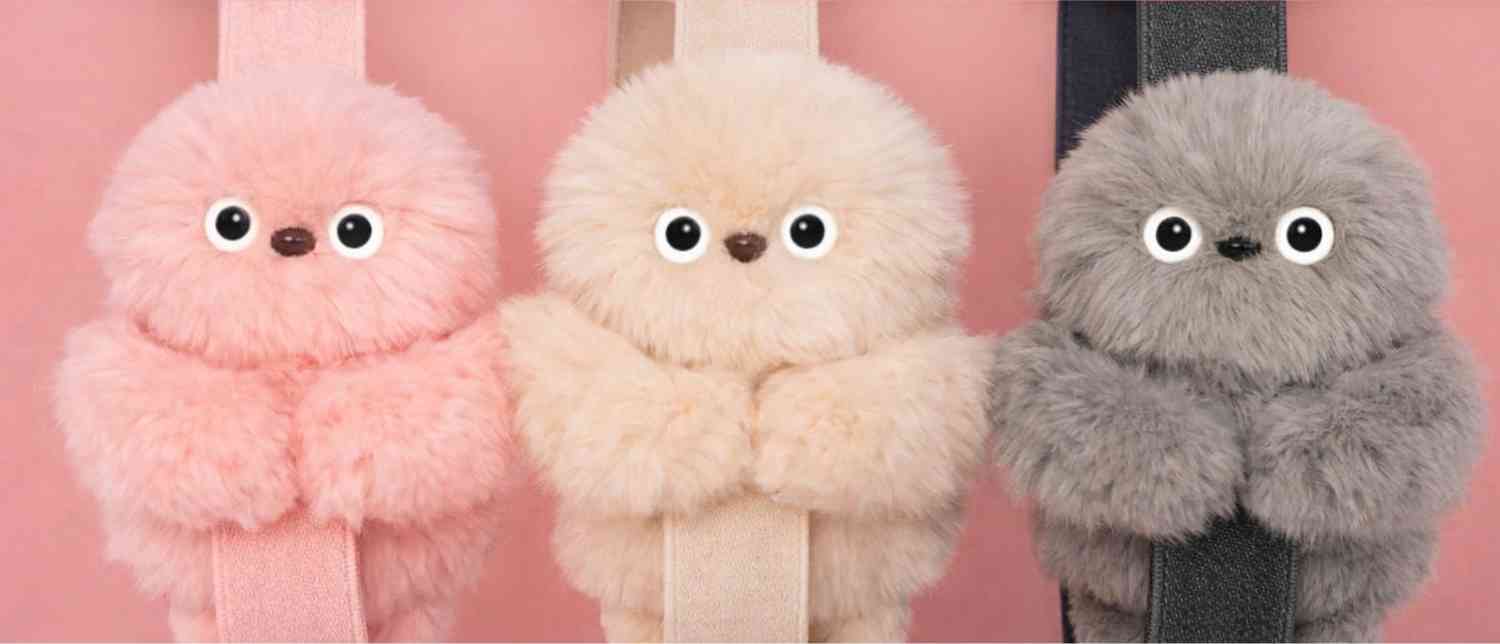
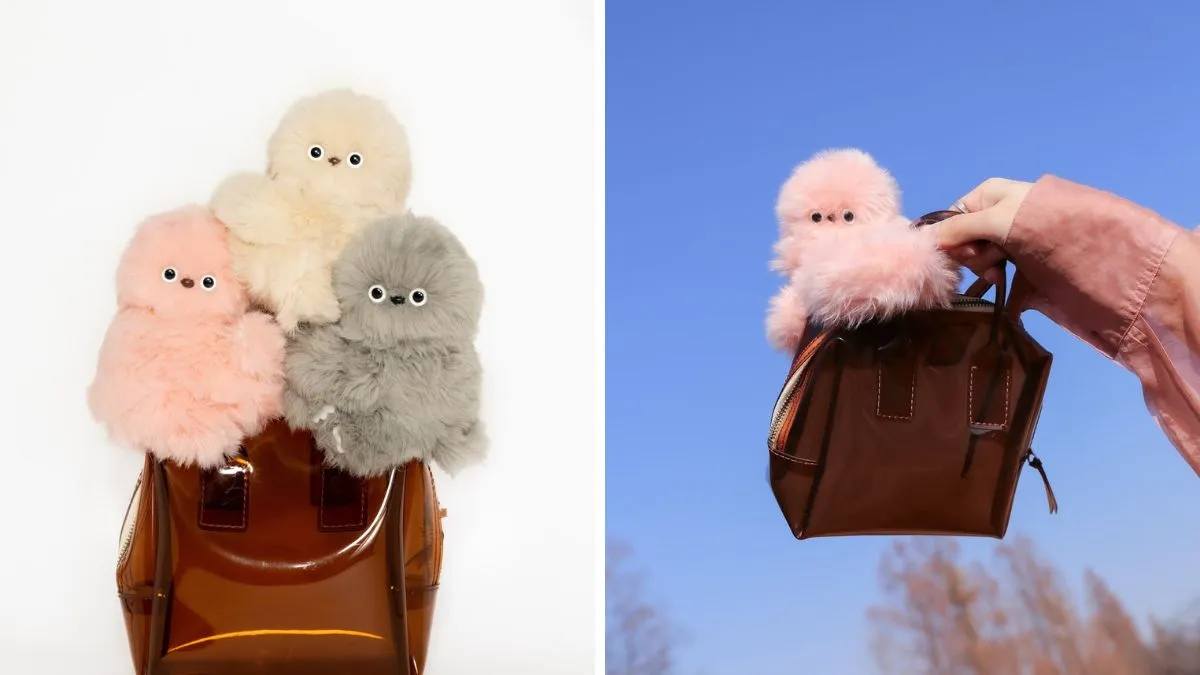
At first glance, Mirumi looks deceptively simple — a palm-sized furry creature with rounded, baby-like proportions and elongated arms meant to wrap around bag straps. Clip it onto a handbag or backpack, and it could easily be mistaken for a soft toy accessory. But Mirumi is far more than that.
According to Mirumi’s official description, it is “a little companion robot that lights up your heart with its innocent, adorable expression.” The robot notices its surroundings, gently turning its head to take a peek. When its shy gaze meets yours, it creates a fleeting moment of joy — much like when a human baby unexpectedly makes eye contact with a stranger on a crowded train.
That moment, fleeting and tender, lies at the very core of Mirumi’s design philosophy.
Pronounced “mai-a-mee,” Mirumi was developed by Yukai Engineering, a company known for designing playful, emotionally engaging robots rather than purely functional machines. The firm specialises in human-centred robotics that prioritise joy, curiosity and connection over productivity.
The Inspiration Behind Mirumi
Mirumi’s origin story is as thoughtful as its behaviour. The concept was born during Yukai Engineering’s internal Make-a-Thon in 2024. A team of engineers and designers proposed creating a robotic creature inspired by a “yokai” — supernatural beings from Japanese folklore — infused with the emotional qualities of a human baby.
CEO Shunsuke Aoki explained that the team wanted to capture a very specific form of cuteness. Speaking to media outlets, he described the inspiration as the moment when a baby, held in a parent’s arms, quietly peeks through a small gap and makes eye contact with a stranger. “It’s such a gentle moment that naturally makes you smile or wave back,” Aoki said. “We wanted to capture that warm, heart-melting feeling and bring it into a small, everyday companion.”
This vision shaped every aspect of Mirumi, from its movements to its lack of a screen.
How Mirumi Works
What makes Mirumi truly stand out is how alive it feels. Beneath its soft, plush exterior lies a sophisticated combination of proximity sensors, motion sensors and a proprietary algorithm developed by Yukai Engineering.
Mirumi cannot understand words, but it “hears” sounds around it. When it detects nearby voices or movement, its algorithm triggers a shy response — a gentle glance upward followed by a subtle turn away. If someone pets it, Mirumi reacts with a randomised set of baby-like movements, ensuring no two interactions feel exactly the same. When jiggled, it may shake its head sideways, as if politely saying, “please don’t do that.”
The robot nods, tilts, turns and cocks its head, expressing emotions such as curiosity, hesitation and bashfulness. With dozens of subtly randomised movement patterns, Mirumi avoids repetitive behaviour. When left alone, it occasionally glances around on its own, quietly “taking in” the world.
Even its battery status is communicated through movement. When power runs low, Mirumi becomes slightly lethargic or shakes its head. When unplugged, it turns away. Once fully charged, it nods gently, completing the interaction without screens, notifications or apps.
This screen-free design has been widely praised, particularly at a time when concerns around excessive screen time are growing louder.
Design Meets Practicality
Mirumi’s design leans unapologetically into cuteness while remaining practical. Its elongated arms wrap securely around bag straps, including slimmer ones, ensuring it stays firmly attached even during travel. The plush body-cover materials are made in Japan and come in three original colours: grey, pink and ivory.
Rounded, soft and baby-like, Mirumi is designed to look like it belongs with you — not tucked away on a shelf. It functions as a living accessory, one that invites interaction not just from its owner, but from strangers who notice it in public spaces.
From CES to Kickstarter: Mirumi’s Launch Journey
Mirumi was first unveiled as a prototype at the Consumer Electronics Show (CES) in Las Vegas in 2025, where it immediately attracted attention across technology, fashion and lifestyle circles. The response was strong enough to propel Yukai Engineering into launching a Kickstarter crowdfunding campaign, which opened pre-orders in late 2025 and runs until January 22.
According to the company, pre-ordered units are expected to ship around April 2026.
How Much Does Mirumi Cost?
Mirumi is positioned as a premium novelty item rather than a mass-market toy. Pricing has varied slightly across promotional phases and regions.
During the early promotional period, Mirumi was priced at 18,360 yen (approximately Rs 10,583 to Rs 10,837). As the crowdfunding campaign progresses, the price increases to 21,803 yen (around Rs 12,513 to Rs 12,564). Even then, it remains discounted compared to the expected retail price of $150.
Some reports have also cited an introductory base price range between ¥7,000 and ¥9,000 globally, with Indian consumers estimated to pay between Rs 6,000 and Rs 9,000 initially. However, once delivery charges and import duties are factored in, the final retail cost in India is expected to land between Rs 10,000 and Rs 12,000.
In short, Mirumi is not inexpensive — but its buyers are not looking for affordability. They are buying an experience.
Why the Internet Is Obsessed
Since its launch, Mirumi has generated widespread excitement on social media. Instagram posts featuring the robot have attracted hundreds of likes and comments, with users expressing eagerness to purchase one.
Comments range from “Oh wow, I need one” to “I need that friend” and “I’m so excited about getting my Mirumi!” One user described it as “childhood nostalgia wrapped in a furry package,” while another said having Mirumi instead of a health app would make self-care feel like a treat.
Romanian actor and songwriter Lora even called Mirumi her “new best friend” and referred to it as her anti-stress medicine in a video shared online.
Others see it as the natural evolution of internet collectibles. “Labubus worked because we projected emotions onto them,” noted Instagram user Aditi Randev. “But Mirumis work because they project emotions back at us.”
Mirumi vs Labubu: A Cultural Shift
While many are quick to label Mirumi as Labubu’s successor, the comparison only goes so far. Labubu thrived on visual identity, blind-box culture and emotional projection. Mirumi, on the other hand, responds. It looks at people, looks away when approached too closely, and reacts when touched.
Where Labubu symbolised playful rebellion, Mirumi represents calm, presence and emotional reciprocity. It reflects a broader cultural shift — from static collectibles to interactive companions, from ownership to experience.
The Purpose Behind the Charm
Mirumi does not sweep floors, manage tasks or provide productivity boosts. And that is entirely the point.
“Our goal is to create small moments of joy in public spaces, shared between strangers through Mirumi’s gentle glance,” Aoki explained. Whether on a crowded train or in a checkout line, Mirumi is designed to spark smiles, waves and brief human connections.
In an era dominated by screens, apps and constant notifications, Mirumi offers something quietly radical: presence without performance.
The Future of Cute Technology
As Mirumi prepares to ship globally in 2026, it stands at the intersection of fashion, technology and emotional design. Whether it achieves the same longevity as Labubu remains to be seen. But its early traction makes one thing abundantly clear — the future of collectibles is no longer static.
It moves. It responds. And sometimes, it shyly looks away.
With inputs from agencies
Image Source: Multiple agencies
© Copyright 2025. All Rights Reserved. Powered by Vygr Media.