 By

Washington: Democrats have won control of both chambers of Congress in the US midterm elections, and the swing ran deep into states that Donald Trump carried comfortably two years ago. They flipped at least seven Republican-held Senate seats, in Iowa, Kansas, Maine, North Carolina, Ohio, South Carolina and Texas. In the House, projections show them winning at least 245 seats against the 218 needed for a majority. Trump is the first US president in two decades to lose both chambers in a midterm.
The contrast with 2020 is what makes this result stand out. When Trump lost the White House that year, large parts of America still saw him as a president who stood by his own supporters. This time the losses came in places that have voted Republican for generations. Kansas elected a Democratic senator for the first time in 94 years. Texas did the same in a Senate race that pitted a Democrat against Trump's own endorsed candidate.
Counting is still going on in some House races, so final seat totals may move. The direction of the result, though, is not in doubt, and it matters well beyond Washington: for the final two years of Trump's term, for the war in Iran, for global trade, and for India.
Key takeaways from the US midterms
- Democrats now run Congress. Republicans began the year with a 53-47 Senate majority and little fear of losing it. They lost it, along with the House, and Senate Majority Leader John Thune loses his post as a result.
- Trump's picks lost. In Texas, Democrat James Talarico beat Ken Paxton, whom Trump had backed. In North Carolina, former Governor Roy Cooper beat Trump's handpicked candidate, Michael Whatley.
- The losses reached governors' mansions. Democrats flipped the governorships in Georgia, Texas and Iowa, and Ohio elected Democrat Amy Acton. A Republican bright spot: Byron Donalds is projected to become Florida's first Black governor.
- Republican redistricting backfired. Republicans redrew maps in red states to pad their House majority. Projections show Democrats keeping at least eight of the 15 districts targeted and flipping at least four of them, while also gaining seats in California and Utah.
- Prices and corruption decided it. Exit polls show voters named the cost of living and government corruption as their top concerns. Prices rose sharply with the Iran war, according to the same reporting.
- Trump isn't conceding the argument. He says he will accept the results, but doesn't see the losses as a verdict on him. More on that below.
The biggest upsets
Seven Senate flips make up the core of the Democratic win. Each of the seats below was held by Republicans before Tuesday.
|
State |
Winner |
Who lost |
Why it stands out |
|---|---|---|---|
|
Texas |
James Talarico (D) |
Ken Paxton (R), backed by Trump |
A Democratic Senate win in a state that hasn't elected one in decades |
|
Kansas |
Adam Hamilton (D), a megachurch pastor |
Sen. Roger Marshall (R) |
Ends a 94-year run of Republican control of the seat |
|
South Carolina |
Annie Andrews (D) |
Sen. Graham (R) |
A deep-red state loses a senior Republican incumbent |
|
Iowa |
Josh Turek (D) |
Rep. Ashley Hinson (R) |
Hinson was one of the GOP's star recruits for the open seat |
|
Ohio |
Sherrod Brown (D) |
Sen. Jon Husted (R) |
Brown returns to the Senate after losing his seat in 2024 |
|
North Carolina |
Roy Cooper (D) |
Michael Whatley (R), Trump's pick |
Seat held by Republicans since 2014 |
|
Maine |
Troy Jackson (D) |
Sen. Susan Collins (R) |
Collins, a five-term senator, loses to a nominee Democrats chose late |
Democrats also held the Senate seats Republicans had hoped to take in Michigan, where Abdul El-Sayed won, and in Georgia, where Jon Ossoff was re-elected. In the House, Democrat Brian Poindexter beat Republican Rep. Max Miller in Ohio, and Tejano singer Bobby Pulido won a Texas seat from a Republican incumbent.
Why Republican constituencies turned
No single cause explains a swing this broad, but the exit polls and the pre-election reporting point the same way. Voters were worried about prices and about corruption in government, and the Iran war, now in its ninth month, sat behind both. Trump's approval rating had been below 40 per cent for much of the year.
Trump also made the vote about himself. Ahead of Election Day he told supporters to act as though he were on the ballot, which turned a set of local contests into a referendum on his presidency. His preferred candidates then carried that weight into the voting booth. In Texas he backed Paxton over incumbent Senator John Cornyn, whom he called disloyal, and Paxton lost.
A second factor was the Republican push to redraw House maps mid-decade. The aim was to lock in extra seats. Projections show it didn't work: Democrats held most of the targeted districts and took several of them.
There is also a simple point about expectations. Many Republicans saw the Senate as safe. The result left several of them defending seats that had not been seriously contested in years.
Trump's response and what it means for him
Trump's reaction moved through several moods in a few hours. On Truth Social he wrote that he wasn't on the ballot and that Republicans would have won in a landslide if he had been. He then told a newspaper he was "absolutely willing" to accept the results, a notable statement after he said in October he would accept them only if the elections were honest.
Later he called a news channel and congratulated Democrats, saying they had done a good job and fought hard. He said he didn't see the losses as a hit on him, and described the Iran war as one "piece" of a wider set of losses. He also said he had no staff changes planned and that he was eager to make deals with Democratic leaders. About an hour after that, he posted a hat with the word "veto" on it.
The practical effect on his presidency is large, even if his tone isn't:
- Investigations. With both chambers in Democratic hands, his last two years will be shaped by congressional probes in the House and Senate, and by lawmakers hostile to his agenda.
- Nominees. Democrats can now block his nominees in the Senate.
- Legislation. He will need Democratic votes to pass anything, and he holds the veto against anything he dislikes. Expect fewer laws and more standoffs.
- The Republican Party. Senate Republicans lose their majority and Thune his leadership post. Questions about his endorsements in Texas, South Carolina, and North Carolina will follow him, and talk about who leads the party after him will grow. Trump declined to weigh in on 2028 and said only that the party has a deep bench.
What doesn't change is the power he holds on his own. A president still controls foreign policy, immigration enforcement, and much of trade policy through executive action.
What a Democratic Congress can and can't do
A Democratic Congress has real tools, but it cannot run foreign or trade policy from Capitol Hill. Analysts stress that Trump keeps substantial executive powers, and that Congress cannot conduct diplomacy in place of the president.
|
Congress can |
Congress can't (easily) |
|---|---|
|
Hold hearings, issue subpoenas and investigate the administration |
Override a presidential veto without a large two-thirds vote |
|
Block or slow nominees in the Senate |
Reverse tariffs that rest on executive authority simply by passing a bill |
|
Use its control of government funding to force negotiations |
Run diplomacy or direct a war on its own |
|
Debate war powers, demand transparency on Iran, shape sanctions and military aid |
Guarantee that Trump follows its lead on Iran, Russia or Ukraine |
Tariffs deserve a special note. The Supreme Court ruled on February 20 that the emergency-powers law used for the broad tariffs does not authorise them, and collection under it ended days later. Tariffs now rest on other statutes that give the executive branch wide authority, which is why some analysts don't expect Congress to pass laws that sharply cut them. Democrats, for their part, aren't a uniform free-trade bloc.
Impact on India
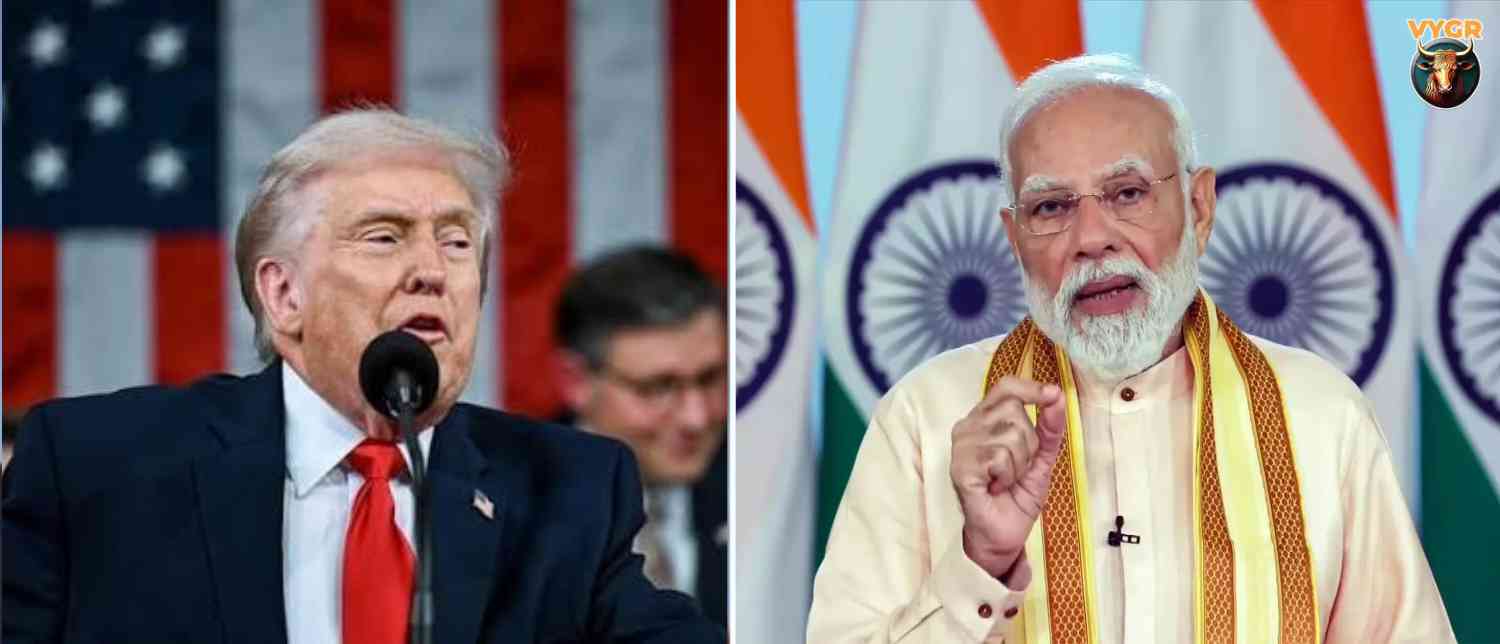
The midterms don't change who sits in the White House, so India's dealings with Washington still run through Trump. The change comes at the edges: how much room he has to move, what Congress can slow down, and what a weakened president wants to show voters abroad. The effect is mixed, and much of it depends on choices not yet made.
Trade deal and tariffs
India and the US still have no signed trade deal. The two governments announced a framework for an interim agreement on February 6, setting an 18 per cent rate, but that rate was never applied. Commerce Minister Piyush Goyal said on October 15 that the first phase had been finalised and was in legal drafting. Finance Minister Nirmala Sitharaman had said ten days earlier that talks had reached a plateau, and the US trade representative said a deal was not imminent.
On the ground, most Indian goods now pay the normal US duty plus a 10 per cent Section 301 duty in force since July 24, after the Supreme Court struck down the broader emergency tariffs in February. A separate law that allowed duties of up to 100 per cent on big buyers of Russian oil was waived by an order on October 16.
A Democratic Congress is unlikely to rewrite these rates quickly, since the executive controls most of the tariff levers. What it can do is raise the political cost of sweeping tariffs and ask for a say over deals. For Indian exporters the near-term picture is therefore little changed: continued uncertainty, with no sign of a sudden cut.
Visas and the IT sector
India's IT industry will be watching immigration closely. The $100,000 fee on new H-1B visas, announced in September 2025, was an executive decision, and Congress can't easily undo it. Democrats aren't uniformly in favour of more liberal visa rules, so their control of Congress doesn't mean automatic relief. The most that can be said is that a new Congress opens a legislative route that didn't exist before.
West Asia, oil and Indian lives
The Iran war is the part of this story closest to India's daily concerns. The Ministry of External Affairs said on Tuesday that 23 Indians have been killed in the West Asia conflict, 15 of them seafarers, and shipping through the Strait of Hormuz remains disrupted. Analysts expect the election to push the Trump administration toward an exit strategy through diplomacy, since the war was a factor in the losses. A Democratic Congress can press the issue through funding, war-powers debates and demands for transparency. None of that guarantees an end to the fighting, and Iran may feel less pressure to compromise. Any easing would still help India: lower oil prices, safer sea lanes and fewer risks to its seafarers.
Russian oil and sanctions
Congress shapes sanctions policy. If Democrats push for tougher measures on Russia, India's purchases of Russian crude could come under fresh scrutiny, even though Trump has waived the latest duty law for now. This is a risk rather than a forecast, and it depends on how hard the new majority presses.
Indian-American lawmakers
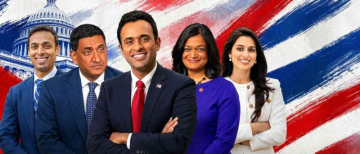
Four Indian-American Democrats, Ro Khanna, Pramila Jayapal, Ami Bera and Suhas Subramanyam, were on the ballot for the House. Two others, Raja Krishnamoorthi and Shri Thanedar, lost their primaries earlier this year. With Democrats in charge of committees, these lawmakers are likely to have more say. Last December, Jayapal described the tariffs as damaging to India's economy and to American businesses and consumers.
The strategic relationship
The wider relationship rests on shared interests, including balancing China, that don't depend on one party. On that reading, the midterms are more likely to affect the tone and timing of the relationship than its direction.
Impact on the world
Washington’s election result reached world markets within hours, and it will be felt abroad mainly in three places: trade, security and the economy.
Markets reacted with caution. Asian stocks fell on Wednesday, with Tokyo down by nearly 3 per cent as the yen strengthened, and futures for European indices pointed lower. The dollar weakened to a one-month low against major currencies, while the euro rose about 0.4 per cent to roughly $1.12. Oil prices declined. Analysts said investors were weighing the prospect of gridlock, budget standoffs, debt-ceiling fights and congressional investigations, and some pointed to worries about tighter regulation of AI, since the tech sector has been a key engine of growth. Currency strategists also cautioned that the dollar still responds mainly to the Federal Reserve, not to Congress, so the moves could prove short-lived.
Europe: tariffs and Ukraine are the big questions. European analysts argued that a Democratic Congress will probably not end the tariff threat, because the president’s tariffs no longer rest on Congress. Trump did not rule out new tariffs aimed at Europe. On Ukraine, Congress controls funding, which gives Democrats more influence over military aid, but the White House keeps most of the power over diplomacy and negotiations. A more assertive Congress could reassure allies who have worried about Washington’s commitment to European security.
Asia: reading the signals. Allies such as Japan, South Korea and Taiwan rely on steady American deterrence against a rising China, and they will watch whether a Democratic Congress changes the pace of military assistance or sanctions policy. For China, the result is a sign of limits on Trump’s domestic strength. Because trade policy is largely in the president’s hands, near-term changes in tariffs on Chinese goods are not expected to come from Capitol Hill.
The Middle East and oil. The Iran war, now in its ninth month, is the highest-stakes foreign policy issue. Some market analysts have warned that Trump could restart major strikes before the new Congress is seated in January, which would send oil prices sharply higher. Crude rose more than 10 per cent in October. Congress can press for war-powers debates, funding limits and transparency, but it cannot direct the war itself. Gulf economies, shipping companies and oil importers will be watching whether the administration looks for a diplomatic exit.
A bellwether for 2028. Governments around the world will also treat the vote as a preview of the next presidential race. A sweeping defeat for the incumbent party in strongholds such as Texas, Kansas and Ohio shapes how foreign capitals judge the durability of Trump’s agenda and who might lead the country after him.
The One Nation One Election angle in India
The US midterms offer an unusual mirror for an Indian debate. Every two years, American voters get a mid-term check on a president, as this week’s results show. In India, the proposal known as One Nation One Election (ONOE) would do the opposite: it would synchronise elections to the Lok Sabha and state assemblies so that voters in most places go to the polls at the same time.
Where the proposal stands. The Constitution (129th Amendment) Bill, 2024, and the Union Territories Laws (Amendment) Bill, 2024, were introduced in the Lok Sabha in December 2024 and sent to a Joint Parliamentary Committee (JPC) headed by BJP MP P P Chaudhary. The bills draw on the report of the Kovind committee, which recommended simultaneous polls. The government’s stated aim is to enable simultaneous elections from the 2029 general election, subject to Parliament’s approval. The JPC has held consultations across states, and the Lok Sabha has extended its deadline to the first day of the last week of the Winter Session in 2026. Reports from earlier in the year suggested the committee needed more time to examine constitutional and federal questions, including whether the framework respects the basic structure of the Constitution.
The case for ONOE. Supporters argue that repeated elections drain public money, keep governments in campaign mode and slow down administration because of repeated model codes of conduct. A senior BJP leader in Himachal Pradesh has said that endless polls waste time and bring governance to a standstill for months. Some experts who testified before the committee supported the concept, including its promise of lower costs and greater efficiency.
The case against. Critics say shortening the terms of some state assemblies to sync cycles would violate the principle that governments serve their full term, and they question whether provisions allowing the Election Commission to decide on not holding polls in certain states would survive judicial scrutiny. Congress leaders, including the Himachal Pradesh Chief Minister, have opposed the bill on these grounds. Others have suggested a phased rollout.
What the US result adds. The American example is a reminder of why staggered elections matter to many voters and politicians. A midterm lets citizens deliver a verdict on a government between general elections, and this week’s results suggest it can be a powerful check. In India, state elections often play that role, with a loss in key states acting as a signal to the ruling party at the Centre. Supporters of ONOE respond that a fixed, shared calendar can also produce accountability, and that the comparison is imperfect because the US has fixed terms and a very different federal structure. The ONOE bills would also be a major constitutional change requiring a special majority in Parliament.
The honest summary is that the US midterms do not settle the ONOE debate, but they sharpen the central question: how much mid-term accountability should a democracy build in, and how much stability and efficiency is worth trading for it?
What to watch next
- The final House count. Counting continues in some races, and the seat tally could shift from the projected 245.
- The new Congress in January. Both chambers will elect leaders, and Democrats will take committee chairs and the power to investigate. Senate Republicans will have to choose a new leadership team after losing the majority.
- Trump’s use of the veto. Watch how often he uses it and whether he seeks deals with Democratic leaders, as he has said he might.
- Tariff decisions. New executive actions under existing trade statutes are likely to continue, as is the effort to settle an India-US trade agreement.
- Iran policy before January. Any escalation or diplomatic breakthrough would affect oil prices, shipping and Indian seafarers.
- Immigration and visas. Whether Congress takes up legislation on H-1B and related issues.
- The One Nation One Election committee. Watch for the JPC’s report in the Winter Session of Parliament.
- Early 2028 positioning. Party leaders’ moves in both parties will shape the next presidential race.
© Copyright 2026. All Rights Reserved. Powered by Vygr Media.