 By
By 
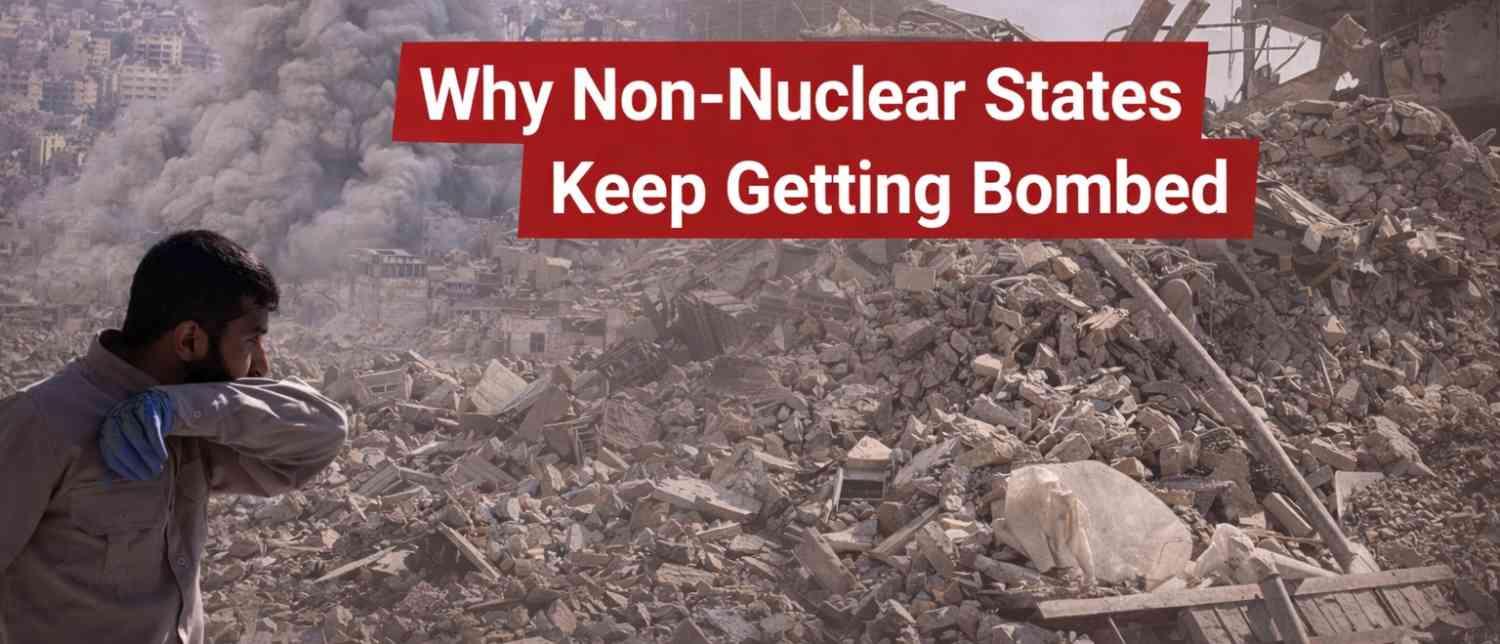
The rapid escalation of violence in the Middle East following the United States–Israel assault on Iran has revived one of the most unsettling questions in modern geopolitics: why do some countries get attacked while others, despite similar accusations, remain largely untouched?
The unfolding conflict — marked by assassination, missile exchanges and regional diplomatic breakdowns — is doing more than destabilising West Asia. It may be pushing the world into what could become the darkest phase of the nuclear age. The message emerging from these events is stark: states without nuclear weapons are vulnerable, while those possessing them enjoy a far greater degree of immunity.
If that perception solidifies, the consequences for global nuclear proliferation could be profound.
A Rapidly Escalating War
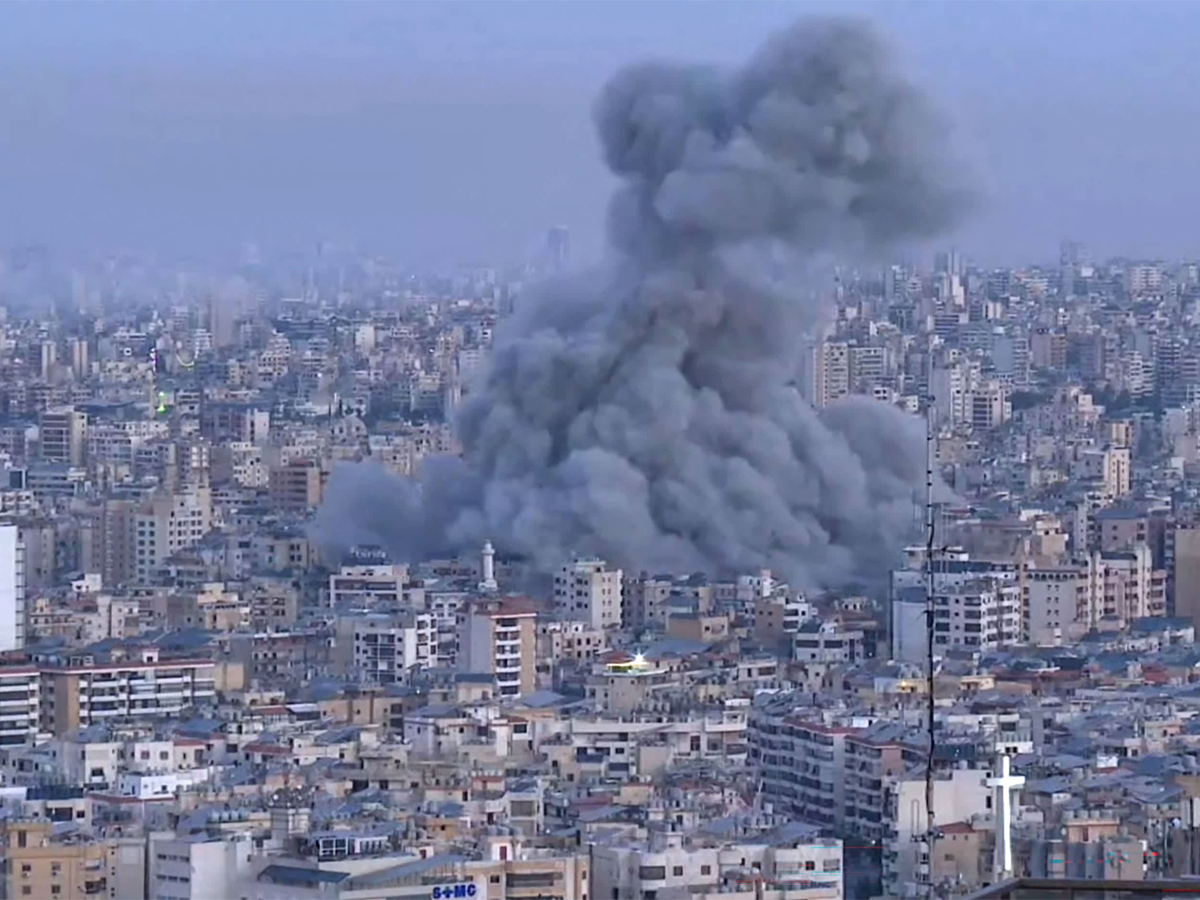
Events since February 28 have moved with astonishing speed. On that day, the United States and Israel launched a coordinated military campaign against Iran under the name Operation Epic Fury. The strikes targeted locations across the country and triggered an immediate regional crisis.
Among the most dramatic developments was the killing of Iran’s Supreme Leader, Ayatollah Ali Khamenei, in an American strike on his compound. Several other senior officials, including the head of the Islamic Revolutionary Guard Corps (IRGC), were also killed.
The conflict quickly spilled beyond Iran’s borders. An Iranian warship returning from a naval exercise in India was sunk by a US submarine off the coast of Sri Lanka — the first such attack in the Indian Ocean since the Second World War. Meanwhile, the strategic Strait of Hormuz, through which a significant portion of the world’s oil passes, has effectively been paralysed.
Iran has retaliated with waves of missiles and drones targeting Israel, US military bases in the region and even Azerbaijan. The strikes have triggered casualties on both sides and heightened fears of a wider regional war.
According to the Iranian Red Crescent, at least 787 people have been killed in Iran. Six American soldiers have died and 18 service members have been injured as Iran’s counterattacks hit US assets.
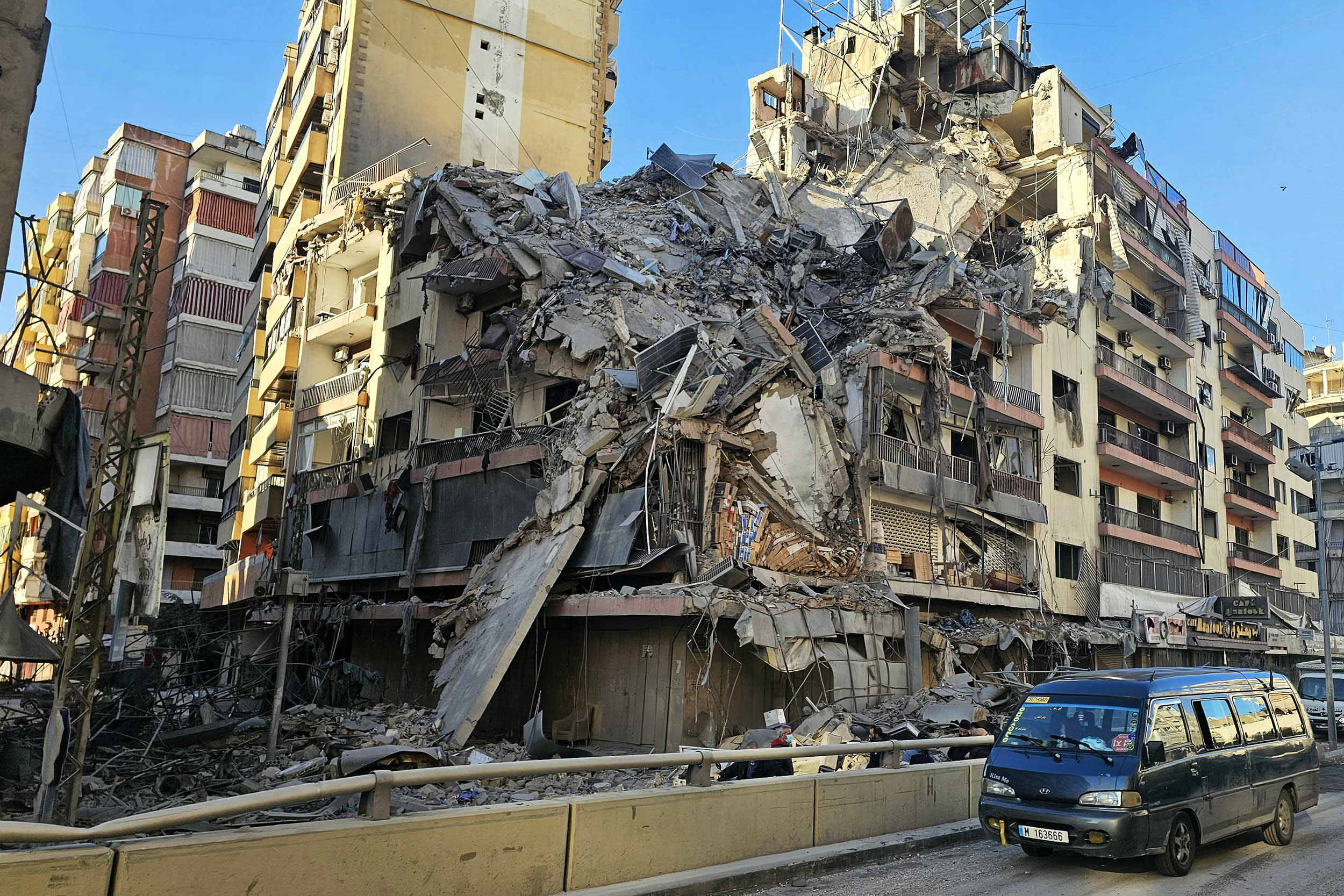
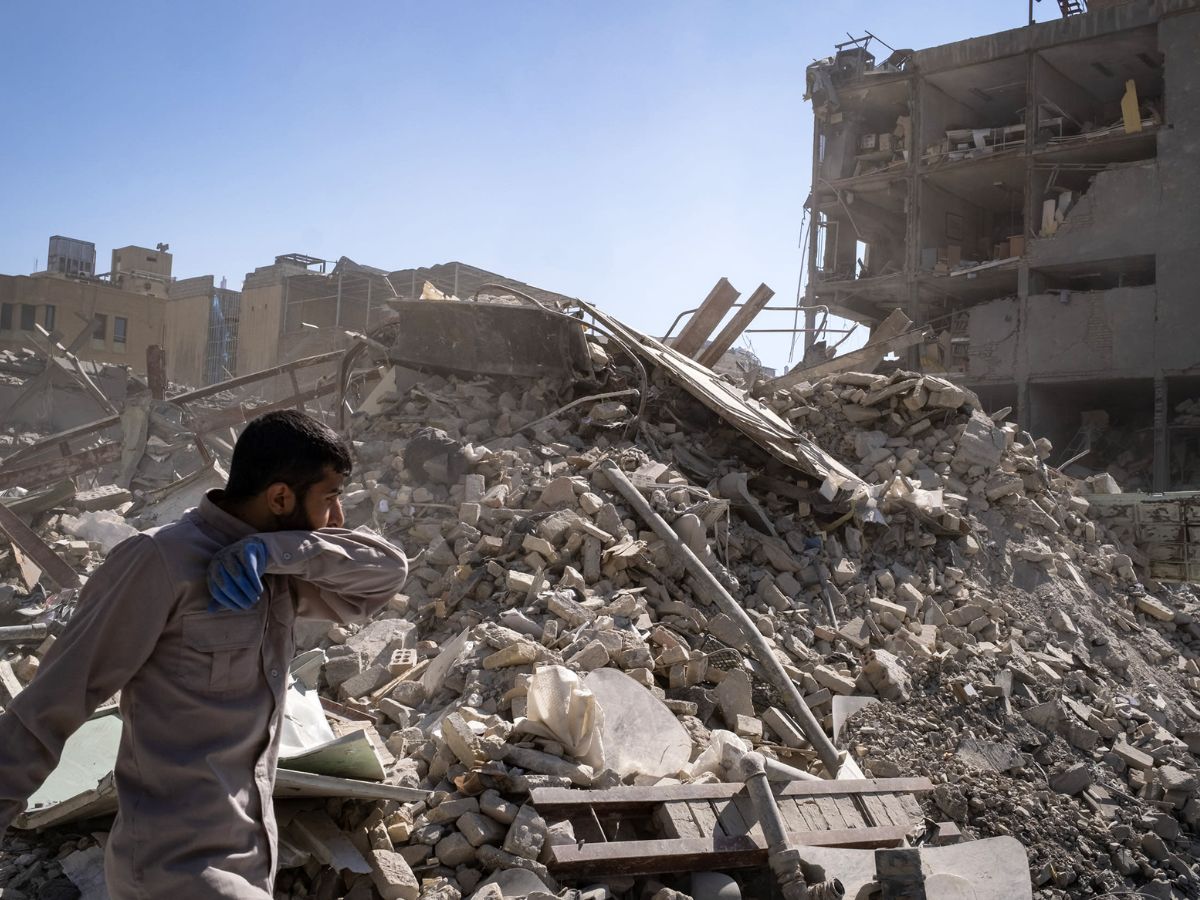
One of the deadliest incidents occurred in the southeastern Iranian city of Minab, where a strike hit a girls’ elementary school, killing 165 students.
The conflict is also reshaping regional diplomacy. The United Arab Emirates has withdrawn its ambassador from Tehran and closed its embassy there, while Saudi Arabia has warned that it will deploy all its resources to assist its “Arab brothers”.
At the same time, Iran appears increasingly isolated. Russia and China have condemned the attacks and the assassination of Khamenei but have stopped short of any commitment to military intervention.
War Without a Declaration
Whether the United States is technically “at war” with Iran remains a matter of legal debate.
Under the US Constitution, Congress has the sole authority to declare war. Yet the president, as commander-in-chief, has the power to order military action in response to threats. In practice, most American conflicts since World War II — including Vietnam and Iraq — have occurred without formal declarations of war.
In 1973, the US Congress passed the War Powers Resolution, which requires the president to notify lawmakers within 48 hours of launching military hostilities and limits unilateral military action to 60 days without congressional approval.
President Donald Trump informed Congress that the threat from Iran had become “untenable”, despite ongoing diplomatic efforts. Oman had been mediating negotiations between Washington and Tehran and had indicated that the two sides were close to a breakthrough.
Democratic lawmakers have questioned the legality of the strikes and warned that they may violate the War Powers Resolution. But historically, American presidents have often initiated military operations without explicit congressional approval.
As political scientists note, the distinction between an “attack” and a “war” often depends less on legal definitions than on duration and intensity. If the campaign stretches into weeks or months, it will effectively become a war regardless of what it is officially called.
.@RepJeffries: "There is no evidence that has been presented to us that the United States was under threat of imminent attack from Iran…It's hard for the American people to understand the rationale from launching a preemptive war in the Middle East." pic.twitter.com/4365R10iH8— CSPAN (@cspan) March 3, 2026
Washington’s Justifications
The Trump administration has presented multiple explanations for launching Operation Epic Fury.
First, it says the goal is to eliminate Iran’s nuclear programme. Trump and Vice President JD Vance have argued that preventing Tehran from acquiring nuclear weapons is the central objective.
However, the administration has not produced evidence showing Iran was on the verge of building a bomb. In fact, the International Atomic Energy Agency (IAEA) recently stated that it had no evidence Iran was running an active nuclear weapons programme.
Second, the administration has framed the strikes as pre-emptive self-defence. US officials argue that Iran posed an imminent threat to American troops, bases and allies in the region.
Secretary of State Marco Rubio suggested the United States acted partly because Israel had been preparing its own military strike against Iran and Washington wanted to act first to reduce potential casualties.
Yet even within the administration, the explanations have been inconsistent. Trump later said the US attacked because he believed Iran might strike first — contradicting Rubio’s earlier reasoning.
Third, regime change has been openly discussed. Trump has called on the Iranian people to overthrow their government and “seize control of your destiny”.
Fourth, the operation is intended to weaken Iranian-backed groups such as Hezbollah in Lebanon, the Houthis in Yemen and Hamas in Gaza.
Critics say the shifting rationale reflects the absence of a clear strategic objective.
Echoes of the Iraq War
For many observers, the situation evokes uncomfortable memories of the 2003 US invasion of Iraq.
At that time, the George W Bush administration justified the war by claiming Saddam Hussein possessed weapons of mass destruction — a claim that ultimately proved false.
Today, the parallels are difficult to ignore. Once again, a major military campaign has been launched against a state accused of pursuing nuclear weapons, despite ongoing diplomatic negotiations and ambiguous evidence.
Less than a year before Operation Epic Fury, Trump himself had claimed that US strikes had already destroyed Iran’s nuclear facilities. Yet the new campaign is again framed as necessary to eliminate the same threat.
The similarity between the two wars highlights a deeper issue: militarily weaker states without nuclear weapons remain vulnerable to intervention by stronger powers.
pic.twitter.com/BZuJDudLej— Donald J. Trump (@realDonaldTrump) February 28, 2026
The Nuclear Deterrence Reality
Perhaps the most unsettling implication of the Iran conflict is what it reveals about nuclear deterrence.
Consider Iraq again. The US and its allies were able to invade in 2003 precisely because they knew Saddam Hussein did not possess weapons of mass destruction.
The same logic applies to Ukraine. After the collapse of the Soviet Union, Ukraine inherited a large nuclear arsenal. In the 1990s, it voluntarily gave up those weapons in exchange for security guarantees.
Yet Russia invaded Ukraine decades later — an action many analysts believe might never have occurred had Kyiv retained its nuclear deterrent.
The pattern is clear: states without nuclear weapons are far more vulnerable.
Iran Versus Pakistan
The contrast between Iran and Pakistan further underscores this reality.
Both countries have been accused of supporting militant groups beyond their borders. Iran allegedly backs organisations targeting Israel, while Pakistan has long been accused of nurturing jihadist groups focused on India and other regions.
Pakistan’s name has surfaced in connection with numerous global terror incidents over the decades.
Yet the United States has pursued dramatically different policies toward the two countries. Iran faces sanctions, military strikes and threats of regime change, while Pakistan — despite its controversial record — has largely avoided such treatment.
The reason is simple: Pakistan possesses nuclear weapons.
It is difficult to imagine a US-led attack on Pakistan similar to Operation Epic Fury. Nuclear capability acts as a powerful deterrent against direct military intervention.
What Iran Actually Had
Ironically, Iran had taken several steps that theoretically should have reduced international suspicion.
It is a signatory to the Nuclear Non-Proliferation Treaty (NPT). Iran’s supreme leader had even issued a religious ruling — a fatwa — prohibiting the pursuit of weapons of mass destruction.
Tehran has consistently maintained that its nuclear programme is intended for peaceful purposes, including energy production. It has insisted on the right to enrich uranium at levels below weapons-grade thresholds.
During recent negotiations, Iran reportedly agreed to unprecedented compromises.
Yet the attacks occurred anyway.
Meanwhile, the only widely acknowledged nuclear power in the Middle East remains Israel.
A Dangerous Domino Effect
The broader consequence of Operation Epic Fury may not be the destruction of Iran’s nuclear facilities, but rather a surge in nuclear ambition across the world.
Countries observing the conflict may conclude that nuclear weapons are the only reliable guarantee of sovereignty.
In the Middle East, states such as Saudi Arabia and Qatar could seek nuclear capabilities to balance Israel and deter potential threats. Some analysts already believe Saudi Arabia benefits from a form of nuclear protection through its defence ties with Pakistan.
Turkey has also strengthened strategic ties with Islamabad, fuelling speculation about future nuclear cooperation.
North Korea provides another example of how nuclear deterrence alters geopolitical dynamics. Despite severe tensions with the United States — and personal clashes between Kim Jong Un and Donald Trump — certain red lines are never crossed.
The reason again is simple: North Korea possesses nuclear weapons.
The Shadow of Illegal Proliferation
If states believe nuclear weapons guarantee survival, they may seek them by any means necessary.
That could include clandestine nuclear programmes, black-market procurement networks or security arrangements with nuclear powers.
Pakistan’s nuclear development in the 1970s, which reportedly involved acquiring materials through covert channels, is often cited as an example of how countries can circumvent international controls.
Some states may instead pursue nuclear umbrellas — security guarantees from nuclear-armed allies — similar to the arrangements believed to exist between Saudi Arabia and Pakistan.
Meanwhile, even established nuclear powers are reconsidering their strategies. Countries like France have already suggested increasing their nuclear arsenals in response to rising global instability.
The Limits of Military Power
Even if the United States continues its air campaign, experts doubt whether bombing alone can permanently eliminate Iran’s nuclear capabilities.
Nuclear infrastructure and expertise cannot simply be destroyed from the air. Facilities can be rebuilt, scientists can continue research and technological knowledge cannot be erased.
A ground invasion would be even more daunting.
Iran is three to four times larger than Iraq, the country the US invaded in 2003. At the height of the Iraq war, more than 150,000 American troops were deployed, yet the occupation still spiralled into a prolonged insurgency.
Launching a similar campaign in Iran would likely be far more costly and complicated.
As analysts warn, such an operation could trigger years of instability — primarily for the Iranian population, but also for American soldiers and the wider region.
A Chilling Lesson
The war unfolding around Iran is not just a regional crisis. It is a global signal.
For smaller or militarily weaker states, the lesson appears brutally simple: nuclear weapons may be the ultimate insurance policy against foreign intervention.
If that conclusion spreads, the world may soon witness a surge in nuclear proliferation — both legal and illegal.
In that sense, the most chilling consequence of Operation Epic Fury may not be the destruction it causes today, but the nuclear arms race it could ignite tomorrow.
With inputs from agencies
Image Source: Multiple agencies
© Copyright 2025. All Rights Reserved. Powered by Vygr Media.