 By
By 
New Delhi: The collapse of a five-storey paying guest accommodation in Delhi’s Satya Niketan has once again exposed a problem that India has confronted repeatedly over the past decade but has struggled to eliminate: unsafe buildings continuing to house people despite visible structural risks, unauthorised alterations and inadequate enforcement of construction norms.
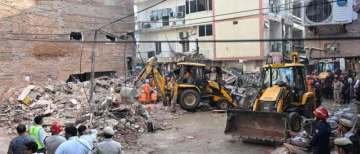
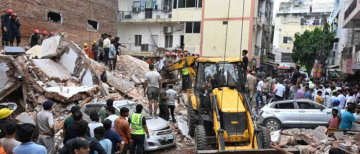
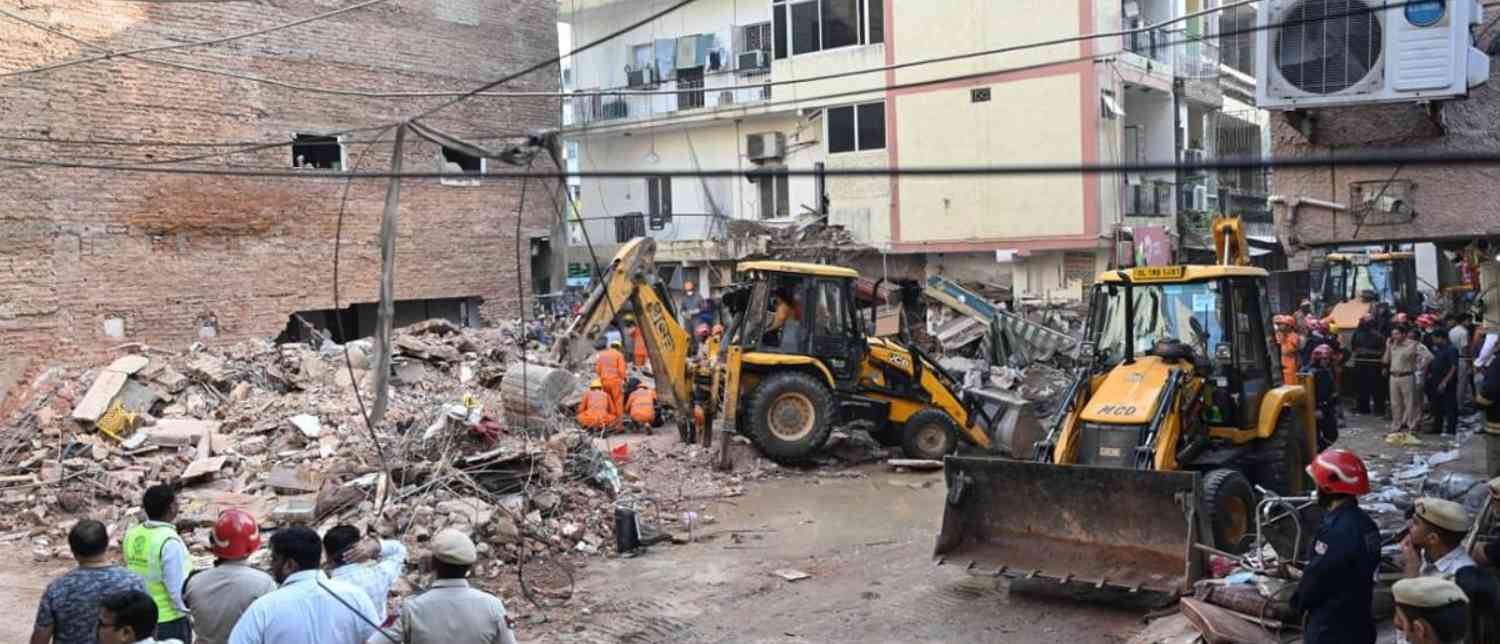
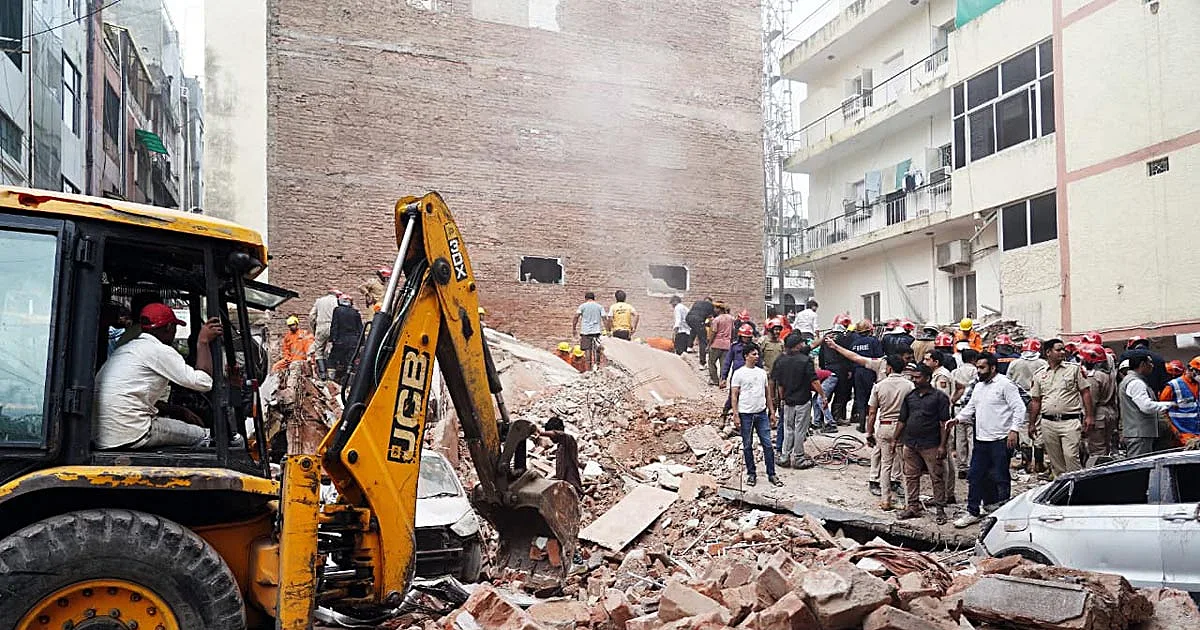
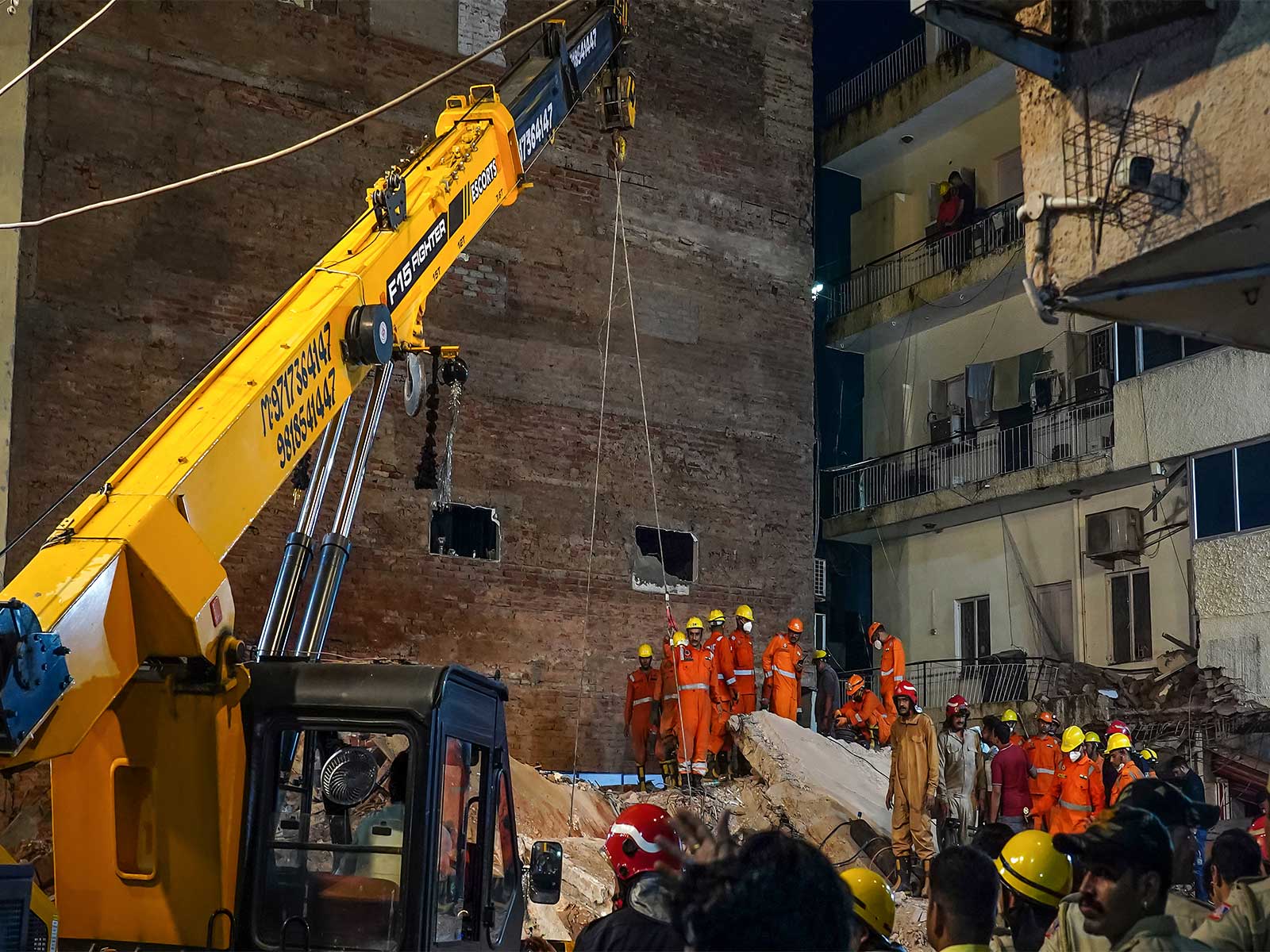
Six people were killed after the building in South-West Delhi’s Satya Niketan collapsed on Sunday, September 6, while several others were injured. The structure, located close to Delhi University’s South Campus, was being used as a student PG accommodation. Rescue teams worked through the rubble as authorities investigated what caused the building to fail.
The tragedy has also prompted renewed scrutiny of the safety of student accommodation in Delhi, particularly in densely populated neighbourhoods where residential buildings are frequently converted into hostels, PGs and other high-density facilities.
Preliminary findings have pointed towards renovation and excavation work in the basement of the ageing structure. Delhi Chief Minister Rekha Gupta said the building was old and that water accumulation in the basement, combined with ongoing repair work, appeared to have contributed to the collapse. Authorities have ordered a magisterial inquiry, while an FIR has been registered against the building owner.
The Delhi government has also ordered intensive inspections of PG accommodations and other buildings in the area. Buildings with unauthorised additional floors have come under particular scrutiny following the incident.
But Satya Niketan is not an isolated case.
From Delhi and Mumbai to Lucknow and Bhiwandi, a disturbing pattern emerges from several major building collapses: structures are frequently modified beyond their original design, ageing buildings are exposed to years of water damage, repairs are delayed, dangerous buildings continue to be occupied, and regulatory intervention often comes only after disaster strikes.
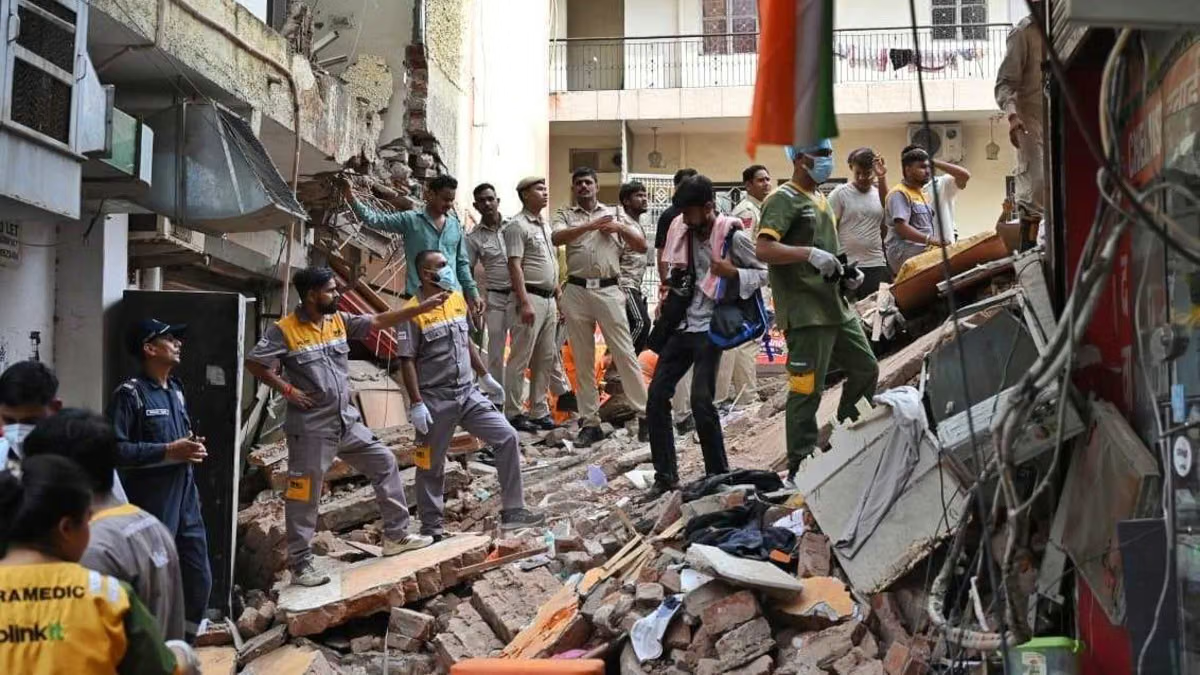
Satya Niketan collapse puts student housing safety under spotlight
The Satya Niketan building was reportedly around four to five decades old and consisted of a basement and five upper floors. It was operating as a PG accommodation in an area densely populated by students, hostels, restaurants and small commercial establishments.
The locality's proximity to Delhi University’s South Campus has made it a major student-housing hub. Such areas often have intense demand for affordable accommodation, creating strong incentives for property owners to maximise the number of rooms and occupants within existing structures.
Reports from the area indicate that the building had undergone renovation work before the collapse. Basement work was reportedly underway when the structure gave way. Residents also raised concerns about water accumulation and the condition of the building.
The sequence is significant because basement excavation or structural work inside an existing building is not a routine cosmetic modification. Removing soil, altering foundations or disturbing structural supports can affect the load-bearing system of an entire building. In an ageing structure, the risks can be considerably higher if the original design, foundation capacity or previous alterations are not properly assessed.
The collapse has therefore raised a broader question: how many older residential buildings in student-dominated areas have been converted into high-density PG accommodations without undergoing adequate structural assessment?
The issue is particularly important because a building designed decades ago for a conventional residential load may face very different demands after being converted into a hostel or PG. More occupants, additional partitions, water tanks, electrical installations, bathrooms and other modifications can collectively change the load and functioning of the structure.
India’s Deadliest Building Collapses: A Grim List of Tragedies
|
Location & Year |
Building |
Death Toll |
Key Cause / Concern |
|---|---|---|---|
|
Mumbra, Thane (2013) |
Lucky Compound, illegal under-construction building |
74 |
Unauthorised construction and lack of occupancy certificate |
|
Moulivakkam, Chennai (2014) |
Prime Trust Heights, under-construction building |
61 |
Construction flaws and lightning strike on exposed reinforcement |
|
Bhendi Bazaar, Mumbai (2017) |
Husaini Building, 117-year-old structure |
33 |
Dilapidated structure awaiting redevelopment |
|
Ghatkopar, Mumbai (2017) |
Residential building |
17 |
Ageing structure and monsoon-related damage |
|
Dongri, Mumbai (2019) |
Kesarbai Building, around 100 years old |
14 |
Ageing MHADA structure and evacuation warnings reportedly ignored |
|
Bhiwandi, Thane (2020) |
Jilani Building, more than 30 years old |
35+ |
Monsoon-weakened foundation and delayed repairs |
|
Satya Niketan, Delhi (2026) |
Five-storey PG accommodation |
6 |
Unauthorised floor additions, basement work and structural alterations; inquiry ongoing |
|
Transport Nagar, Lucknow (2026) |
Three-storey mixed-use building |
8 |
Rainwater seepage, foundation weakening, construction quality and heavy loads |
|
Bapa Nagar, Delhi (2026) |
Four-storey residential building |
5 |
Ageing structure, unauthorised internal modifications and monsoon damage |
|
Mahagujarat, Bhiwandi (2026) |
Ground+2 residential building |
2 |
Dilapidated structure, prolonged water damage and continued occupation despite safety concerns |
|
Naik Nagar Society, Kurla, Mumbai (2026) |
Four-storey residential complex |
19 |
Structural deterioration, delayed redevelopment and continued occupation despite C-1 classification |
|
Bhiwandi, Thane (2026) |
Kohinoor Building |
10+ |
Building previously flagged as dangerous, with concerns over unauthorised repairs |
What These Collapses Have in Common
The figures may differ, but the cases reveal a strikingly similar pattern. Unauthorised construction and structural modifications repeatedly emerge as major concerns. Older Ground+1 or Ground+2 buildings are sometimes expanded without corresponding strengthening of their foundations, columns and other load-bearing elements.
Basement excavation is another potential risk, particularly when work is carried out beneath or alongside an existing structure without a comprehensive engineering assessment. Altering the soil or foundation system of an older building can compromise its structural stability.
Water damage is another recurring factor. Poor drainage, rainwater seepage and prolonged waterlogging can deteriorate concrete and contribute to corrosion of the steel reinforcement inside it. Over time, this can weaken critical structural components.
The cases also expose the consequences of delayed repairs and redevelopment. In some instances, authorities have identified buildings as dangerous, yet residents continue to occupy them because demolition, redevelopment, legal disputes or relocation arrangements take too long.
Finally, urban housing pressure remains an important part of the problem. In expensive and densely populated cities, old residential buildings are frequently modified to accommodate more occupants or converted into PGs and other rental accommodation. Without appropriate structural assessments and upgrades, such changes can increase the risks considerably.
Together, these tragedies suggest that India's building-collapse problem is not caused by a single factor. It is often the result of several vulnerabilities accumulating over years — an ageing structure, unauthorised construction, water damage, inadequate maintenance, increased loads and delayed regulatory action — until a building reaches a point where it can no longer withstand the stress.
Why unauthorised floor additions are so dangerous
One of the clearest recurring problems is the addition of floors to buildings that were never designed to carry them.
A Ground+1 or Ground+2 building has a particular foundation, column and beam configuration based on its approved design. Adding multiple floors changes the total load transferred to the foundation and structural members.
If the foundation and columns are not strengthened accordingly, the additional weight can place the structure beyond its intended capacity.
The Satya Niketan case has brought this concern into sharp focus because the building was reportedly originally approved as a much smaller structure before being expanded.
Such transformations are particularly worrying in dense urban neighbourhoods, where construction can happen incrementally and modifications may accumulate over years.
Basement excavation is another hidden structural risk
Basement work can be equally dangerous when carried out without detailed structural assessment.
Excavation around or beneath an existing building can alter soil conditions and remove support that the original foundation depended upon. If a column, footing or other load-bearing element is disturbed, the consequences can extend far beyond the immediate work area.
The Satya Niketan collapse appears to have brought precisely this concern to the forefront, with preliminary findings linking basement work and water accumulation to the failure.
This is why structural engineering assessments are crucial before major alterations are undertaken in older buildings.
Monsoon water is a slow-moving structural threat
India's annual monsoon season adds another layer of vulnerability.
Water seepage, poor drainage and prolonged waterlogging can gradually deteriorate buildings. Moisture can penetrate cracks, damage concrete and contribute to corrosion of reinforcement.
The effects may not be dramatic at first. A damp basement or recurring seepage may appear to be a maintenance issue rather than a structural emergency.
But when water exposure continues for years, particularly in an already ageing building, its cumulative impact can become serious.
The Bhiwandi and Lucknow collapses illustrate this problem, while the Satya Niketan tragedy has once again brought basement water accumulation into focus.
The biggest failure may be what happens before the collapse
Perhaps the most troubling common factor across these tragedies is that many structural failures do not happen without warning.
Buildings may show cracks, water seepage, damaged concrete, leaning walls or other signs of deterioration. Some may even be officially classified as dangerous.
Yet action can still be delayed.
The reasons vary: redevelopment disputes, financial constraints, lack of affordable housing, weak monitoring, unauthorised construction, bureaucratic delays or occupants' reluctance to leave.
The result is the same — people continue living or working inside structures whose risks may already be known.
That makes prevention far more important than post-collapse response.
Rescue teams can pull survivors from rubble, governments can announce inquiries and FIRs can be registered. But none of these measures can bring back people who die when a preventable structural failure occurs.
India needs building safety checks before tragedy strikes
The immediate response to the Satya Niketan collapse has included an FIR, a magisterial inquiry and orders for inspections of PG accommodations and buildings with unauthorised additional floors.
Those steps are important, but their effectiveness will depend on whether inspections lead to sustained action.
Regular structural audits of older buildings, particularly those used for high-density accommodation, could help identify risks before they become emergencies. Buildings undergoing major alterations should also be subject to proper engineering assessments rather than informal repairs.
Authorities need accurate records of approved building plans, subsequent modifications and structural inspections. Dangerous structures should not remain occupied indefinitely simply because redevelopment is stuck in a dispute.
At the same time, enforcement must be paired with realistic rehabilitation options. Evicting families from unsafe buildings without providing affordable alternatives can simply shift the problem elsewhere.
Student accommodation requires particular attention. Areas around universities often experience intense housing demand, and older residential properties can quickly become overcrowded PGs or hostels. The safety standards applied to such buildings must reflect their actual occupancy and use rather than merely their original classification.
A warning India cannot afford to ignore
Satya Niketan has once again shown how quickly an ordinary residential building can turn into a mass-casualty site.
The tragedy is not only about one old building, one basement or one construction project. It is about a wider urban system in which buildings are modified, overloaded, exposed to water damage and sometimes occupied even after safety concerns emerge.
The deaths in Satya Niketan, like those in Bapa Nagar, Transport Nagar, Bhiwandi and Kurla, underline the same uncomfortable reality: building collapses are often the final stage of a much longer chain of neglect.
India's cities are expanding rapidly, but the buildings within them are ageing, changing use and carrying increasingly complex demands.
If structural safety remains an issue addressed mainly after a building collapses, the cycle will continue.
The real test will be whether authorities, property owners, developers and residents can identify unsafe structures before the cracks become rubble — and whether the system has the will and capacity to act when those warnings appear.
With input from agencies
Image Source: Multiple agencies
© Copyright 2026. All Rights Reserved. Powered by Vygr Media.