 By
By 
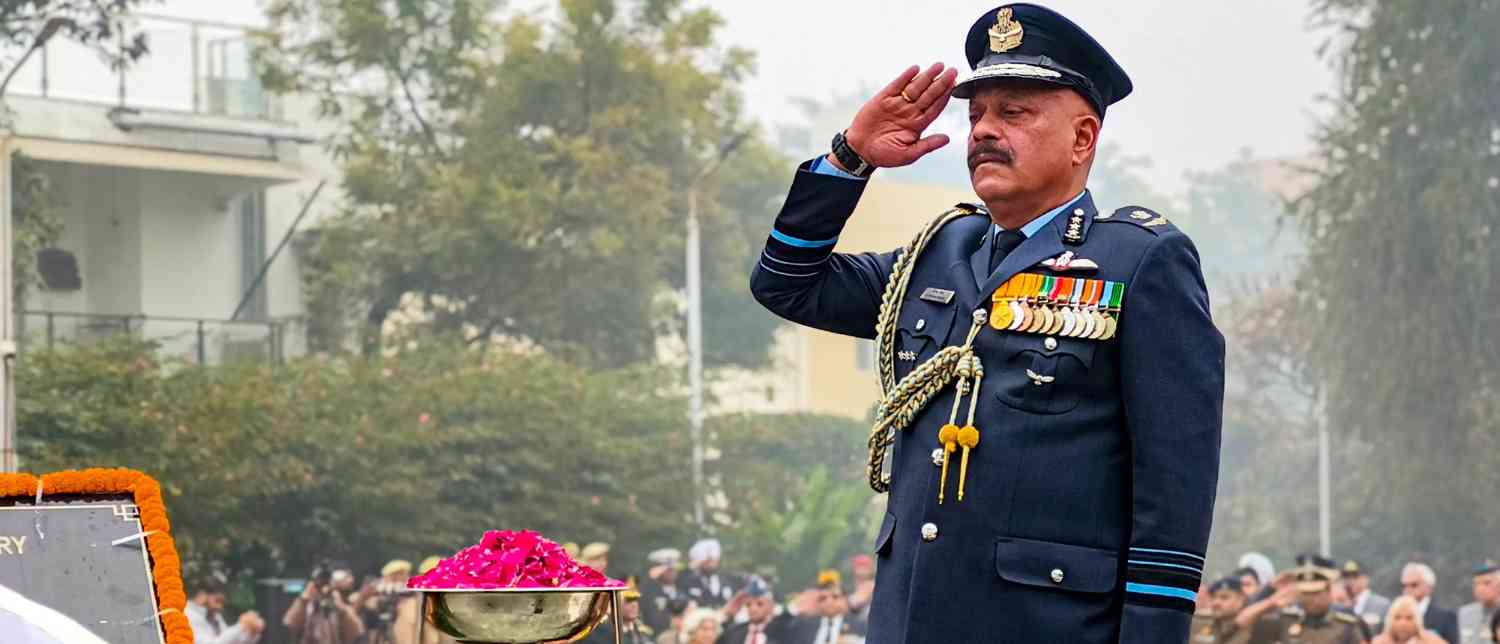
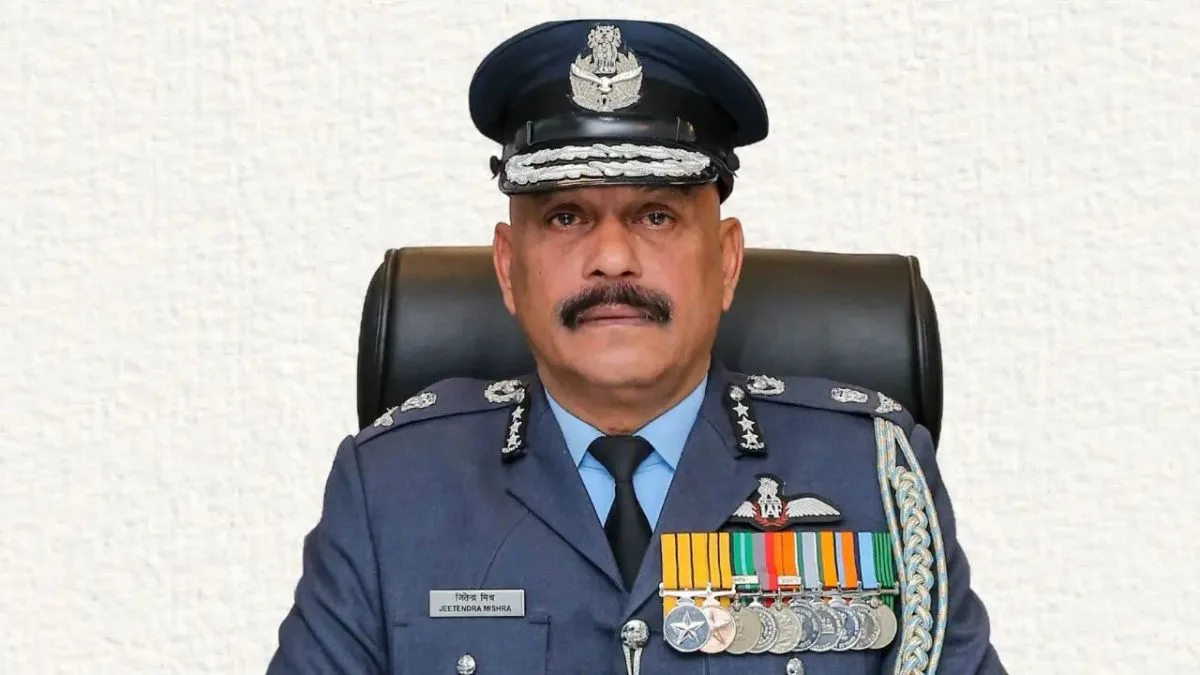
Ayodhya: The Shri Ram Janmabhoomi Teerth Kshetra Trust has appointed retired Air Marshal Jeetendra Mishra as the first full-time Chief Executive Officer (CEO) of the Ram Temple in Ayodhya, bringing a highly decorated former Indian Air Force officer into a role that is expected to professionalise the temple's administration and strengthen its operational and financial systems.
The appointment, announced on Wednesday, September 2, marks a significant change in the way the Trust plans to manage the sprawling religious institution. Mishra, who retired from the Indian Air Force earlier this year after more than 38 years of service, emerged from a highly competitive selection process involving 5,585 applications.
His appointment comes at a particularly important moment for the Ram Temple Trust. The organisation has been undergoing an administrative overhaul following a controversy surrounding the alleged theft and embezzlement of temple donations. Eight people were arrested in connection with the case, while the controversy also led to the resignation of former Trust general secretary Champat Rai.
Who Is Jeetendra Mishra, the New Ram Temple CEO?
Mishra brings an unusual combination of military leadership, operational planning and institutional management to his new assignment.
Originally from Deoria district in Uttar Pradesh, he was commissioned into the Indian Air Force as a fighter pilot in December 1986. Over a career spanning nearly four decades, he held several important operational and command positions before retiring in April-May 2026. He most recently served as Air Officer Commanding-in-Chief of the Western Air Command.
His military career included serving as the commanding officer of a fighter squadron, Chief Test Pilot at the Aircraft and Systems Testing Establishment, Air Officer Commanding of two frontline air bases and Deputy Chief of Integrated Defence Staff (Operations).
Mishra also served as Deputy Chief of Integrated Defence Staff for Doctrine, Organisation and Training and held other senior appointments connected with operational planning and assessment.
His record includes the Sarvottam Yudh Seva Medal, Ati Vishisht Seva Medal and Vishisht Seva Medal, recognising distinguished service in the armed forces.
His experience also extends to some of India's most demanding military operations. During the Kargil conflict, Mishra was associated with efforts to operationalise laser-guided bombs for Mirage 2000 aircraft. Decades later, as head of the Western Air Command, he was in command during Operation Sindoor in May 2025.
That background is now set to be applied to a very different kind of institution.
From Military Command to Temple Administration
Mishra's transition from the armed forces to the Ram Temple is striking not merely because of his military credentials, but because of the scale and complexity of the organisation he is expected to oversee.
The CEO's role will extend well beyond the routine administration of the temple. The Trust's framework envisages the CEO as its highest executive authority, responsible for officers, employees and other functionaries.
The position will involve developing systems, procedures and operational practices suited to the size and nature of the institution. The CEO will also be responsible for strengthening the organisational structure, overseeing ongoing activities and preparing the Trust for its future expansion.
Compliance will be another crucial part of the job. Mishra will be expected to ensure that the Trust's functioning remains aligned with statutory and regulatory requirements as well as the provisions of its Trust Deed.
The responsibilities are particularly significant for an institution that attracts large numbers of devotees and is continuing to expand its infrastructure and operations.
Pilgrim management, security, logistics, finance, engineering, technology and coordination among different stakeholders are among the areas expected to fall within the broader administrative framework of the CEO's office.
Why the CEO Appointment Matters
The creation of a full-time CEO represents a move towards a more structured and professional administrative model for the Ram Temple.
Until now, the Trust's affairs have largely been driven through its trustees and office-bearers. The introduction of a dedicated executive authority creates a clearer distinction between governance by trustees and the day-to-day management of a large and increasingly complex institution.
That distinction could become particularly important as the number of visitors to Ayodhya grows and the temple's operations become more sophisticated.
The CEO will essentially have to bring together multiple moving parts — from crowd management and security to finance, staffing, technology and future development — while maintaining the religious character of the institution.
The Trust has also approved an amendment to its Trust Deed to establish the powers and responsibilities associated with the CEO's position. This is the first amendment to the deed since the Trust was created in February 2020.
How Was Jeetendra Mishra Selected?
Mishra's appointment followed an extensive selection exercise.
A three-member search committee was constituted to identify a suitable candidate. The panel comprised retired Justice Pramod Kohli, retired Lieutenant General Vishnukant Chaturvedi and nuclear scientist Dr Suresh Haware.
The recruitment process began with 5,585 applications. Candidates were assessed through a structured evaluation framework, with leadership, management experience, integrity and institutional vision among the factors considered.
After the initial screening, 108 candidates took part in a further interaction process. The field was eventually reduced to 16 candidates who appeared for in-person interviews in Ayodhya on August 11 and 12.
The committee subsequently submitted a final panel of three candidates to the Trust, which made the final selection.
The process itself signals the importance attached to the new post. Rather than treating the CEO position as a conventional administrative appointment, the Trust sought a professional capable of managing an organisation of substantial scale and national significance.
Three New Trustees Also Inducted
Mishra's appointment was accompanied by changes within the Trust's membership.
Three new trustees — Madan Mohan Pandey, Mahesh Bhagchandka and Dr Nirmala Yadav — have been inducted into the Shri Ram Janmabhoomi Teerth Kshetra Trust.
Pandey is an advocate from Ayodhya who has been associated with legal proceedings connected with the Ram Janmabhoomi matter. Bhagchandka is based in Delhi and has been involved in social and organisational activities. Yadav is a retired teacher.
The new appointments fill vacancies that emerged following recent changes within the Trust, including resignations and the death of an existing member.
The Trust has also reshuffled key office-bearers. Govind Dev Giri, who had been serving as treasurer, has been appointed general secretary, while Bhagchandka has been named treasurer.
Appointment Comes After Donation Controversy
The timing of the restructuring is significant.
The Trust has faced intense scrutiny following allegations concerning the handling of donations and offerings at the Ram Temple. The controversy resulted in arrests and triggered changes at the senior level of the organisation.
The Trust's latest meeting therefore dealt with more than just the appointment of a CEO. Its agenda included issues such as security coordination, appointment of an official spokesperson, audited accounts for 2025-26 and a review of the investigation into the donation-related controversy.
Against this backdrop, Mishra's military background could prove particularly relevant to efforts aimed at establishing stronger systems, accountability and operational discipline.
However, the retired officer has indicated that he does not intend to rush into announcing an immediate blueprint for the temple's administration.
'Another Opportunity to Serve the Nation'
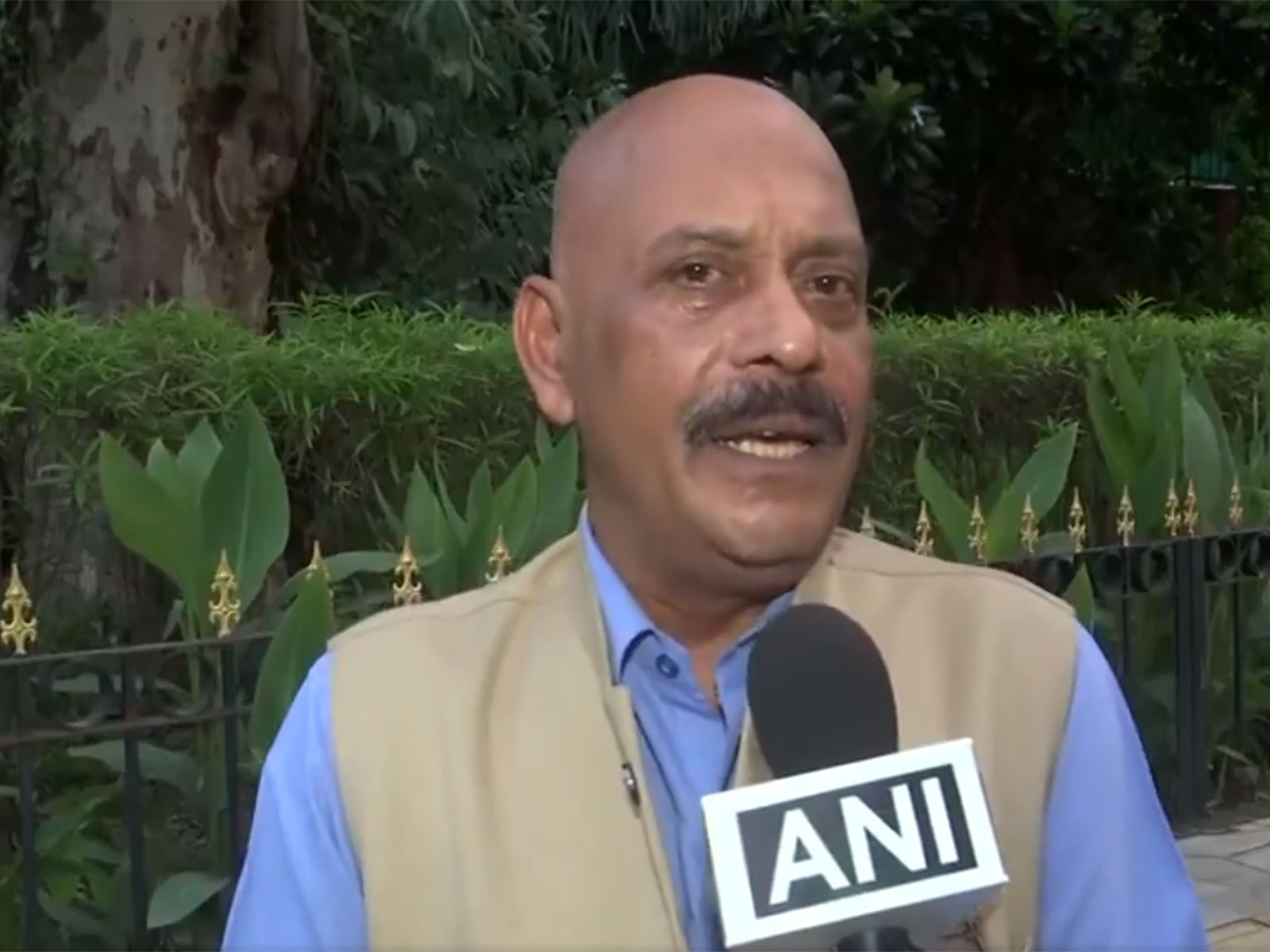
Speaking about his new responsibility, Mishra described the transition from the military to temple administration as a change in uniform, but not in purpose.
He said the new role represented another opportunity to serve the nation. Mishra also indicated that he would first interact with the Trust, understand its expectations and responsibilities, and then formulate his approach after formally taking charge.
He described his selection in deeply personal terms, saying it was "God's order" and that his family was immensely happy about the appointment. He also expressed his intention to seek Lord Ram's strength and guidance as he takes on the new responsibility.
For Mishra, therefore, the move is not simply a second career after retirement. It represents a transition from one form of public service to another.
What Lies Ahead for Ayodhya's Ram Temple?
The real test of Mishra's appointment will begin once he assumes charge.
The Ram Temple is no longer simply a construction project or a place of pilgrimage. Its growing prominence has created the need for systems capable of handling large crowds, complex logistics, security requirements, financial administration and long-term infrastructure planning.
Mishra's task will be to bring these functions under a coherent administrative framework while working within the religious and institutional structure of the Trust.
The creation of the CEO's post, the appointment of new trustees and the reshuffling of senior office-bearers together point towards a broader effort to strengthen the organisation.
For millions of devotees, the expectation will ultimately be straightforward: a temple that is efficiently managed, transparent in its financial affairs, secure for pilgrims and capable of handling its growing responsibilities.
For the newly appointed CEO, that will mean converting nearly four decades of experience in command, planning and organisational discipline into a completely different setting.
From leading India's western air operations to overseeing the administration of one of the country's most prominent religious institutions, Jeetendra Mishra's next mission is likely to be watched as closely as his last.
With input from agencies
Image Source: Multiple agencies
© Copyright 2026. All Rights Reserved. Powered by Vygr Media.