
 By
By 
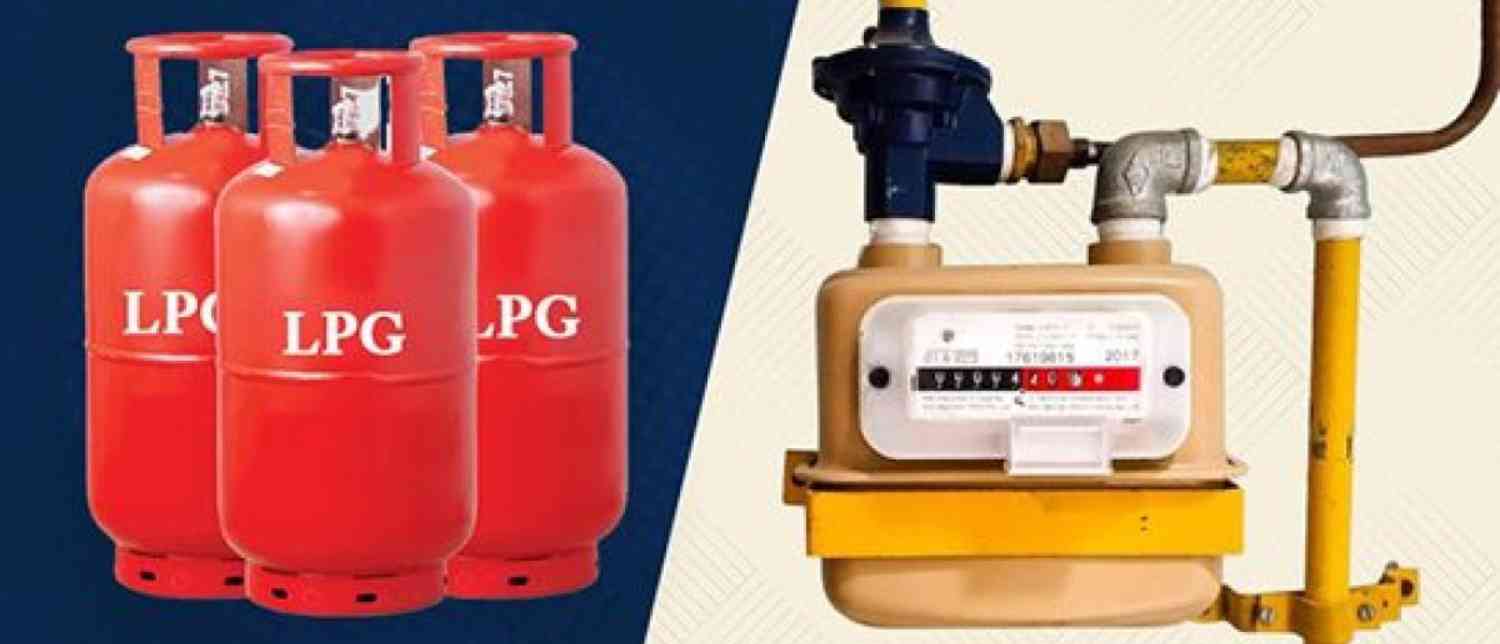
In a sweeping policy move that could fundamentally alter how Indian households cook, the Centre has mandated a transition from liquefied petroleum gas (LPG) cylinders to piped natural gas (PNG) in areas where pipeline infrastructure already exists. The directive, issued by the Ministry of Petroleum and Natural Gas on March 24, 2026, comes with a clear ultimatum: switch to PNG within three months of notification or risk losing LPG supply altogether.
This decision—driven by supply concerns, global energy disruptions, and long-term energy strategy—affects millions of households across urban India and signals a decisive push toward a gas-based economy.
The New Rule: PNG or No LPG
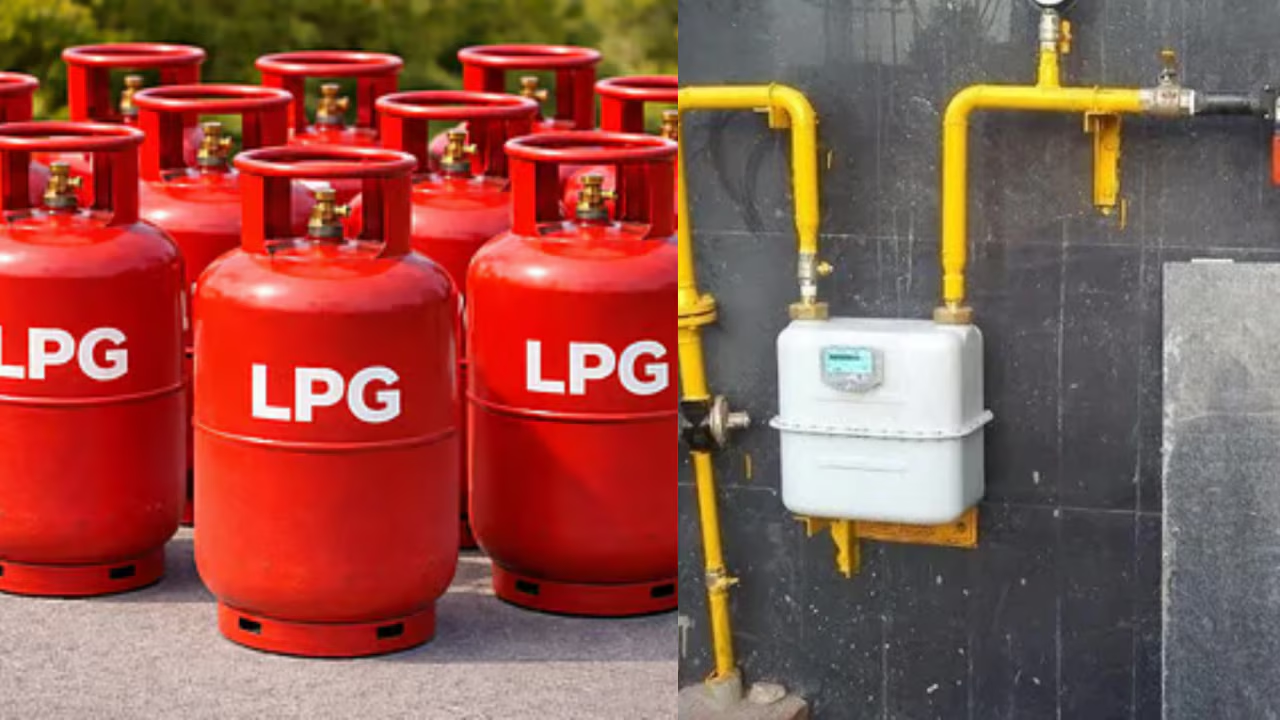
Under the government’s latest order, households located in areas where PNG connections are available will no longer have the option to continue using LPG indefinitely. Once notified, they must transition to PNG within a strict three-month window. Failure to comply will result in discontinuation of LPG cylinder supply.
Officials have clarified that LPG supply “shall cease after three months” in such cases, making the shift effectively mandatory rather than optional.
However, there is a limited exception: households may continue receiving LPG if it is technically infeasible to provide a PNG connection—subject to approval and a no-objection certificate (NOC) from authorities.
The policy applies only to areas with existing pipeline connectivity, meaning rural regions and locations without PNG infrastructure remain unaffected for now.
Why Now? The Trigger Behind the Policy
The timing of the directive is closely tied to global energy disruptions. India is currently grappling with an LPG supply crunch triggered by geopolitical tensions in West Asia, a region that plays a crucial role in global fuel supply chains.
Disruptions in shipments—particularly through critical routes—have exposed India’s vulnerability due to its heavy reliance on imported fuel. This has forced policymakers to rethink domestic fuel allocation and prioritisation.
The government’s strategy is twofold:
-
Reduce dependence on imported LPG
-
Ensure more efficient and secure fuel distribution within the country
By diverting households in PNG-enabled areas away from LPG, authorities aim to free up cylinder supply for regions that have no alternative.
Energy Security at the Core
At the heart of the move lies a broader goal: strengthening India’s energy security.
India imports a significant portion of its LPG requirements, making it susceptible to global price volatility and supply disruptions. The current crisis has reinforced the urgency to diversify energy sources and reduce reliance on a single fuel type.
Switching to PNG—delivered via domestic pipeline networks—offers a more stable and controllable supply mechanism. It also aligns with long-term national goals of building a resilient gas-based economy.
How PNG Differs from LPG
The shift is not merely administrative—it represents a change in how households access cooking fuel.
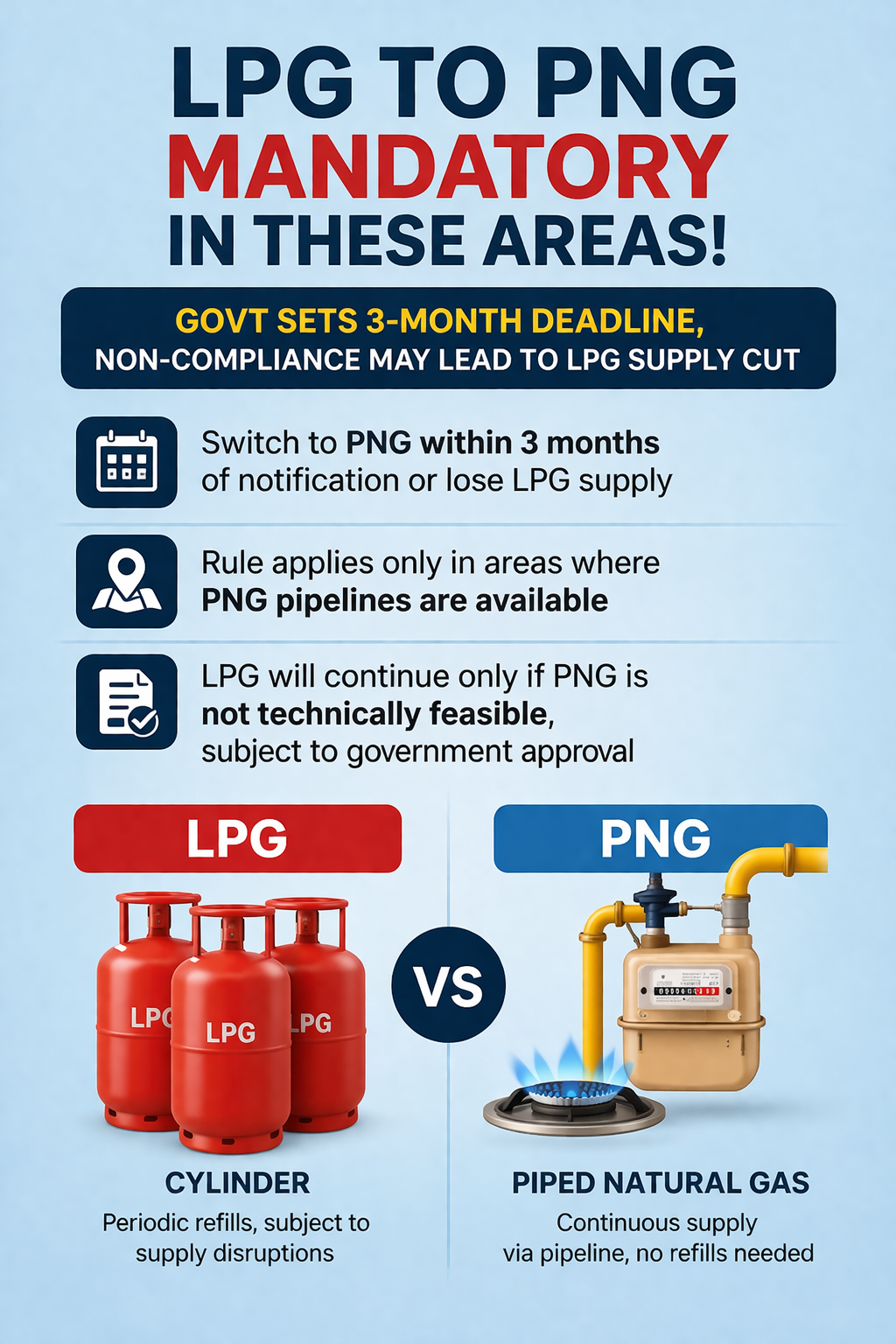
LPG (Liquefied Petroleum Gas):
-
Stored in cylinders
-
Requires periodic booking and delivery
-
Subject to supply chain disruptions
PNG (Piped Natural Gas):
-
Supplied continuously through pipelines
-
No need for refills or bookings
-
Metered usage, similar to electricity or water
PNG’s uninterrupted supply is one of its biggest advantages, eliminating the inconvenience of running out of gas or waiting for deliveries.
Government’s Broader Gas Strategy
The new directive is part of a larger push to expand India’s city gas distribution (CGD) network. Authorities have been accelerating pipeline infrastructure development across urban centres to increase PNG coverage.
The government has also taken administrative steps to support this transition, including:
-
Fast-tracking approvals for pipeline projects
-
Encouraging states to facilitate infrastructure rollout
-
Linking additional LPG allocations to PNG expansion efforts
This indicates that the LPG-to-PNG shift is not a temporary crisis response but a structural policy change.
Who Will Be Affected
The impact will be most visible in urban and semi-urban areas where PNG infrastructure is already in place or nearing completion. Cities with established gas pipeline networks are expected to see the earliest enforcement.
For households in these areas, the transition may soon become unavoidable. Once notified by gas distribution companies or authorities, the countdown to switch begins.
Implementation: How the Transition Will Work
The process for switching to PNG is expected to be straightforward:
-
Households will be notified when PNG becomes available in their locality
-
Applications can be submitted through authorised gas distribution companies
-
Installation of pipelines and meters will follow
-
LPG supply will continue during the transition period (up to three months)
Authorities are also expected to disseminate information through local dealers, online portals, and awareness campaigns to ensure households are prepared.
Challenges and Concerns
While the policy promises long-term benefits, it may also present short-term challenges:
1. Infrastructure Gaps
Not all urban areas currently have seamless PNG connectivity. Delays in pipeline expansion could complicate implementation.
2. Upfront Costs
Households may need to bear installation charges for PNG connections, which could be a barrier for some users.
3. Consumer Resistance
Many consumers are accustomed to LPG cylinders and may be reluctant to switch due to familiarity, perceived safety concerns, or lack of awareness.
4. Administrative Coordination
Ensuring timely notifications, installations, and compliance monitoring across cities will require strong coordination between central agencies, state governments, and gas companies.
Environmental and Efficiency Benefits
Despite these challenges, PNG offers several advantages that align with India’s sustainability goals:
-
Cleaner fuel: Natural gas burns more cleanly than LPG, producing fewer emissions
-
Lower carbon footprint: Supports India’s climate commitments
-
Efficient distribution: Pipeline delivery reduces logistics costs and emissions
The shift is expected to contribute to cleaner urban air and improved public health outcomes over time.
What Happens If You Don’t Switch?
The consequences of non-compliance are clear: LPG supply will be discontinued after the three-month deadline in areas where PNG is available.
This effectively removes the option of continuing with LPG in such regions, making the transition mandatory for most households.
A Step Toward a Gas-Based Economy
India has been steadily working toward increasing the share of natural gas in its energy mix. The LPG-to-PNG transition is a critical step in that direction.
By shifting urban households to PNG, the government can:
-
Optimise LPG distribution for underserved regions
-
Reduce import dependency
-
Strengthen domestic energy infrastructure
-
Improve overall efficiency of fuel usage
The Bigger Picture
This move reflects a broader transformation in India’s energy policy—one that prioritises resilience, sustainability, and efficiency.
While the immediate trigger may be the ongoing global energy crisis, the long-term objective is clear: build a diversified and secure energy ecosystem that can withstand external shocks.
The Centre’s directive to phase out LPG in PNG-enabled areas marks a significant turning point in India’s energy landscape. With a strict three-month deadline and clear consequences for non-compliance, the policy leaves little room for delay.
For millions of households, the message is straightforward: if piped gas is available, the future of cooking fuel lies in PNG—not LPG cylinders.
As infrastructure expands and awareness grows, the success of this transition will depend on how smoothly authorities can balance urgency with accessibility—ensuring that no household is left without a reliable cooking fuel in the process.
With inputs from agencies
Image Source: Multiple agencies
© Copyright 2025. All Rights Reserved. Powered by Vygr Media.