 By

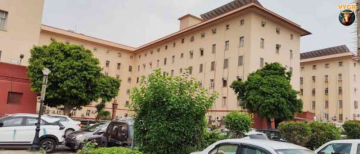
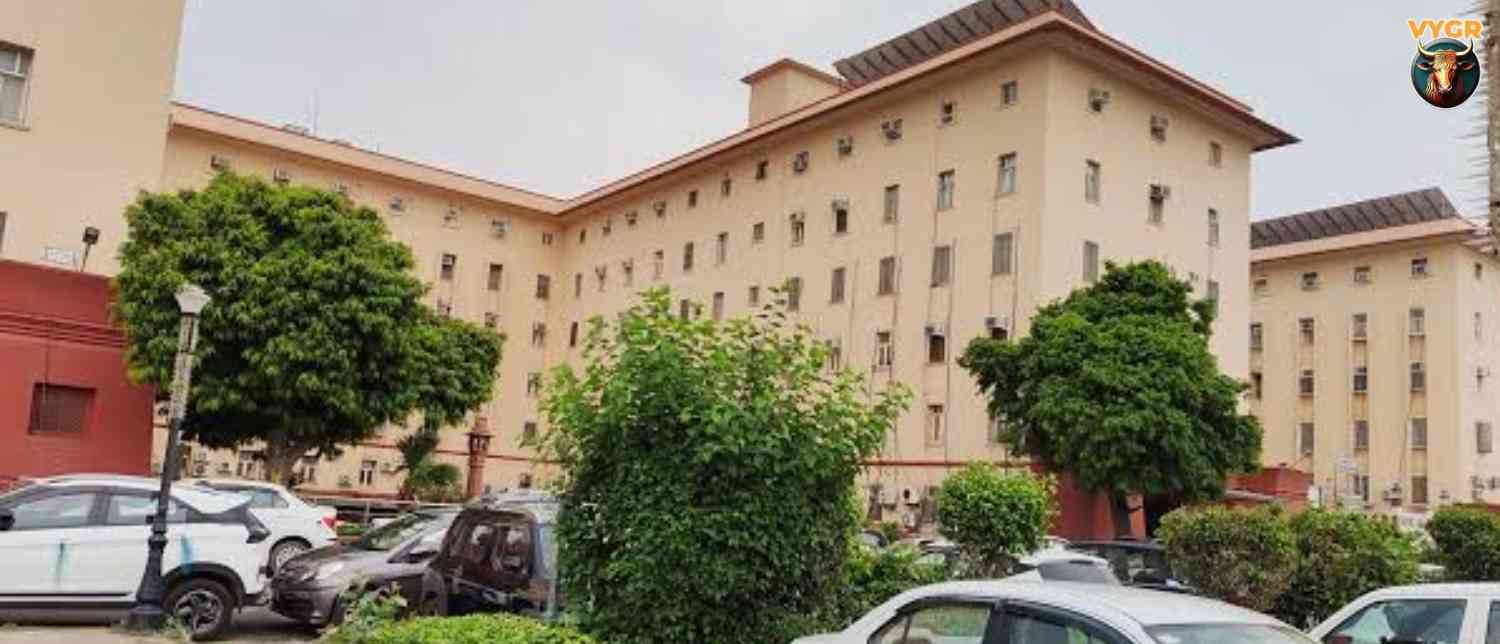
New Delhi: On Monday, the Delhi High Court put a plain question to the Centre: Is there any rule that stops a government complex from housing a place of prayer? The question came after the Union government told the court that the Qadeemi Masjid, a mosque inside the Krishi Bhawan compound, has to go to make way for the Central Vista redevelopment.
In a status report filed through the Land and Development Office (L&DO), the government argued that a permanent religious structure doesn't belong inside a central office complex, because such premises are secular. Justice Anish Dayal decided nothing on Monday. He wanted to know what that argument means in practice, gave the mosque's caretaking committee time to reply, and listed the matter for November 23.
The case is Qadeemi Masjid through its Caretaking Committee v. Union of India and Others (W.P.(C) 13664/2026). The committee says it isn't trying to block the redevelopment of Krishi Bhawan and Shastri Bhawan. What it wants is for the mosque to stay or, failing that, a proper place to pray close by.
What the Centre told the court
The status report rests on a handful of arguments. The first is ownership. The mosque sits on Plot No. 120, Dr. Rajendra Prasad Road, land that belongs to the Government of India, and the report says the caretaking committee only ever had permissive possession under a 1940 agreement.
The second is the project itself. The report calls the redevelopment of Common Central Secretariat (CCS) Buildings 4 and 5 a matter of paramount national importance and says the mosque falls on the site, so it has to be removed.
The third is the secular-character argument that has drawn most of the attention. Krishi Bhawan and the wider Central Secretariat complex exist only for government and public-service work, the report says, so keeping a permanent religious structure there, or even asking for one, is not permissible. Public land in a central administrative zone can't carry a permanent religious reservation, it adds, and setting space aside would clash with the approved master plan.
On the constitutional question, the L&DO says Article 25 isn't violated. In its view, nobody can insist on praying at one particular spot on government land that they hold only by permission.
Finally, the government says worshippers won't be stranded. Shahi Masjid Zabta Ganj, near India Gate, is within two kilometres of Krishi Bhawan and fully functional. The report concludes that, as owner of the land, the government can't be forced to set aside separate space for the mosque inside the Krishi Bhawan compound or the Central Secretariat complex.
What the Delhi High Court asked
Justice Dayal's questions weren't about the redevelopment itself. They went at the thinking behind the government's stand.
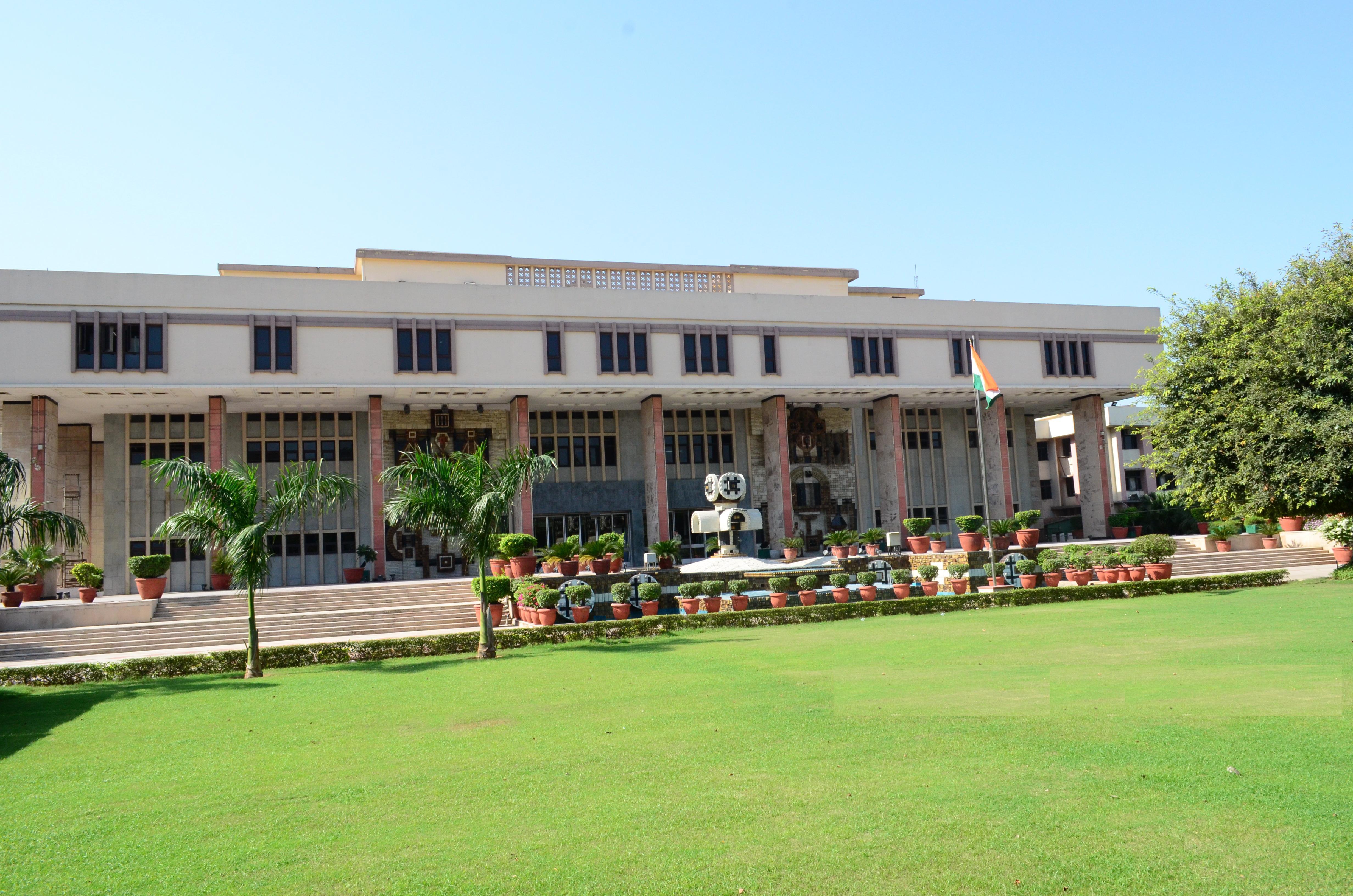
He asked whether any rule actually prohibits religious structures or prayer facilities inside government complexes. He then asked what the government's position would mean for other communities, in effect, whether it rules out a prayer space for every community in every government premises. If that is the line, he indicated, there would have to be a rule that says so.
The questions matter because the government's case leans on a general principle. If it can point to a written rule or policy, that principle stands on firmer ground. If it can't, the court may end up looking harder at the facts of this particular mosque: how old it is, its Waqf status, and the decades of use by government staff. For now, nothing has been decided.
Monday's listing followed the court's order of September 17, when Justice Dayal issued notice to the Union of India, the New Delhi Municipal Council (NDMC) and the Delhi Waqf Board and asked for responses within four weeks. That was a notice-stage order, and no issue was settled.
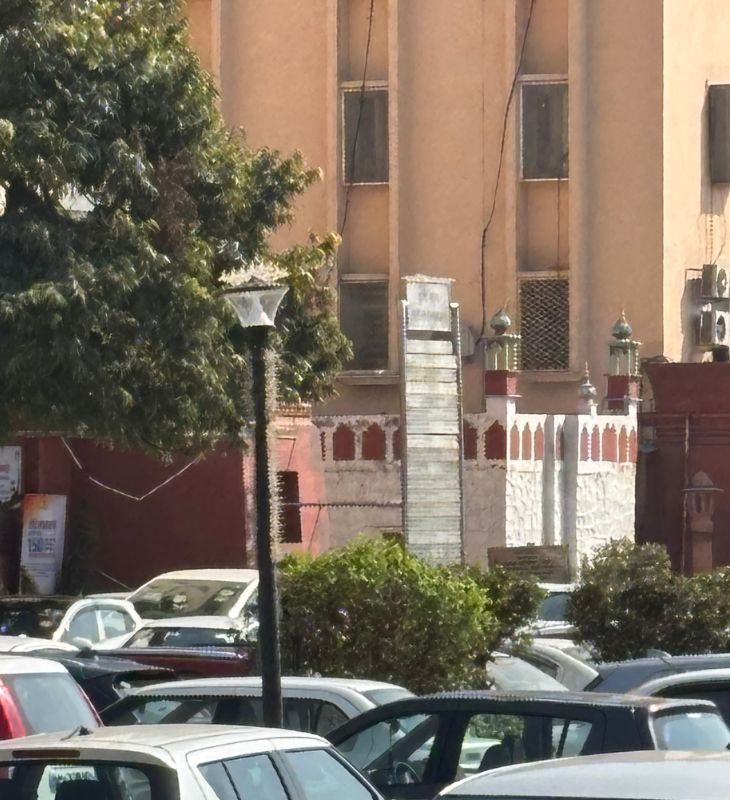
The mosque's case
The caretaking committee moved the High Court in September, with Senior Advocate Salman Khurshid appearing for it. Its case is built on history. The petitioners say the mosque is more than a hundred years old, older than the government offices around it, and point to records going back to 1945. They add that the Delhi Waqf Board notified it as Waqf property in 1970 and recorded its antiquity at the time.
When Krishi Bhawan, Shastri Bhawan and the neighbouring offices came up in the 1950s and 1960s, the mosque stayed where it was. Muslim employees working in those offices have used it for prayers ever since.
The committee accepts that the land underneath belongs to the government and says it doesn't want the redevelopment delayed. It asks the court to consider whether the mosque can be kept where it stands. If that isn't possible, it wants a reasonable and adequate alternative nearby, or a prayer facility in the new buildings, so that worship isn't cut off. It relies on Article 25 and also asks that the property not be demolished or disturbed without a fair, transparent and reasoned process.
Background: how the dispute reached court
The Central Vista project is rebuilding the central government district in New Delhi, and the plan involves pulling down around ten existing buildings, Krishi Bhawan and Shastri Bhawan among them. In 2021, the Delhi High Court refused to halt the work, noting that the Supreme Court had already upheld the project. The mosque now sits where CCS Buildings 4 and 5 are planned.
|
Date |
Event |
|---|---|
|
Nov 2, 2026 |
Centre's status report is before the court. Justice Dayal asks whether any rule bars prayer spaces in government complexes. Next hearing Nov 23. |
|
Sep 17, 2026 |
Justice Dayal issues notice to the Centre, NDMC and Delhi Waqf Board and asks for responses in four weeks. |
|
Dec 2021 |
Delhi Waqf Board moves the High Court to protect six mosques near Central Vista, including Qadeemi Masjid. Solicitor General Tushar Mehta tells the court nothing is happening to these properties. |
|
1950s-60s |
Krishi Bhawan, Shastri Bhawan and nearby offices are built around the mosque. |
|
1970 |
Delhi Waqf Board notifies the property as Waqf property. |
|
1945 |
Earliest record of the mosque cited by the petitioners. |
|
1940 |
Date of the agreement under which, per the Centre, the committee holds permissive possession. |
Against the 2021 assurance, the latest status report is a firm statement that this mosque must be removed.
The legal questions in play
Three things pull against each other here. One is the government's right to use its own land for a project it calls nationally important. Another is Article 25, which protects the freedom to practise religion. The third is the status of a mosque that the Waqf Board has recorded as old Waqf property but that stands on government land under a permissive arrangement.
The government says Article 25 gives nobody the right to pray at one fixed place on government land. The petitioners aren't asking the court to stop the project. They want a sensible arrangement so that people who have prayed there for years aren't left with nowhere to go.
Courts have dealt with similar fights before. In 2017 the Allahabad High Court held that no religious activity can be allowed on High Court premises and directed the Waqf to vacate the mosque there; the Supreme Court later ordered status quo on that direction. In Delhi, when NDMC proposed removing the Sunehri Bagh Masjid in 2023, the High Court said it had to be satisfied that all religious structures are treated equally. NDMC later said its notice was only procedural.
Neither matter decides the Krishi Bhawan case, whose facts are different. They do show that courts look closely at how the state treats religious structures on public land, which is the thread behind Justice Dayal's question about written rules.
What happens next
The committee will file its reply to the Centre's status report, and the court will take up the case again on November 23. Expect the Centre to be pressed on whether a rule or policy supports its blanket stand, and on whether an alternative prayer space within the new complex is ruled out. The court has passed no direction on demolition. This report will need updating after the next hearing.
Frequently asked questions
What is the Qadeemi Masjid case about? The mosque's caretaking committee has asked the Delhi High Court to protect the mosque inside the Krishi Bhawan compound, or to secure a nearby prayer facility, as the Central Vista redevelopment goes ahead.
What did the Centre say? Through the L&DO, it said the mosque must be removed, that a permanent religious structure is incompatible with the secular character of government property, and that Shahi Masjid Zabta Ganj is within two kilometres.
What did the Delhi High Court ask? Justice Anish Dayal asked whether any rules bar religious structures or prayer facilities in government complexes, and what the Centre's stand means for other communities.
Has the court ordered the mosque to be removed? No. The court has passed no ruling on the merits. The case is listed for November 23.
Which judge is hearing the case? Justice Anish Dayal of the Delhi High Court.
© Copyright 2026. All Rights Reserved. Powered by Vygr Media.