 By

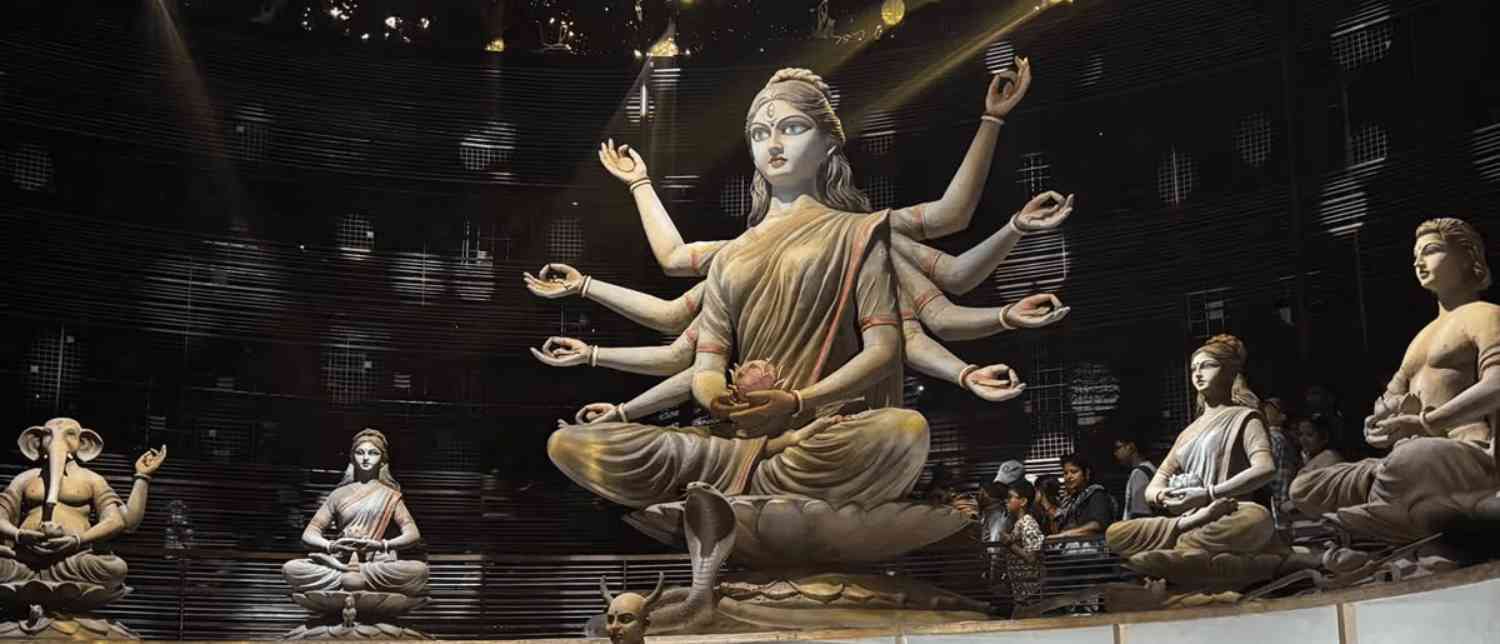
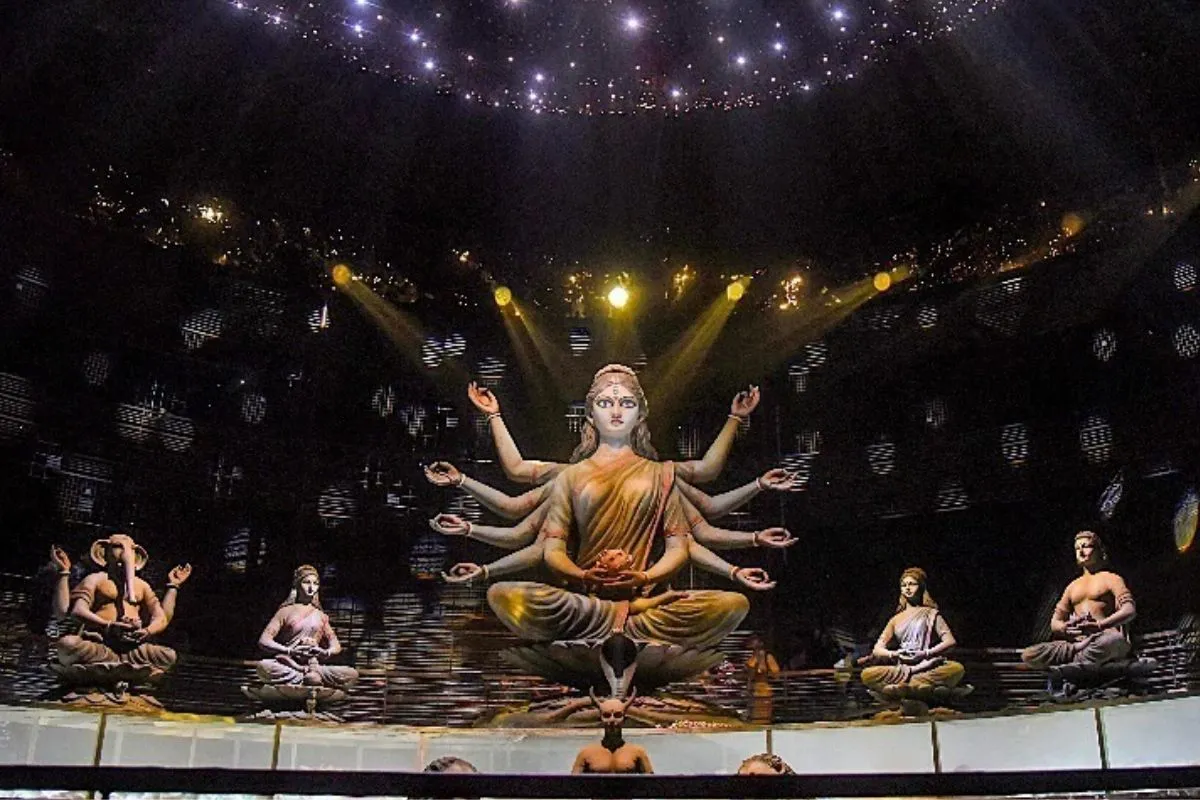
Kolkata’s Durga Puja is more than a religious festival. It is an emotion, a cultural inheritance and a celebration that brings together people from different communities, generations and walks of life. The city comes alive with artistic pandals, illuminated streets, traditional rituals, music and the unmistakable excitement of pandal-hopping. For millions, Pujo represents joy, belonging and the freedom to celebrate Bengal’s distinctive identity.
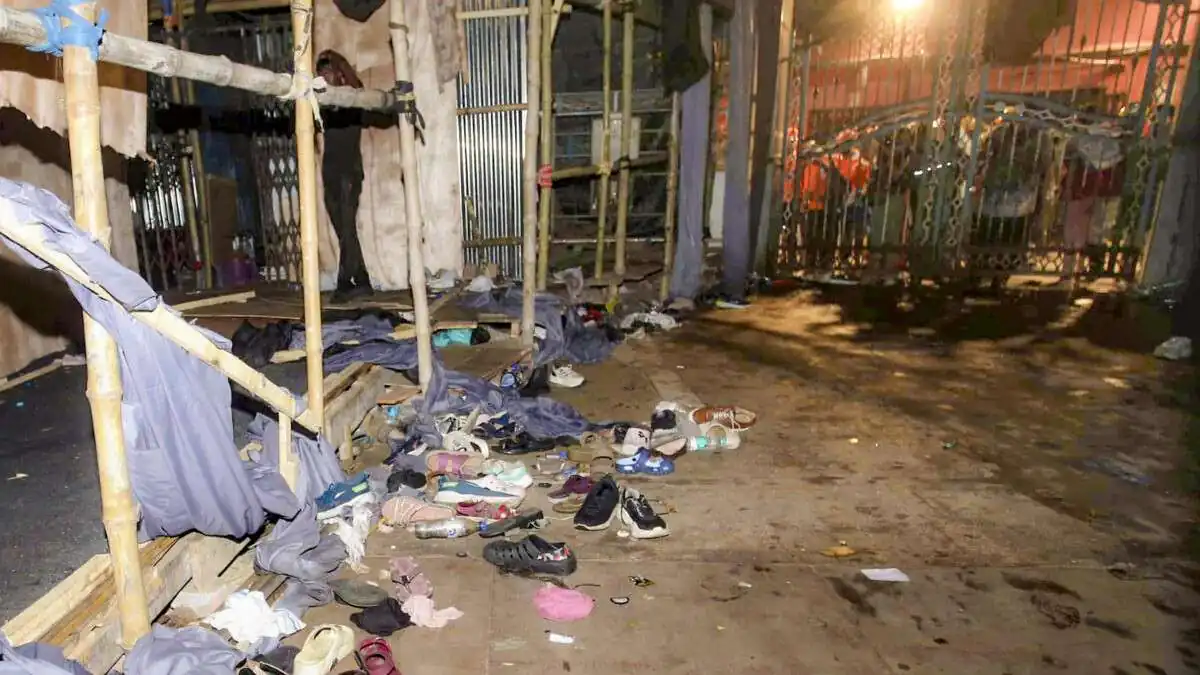
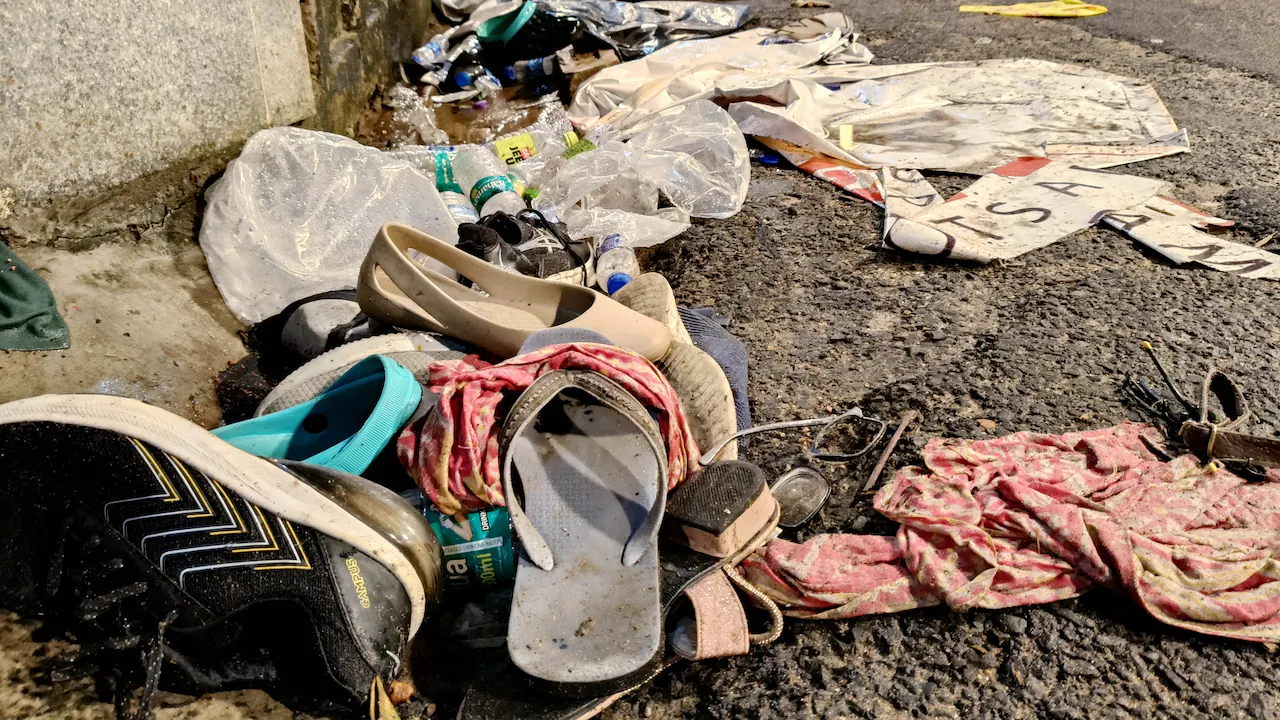
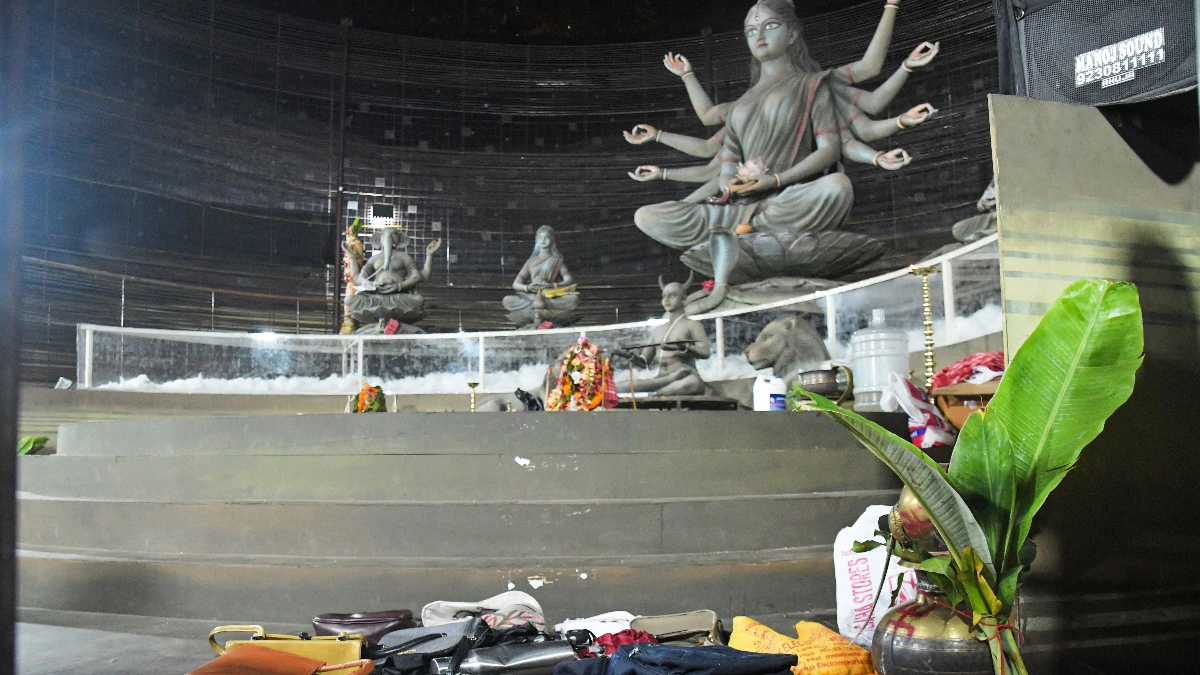
But the tragedy at the Chorbagan Sarbojanin Durga Puja pandal in north Kolkata on October 17, 2026, has cast a devastating shadow over that celebration. At least 19 people died and 25 others were reported injured after a crowd surge during heavy rain turned a festive gathering into a scene of panic and loss.
The incident has raised uncomfortable but necessary questions about the safety of Durga Puja pandals, the preparedness of the police and civic administration, the responsibilities of organisers and the political priorities of West Bengal’s new government.
A festival that celebrates the triumph of good over evil should never become a setting in which preventable failures cost innocent people their lives. The Kolkata Durga Puja stampede is not simply a local accident to be investigated and forgotten. It is a warning about the consequences of treating public safety as an administrative formality rather than an essential public responsibility.
The immediate priority must remain the injured, the bereaved families and an impartial investigation. But genuine respect for the dead also requires a wider reckoning: why were the risks not adequately controlled, and what must change before another crowd disaster occurs?
Chorbagan Stampede: A Disaster That Demands More Than Condolences
The circumstances surrounding the Chorbagan tragedy point towards a dangerous combination of overcrowding, sudden weather changes and possible shortcomings in crowd management. Heavy rain and lightning reportedly prompted people waiting outside the pandal to move towards shelter, while those already inside struggled to leave. The resulting surge in a confined space created conditions in which people could fall, become trapped and be crushed by the pressure of the crowd.
Reports also raised questions about the narrow approach roads, entry and exit arrangements, the availability of police personnel and volunteers, and the possibility of structural problems at the venue. The precise sequence of events and the extent to which each factor contributed must be established through evidence rather than speculation.
Yet the larger lesson is already clear: crowd safety cannot depend on favourable weather, the patience of visitors or the hope that experienced organisers will somehow manage a crisis.
A sudden downpour is not an unimaginable event during a large public gathering. Nor is it unusual for thousands of people to converge on a popular Durga Puja pandal within a short period. These are foreseeable risks, and foreseeable risks require advance planning.
If rain sends people rushing towards a narrow entrance, there must be a contingency plan to prevent dangerous congestion. If a pandal reaches its safe capacity, organisers must be able to stop further entry. If the crowd begins moving against itself, trained personnel must know how to respond without creating additional panic.
The investigation must establish whether such precautions existed, whether they were followed and whether the authorities acted promptly when conditions deteriorated.
There is a difference between an unfortunate event and a tragedy made worse by preventable failures. Determining which factors were involved in Chorbagan is precisely why the inquiry must be thorough, transparent and free from political pressure.
Kolkata Knows Crowd Management. Why Was It Not Enough?
One of the most troubling aspects of the incident is that Kolkata is hardly inexperienced in managing large crowds.
Every year, Durga Puja draws enormous numbers of visitors to the city. Similar challenges arise during Christmas celebrations on Park Street, major cricket matches, football derbies and other public events. Police personnel, traffic teams, civic workers and community volunteers routinely work together to manage pedestrian movement and keep busy areas accessible.
Barricades, designated routes, public announcements, CCTV cameras and other monitoring arrangements are familiar features of major festival management.
Yet experience can create a dangerous illusion of control. When an event passes safely year after year, organisers and officials may begin to assume that established arrangements will always work. Success becomes a reason to trust the system rather than examine its weaknesses.
That assumption is especially dangerous during Durga Puja, when crowd volumes can change rapidly and the popularity of a particular pandal may exceed expectations.
The Chorbagan incident has also revived memories of a crowd-related episode at Deshapriya Park in 2015, when an overwhelming rush around a major Durga Puja attraction resulted in injuries. The comparison raises a painful question: have lessons from previous incidents been translated into enforceable safety practices, or have they remained warnings that are remembered only when disaster strikes?
Kolkata's crowded neighbourhoods present a distinctive challenge. In parts of north Kolkata, old buildings, narrow lanes, overhead electrical wires and limited road access complicate emergency movement. Such neighbourhoods possess immense historical and cultural value, but their physical limitations cannot be ignored when thousands of people gather in a small area.
A lane that accommodates ordinary neighbourhood traffic may be entirely unsuitable as the main approach to a heavily visited pandal. An attractive entrance may also become a dangerous bottleneck if the exit route is inadequate.
The answer is not to destroy the character of traditional neighbourhood celebrations. It is to recognise their limitations and design crowd management around them.
Every major pandal should undergo a realistic assessment of its maximum safe capacity, access routes, emergency exits and evacuation arrangements. The number of visitors a venue can safely accommodate must take precedence over the number it hopes to attract.
Durga Puja Safety Must Come Before Spectacle
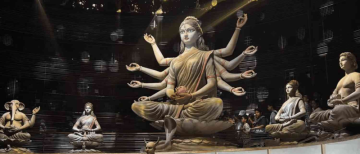
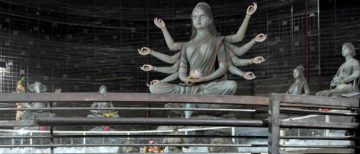
The growing popularity of elaborate Durga Puja themes has transformed the festival into a major cultural attraction. Creative installations, striking idols and innovative designs draw visitors from across Kolkata and beyond. For organisers, recognition and large crowds can be a source of pride.
But when spectacle becomes the dominant measure of success, safety can slip into the background.
A visually impressive pandal is not necessarily a safe one. A long queue does not prove that crowd management is working. A large volunteer team does not guarantee that its members are trained to handle emergencies. And a police clearance should never be treated as a permanent certificate of safety regardless of how conditions change.
The distinction between permission and preparedness is crucial. Permissions establish whether an event meets specified requirements at a particular stage. Preparedness determines whether organisers can manage the real conditions that emerge during the event.
Crowd management must therefore be dynamic. Authorities need to monitor visitor numbers, identify emerging bottlenecks and intervene before congestion becomes dangerous. Organisers must maintain clear communication with the police and ensure that emergency access remains unobstructed.
Entry and exit routes should be physically separated wherever possible. Emergency lighting and clearly visible directional signs must remain functional. First-aid teams, ambulances and trained responders should be positioned according to the venue's risk assessment rather than convenience.
There must also be clear procedures for stopping entry, temporarily suspending darshan and safely dispersing visitors when a venue becomes overcrowded. Such decisions may disappoint devotees, but temporary inconvenience is infinitely preferable to a mass-casualty emergency.
Most importantly, safety standards must apply equally to established community committees, politically influential organisers and newly formed festival bodies. Experience, popularity and political connections must not become substitutes for compliance.
Suvendu Adhikari's First Major Test Is Accountability
The Chorbagan stampede presents a defining challenge for Chief Minister Suvendu Adhikari and his government. The administration has announced an inquiry led by a sitting judge of the Calcutta High Court, with an investigation intended to examine the circumstances of the incident and identify responsibility.
Authorities have also detained people for questioning, collected CCTV footage and announced compensation for victims' families and those injured. These steps matter, particularly when families are facing sudden medical expenses, funeral costs and the loss of their primary earners.
However, the government's response will ultimately be judged by what the investigation establishes and what action follows.
The state government has a responsibility to ensure that the inquiry examines the conduct of everyone involved, including the puja committee, private security personnel, temporary workers, police officers and other officials responsible for crowd safety. No individual should be presumed guilty before the evidence is assessed, but no one should be shielded because of political influence or administrative rank.
The use of CCTV footage, witness statements, site inspections and other relevant evidence will be essential in reconstructing the sequence of events. Investigators must determine how the crowd built up, whether warnings were received, what arrangements were in place and how the response unfolded.
The government's credibility will depend on whether its promises of impartiality translate into verifiable findings and meaningful action.
This responsibility is particularly significant because the new administration has sought to reshape aspects of the state's Durga Puja landscape, including the management of some festival committees. Changes in political influence over cultural institutions may be part of ordinary political life, but they also create a responsibility to demonstrate that public safety decisions are guided by professional standards rather than partisan considerations.
If organisers associated with the ruling party are found to have failed in their duties, the government must respond with the same seriousness it would demand in a case involving its political opponents.
The opposite is equally true: allegations against organisers or officials must be tested against evidence, not political narratives.
The tragedy should not become an opportunity for the ruling party and opposition to trade accusations while the underlying failures remain unaddressed. Families deserve answers, and the public deserves a credible account of what happened.
Compensation can provide essential financial assistance. It cannot replace a loved one, reverse a preventable failure or absolve the administration of its duty to improve public safety.
Amit Shah, BJP's Bengal Strategy and the Limits of Political Symbolism
The Chorbagan tragedy unfolded at a politically significant moment. Union Home Minister Amit Shah was in Kolkata as the BJP sought to deepen its connection with Bengal's cultural identity through Durga Puja celebrations and visits to prominent religious and cultural institutions.
For the BJP, engaging with Bengali traditions is an important part of its broader political project in West Bengal. Durga Puja provides a powerful opportunity to connect with people through shared cultural experiences rather than electoral messaging alone.
But Bengal's cultural identity cannot be understood through religious symbolism alone. Its traditions have been shaped by literature, philosophy, social reform, artistic expression and a long history of public participation. The evolution of Durga Puja itself—from celebrations associated with wealthy households to community-organised festivities—reflects a broader democratisation of cultural life.
The festival belongs to the people, not to a political party.
That principle becomes particularly important when a government seeks to associate itself closely with cultural celebrations. Public engagement during a festival is meaningful, but it must be accompanied by a commitment to the welfare of the people who participate in it.
The cancellation of scheduled engagements and the visit to injured victims following the tragedy were appropriate responses to an emergency. Yet political leaders must recognise that their responsibility extends beyond expressions of grief and symbolic gestures.
For a government that has sought to establish its cultural credentials in Bengal, the more consequential demonstration of leadership would be to make public celebrations safer, strengthen accountability and ensure that every community receives fair and professional administrative support.
Political outreach can build visibility. Effective governance builds trust.
The tragedy also underscores why Bengal's pluralistic traditions should not be reduced to a narrow contest over religious identity. Durga Puja is a Hindu festival with a cultural reach that extends far beyond ritual observance. People from different faiths participate in its public celebrations, admire its art and share in the city's festive atmosphere.
Protecting that openness requires more than speeches about tradition. It requires public spaces in which everyone can celebrate without fear.
Beyond Religion: The Moral Meaning of Durga Puja
There is a deeper contradiction at the heart of the Chorbagan tragedy. Durga Puja celebrates the victory of good over evil and the restoration of order against forces that threaten society. Yet a celebration devoted to faith and hope became a setting for devastating loss.
The answer is not to question the faith of devotees or diminish the importance of religious celebrations. It is to recognise that religious devotion and civic responsibility must go hand in hand.
Faith does not remove the need for emergency exits. Devotion does not make overcrowded spaces safe. And elaborate rituals cannot compensate for the absence of trained personnel, clear communication or responsible planning.
The most meaningful way to honour the spirit of the festival is to protect the people who come together to celebrate it.
That means placing human life above commercial interests, competition between pandals and the desire to attract record-breaking crowds. It means ensuring that the elderly, children, people with disabilities and other vulnerable visitors can access public celebrations without being exposed to avoidable risks.
It also means refusing to treat safety measures as obstacles to religious freedom. Proper crowd management does not diminish a festival; it allows the festival to take place without putting lives in danger.
The families who lost loved ones at Chorbagan should not have to accept that the tragedy was simply an unfortunate consequence of attending a popular celebration. They deserve a clear explanation of the failures, if any, that contributed to the disaster and a credible assurance that corrective measures will follow.
What Must Change to Prevent Another Kolkata Stampede?
The immediate investigation must lead to a wider reform of crowd management during Durga Puja and other major public gatherings.
First, every high-footfall pandal should have a publicly documented safety plan based on its location, expected attendance and physical capacity. Plans must include evacuation routes, emergency access, weather contingencies and procedures for controlling entry.
Second, police and organisers must conduct joint inspections before the festival begins and continue monitoring conditions throughout the celebrations. A clearance granted before an event cannot replace supervision when visitor numbers increase or arrangements change.
Third, crowd monitoring should be supported by trained personnel who can recognise dangerous pressure, identify bottlenecks and communicate clearly with visitors. Technology such as CCTV and drones can assist, but it cannot substitute for competent decision-making on the ground.
Fourth, organisers must establish clear protocols for heavy rain, sudden surges and other emergencies. Visitors should never be left to improvise their own escape routes during a crisis.
Fifth, the government must introduce meaningful consequences for proven violations of safety requirements. Inspections should be documented, deficiencies corrected promptly and repeat violations treated seriously. Accountability must extend to both event organisers and public officials where evidence establishes negligence.
Finally, the administration should publish the findings of the Chorbagan inquiry to the extent legally permissible and explain which recommendations will be implemented, by whom and within what time frame. A report that identifies mistakes but produces no institutional change would be another failure.
These measures need not undermine the creativity or community spirit that make Kolkata's Durga Puja distinctive. On the contrary, they can protect the festival's future by ensuring that its success is not measured in crowd numbers alone.
Kolkata Must Remember the Lives Behind the Numbers
The deaths at the Chorbagan Durga Puja pandal have turned a moment of collective celebration into a period of mourning. Nineteen lives lost, dozens injured and families left to confront unimaginable grief should be enough to force a serious reassessment of how public festivals are organised and supervised.
The real test for Suvendu Adhikari's government is whether it can move beyond immediate announcements and deliver a credible investigation, impartial accountability and lasting improvements in crowd safety. The same standard should apply to every political party, police authority and festival committee involved in organising large public events.
Amit Shah's cultural outreach, the BJP's political ambitions in Bengal and the government's administrative response may all remain subjects of public debate. But none should overshadow the fundamental issue: people must be able to participate in a religious festival without being exposed to preventable danger.
Kolkata has demonstrated its ability to manage enormous crowds for decades. The Chorbagan tragedy shows why that experience must never become an excuse for complacency.
Durga Puja is a celebration of faith, creativity, community and the triumph of good. Protecting those values requires more than devotion or political symbolism. It requires planning, discipline, transparency and the courage to hold the responsible accountable.
The ultimate measure of a successful Durga Puja should not be the size of its crowds, the grandeur of its pandals or the prominence of the leaders who visit them. It should be that people arrive safely, celebrate freely and return home to their families.
Kolkata must ensure that the Chorbagan stampede becomes a turning point in public safety, not another tragedy remembered only until the next festival begins.
© Copyright 2026. All Rights Reserved. Powered by Vygr Media.