 By
By 
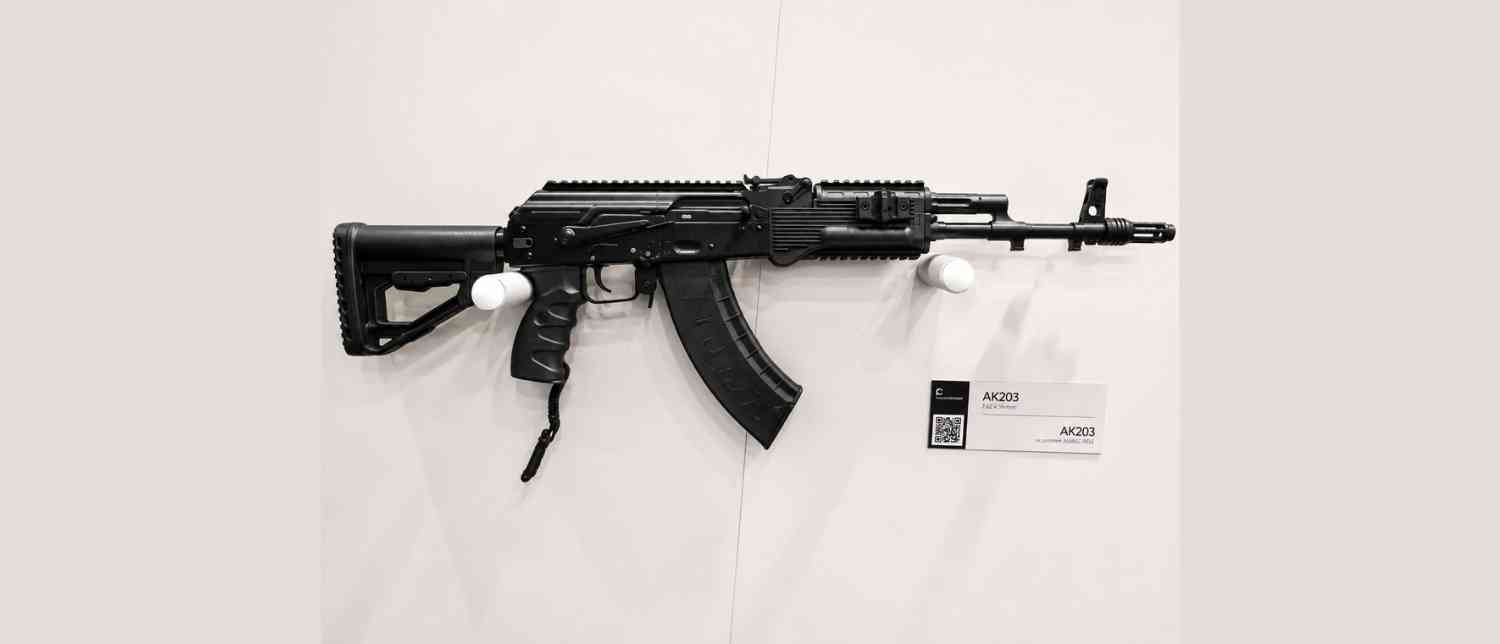
India has achieved a significant milestone in its push for defence self-reliance with the successful test-firing of the first fully indigenous AK-203 assault rifle, named ‘Sher’, at the Korwa Ordnance Factory in Amethi, Uttar Pradesh.
What makes the development notable is not simply that the rifle was assembled in India. Every component and input material used in the latest AK-203 prototype has been sourced from Indian industry, marking a major shift from the programme’s earlier dependence on imported components.
The achievement comes as India prepares to move towards large-scale production of the AK-203 for the armed forces. The Indian Army is expected to begin trials of the fully indigenous version in September 2026. If the rifle clears those evaluations, the programme could enter a new phase in which a Russian-origin platform is manufactured entirely through an Indian supply chain.
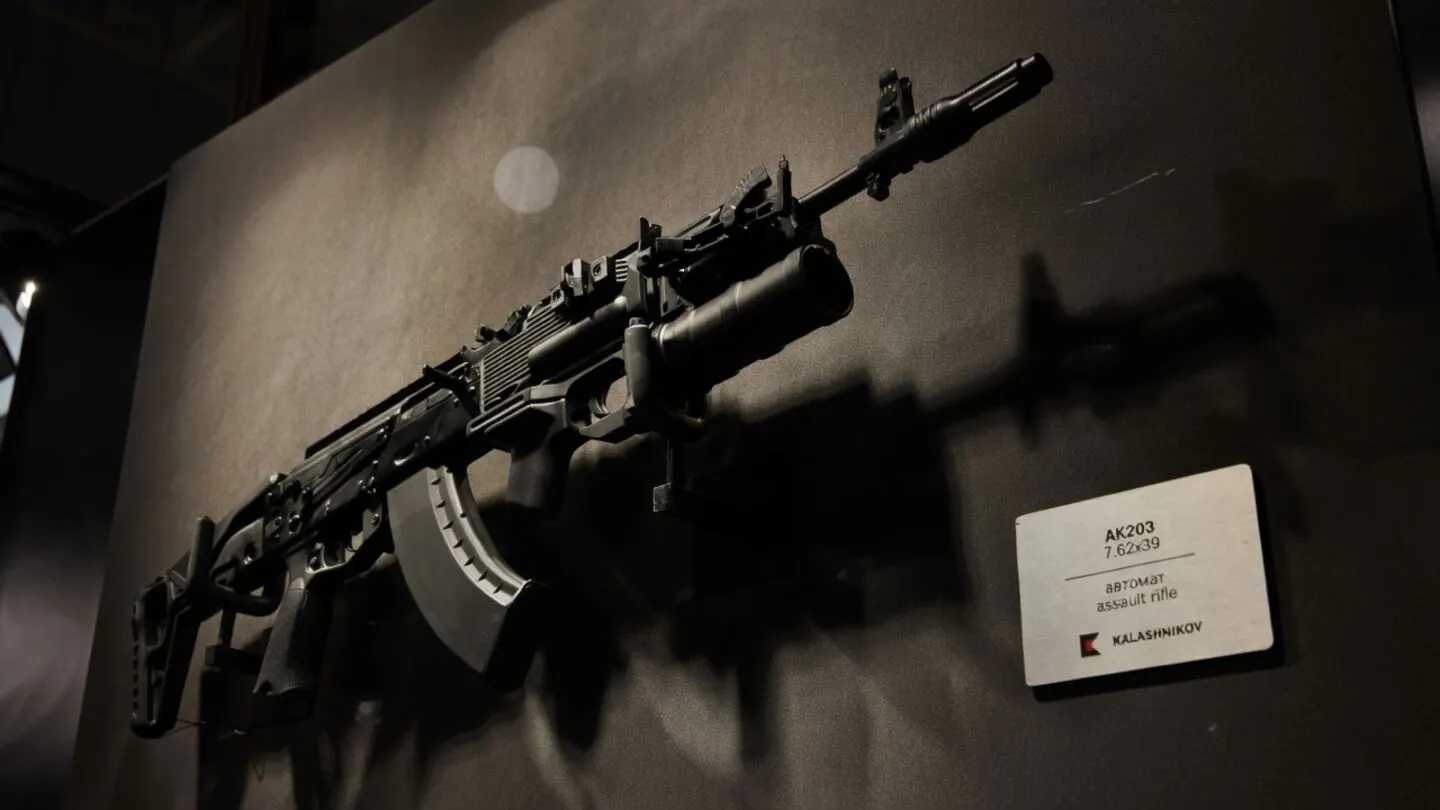
India’s first fully indigenous AK-203 ‘Sher’ test-fired in Amethi
The first 100% indigenous AK-203 Sher was manufactured and test-fired at the Korwa facility on August 23. The firing included burst firing, with the initial results described as encouraging.
The rifle is being produced by Indo-Russian Rifles Private Limited (IRRPL), a joint venture established in 2019 to manufacture AK-203 rifles in India. The project was originally conceived as a way to move away from importing complete rifles while gradually building domestic manufacturing capabilities.
The latest prototype represents the culmination of that localisation journey.
Unlike earlier rifles, which relied on imported knock-down kits and progressively increased Indian content, the new Sher has been produced using Indian-made components and raw materials throughout its manufacturing chain.
That distinction is important. Made in India and made entirely with Indian inputs are not necessarily the same thing. In the case of the Sher, the objective has been to develop the domestic capability to manufacture the rifle rather than merely assemble imported parts at an Indian facility.
From imported components to 100% localisation
The AK-203 programme began with an India-Russia agreement in 2019. Production was subsequently established at Korwa in Amethi, with the initial rifles manufactured using imported components.
The transition to indigenous production was designed to happen in stages.
By the middle of 2025, the domestic content of the rifle had reportedly reached about 50%. Since then, Indian suppliers have progressively taken over the production of components that were previously sourced from abroad.
The process involved much more than finding local substitutes.
The AK-203 has roughly 50 major components, around 180 sub-components and about 120 manufacturing processes. Localising the rifle therefore required the development of an extensive network of Indian suppliers capable of meeting military specifications.
The domestic ecosystem has had to develop capabilities for producing components such as barrels, bolts, furniture, coatings and fire-control elements, while also establishing indigenous testing, proofing and quality-control systems.
The full transfer of technology from the Russian side was received during 2023-24. Building an Indian vendor base capable of consistently manufacturing components to the required standards took additional time.
The result is a programme that has moved from importing components to creating an end-to-end domestic manufacturing ecosystem.
What makes the AK-203 different from the INSAS?
The AK-203 is intended to replace the ageing Indian Small Arms System (INSAS), which entered military service in the 1990s.
The AK-203 is a gas-operated, magazine-fed assault rifle chambered for the 7.62×39 mm cartridge. It weighs approximately 3.6 kg, has a 415 mm barrel and a 30-round magazine. Its cyclic rate of fire is around 700 rounds per minute, while its sighting range is reported at approximately 800 metres.
The rifle also incorporates features suited to modern infantry operations, including an adjustable and folding stock, an ergonomic grip and accessory rails that can accommodate optical and other equipment.
By comparison, the INSAS uses the 5.56×45 mm cartridge, has a 20-round magazine and weighs around 4.15 kg. Its effective range is approximately 400 metres.
The AK-203 consequently offers a lighter platform, greater magazine capacity and a longer stated sighting range.
The shift is also linked to longstanding concerns surrounding the INSAS, including reported reliability problems and issues with its magazine in extremely cold conditions.
The move to the AK-203 is therefore not simply a replacement of one rifle with another. It is part of a broader effort to modernise the Army’s standard infantry weapon while improving the domestic manufacturing base supporting it.
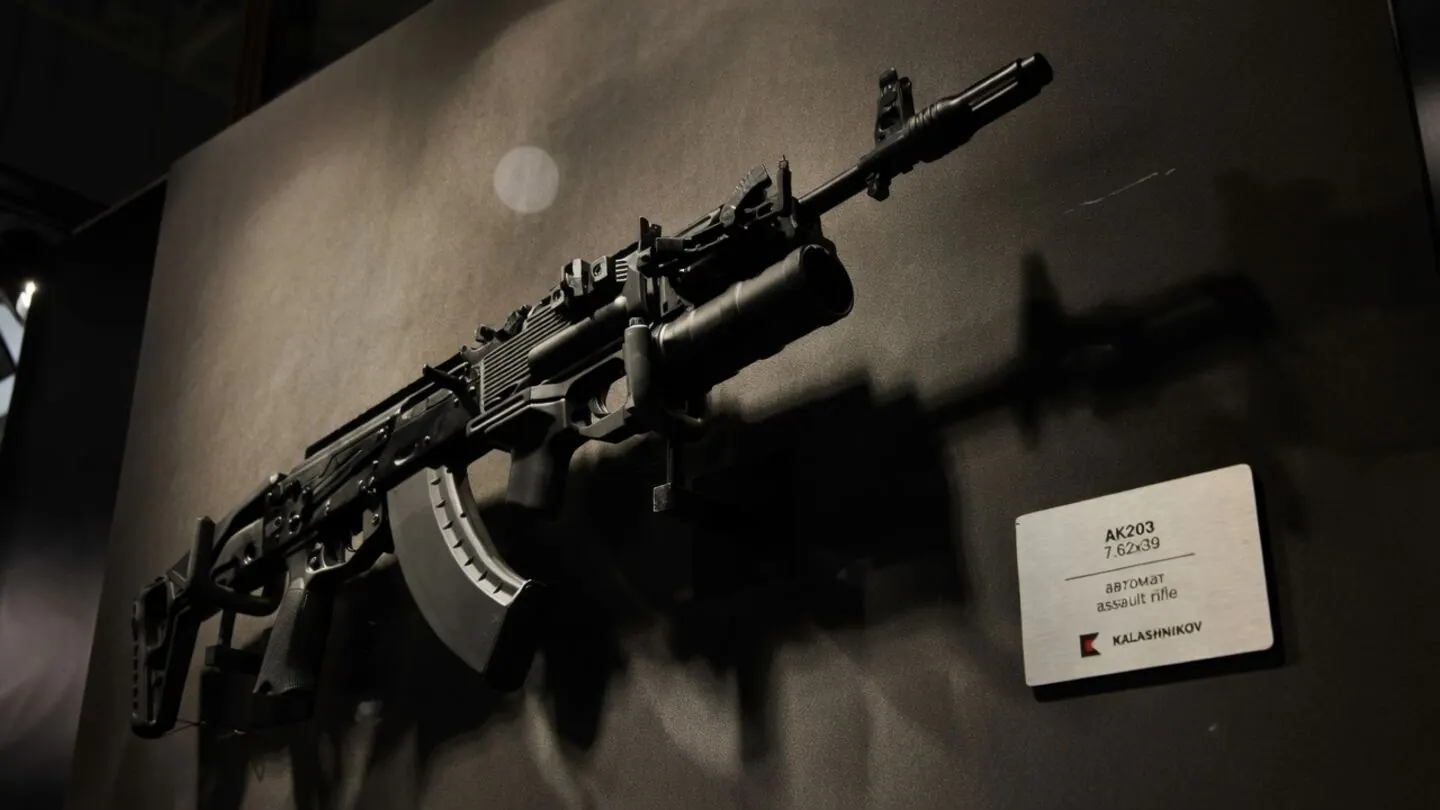
The Russian origin of the AK-203 does not diminish the localisation milestone
There is an important distinction to make when describing the Sher as indigenous.
The AK-203 itself is based on the Kalashnikov family of rifles and originated from Russian design and technology. India has not designed the weapon from scratch.
What has changed is the manufacturing capability.
The latest milestone demonstrates that Indian industry has developed the ability to produce the platform using domestically sourced components and materials. The programme therefore combines foreign-origin technology with an increasingly Indianised manufacturing ecosystem.
This distinction is particularly relevant to India's broader defence strategy. Self-reliance does not necessarily mean every weapon must originate from an entirely indigenous design. It can also involve absorbing technology, developing domestic suppliers and eventually building the industrial capability to manufacture a platform without relying on imported components.
The AK-203 programme is an example of that progression.
Over 6 lakh rifles planned for the Indian Army
The scale of the programme makes the development even more significant.
IRRPL has a contract valued at approximately ₹5,200 crore to manufacture 6,01,427 AK-203 rifles for the Indian armed forces.
The original delivery schedule extended to October 2032. However, production optimisation, capacity enhancement and increasing localisation have allowed the company to target completion by December 2030 — almost two years earlier than the original deadline.
The planned production rate is also substantial. IRRPL is working towards producing approximately one AK-203 every 100 seconds, equivalent to around 600 rifles a day when operating at the targeted rate.
Achieving such a pace will be critical if the revised delivery timeline is to be maintained.
But mass production cannot begin solely on the basis of the successful factory firing. The fully indigenous rifle must first demonstrate that it meets the Army's operational and technical requirements.
September Army trials will be the next major test
The next significant stage for the AK-203 Sher programme will come in September 2026, when the required number of fully indigenous prototypes are expected to be handed over for Army trials.
The trials will be crucial because factory-level firing is only one part of the evaluation process.
The Army will need to assess the rifle against operational and technical requirements before wider induction can proceed. Performance under broader field conditions will ultimately determine whether the indigenous version is ready for large-scale service.
That makes September an important checkpoint for both the weapon and India's defence manufacturing ambitions.
A successful trial process would provide a pathway towards large-scale production of an assault rifle whose entire component and material supply chain is based within India.
A bigger milestone for India’s defence industry
The significance of the AK-203 Sher extends beyond a single rifle.
The programme demonstrates how a defence manufacturing project can evolve over time. It began with imported knock-down kits, progressed through increasing levels of local production and has now reached a stage where the manufacturer says the rifle can be produced entirely from Indian components and input materials.
That progression has implications for the wider defence industrial base.
Developing suppliers for a complex weapon requires Indian companies to build expertise in precision manufacturing, metallurgy, materials, testing and quality control. Those capabilities can potentially support other defence programmes as well.
For the armed forces, greater domestic sourcing can also reduce dependence on overseas supply chains for critical equipment. For the defence industry, it creates opportunities for a wider network of Indian manufacturers, including smaller suppliers and MSMEs.
The AK-203 Sher is therefore more than an indigenous version of a familiar assault rifle. It is a demonstration of how India is attempting to turn defence localisation from an assembly exercise into a deeper manufacturing capability.
The immediate focus now shifts to the Army trials. If the Sher meets the required standards, the successful test-firing in Amethi could mark the beginning of a much larger transition — one in which thousands of rifles destined for Indian soldiers are manufactured without imported components.
For India's drive towards defence self-reliance, that would make the Sher milestone considerably bigger than the firing of a single rifle.
With input from agencies
Image Source: Multiple agencies
© Copyright 2026. All Rights Reserved. Powered by Vygr Media.