
 By
By 
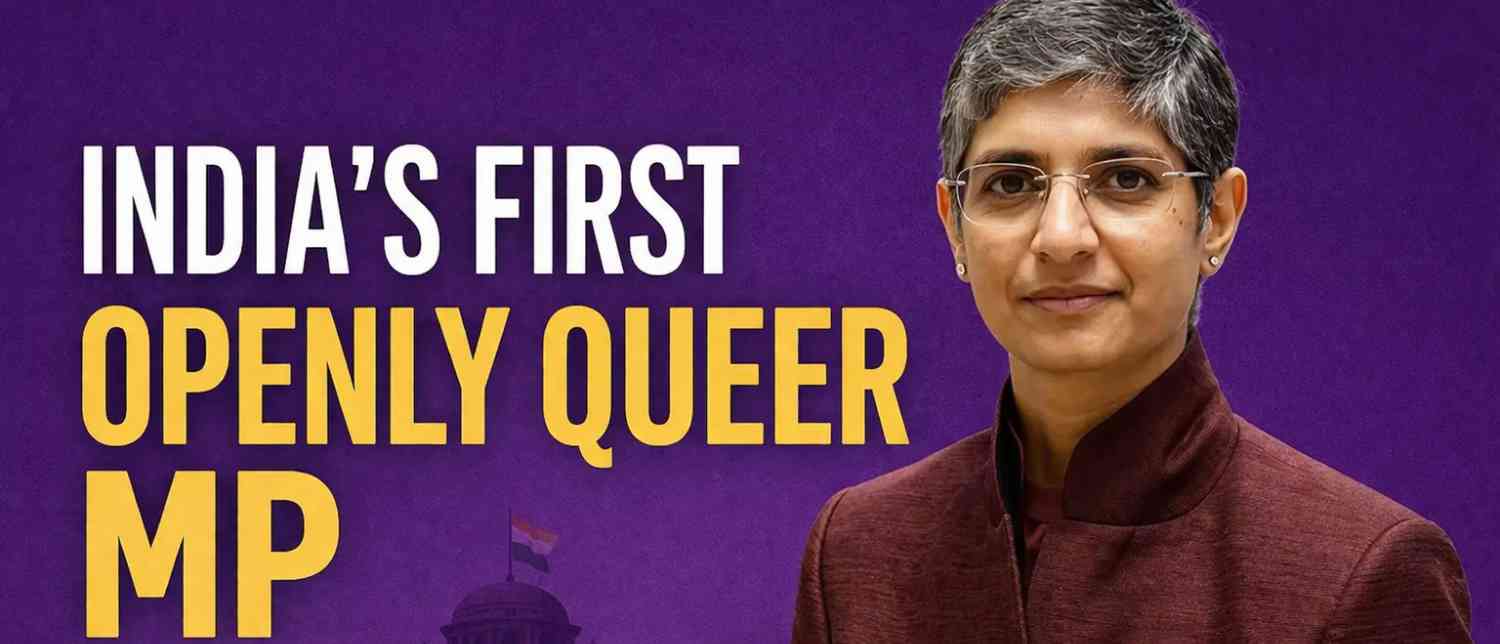
In a moment widely described as historic for both Indian politics and LGBTQ+ representation, Menaka Guruswamy took oath as a Member of Parliament in the Rajya Sabha, becoming India’s first openly queer MP. The milestone, shaped by years of legal activism and academic excellence, signals a turning point in the country’s evolving discourse on inclusion, rights, and representation.
Her nomination by Mamata Banerjee and the All India Trinamool Congress (TMC) did not merely fill a parliamentary seat—it redrew the contours of visibility for queer Indians in public life. For a nation where LGBTQ+ rights have long been contested terrain, Guruswamy’s entry into Parliament carries both symbolic and substantive weight.
A historic oath with layered significance
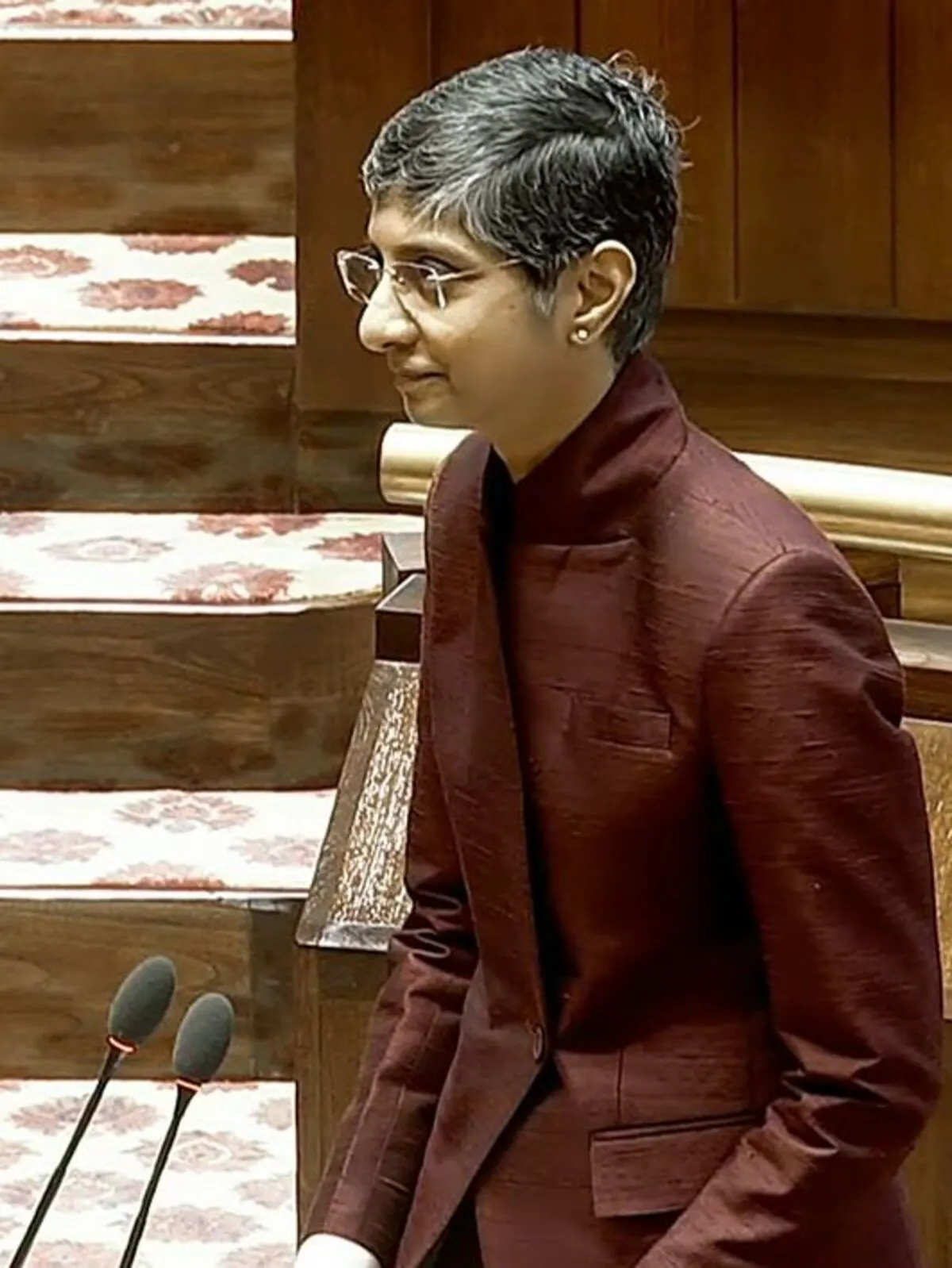
When Guruswamy stood to take her oath in the Rajya Sabha, the moment resonated far beyond the chamber’s walls. Her identity as an openly queer individual—something she has never concealed—makes her elevation unprecedented in Indian parliamentary history. While LGBTQ+ individuals have previously served in public office at local or regional levels, none had done so openly at the national legislative level.
Her appointment is being seen as a direct political endorsement of diversity, particularly by the TMC, which has increasingly positioned itself as a progressive force on issues of gender and minority rights. The move also underscores Banerjee’s strategy of bringing accomplished professionals from outside conventional political circles into legislative roles.
From courtroom battles to Parliament
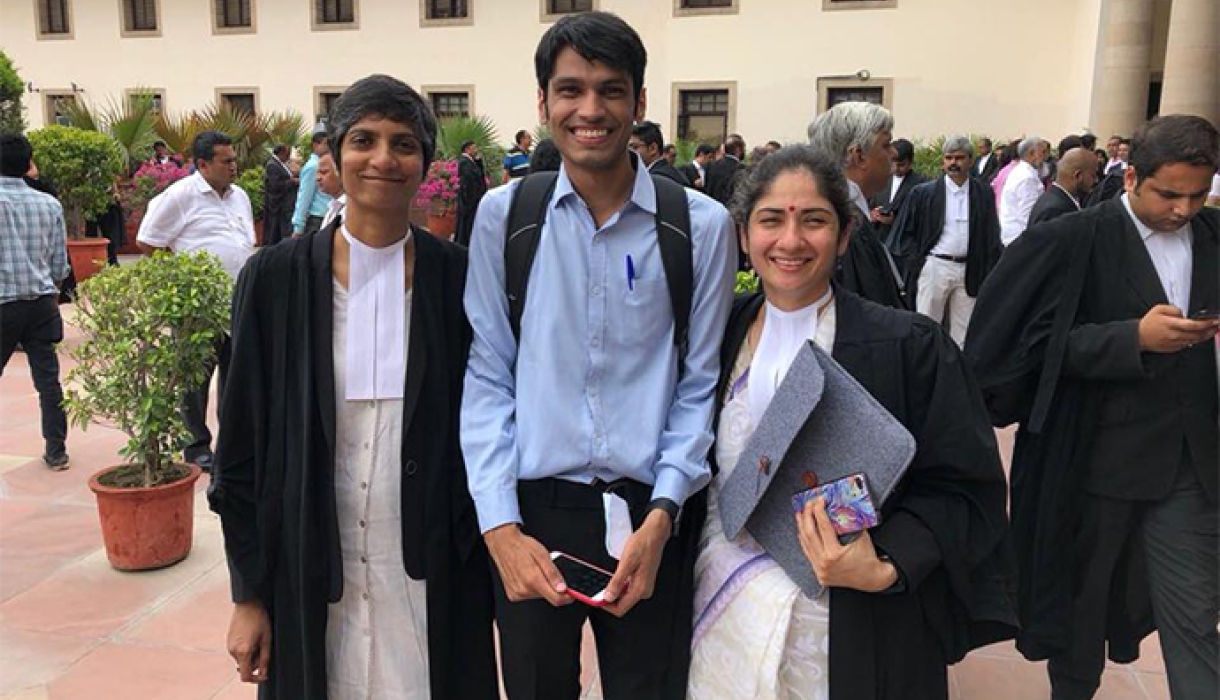
Guruswamy is not new to shaping India’s constitutional and social landscape. A senior advocate at the Supreme Court of India, she played a pivotal role in one of the most consequential legal battles in recent Indian history—the decriminalisation of homosexuality.
She was among the lead lawyers in the landmark Navtej Singh Johar v. Union of India case, which in 2018 struck down Section 377 of the Indian Penal Code insofar as it criminalised consensual same-sex relationships. The ruling was hailed globally as a major victory for human rights, and Guruswamy’s advocacy was central to its success.
Her courtroom arguments, grounded in constitutional morality and individual dignity, helped persuade the bench to recognise that sexual orientation is an intrinsic part of identity and cannot be subject to criminal sanction. That victory fundamentally altered the legal status of LGBTQ+ individuals in India, and now, just a few years later, one of its chief architects has entered Parliament.
Academic brilliance across continents
Behind Guruswamy’s legal and political achievements lies a formidable academic journey that spans some of the world’s most prestigious institutions. She studied at National Law School of India University, widely regarded as India’s premier law school, where she built the foundation of her legal career.
She later pursued advanced studies at Harvard Law School, one of the most competitive and globally respected legal institutions. Her academic pursuits did not stop there—she also attended University of Oxford, further sharpening her expertise in law and governance.
In addition to her degrees, Guruswamy has also contributed to academia as a faculty member and visiting scholar, engaging with issues of constitutional law, gender, and human rights. Her work has consistently bridged the gap between theory and practice, bringing scholarly depth to her legal interventions.
A career defined by constitutional advocacy
Over the years, Guruswamy has built a reputation as one of India’s most respected constitutional lawyers. Her practice has spanned a wide range of issues, including civil liberties, federalism, and minority rights. She has represented clients in cases involving fundamental rights, often taking positions that challenge entrenched power structures.
Her legal philosophy is rooted in the idea that the Constitution must serve as a living document—one that evolves with society and protects the most vulnerable. This perspective has informed her work not only in the Section 377 case but also in other matters involving gender justice and democratic accountability.
Colleagues and observers frequently note her ability to combine rigorous legal reasoning with a strong moral compass, a combination that has made her both an effective advocate and a persuasive public voice.
Political significance and broader implications
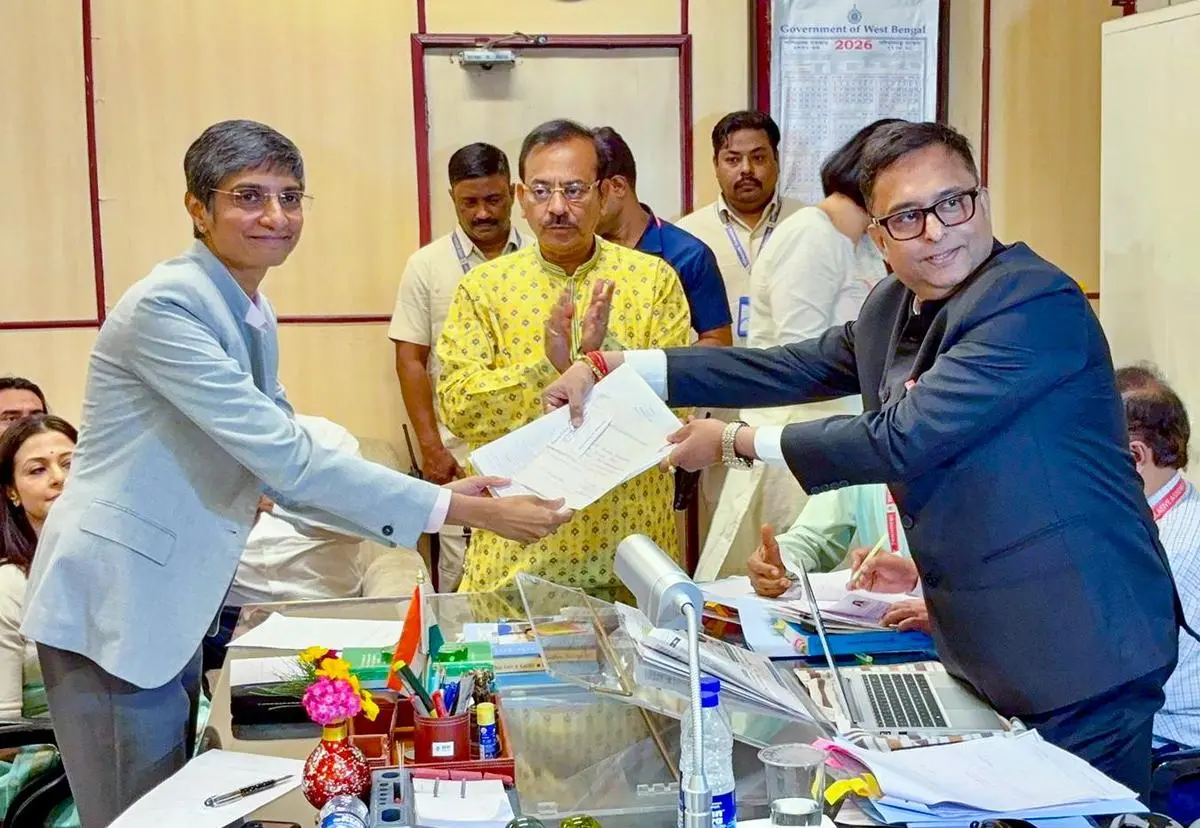
Guruswamy’s nomination to the Rajya Sabha is not merely a personal milestone—it carries broader political implications. For the TMC, it reinforces a narrative of inclusivity and intellectualism, bringing a non-traditional figure into the legislative fold. For Indian politics at large, it raises questions about representation and the need to reflect the country’s diversity within its institutions.
The move also comes at a time when debates around LGBTQ+ rights continue to evolve. While the decriminalisation of homosexuality marked a major legal victory, issues such as marriage equality, anti-discrimination protections, and social acceptance remain unresolved. Guruswamy’s presence in Parliament could help bring these issues into sharper focus, potentially influencing legislative priorities and public discourse.
Representation beyond symbolism
While symbolic breakthroughs are important, Guruswamy’s appointment is being viewed as more than just a gesture. Her legal expertise and policy understanding position her to contribute meaningfully to debates on a wide range of issues, from constitutional amendments to social justice legislation.
Her dual identity—as a legal heavyweight and a member of the LGBTQ+ community—gives her a unique vantage point. She is not only equipped to articulate the concerns of marginalised groups but also to translate them into actionable policy proposals.
Observers note that her presence could encourage greater participation of LGBTQ+ individuals in public life, challenging longstanding stigmas and opening doors for future leaders.
A personal journey intertwined with public change
Guruswamy has often spoken about the importance of authenticity and visibility. Her decision to be open about her sexual orientation, even in conservative professional spaces, has been both a personal choice and a political act. It reflects a broader shift in Indian society, where increasing numbers of individuals are asserting their identities despite persistent challenges.
Her journey—from a law student in India to an internationally recognised advocate, and now a Member of Parliament—mirrors the gradual transformation of the country’s legal and social landscape. Each milestone in her career has contributed to expanding the boundaries of what is possible for those who come after her.
The road ahead
As Guruswamy begins her tenure in the Rajya Sabha, expectations are high. Her supporters hope she will leverage her expertise to push for progressive reforms, while her critics will undoubtedly scrutinise her performance in a political environment that often resists change.
What is clear, however, is that her presence in Parliament marks a departure from the status quo. It represents a convergence of law, politics, and identity at a time when India is grappling with complex questions about equality and inclusion.
In a country where representation has often lagged behind rhetoric, Menaka Guruswamy’s entry into the Rajya Sabha stands as a powerful reminder that change, while slow, is possible. Her journey from the courtroom to the corridors of power is not just a personal achievement—it is a chapter in India’s ongoing story of democracy, diversity, and the quest for justice.
With inputs from agencies
Image Source: Multiple agencies
© Copyright 2025. All Rights Reserved. Powered by Vygr Media.