 By
By 
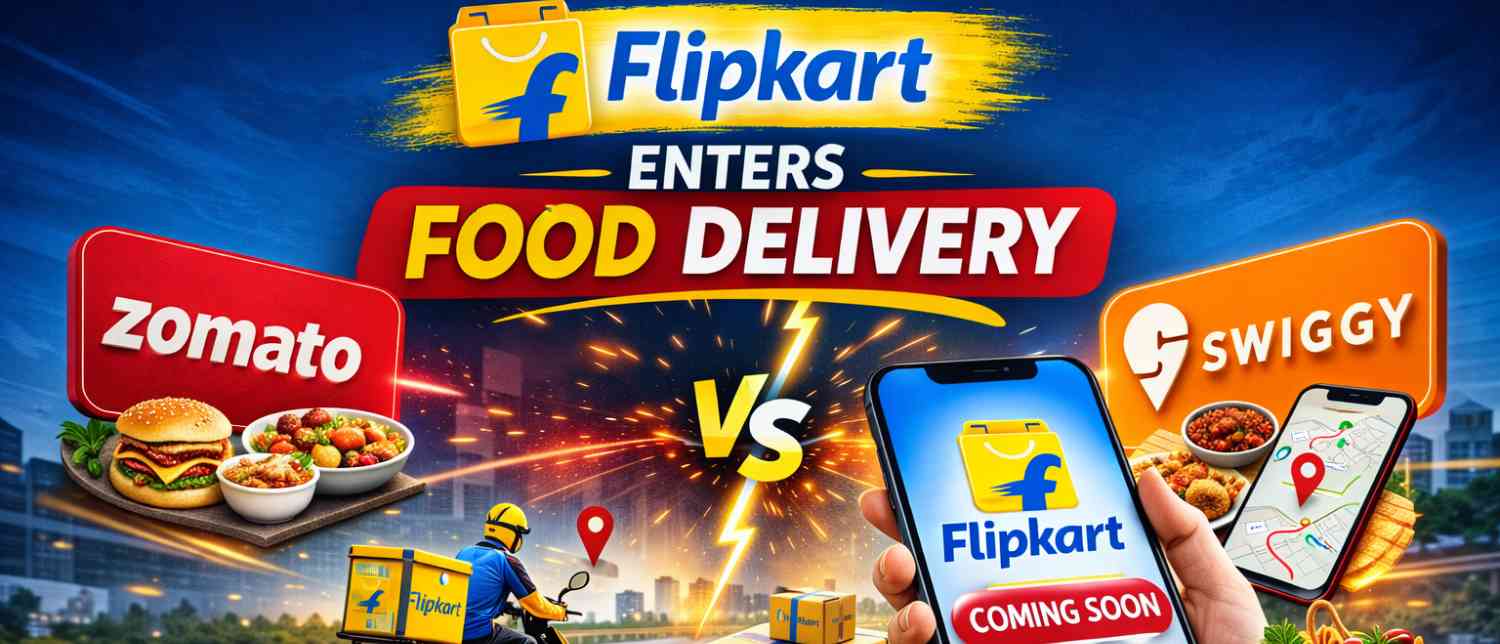
Walmart-owned ecommerce giant Flipkart is reportedly evaluating a fresh entry into India’s fiercely competitive online food delivery market—a move that could significantly reshape the sector long dominated by Zomato and Swiggy.
According to media reports citing people familiar with the matter, Flipkart is considering launching a pilot project in Bengaluru between May and June. If the trial run proceeds as planned, a nationwide rollout could follow by late 2026 or early 2027. While Flipkart has not officially commented on the development, preparations—including team-building and strategic evaluations—are reportedly underway.
If executed, this would mark Flipkart’s second attempt to enter the food delivery segment. Two years ago, the company explored launching food services through the government-backed Open Network for Digital Commerce (ONDC), but those plans did not materialize. Now, amid rapid market expansion and shifting competitive dynamics, Flipkart appears ready to re-evaluate the opportunity.
A $25 Billion Opportunity in the Making
India’s online food delivery market is projected to grow significantly over the next five years. According to brokerage firm Jefferies, the sector—estimated at around $9 billion in FY2025—is expected to expand to $25 billion by FY2030.
Currently, the market is largely a duopoly. Zomato (owned by Eternal) and Swiggy command the bulk of market share, supported by extensive restaurant partnerships, deep delivery networks, and strong brand recall. Smaller players—including Rapido’s Ownly and several ONDC-based operators—have struggled to capture meaningful traction.
Despite the dominance of incumbents, the overall market continues to show resilience. Recent quarterly disclosures indicate both Zomato and Swiggy have returned to over 20% year-on-year growth in gross order value. However, growth has moderated compared to the post-pandemic surge, and both companies are now focused more sharply on profitability and operational efficiency.
For Flipkart, entering a $25 billion growth market could significantly bolster its long-term expansion story—especially as it prepares for an IPO.
Why Food Delivery Makes Strategic Sense for Flipkart
At first glance, entering a mature, capital-intensive market may seem risky. However, viewed through the lens of platform economics and ecosystem expansion, Flipkart’s strategy begins to make sense.
1. High-Frequency Consumer Engagement
Ecommerce transactions are often seasonal and occasion-driven. In contrast, food delivery is habit-forming and high-frequency. By integrating food delivery into its ecosystem, Flipkart could significantly increase daily user engagement.
Flipkart already commands one of India’s largest digital consumer bases through its marketplace operations. Embedding food delivery services into its app—or launching a standalone platform—would allow it to cross-sell to millions of existing users, deepening customer retention and lifetime value.
For a company aspiring to position itself as a “super app” ahead of its IPO, this move aligns with a broader strategy of capturing a larger share of consumers’ daily spending.
2. Leveraging Quick Commerce Infrastructure
Flipkart’s entry into quick commerce with “Flipkart Minutes” at the end of 2024 marked an aggressive push into rapid delivery. Over the past year, Minutes expanded its dark store network nearly fivefold to 500 locations. The company now aims to double that number to 1,000 by March 2026. Other reports suggest it already operates over 800 dark stores, with plans for further expansion in the coming months.
These dark stores—micro-warehousing hubs designed for rapid fulfillment—offer operational capabilities that could provide significant synergies in food delivery. Flipkart has invested in:
-
Last-mile delivery fleets
-
Demand forecasting systems
-
AI-powered inventory management
-
Modular dark store formats
As quick commerce players experiment with 10-minute grocery deliveries and even 10-minute meal formats, the lines between grocery, ready-to-eat meals, and restaurant food are increasingly blurring.
Competitors such as Blinkit and Zepto have reshaped customer expectations around speed. Swiggy, too, faces intense competition in quick commerce through Swiggy Instamart. By leveraging its Minutes infrastructure, Flipkart could integrate food delivery more seamlessly into its logistics network.
3. Multiple Monetization Levers
Food delivery platforms generate revenue through diverse channels, including:
-
Restaurant commissions
-
Delivery fees
-
Advertising and sponsored listings
-
Subscription models
-
Data-driven targeting
For IPO-bound Flipkart, diversifying revenue streams strengthens its growth narrative. Investors often reward companies that demonstrate multiple monetization levers rather than reliance on a single vertical.
Strategic Choices: Standalone Platform or ONDC?
Flipkart is reportedly weighing two key options:
-
Launch a standalone food delivery app
-
Roll out a buyer-side application on ONDC
The ONDC route could provide regulatory goodwill and position Flipkart within a broader network-based ecosystem. However, building an independent platform would offer greater control over user experience, commissions, and branding.
Notably, Flipkart had earlier outlined plans to enter food delivery through ONDC in 2024, similar to peers like Ola and Paytm. That proposal did not move beyond initial planning stages. This time, however, reports indicate that Flipkart has begun assembling a dedicated team for the vertical—signaling stronger intent.
A Market That Has Defeated Giants Before
India’s food delivery ecosystem has evolved from fragmentation to consolidation. Five years ago, over a dozen players competed in the space. Today, it is effectively a duopoly.
Past attempts underscore the difficulty:
-
Uber exited India’s food delivery market by selling Uber Eats to Zomato in 2020 after sustained cash burn.
-
Ola experimented with Ola Cafes, Foodpanda, and 10-minute food delivery before winding them down.
-
Amazon’s 2019 entry failed to scale meaningfully.
The reasons are structural:
-
Strong network effects: Restaurants gravitate toward platforms with high order volumes.
-
Consumer stickiness: Users prefer platforms offering the widest restaurant selection and fastest delivery.
-
High customer acquisition costs: Discounting and promotions can strain margins.
-
Operational complexity: Managing restaurant relationships, delivery fleets, and customer experience requires flawless execution.
For Flipkart, simply replicating the existing model may not suffice. Differentiation will be critical.
Carving a Distinct Identity
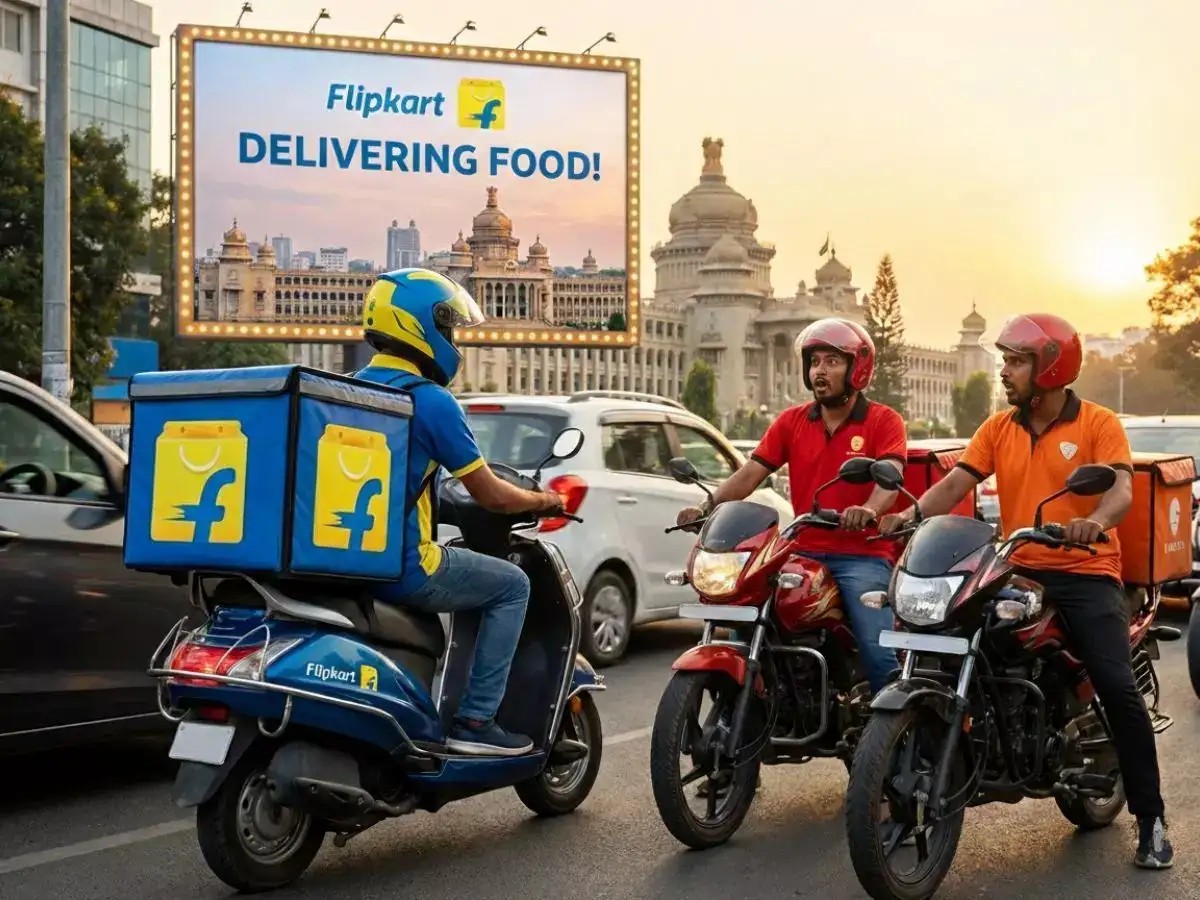
Sources suggest Flipkart is actively evaluating how to carve out a distinct positioning in this crowded space. Potential differentiation levers may include:
-
Competitive pricing strategies
-
Innovative commission structures for restaurants
-
Faster delivery formats
-
Integration with ONDC’s open network
-
Bundling food delivery with ecommerce benefits
Flipkart has historically leveraged aggressive discounting to gain market share in ecommerce and quick commerce. If it adopts a similar playbook in food delivery, incumbents may face renewed competitive pressure.
However, such a strategy could trigger short-term margin compression across the sector, as increased discounting, marketing spends, and restaurant incentives become necessary to defend market share.
Financial Position Ahead of the IPO
Flipkart’s financial trajectory suggests improving operational discipline. For FY25:
-
Operating revenue at Flipkart Internet (its marketplace arm) rose 14.4% to ₹20,493 crore from ₹17,907 crore in FY24.
-
Net loss narrowed 37% to ₹1,494 crore from ₹2,359 crore the previous year.
The improving financial metrics provide a stronger foundation as Flipkart prepares for its public listing. Expanding into a high-growth category like food delivery could further enhance its valuation narrative.
Intensifying Competitive Landscape
Flipkart’s potential entry comes amid rising competition across India’s consumer internet sectors.
-
Quick commerce players such as Blinkit and Zepto have expanded aggressively.
-
Swiggy and Zomato are investing heavily in faster delivery formats.
-
Rapido has launched its food delivery platform Ownly.
-
Several smaller players are attempting to leverage ONDC.
The convergence of ecommerce, grocery, quick commerce, and restaurant delivery is redefining sector boundaries. What were once distinct verticals are now overlapping ecosystems competing for the same consumer wallet share.
If Flipkart enters aggressively, it could trigger:
-
Increased discounting wars
-
Higher marketing spends
-
Stronger restaurant incentives
-
Faster product innovation cycles
For consumers, this could mean better prices and improved service speeds. For incumbents, it could mean tighter margins and renewed pressure to innovate.
The Bigger Picture: Evolution of India’s Digital Economy
Flipkart’s ambitions reflect a broader transformation in India’s digital economy. Large horizontal ecommerce platforms are no longer content operating in category silos. Instead, they are evolving into multi-service ecosystems aiming to capture daily, habitual consumer spending.
From carts to kitchens, Flipkart’s potential expansion signals its intent to become a full-stack consumer platform. Whether it can overcome the entrenched advantages of Zomato and Swiggy remains uncertain. Network effects, brand loyalty, and operational scale are formidable barriers.
Yet, Flipkart brings significant assets to the table:
-
A massive existing user base
-
Expanding quick commerce infrastructure
-
Strengthening financial performance
-
Backing from Walmart
-
IPO-driven growth incentives
If the company successfully differentiates its offering and leverages its logistics backbone, it could introduce meaningful disruption in a sector long defined by duopoly.
The coming months—beginning with the proposed Bengaluru pilot—will determine whether Flipkart can translate strategic intent into execution.
One thing, however, is certain: if Flipkart moves from carts to kitchens, India’s online food delivery battle is about to get a lot more intense.
With inputs from agencies
Image Source: Multiple agencies
© Copyright 2025. All Rights Reserved. Powered by Vygr Media.