 By
By 
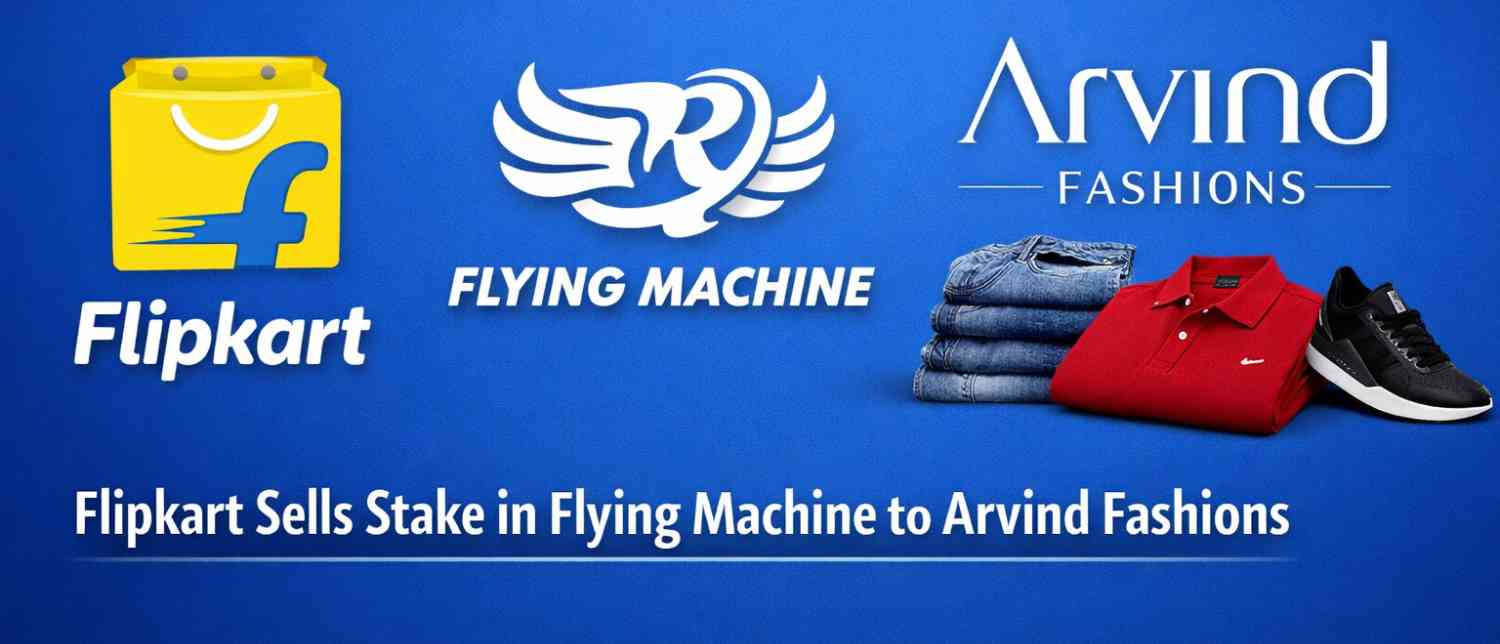
Flipkart, India’s largest homegrown ecommerce marketplace and a Walmart-backed entity, is continuing its strategic portfolio clean-up as it gears up for a much-anticipated public listing. In its latest divestment move, Flipkart has decided to exit Arvind Youth Brands Pvt Ltd (AYBPL), the parent company of iconic Indian denim label Flying Machine, by selling its entire 31.25% stake to Arvind Fashions Ltd (AFL).
The transaction, valued at ₹135 crore, will result in Arvind Fashions regaining complete ownership of Arvind Youth Brands, consolidating Flying Machine as a wholly owned subsidiary. While the capital partnership between Flipkart and Flying Machine comes to an end, both companies have confirmed that their commercial collaboration will continue, ensuring the brand’s uninterrupted presence across Flipkart’s digital platforms.
Details of the Transaction
According to regulatory filings, Arvind Fashions will acquire Flipkart’s full shareholding in AYBPL through a share purchase agreement with Flipkart India Pvt Ltd. The acquisition includes one equity share of ₹10 and 58.95 lakh compulsory convertible preference shares (CCPS) priced at ₹100 each, representing Flipkart’s stake on a fully diluted basis.
The deal is expected to close on December 29, 2025, subject to customary regulatory approvals. Once completed, Arvind Youth Brands will become a 100% owned subsidiary of Arvind Fashions, giving the company full strategic and operational control over Flying Machine.
Commenting on the development, Amisha Jain, Managing Director and CEO of Arvind Fashions Ltd, said that while ownership structures are changing, the business relationship remains intact. “Our relationship with the Flipkart Group will continue, ensuring consumers can still shop Flying Machine on its platforms. The brand will also be available to consumers on other digital channels and portals,” she said.
Flipkart’s Original Investment and Exit Valuation
Flipkart first invested in Arvind Youth Brands in 2020, acquiring a minority 31.25% stake for approximately ₹260 crore. The investment was part of Flipkart’s broader strategy at the time to deepen its influence in fashion and lifestyle by backing strong Indian brands and helping them scale digitally.
Five years later, Flipkart is exiting the investment for ₹135 crore—almost half of what it paid initially. The reduced valuation reflects broader market realities, increased competition in online fashion, and softer financial performance at Flying Machine over the past few years.
Despite the lower exit valuation, the partnership played a pivotal role in repositioning Flying Machine as a digital-first youth casual wear brand. Arvind Fashions has acknowledged that Flipkart’s marketplace strength helped the brand become one of the leading youth-focused casual labels on ecommerce platforms in India.
Flying Machine’s Financial Performance
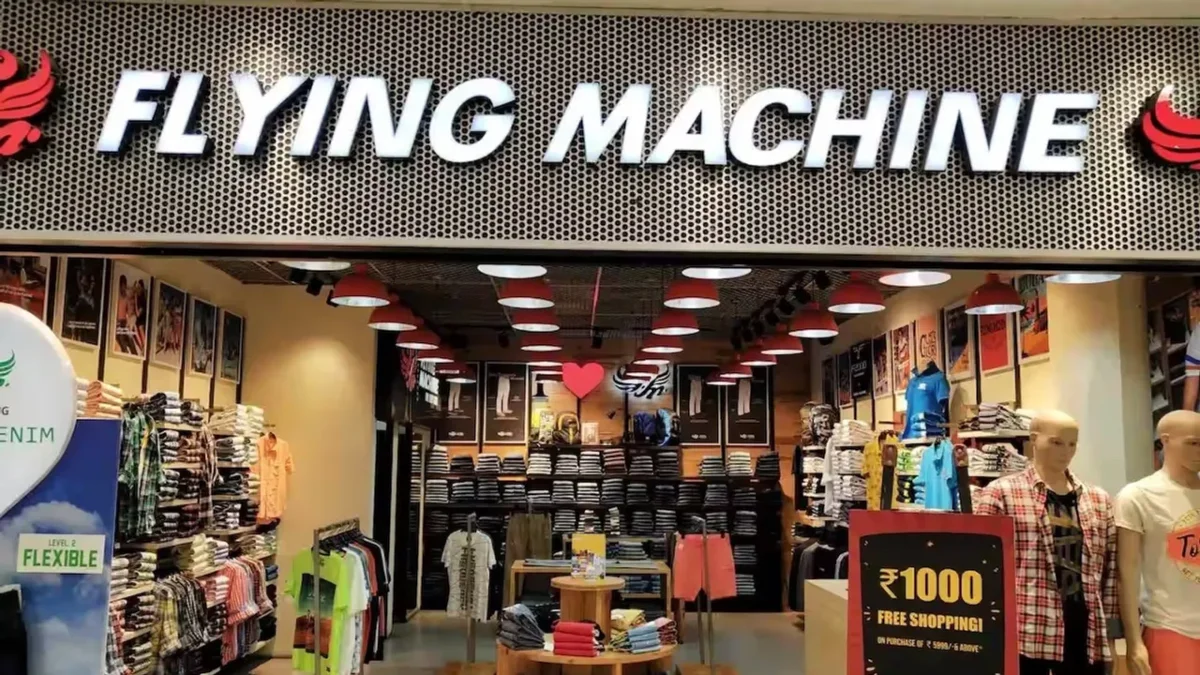
Flying Machine, one of India’s oldest denim brands with a legacy spanning over four decades, has seen fluctuating fortunes in recent years. Financial data indicates a consistent decline in revenue over the past three fiscal years.
The brand’s turnover fell from ₹472.4 crore in FY23 to ₹432.2 crore in FY25, marking a decline of roughly 8.5% to 10%, depending on reporting metrics. This slowdown has come amid intensifying competition in the casual wear and denim segments, changing consumer preferences, and price pressures in the mass fashion category.
While Flying Machine has successfully expanded its digital reach across metros and tier-II towns and has been present on online platforms for more than a decade, maintaining growth momentum has become increasingly challenging in a crowded and discount-driven marketplace.
Strategic Importance for Arvind Fashions
For Arvind Fashions, the buyback represents more than just a financial transaction—it signals a strategic consolidation of one of its most recognisable legacy brands. Full ownership allows Arvind to sharpen Flying Machine’s long-term roadmap across product design, pricing, distribution, and omnichannel expansion without the complexity of shared equity control.
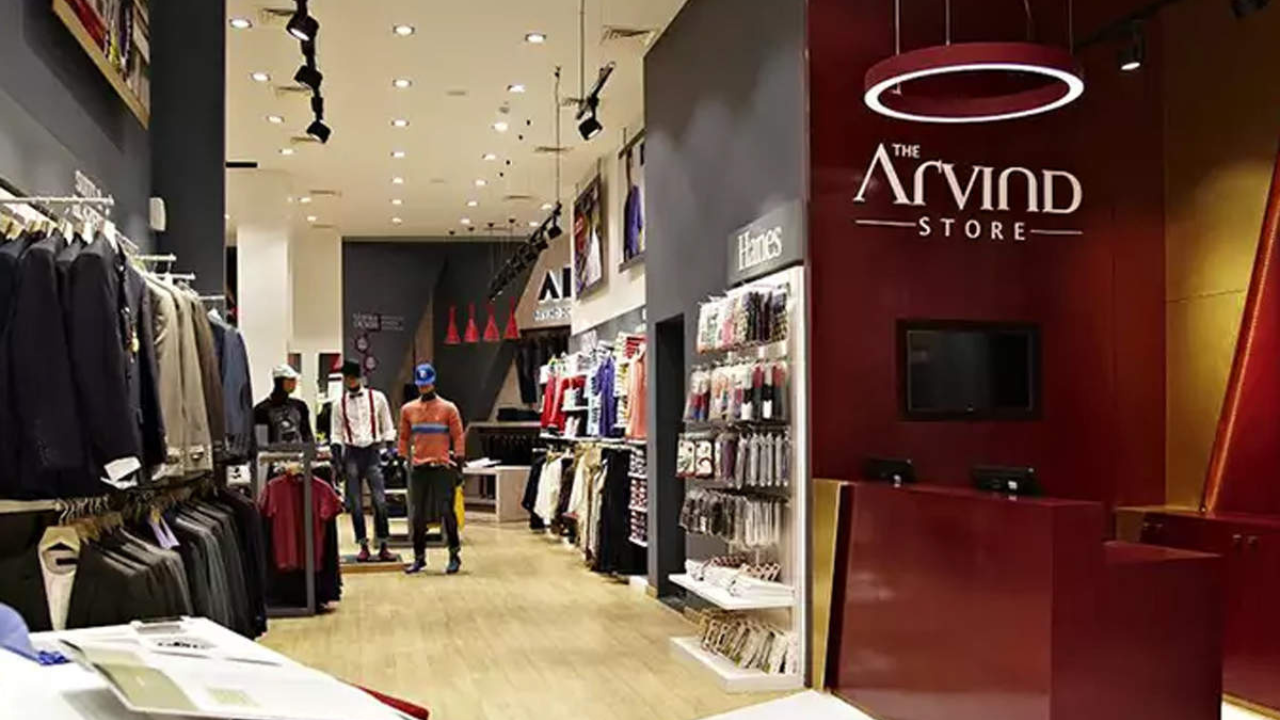
Flying Machine sits alongside other global and homegrown brands in Arvind Fashions’ portfolio, including U.S. Polo Assn., Arrow, Tommy Hilfiger, Calvin Klein, and Flying Machine itself. Regaining full ownership strengthens Arvind’s ability to align Flying Machine’s growth with its broader apparel strategy at a time when India’s fashion retail landscape is undergoing rapid transformation.
Arvind Group, one of India’s largest textile and apparel conglomerates, is also known globally for its capabilities in sustainable manufacturing, recycled fibres, and integrated value chains. The group has worked with international brands such as Pepe Jeans, H&M, Calvin Klein, Tommy Hilfiger, and Circ, the next-generation materials startup backed by Inditex.
Flipkart’s Broader Divestment Drive
The Flying Machine exit is part of a larger divestment and restructuring exercise underway at Flipkart as it prepares for its proposed IPO, targeted around 2026. Over the past year, the ecommerce giant has significantly reduced its minority investments in external companies, signalling a sharper focus on its core marketplace, logistics, and payments ecosystem.
Recently, Flipkart sold its entire stake in logistics technology firm BlackBuck, a company it had backed since 2015. Before BlackBuck’s listing in November 2024, Flipkart held a 13.2% stake. During the offer-for-sale process, Flipkart offloaded shares worth ₹151 crore while retaining a stake valued at ₹416 crore before fully exiting later. Early investors such as Accel and Tiger Global reportedly earned four- to five-fold returns on their IPO investments.
Flipkart has also offloaded its 6% stake in Aditya Birla Fashion & Retail (also referenced in some filings as Aditya Birla Lifestyle Brands) for ₹998 crore, further reducing its exposure to fashion brand equity holdings.
Preparing for a 2026 IPO
While Flipkart’s IPO plans remain at an early stage, the company has been steadily laying the groundwork for a domestic listing. One of the most significant steps in this direction has been securing approval from the National Company Law Tribunal (NCLT) to merge eight Singapore-incorporated entities into its Bengaluru-headquartered operations.
This move marks a critical step toward “reverse-flipping” Flipkart’s domicile back to India, a prerequisite for listing on Indian stock exchanges. In addition, Flipkart has appointed Dan Neary, a senior executive from Meta, to its board to support governance and strategic readiness ahead of the public markets transition.
Financially, Flipkart Internet, the group’s ecommerce arm, reported encouraging improvements in FY25. Operating revenue rose 14% year-on-year to ₹20,493 crore, up from ₹17,907 crore in FY24. At the same time, net losses narrowed by 37% to ₹1,494 crore, compared with ₹2,359 crore in the previous fiscal year—highlighting improved cost controls and operating leverage.
Flipkart’s Evolving Role in Fashion
Industry observers note that Flipkart’s exit from Flying Machine reflects a broader shift in its fashion strategy. Rather than holding equity stakes in individual brands, Flipkart appears to be repositioning itself as a neutral, scale-driven digital marketplace, complemented by strong logistics and fintech capabilities.
By reducing capital exposure to fashion labels, Flipkart is freeing up resources to double down on platform-led growth while still benefiting from brand partnerships through exclusive launches, data insights, and digital merchandising.
About Flipkart, Flying Machine, and Arvind Fashions
Flipkart, founded in 2007 and backed by Walmart, is one of India’s largest ecommerce companies, operating across categories including fashion, electronics, grocery, payments, and logistics. As it prepares for a domestic IPO, Flipkart is reshaping its portfolio to align with long-term platform scalability.
Flying Machine is one of India’s most recognisable denim and casual wear brands, with over 40 years of history. Known for its youth-centric positioning, the brand has successfully transitioned into the digital era, gaining strong traction across online marketplaces while maintaining a presence in physical retail.
Arvind Fashions Ltd, part of the Arvind Group, is a leading apparel and lifestyle company in India. With a diversified portfolio of international and Indian brands, the company plays a critical role in shaping India’s premium and mass fashion segments while also investing heavily in sustainability and supply chain integration.
Looking Ahead
Flipkart’s exit from Arvind Youth Brands marks the end of a five-year capital partnership that helped Flying Machine strengthen its digital footprint during a critical phase of ecommerce growth in India. At the same time, the transaction reinforces Flipkart’s IPO-focused strategy and Arvind Fashions’ commitment to consolidating control over its core brands.
As India’s ecommerce and fashion industries mature, such strategic realignments underscore how leading companies are recalibrating ownership structures, capital allocation, and growth priorities in preparation for the next phase of market evolution.
With inputs from agencies
Image Source: Multiple agencies
© Copyright 2025. All Rights Reserved. Powered by Vygr Media.