 By

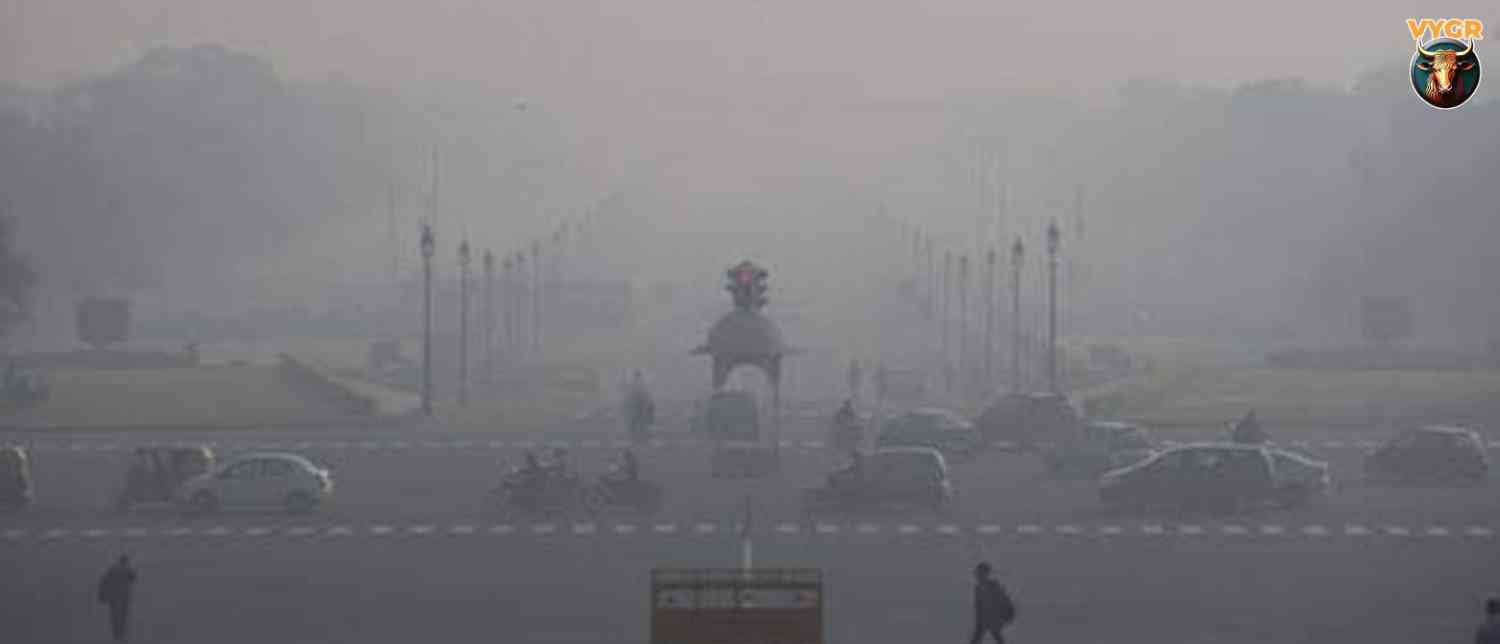
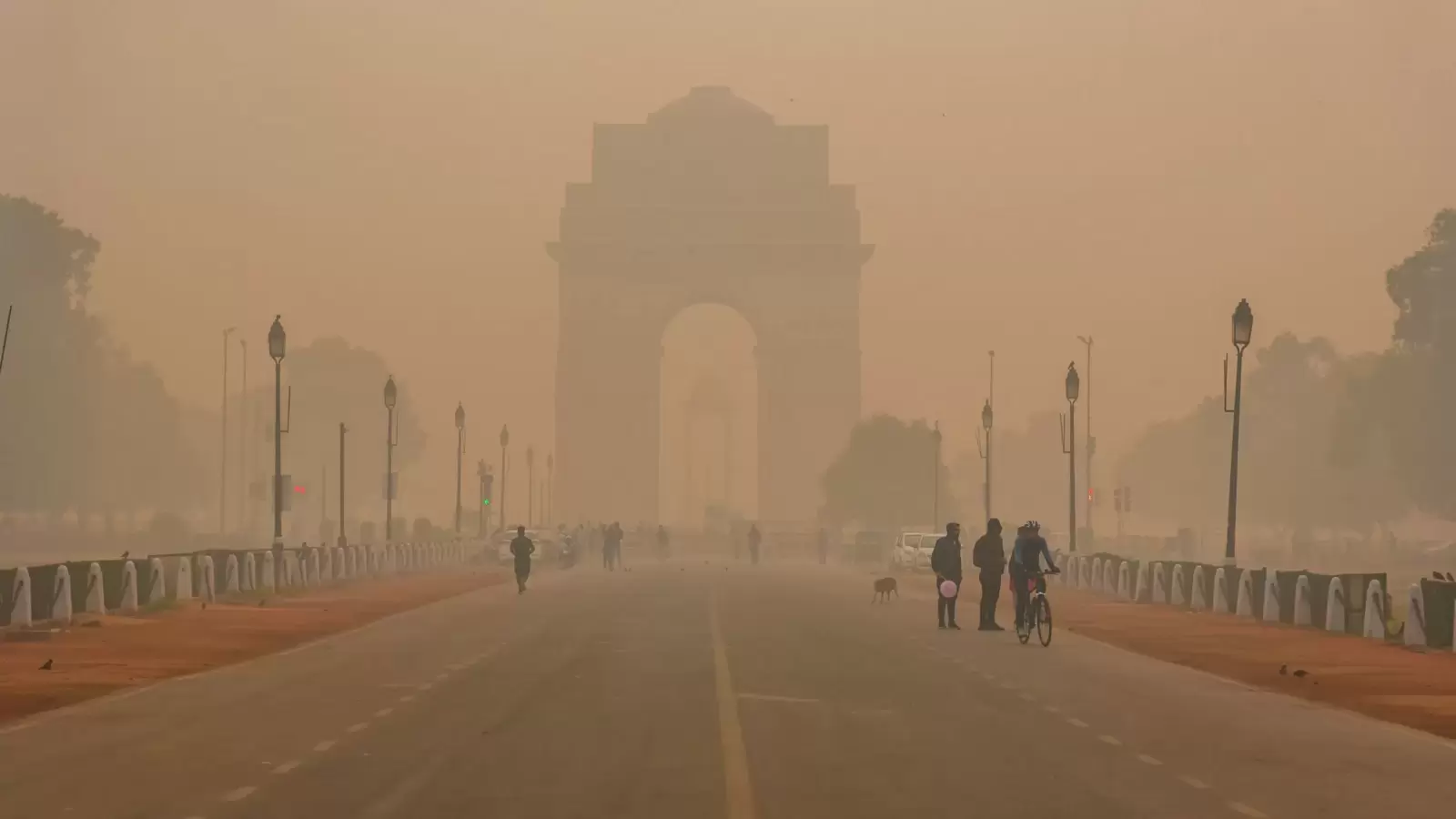
New Delhi: Delhi woke up on Thursday to the kind of morning that has become a grim yearly ritual. A grey, heavy haze sat over the city, eyes stung, and the air quality index in several localities climbed past 500, the top of the scale. With Diwali just days away, the capital is heading into the festival under a blanket of toxic air.
The numbers tell part of the story. The pattern tells the rest. Pollution in Delhi does not rise and fall evenly through the day. It builds through the evening, peaks in the small hours and early morning, and only eases a little in the afternoon. That rhythm is not a coincidence. It is physics, geography and human activity lining up.
Key takeaways
- The AQI crossed 500 in places. Readings at some stations and localities reached the top of the scale, while the citywide figure stood lower and was still near the ‘severe’ mark.
- Night and early morning are the worst hours. Cold, still air traps pollutants close to the ground.
- A temperature inversion is the main mechanism. A layer of warmer air sits above cooler air near the surface, acting like a lid.
- Stubble burning is adding to it. Farm fires contributed about 20 per cent of Delhi’s pollution on Wednesday, with transport at about 15.5 per cent.
- Diwali is coming. Forecasters have warned of ‘severe’ air on November 6 and 7, before the festival itself.
- Local sources matter all year. Experts say Delhi’s own emissions, not only farm fires, keep levels high.
The numbers right now
| Indicator | Reading |
|---|---|
| Overall AQI, Thursday morning | Near the severe mark; some localities above 500 |
| Overall AQI on Wednesday morning | Reached 399, a 288-day high |
| Stations above 400 (reported Thursday) | At least 12 areas |
| GRAP Stage II | Imposed across Delhi-NCR on November 2 |
| Stubble burning’s share of PM2.5 (Wednesday) | About 20.2% |
| Transport’s share | About 15.5% |
| Residue-burning events detected (Sept 15 to Nov 4) | About 4,800 across seven states and UTs |
| Forecast for November 6 and 7 | ‘Severe’ |
A note on the numbers. Different readings can look contradictory. One is the hourly AQI at a single station, which can spike sharply in the early hours. The other is the 24-hour average, which smooths out the peaks and is what authorities use for response measures. Both are real, and the gap between them is itself a clue about the night-time problem.
Why the air is worst at night and early morning
1. The lid: temperature inversion
On a normal day, the ground warms, the air above it warms and rises, and pollution mixes upward and spreads out. In winter, that process weakens. On clear, calm nights, the ground loses heat quickly, and the air next to it becomes cold and dense. Warmer air sits above it. This is a temperature inversion.
Cool air under warm air doesn’t rise, so it stays put. Whatever is released into that layer, whether vehicle exhaust, smoke or dust, is trapped in a thin slice near the ground.
2. The shrinking box: mixing height
Scientists talk about the “mixing height”, the depth of air in which pollutants can spread. In the afternoon, it can stretch to several hundred metres or more. At night and before sunrise, it can shrink to a fraction of that. A recent study found that Delhi’s boundary layer stayed below one kilometre from November to January, with lower ceilings linked to higher PM2.5.
Picture the same amount of smoke released into a large room versus a small cupboard. The smoke is identical, but the concentration is not.
3. Still air
Winds that would normally flush pollution out are weak in winter, and at night they are weaker still. With little movement, pollution simply accumulates hour after hour.
4. More going in at night
The “box” is not only shrinking. More is also being poured into it.
- Evening and night traffic. Rush-hour exhaust builds through the evening, and heavy diesel vehicles are generally allowed to move during night hours.
- Burning for warmth and waste. Cold nights lead to more open burning of waste and fuel, and evening cooking adds to household emissions.
- Smoke from farm fires. Fires burn mostly in the afternoon, and the smoke is carried toward Delhi and arrives later, when the inversion is already forming.
- Festival emissions. Firecrackers add a large burst of fine particles in the hours around Diwali night.
5. Chemistry in the cold
Cold, humid air does more than hold pollution still. It changes it. Low temperatures and moisture help gases turn into tiny particles and cause existing particles to swell. This is one reason winter nights and mornings often look and feel thicker, with fog and pollution blending into the smog Delhi knows too well.
6. Geography
Delhi sits on the Indo-Gangetic Plain, far from the sea, with the Himalayas to the north blocking the flow of air. Pollution from a huge surrounding region has little chance to escape. The city is effectively at the bottom of a basin.
Why the afternoon feels better
By midday the sun has heated the ground, the inversion has broken, and the mixing height has risen. Pollution gets diluted and often drops noticeably. That is why the same city can be at its worst at 6 am and noticeably better by 3 pm. The relief doesn’t last, because the cycle restarts at sunset.
Is it all stubble burning?
Not at all, and the share changes from day to day. Official forecasts expected the farm-fire contribution to climb to around 22 per cent this week, which is significant, but transport and other local sources contributed a large share too. Last November, stubble burning accounted for only about 7 per cent of Delhi’s PM2.5, down from about 20 per cent the year before, yet the air was still bad. A study by an environmental research group concluded that local emissions, not farm fires, were keeping pollution high.
In short, stubble smoke makes bad days worse, but Delhi’s own dust, vehicles, industry and burning are what keep it from ever getting clean.
What authorities have done so far
The Commission for Air Quality Management invoked Stage II of the Graded Response Action Plan across Delhi-NCR on November 2, when the AQI hit the very poor category. Stage II brings measures such as stricter dust control and curbs on certain polluting activities. Delhi’s winter action plan for 2026-27 included a ban on construction dust from November 1. The Centre has spent more than Rs 3,120 crore on crop-residue machinery since 2018-19, and the Commission has ordered that stubble burning be eliminated in 2026.
Critics say these steps have not stopped the annual spike, and that action tends to come when the air has already turned dangerous. Supporters of the current approach point out that the plans were announced earlier than in some past years and that farm-fire numbers are lower than in the worst years.
What it means for your health
The main pollutant is PM2.5, particles so fine they travel deep into the lungs and can enter the bloodstream. India’s safe limit for 24-hour exposure is 60 micrograms per cubic metre, and the World Health Organization’s guideline is much stricter at 15. When the AQI is in the severe range, concentrations can be many times the national limit.
Children, older adults, pregnant women and people with asthma, heart disease or lung conditions are at greatest risk. Short-term effects include coughing, burning eyes, headaches and breathlessness.
What you can do
- Rethink morning exercise. The early hours are often the worst time to be outdoors. If you must go out, midday to afternoon is generally better.
- Keep windows closed during peak hours, and use an air purifier if you have one.
- Wear a well-fitted mask such as an N95 when outdoors.
- Protect children and the elderly by limiting their time outside.
- Skip firecrackers. They add a sudden spike on top of an already loaded atmosphere.
- Seek medical advice if you have breathing trouble or chest discomfort.
What to watch next
- Diwali night and the morning after, when the inversion and firecracker smoke can combine.
- Wind direction and speed, since a change can either flush the air or bring in more smoke.
- The stubble-burning share, which was forecast to keep rising this week.
- GRAP stages, because a worsening reading can trigger tougher restrictions.
- Western disturbances, which can improve wind speed and clear the air.
- The 24-hour average AQI, the figure that actually triggers official action.
FAQs
Why is Delhi’s pollution worse at night and in the early morning?
Cold, still air forms a lid near the ground (a temperature inversion), the mixing height shrinks, and more emissions enter that shallow layer while little wind removes them.
What is a temperature inversion?
It is a layer of warm air above cooler air near the ground, which stops surface air from rising and spreading.
Does AQI really go above 500?
The official scale tops out at 500, so readings above that aren't recorded separately. Station-level values at or near that limit mean the concentration may be higher.
Is stubble burning the main cause?
It is a major contributor on some days, about 20 per cent on Wednesday, but local sources contribute the rest, and studies show they keep levels high even when farm fires are low.
Will Diwali make it worse?
Forecasters expect severe air pollution around the festival. Firecrackers, low winds, and the inversion can combine to push pollution higher, especially overnight.
When is the best time to go out?
Generally in the afternoon, when the air has had time to mix and thin out.
© Copyright 2026. All Rights Reserved. Powered by Vygr Media.