 By
By 
India has taken a major step toward securing global recognition for one of its most extraordinary indigenous traditions by officially nominating Meghalaya’s living root bridges for inclusion in UNESCO’s World Heritage List. Submitted for evaluation during the 2026–27 World Heritage cycle, the nomination highlights a centuries-old practice that blends ecological wisdom, cultural belief systems, and sustainable engineering. Known formally as the “Jingkieng Jri / Lyu Chrai Cultural Landscape,” the proposal places Meghalaya’s living heritage firmly on the world stage.
More than architectural marvels, the living root bridges represent a living relationship between humans and nature—one that has evolved over generations and continues to thrive today. Their nomination underscores India’s growing focus on protecting not just monuments of stone, but living cultural landscapes shaped by indigenous knowledge systems.
What Are Living Root Bridges?
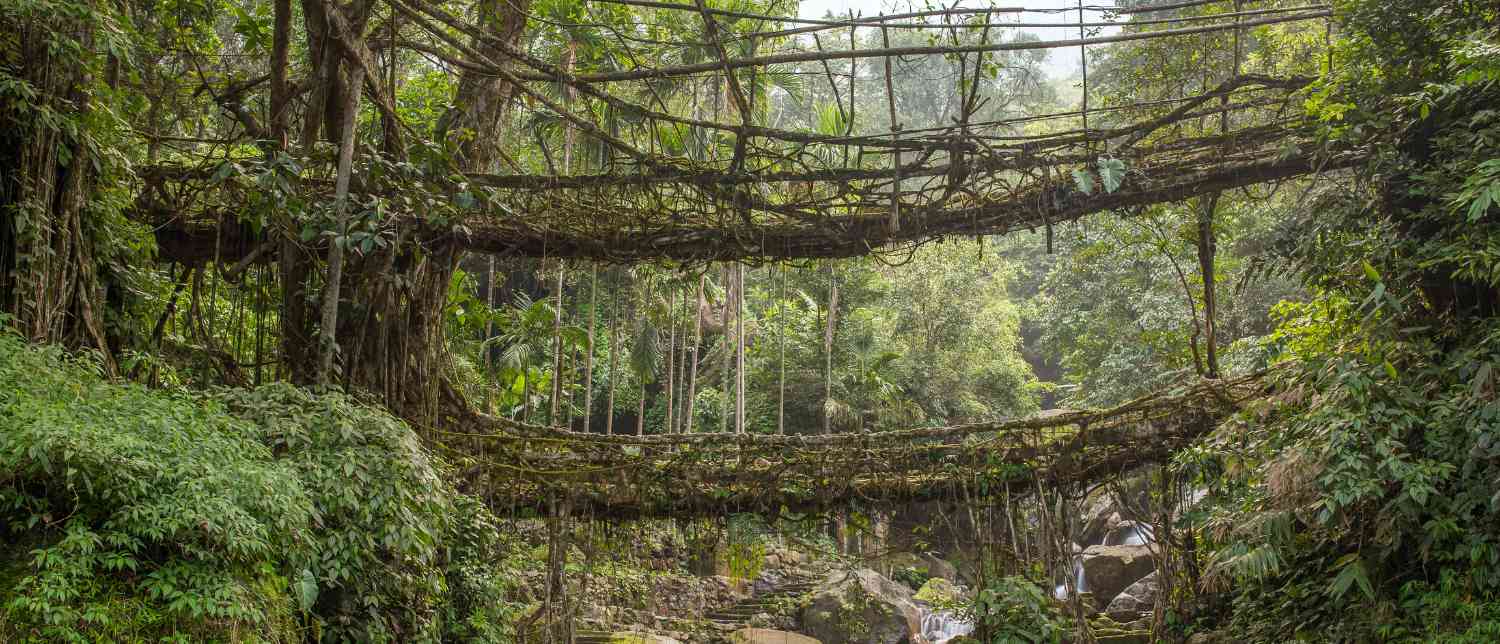
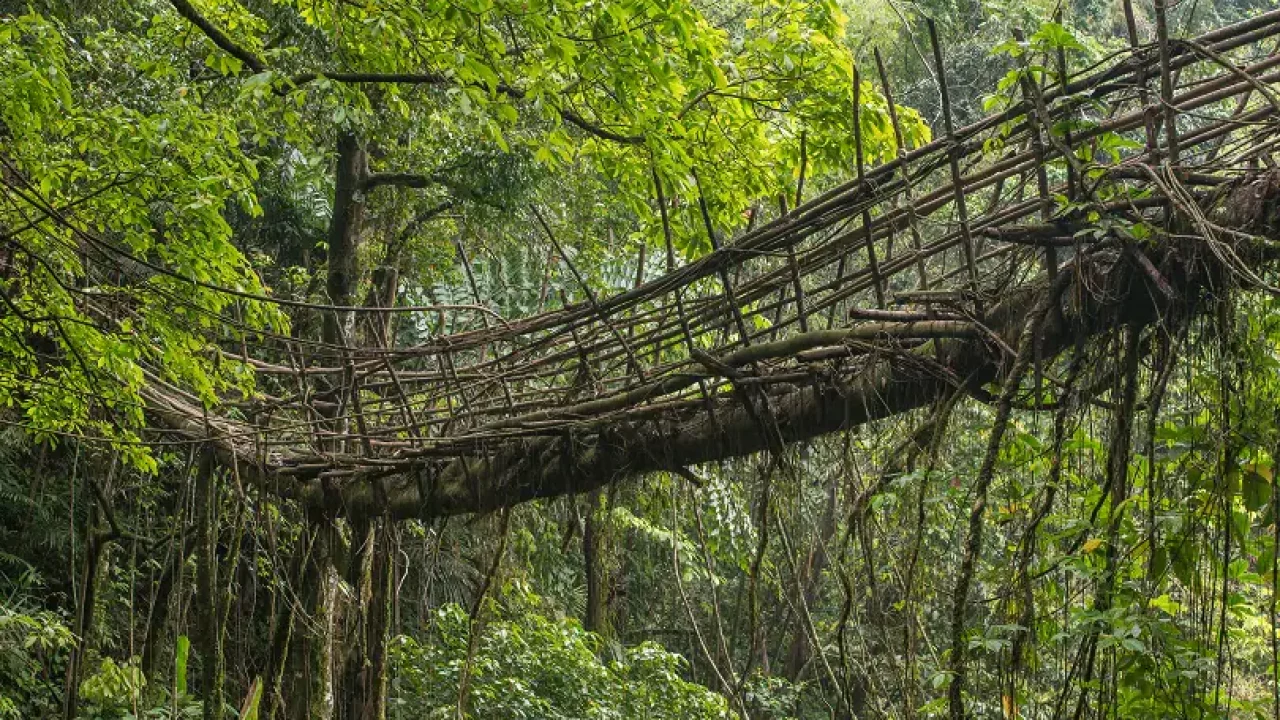
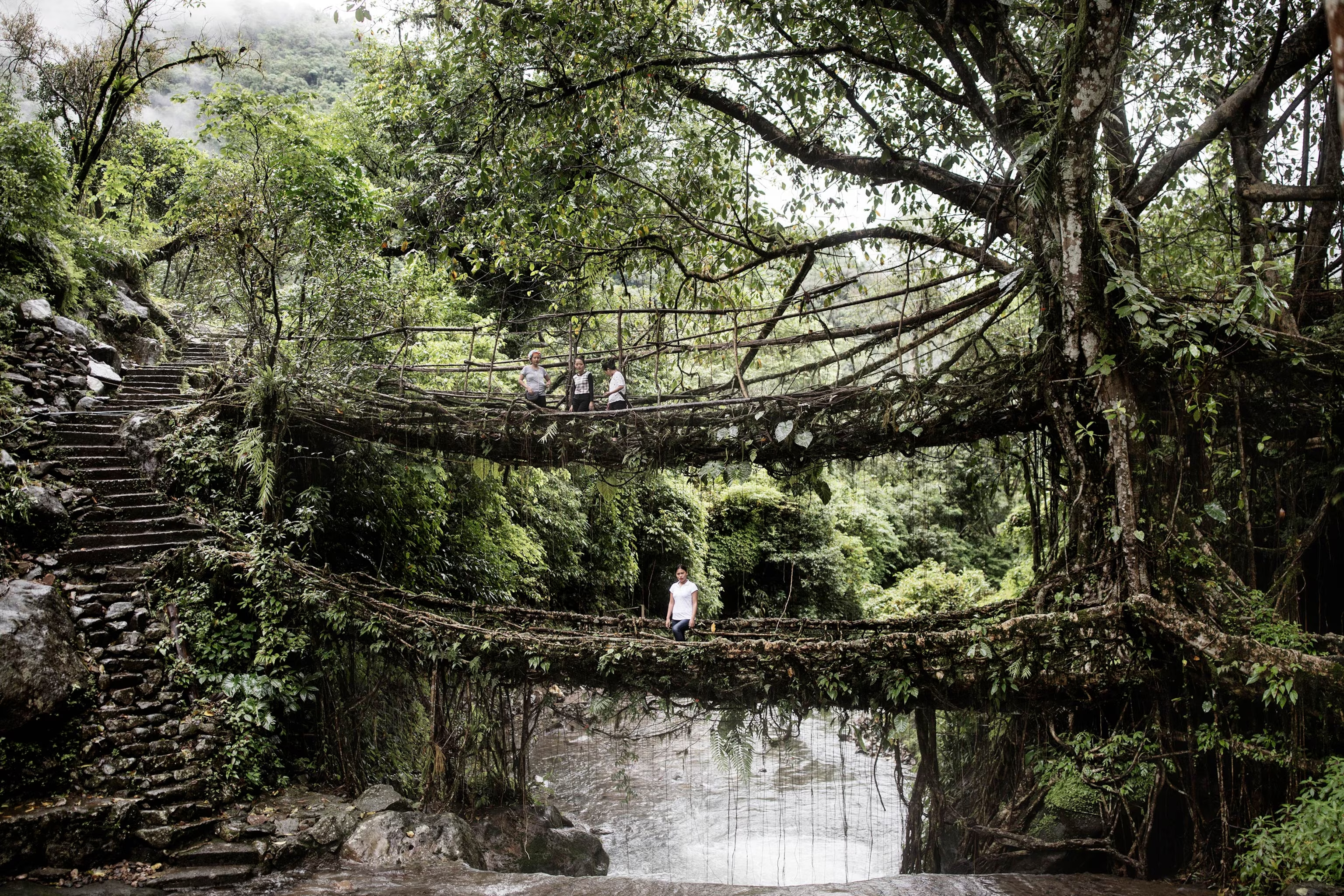
Living root bridges are natural, functional structures formed by guiding and training the aerial roots of rubber fig trees (Ficus elastica) across rivers, streams, and deep forest gorges. Unlike conventional bridges constructed from concrete, steel, or wood, these bridges are very much alive.
Over time—often taking several decades—the roots thicken, strengthen, and intertwine, forming resilient pathways capable of supporting the weight of dozens of people. Remarkably, as the trees continue to grow, the bridges become stronger with age rather than weaker. With proper care, many have lasted for centuries.
Found almost exclusively in Meghalaya’s Khasi and Jaintia Hills, living root bridges are among the world’s finest examples of sustainable bioengineering, perfectly adapted to a region that experiences some of the highest rainfall levels on Earth.
Who Built and Maintains the Living Root Bridges?
The living root bridges are the creation of Meghalaya’s indigenous Khasi and Jaintia communities, who developed this technique centuries ago in response to the region’s rugged terrain and heavy monsoon rains.
There are no written manuals for constructing these bridges. Instead, the knowledge is passed down orally and through hands-on practice, guided by community elders. Younger generations learn patience, precision, and respect for nature as they help shape and maintain the roots over many years.
This communal effort reflects core values of collective responsibility, long-term thinking, and environmental harmony. Each bridge stands as a symbol of how human ingenuity can work with nature rather than against it, adapting to challenging landscapes without causing ecological damage.
Meghalaya’s Living Root Bridges (Jingkieng Jri) dossier has been formally submitted to UNESCO in Paris by India’s Ambassador and Permanent Representative to UNESCO for consideration for inclusion in the World Heritage List 2026–27.
The submission follows closely on the… pic.twitter.com/9Ig5RENnPL— Conrad K Sangma (@SangmaConrad) January 29, 2026
Where Are Meghalaya’s Living Root Bridges Located?
The nominated cultural landscape stretches across the southern slopes of the Khasi and Jaintia Hills in Meghalaya. These forested regions are characterised by deep valleys, fast-flowing streams, waterfalls, and dense subtropical vegetation.
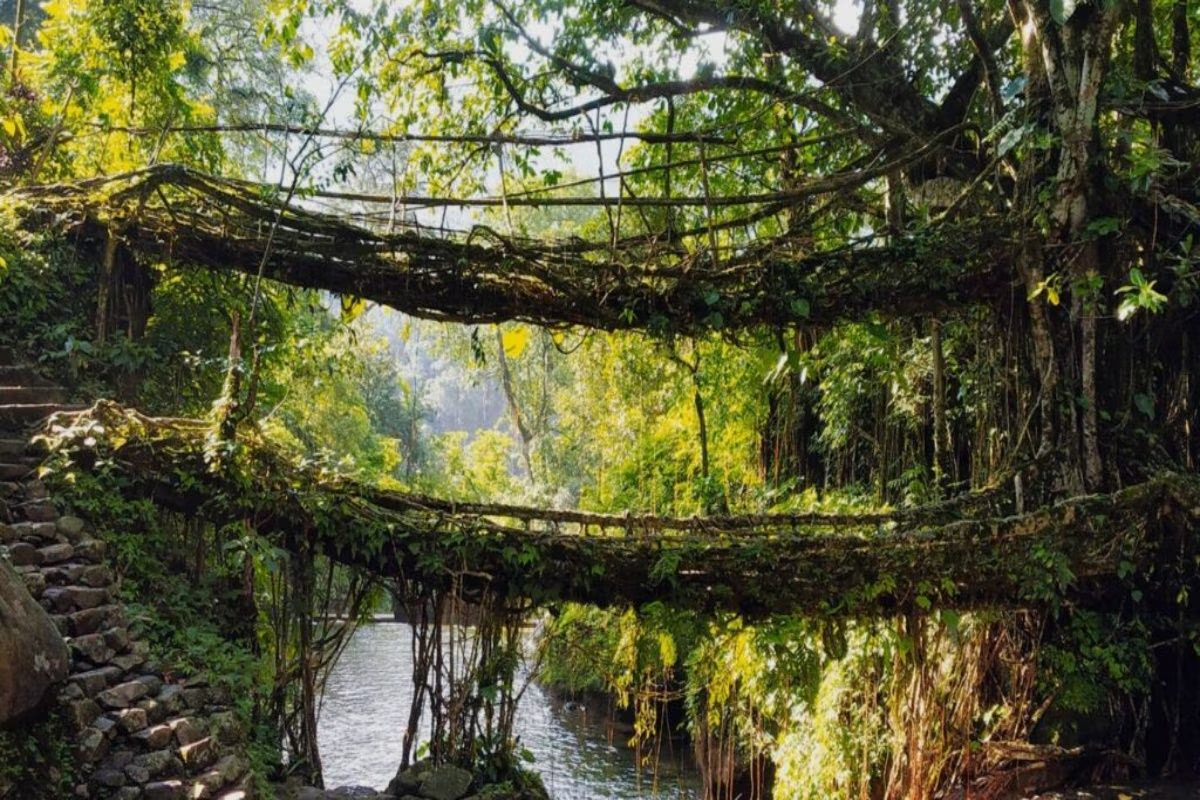
One of the most iconic locations is Nongriat village, home to the world-famous double-decker living root bridge, where two natural bridges are stacked one above the other. Reaching Nongriat itself involves a long trek through forests and steep stone pathways—an experience that underscores just how vital these bridges have been for daily life in remote villages.
In a land where landslides and floods are common, living root bridges have historically served as lifelines, enabling safe movement for villagers, traders, and children attending school.
When and How Was the UNESCO Nomination Submitted?
India officially submitted the nomination dossier in January 2026 for UNESCO’s 2026–27 World Heritage evaluation cycle.
The dossier was presented in Paris by Vishal V. Sharma, India’s Ambassador and Permanent Representative to UNESCO, to Lazare Assomo Eloundou, Director of UNESCO’s World Heritage Centre.
Titled “Jingkieng Jri / Lyu Chrai Cultural Landscape,” the submission outlines the historical, cultural, ecological, and spiritual significance of the living root bridges, positioning them as a rare example of a living cultural tradition rather than a static heritage site.
A Cultural Landscape Rooted in Belief and Ecology
At the heart of the nomination lies the indigenous philosophy of coexistence with nature and reverence for Mei Ramew, or Mother Earth. For the Khasi and Jaintia people, nature is not a resource to be exploited, but a living entity to be respected and nurtured.
The cultural landscape reflects a deep interconnection between people, land, belief systems, and governance structures. Traditional land management practices, community decision-making, and sustainable ecological stewardship are all embedded within the way these bridges are grown and preserved.
According to the nomination dossier, this harmonious relationship between humans and nature is expressed through social organisation, spiritual values, and environmental care—making the living root bridges a powerful symbol of indigenous ecological wisdom.
Recognition of Indigenous Knowledge Systems
One of the most significant aspects of the nomination is its emphasis on intangible heritage. Unlike archaeological ruins or monumental architecture, the living root bridges are part of a knowledge system that continues to evolve.
The submission highlights how this tradition represents a living, adaptive practice—one that responds to environmental challenges while preserving cultural identity. By recognising such landscapes, India aims to broaden global understanding of heritage to include sustainable living traditions, not just physical structures.
This approach aligns with UNESCO’s growing focus on cultural landscapes that showcase long-term human interaction with the environment.
Leadership and Community Efforts Behind the Nomination
While submitting the dossier, Ambassador Vishal V. Sharma acknowledged the leadership and support of Prime Minister Narendra Modi, Union Minister for Culture Gajendra Singh Shekhawat, and Meghalaya Chief Minister Conrad K. Sangma in advancing the nomination.
He also recognised the vital contributions of the Archaeological Survey of India, the Ministry of External Affairs, state officials including Meghalaya Principal Secretary Frederick Kharkongor, heritage experts, and most importantly, the local communities who continue to protect and nurture the bridges.
Chief Minister Conrad K. Sangma expressed optimism about the nomination’s success. In a post on X, he said the state is hopeful that the living root bridges will be inscribed, ensuring that the indigenous communities—the true guardians of this living heritage—receive the global recognition they deserve.
What UNESCO World Heritage Status Could Mean for Meghalaya
If the living root bridges are inscribed on the UNESCO World Heritage List, the impact could be transformative for Meghalaya.
-
Boost to Eco-Tourism
UNESCO recognition would likely draw increased international attention, boosting eco-tourism and creating new livelihood opportunities for local communities. However, officials have emphasised the need for responsible tourism that does not compromise the cultural or ecological integrity of the region.
-
Stronger Conservation Frameworks
World Heritage status often brings enhanced conservation policies, funding opportunities, and global collaboration. This could help ensure the long-term preservation of both the bridges and the surrounding ecosystems.
-
Global Recognition of Indigenous Stewardship
Perhaps most importantly, inscription would validate the role of indigenous communities as custodians of sustainable knowledge, reinforcing the importance of traditional practices in addressing modern environmental challenges.
A Global Spotlight on Meghalaya’s Living Heritage
If approved, Meghalaya’s living root bridges would join India’s expanding list of UNESCO World Heritage Sites, placing the northeastern state firmly on the global cultural and sustainable tourism map.
Beyond recognition, the nomination sends a powerful message: that heritage is not only about preserving the past, but also about celebrating living traditions that continue to offer solutions for a sustainable future.
As the world grapples with climate change and environmental degradation, Meghalaya’s living root bridges stand as a quiet yet profound reminder that sometimes, the most advanced engineering solutions are rooted in centuries-old wisdom—quite literally.
With inputs from agencies
Image Source: Multiple agencies
© Copyright 2025. All Rights Reserved. Powered by Vygr Media.