
 By
By 
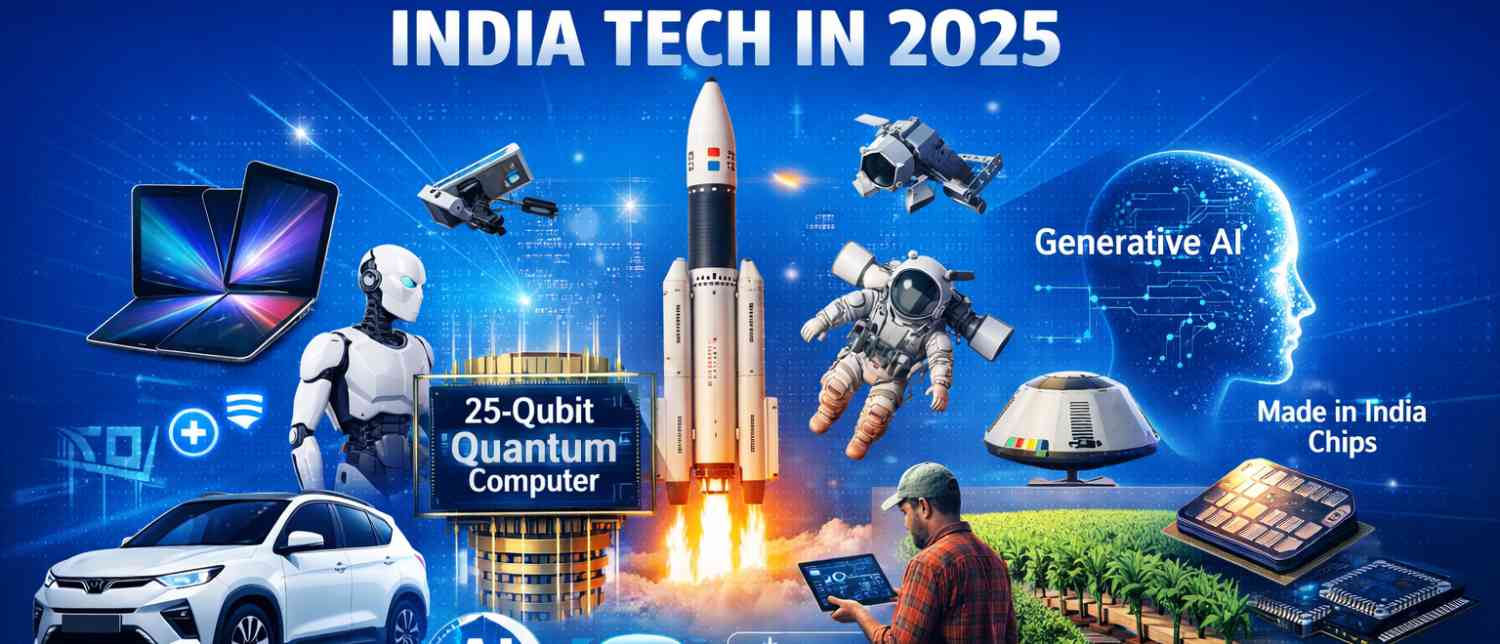
If one year can be described as a turning point in India’s technology journey, 2025 would qualify without hesitation. This was not a year of flashy experimentation or isolated breakthroughs. Instead, it marked the moment when years of policy planning, startup ambition, and industrial investment converged into visible outcomes across smartphones, artificial intelligence, space exploration, electric mobility, deeptech manufacturing, and digital public infrastructure.
From global smartphone brands launching flagship devices in India simultaneously with world markets, to Bengaluru unveiling the country’s first full-stack quantum computer, 2025 demonstrated that India is no longer just adopting technology—it is actively shaping it.
What stood out most was the balance. Global tech giants continued to treat India as a priority market, while Indian startups and manufacturers delivered innovations designed specifically for Indian users, languages, infrastructure, and scale. Artificial intelligence moved closer to everyday life, space missions edged toward human flight, semiconductor production crossed into commercial reality, and “Build in India” became more than a slogan.
Smartphones and Wearables: India Becomes a First-Launch Market
One of the clearest signals of India’s growing importance in global technology came from the smartphone industry. In 2025, flagship devices were no longer delayed launches for Indian consumers. They arrived alongside, or sometimes ahead of, international markets.
Samsung led this shift decisively by pushing foldable smartphones into the mainstream. The Galaxy Z Fold 7 and Z Flip 7 were launched with a sharper focus on productivity, durability, and everyday usability, while the more affordable Z Flip 7 FE dramatically widened access to foldable technology. Demand proved that foldables were no longer niche experiments but aspirational devices for a broader audience.
Samsung also strengthened its conventional flagship lineup with the Galaxy S25 series, unveiled early in 2025. The S25 Ultra leaned heavily into professional-grade photography, media creation, and multitasking, reinforcing Samsung’s “Pro” positioning. Later in the year, anticipation built around the Galaxy S25 FE, expected in late September or early October, aimed squarely at value-conscious premium buyers.
Other Android brands matched this momentum. OnePlus debuted the OnePlus 15 series in November 2025, powered by the Snapdragon 8 Elite chipset and featuring a 165Hz display designed for gamers and power users. The company also confirmed a more accessible OnePlus 15R, scheduled for a late December or early January release.
Realme’s GT 8 Pro made headlines with its Ricoh co-developed camera system, pushing photography standards in the flagship-killer segment.
Motorola continued carving a productivity-focused niche with the Edge 60 Stylus, integrating AI-powered tools for note-taking and workflow efficiency. Nothing, meanwhile, stayed true to its distinctive design language, ensuring that aesthetics remained part of the innovation conversation.
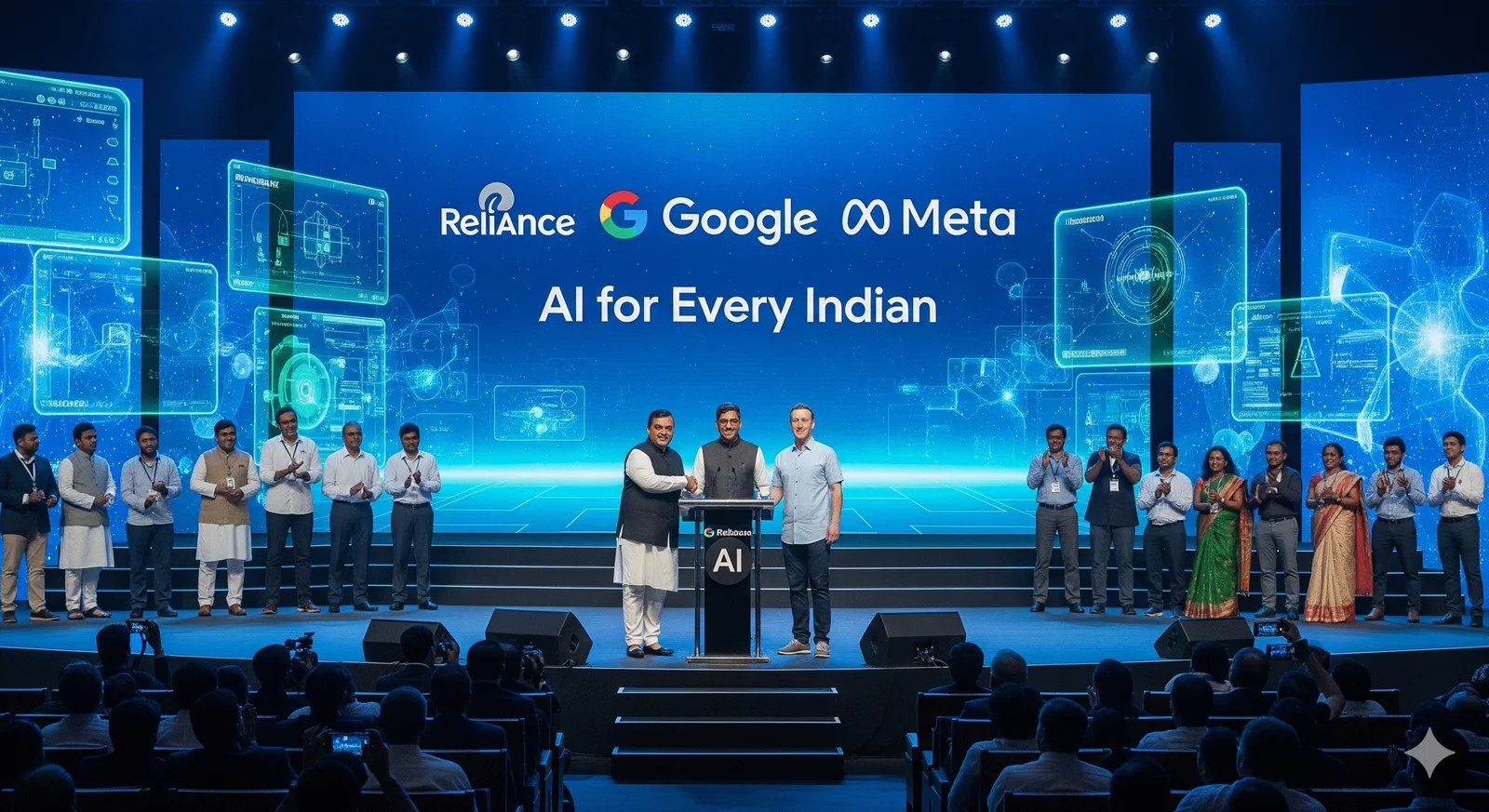
Apple and Google also reinforced India’s importance. Apple’s iPhone 17 series, launched in September 2025, introduced the ultra-slim iPhone 17 Air and standardized a 24MP front camera across all models. Google’s Pixel 10 series, unveiled in August, marked a turning point with the Tensor G5 chipset, enabling deeper on-device AI processing tailored for Indian users and languages.
Artificial Intelligence Moves from Labs to Lives
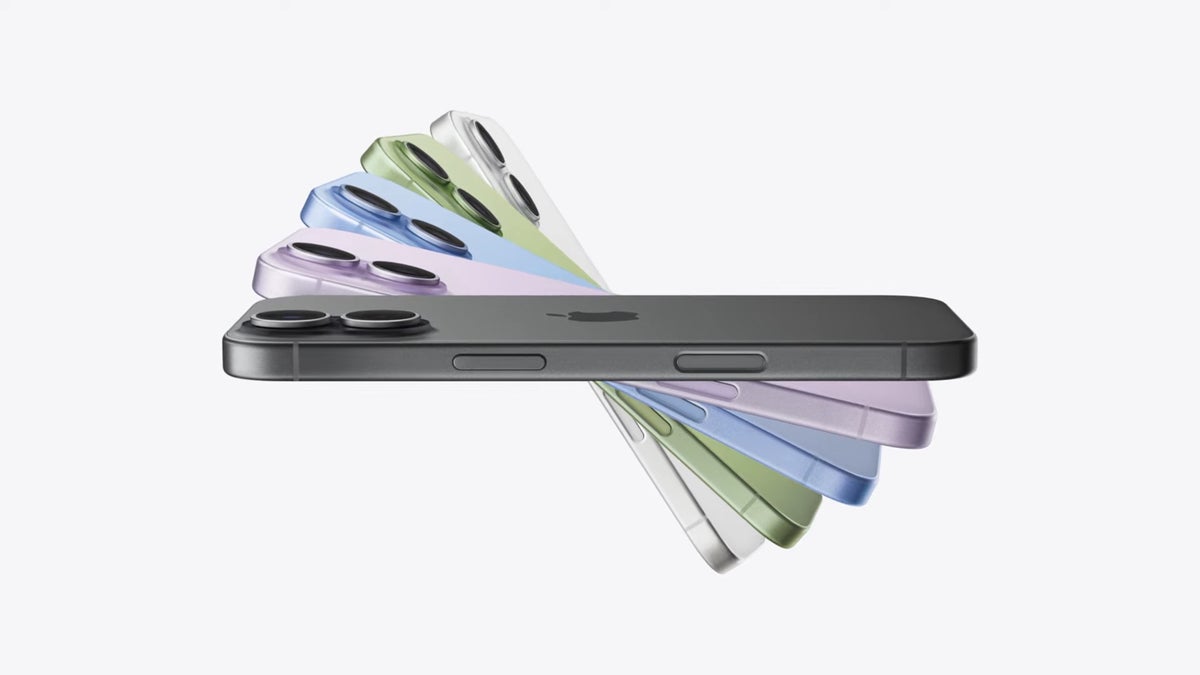
Artificial intelligence was not confined to tech demos in 2025—it entered classrooms, government departments, businesses, and homes. The IndiaAI Mission laid the foundation for this transition by focusing on shared computing infrastructure, quality datasets, and startup support at national scale.
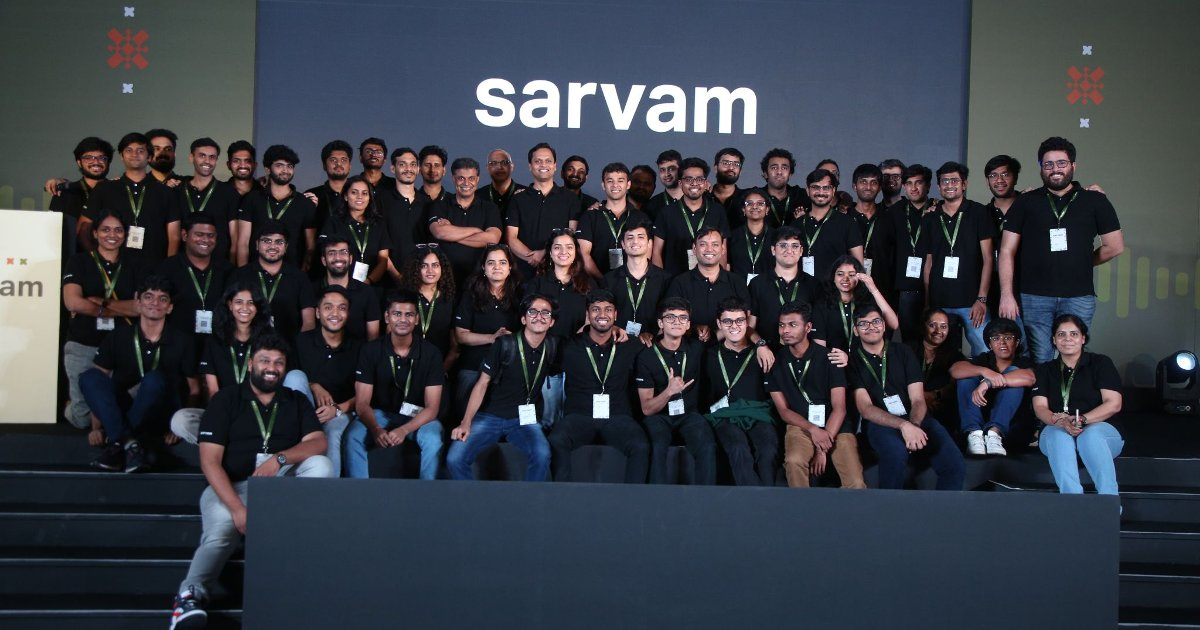
Among Indian startups, Sarvam AI emerged as a defining force. By developing AI models in Hindi, Tamil, Bengali, and other regional languages, Sarvam AI addressed one of India’s most persistent digital divides. In 2025, its tools were deployed across customer service platforms, educational systems, and government communication channels, proving that AI adoption in India must be multilingual to be meaningful.
Generative AI expanded rapidly beyond consumer novelty. AI-driven cybersecurity systems, automated website builders such as Squarespace Blueprint AI, and enterprise-grade analytics became mainstream. Large IT firms, including Tata Consultancy Services, openly discussed AI-led revenue growth and automation-driven efficiency, reflecting how deeply embedded AI had become in corporate strategy.
Healthcare also entered a more structured AI phase. Government plans announced in 2025 focused on using artificial intelligence for diagnostics, disease detection, hospital management, and public health surveillance—particularly in regions with limited access to specialists. Crucially, the narrative emphasized AI as a support system for doctors, not a replacement.
Education and governance followed suit. IIT Madras launched national AI training programmes for government officials, preparing administrators to deploy AI tools in areas such as grievance redressal, urban planning, and traffic management. Several states began piloting similar systems, especially in large urban centres.
Indigenous Deep Tech: Quantum, Semiconductors, and Generative AI
If 2025 proved anything, it was that India’s deeptech ambitions are no longer theoretical. Under the National Quantum Mission, a Bengaluru-based startup launched India’s first 25-qubit full-stack quantum computer, integrating hardware, control systems, and software. While still early-stage, this placed India among a small group of countries actively building quantum hardware with long-term applications in cryptography, materials science, and complex optimisation problems.
While commercial applications remain years away, the implications are long-term—ranging from materials science and cryptography to logistics optimization and drug discovery.
Semiconductors saw equally significant progress. Backed by approximately $18 billion in commitments, semiconductors moved from policy intent to production. Under the India Semiconductor Mission, ten projects received approval, backed by approximately $18 billion in commitments and a ₹76,000 crore outlay. Commercial production of the first Made-in-India 32-bit processor chips, branded DHRUV64, began in 2025. Facilities across Gujarat, Assam, Odisha, Punjab, and Tamil Nadu focused on assembly, testing, packaging, and gradually, fabrication at 28–90 nm nodes.
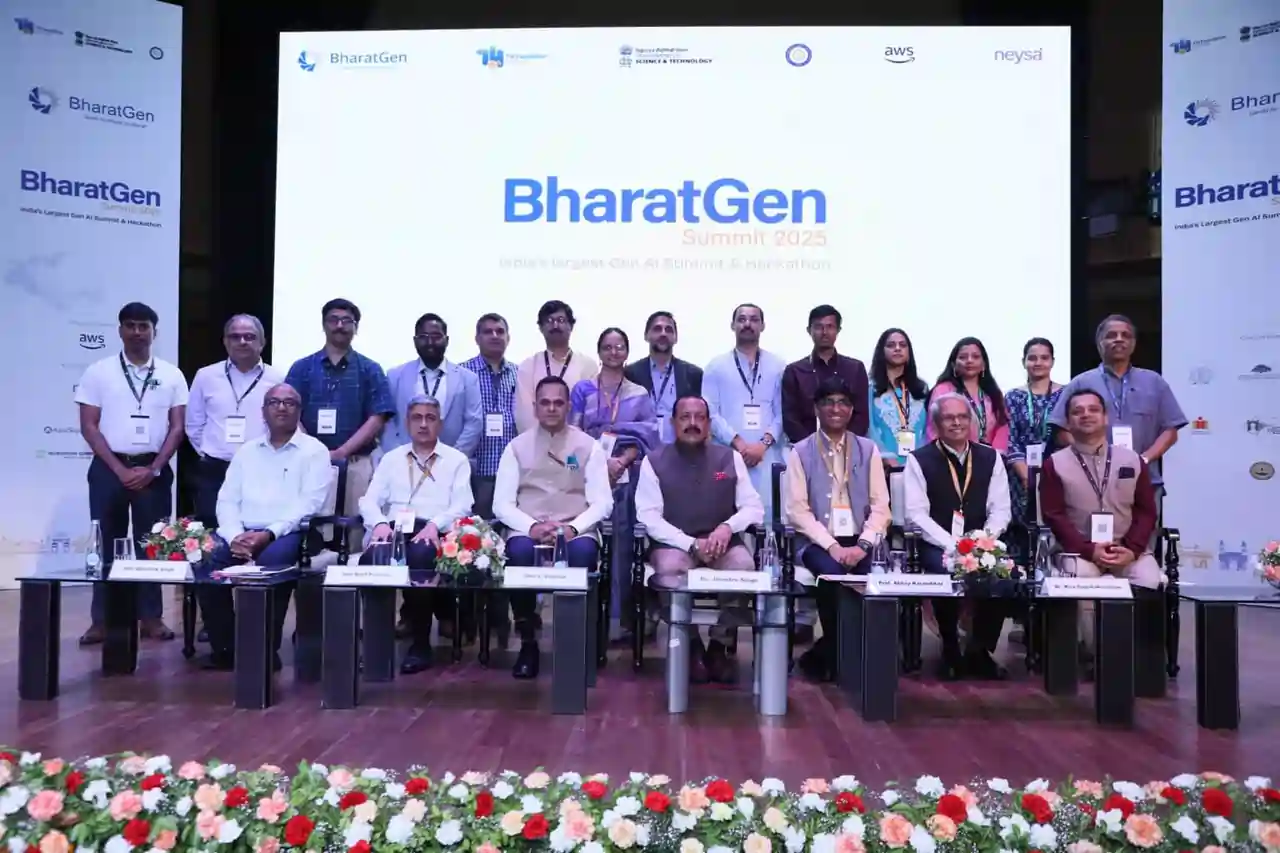
The BharatGen initiative added another layer, launching large-scale generative AI models trained specifically on Indian languages to support digital inclusion, governance, and enterprise applications.
Space Technology: From Reliability to Advanced Capability
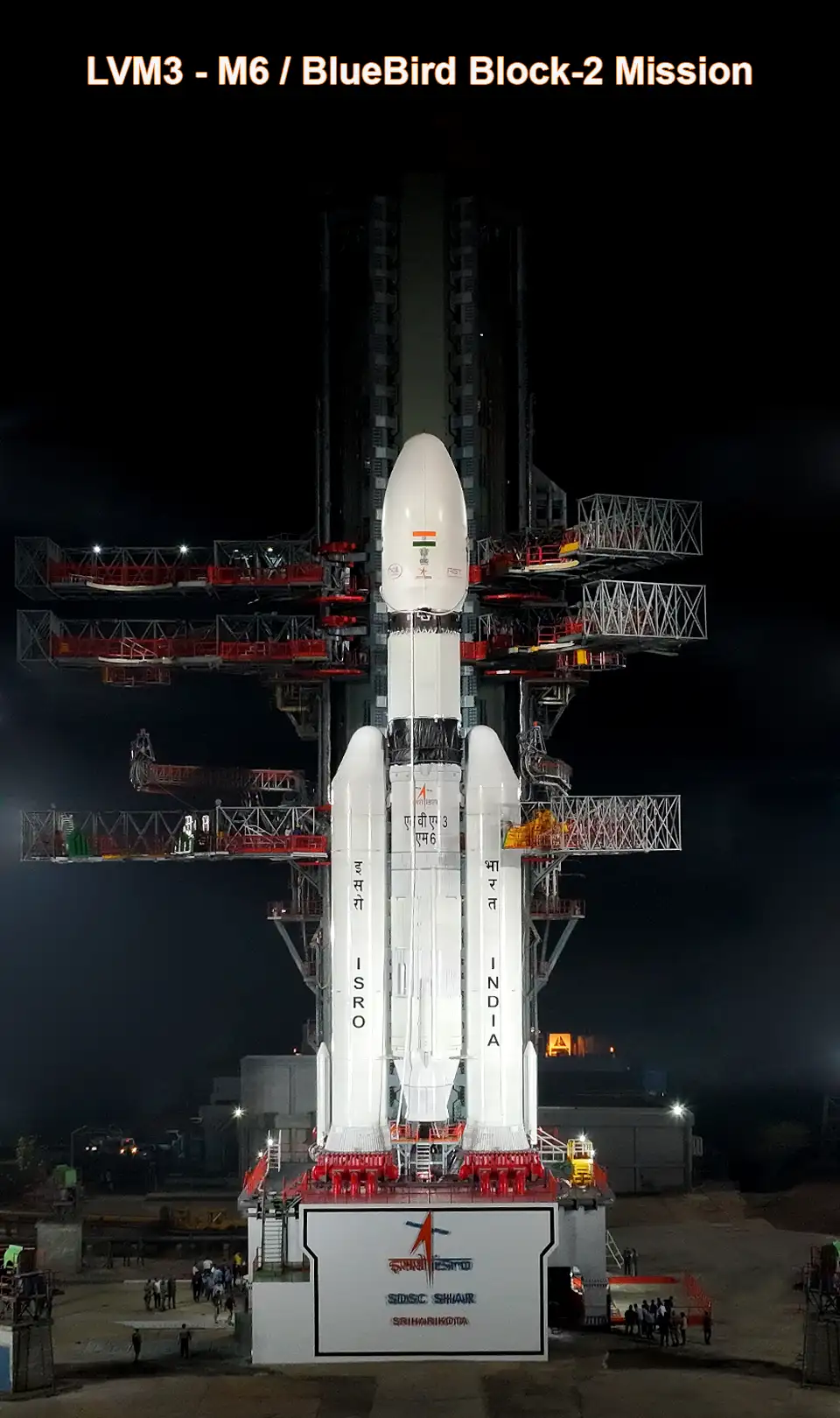
India’s space programme continued its steady ascent in 2025, marked by both technological achievements and ambitious timelines. ISRO continued record satellite launches, including the BlueBird Block-2 missions, and announced plans for additional launch pads to support rising demand.
A key milestone was the advancement of autonomous docking capabilities through the SpaDeX mission, where ISRO successfully demonstrated spacecraft docking and power transfer—essential for future space station plans. These capabilities quietly positioned India among a select group of nations capable of complex in-space operations.
The most closely watched development was the Gaganyaan mission. ISRO slated the first uncrewed orbital test flight for Q4 2025, with life-support systems, human-rated launch hardware, and the Vyommitra humanoid payload prepared for the December test window. Subsequent uncrewed flights are planned before India’s first crewed mission, likely later in the decade.
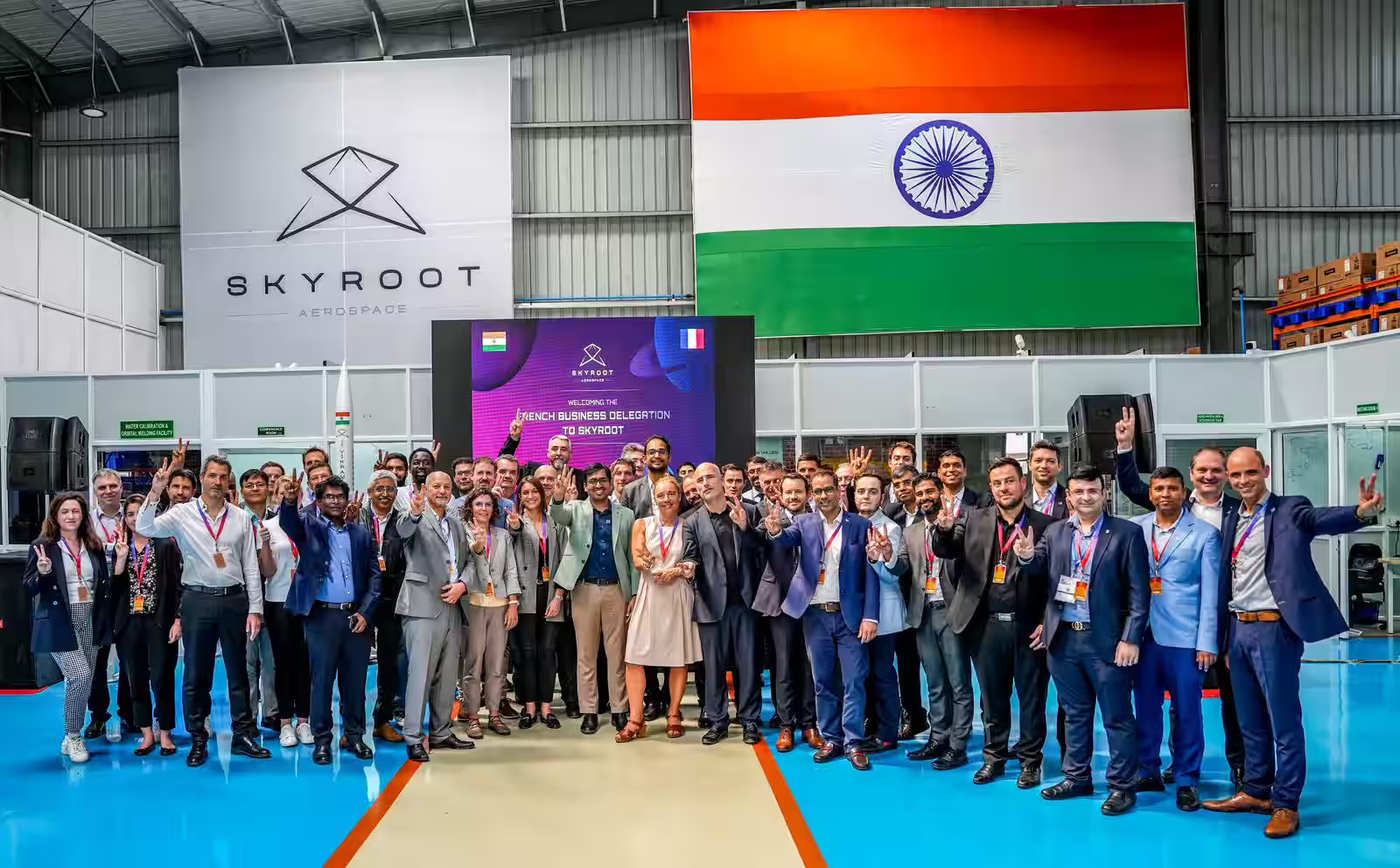
Beyond ISRO, private space startups strengthened India’s commercial space credentials. Skyroot Aerospace continued developing reusable and affordable launch vehicles following its earlier Vikram-S success, aiming to democratize satellite access for research institutions and small organisations.
Smart Homes, Laptops, and Everyday Tech
Technology in 2025 was not limited to labs and factories—it entered living rooms and workspaces more seamlessly than ever.
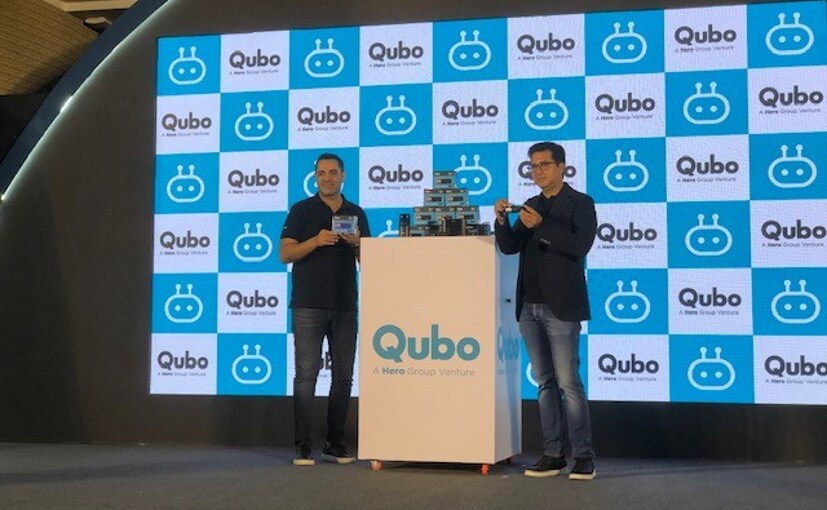
Hero Group’s Qubo expanded its smart home lineup with new smart door locks, reinforcing the growth of AI-enabled home security in India.
Dell responded to rising enterprise and creator demand by introducing AI-powered laptops such as the Dell 14 Plus and 16 Plus, designed to handle on-device AI workloads efficiently. These machines reflected a broader shift toward AI-integrated computing becoming standard rather than a premium add-on.
Electric Mobility and Sustainable Tech

Electric vehicles continued their steady rise. Mahindra’s XEV 9S emerged as one of the most anticipated indigenous electric SUV launches of the year, signaling India’s ambitions in premium EV manufacturing.
Ather Energy strengthened its leadership in electric two-wheelers by integrating advanced IoT features, OTA updates, and expanding its charging network deep into Tier-2 and Tier-3 cities.
Sustainability extended beyond EVs. Green hydrogen, biofuels, advanced solar manufacturing, and grid digitalisation gained policy momentum, aligning climate goals with industrial growth.
Top Indian Tech Startups Shaping 2025
Seven Indian startups stood out in 2025 for redefining their sectors. Sarvam AI championed multilingual artificial intelligence, while Ather Energy accelerated clean mobility adoption. Zepto reimagined urban commerce through ultra-fast delivery powered by automation and analytics. Skyroot Aerospace pushed private spaceflight forward. Innovaccer transformed health data analytics across India and the US. Zetwerk digitised manufacturing supply chains, empowering MSMEs. Cred expanded fintech beyond credit cards into AI-driven wealth and insurance services.
Together, these companies illustrated broader trends—AI everywhere, sustainability as strategy, deeptech investment, youth-led entrepreneurship, and digital inclusion reaching rural India.
Made-in-India Gadgets Take Centre Stage
Consumer hardware also reflected India’s growing confidence. The boAt Lunar Embrace smartwatch delivered ECG monitoring, AMOLED display, and long battery life at an accessible price. Noise Air Buds Pro 3 showcased premium audio features under ₹3,000. Zebronics’ Zeb-Juke Bar 9750 brought Dolby 5.1 sound to Indian living rooms without premium pricing.
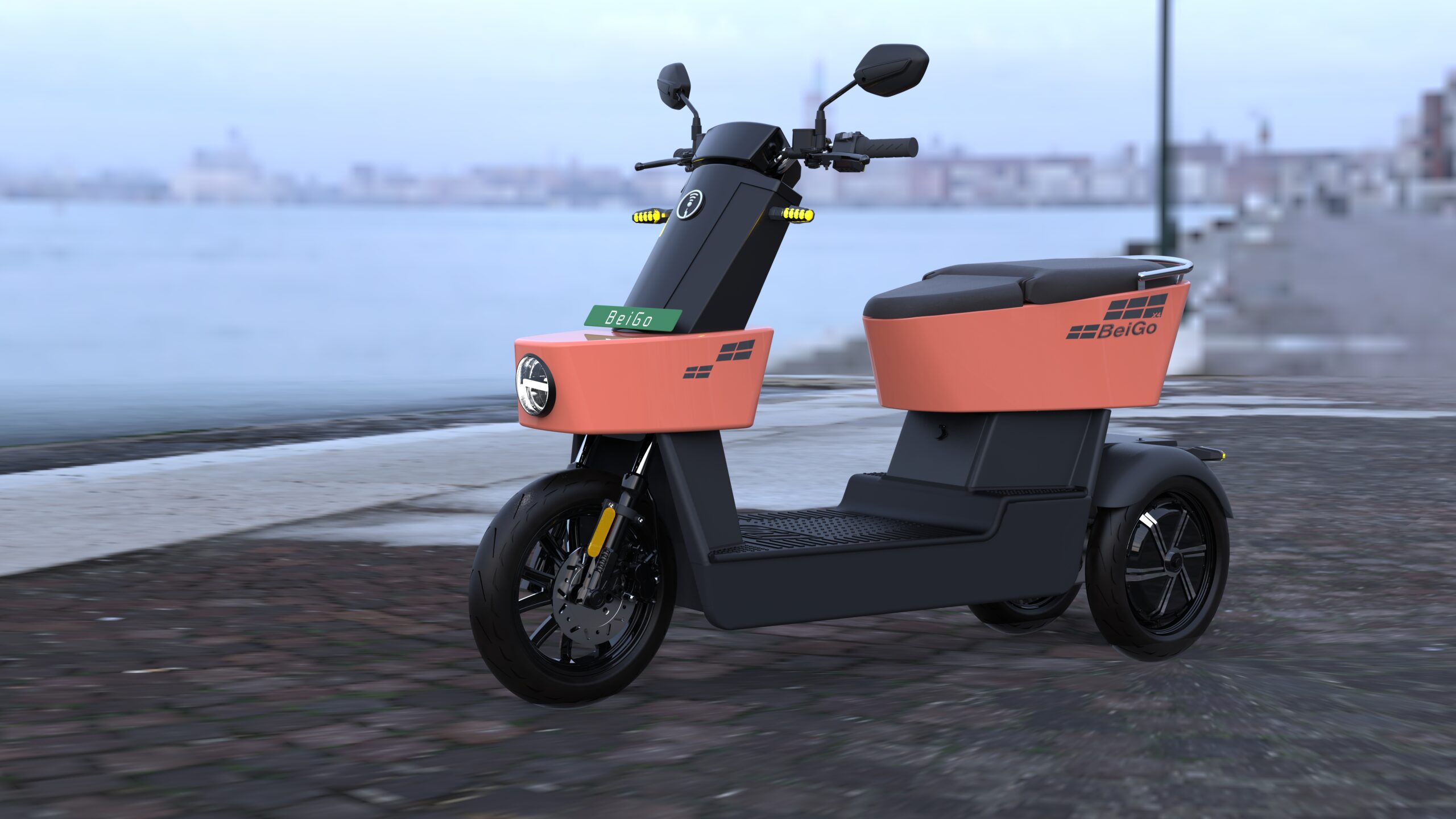
In mobility, IGowise’s BeiGo X4 smart electric scooter introduced AI-enhanced battery management and triple-wheel stability designed for Indian roads. At the frontier of inspiration, Chennai-based AgniKul Cosmos offered educational rocket kits and 3D-printed space models endorsed by ISRO scientists, nurturing the next generation of aerospace talent.
These gadgets were not merely patriotic choices—they offered tailored features for Indian lifestyles, weather conditions, and usage patterns.
Digital Infrastructure and Payments
Behind the scenes, data centres emerged as strategic national infrastructure. Maharashtra and Tamil Nadu led capacity growth, while Karnataka and Uttar Pradesh attracted investments through renewable energy access and fibre connectivity. Domestic data centres became critical for AI workloads, reducing reliance on overseas servers.
Digital payments continued their quiet dominance. UPI handled massive transaction volumes across urban and rural India, while UPI Autopay expanded subscription-based payments. The rollout of Digital Personal Data Protection rules improved confidence in a system processing billions of transactions each month.
A Year of Consolidation, Not Flash
Looking back, 2025 was less about dramatic headlines and more about durable progress. AI entered classrooms, hospitals, and government offices. Chips moved closer to production lines. Space missions matured from ambition to execution. Clean energy linked climate goals with industrial strategy.
The significance of 2025 lies in the foundations laid rather than the promises made. It was the year when India’s technological aspirations became measurable, scalable, and increasingly irreversible.
India’s Technological Trajectory After 2025
As India moves forward, the lessons of 2025 are clear. Sustainable technological leadership requires patient execution, inclusive design, and institutional alignment. Whether through quantum computing labs, multilingual AI platforms, indigenous gadgets, or human spaceflight programs, India demonstrated that innovation at scale is not only possible—but underway.
The future of technology is not being imported into India. It is being built here, for India, and increasingly, for the world.
With inputs from agencies
Image Source: Multiple agencies
© Copyright 2025. All Rights Reserved. Powered by Vygr Media.