
 By
By 
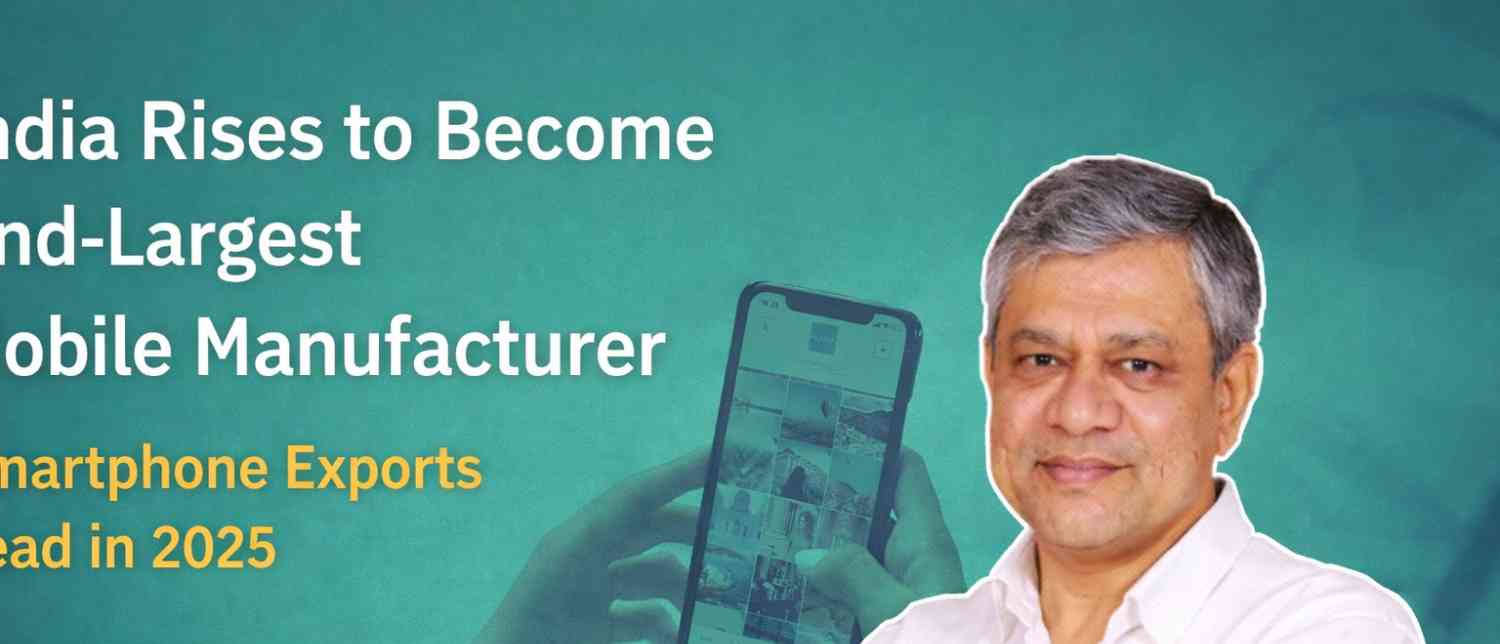
India’s electronics manufacturing sector has undergone a remarkable transformation over the past decade. Once heavily dependent on imports, the country has rapidly built a domestic manufacturing ecosystem that now positions it as the second-largest mobile phone manufacturing country in the world. At the center of this shift lies the explosive growth of smartphone production and exports, which in 2025 emerged as India’s largest export category by value, marking a major turning point in the country’s industrial and trade landscape.
This transformation is the result of coordinated policy initiatives, global supply chain realignments, and the expanding presence of technology giants such as Apple and Samsung. Together, these forces have turned India into one of the most important hubs for mobile device manufacturing globally.

The Vision Behind India’s Electronics Manufacturing Push
India’s rise as a global electronics manufacturing destination is closely tied to the government’s broader industrial strategy. Initiatives such as Make in India and Atmanirbhar Bharat were designed to create a complete ecosystem for electronics manufacturing—encouraging domestic production, attracting foreign investment, and strengthening supply chains.
Over the last decade, these policies have driven rapid expansion in the mobile manufacturing sector. India has moved from being primarily an importer of mobile devices to becoming a large-scale producer capable of serving both domestic and international markets. The number of mobile manufacturing units in the country has expanded dramatically—from just two production facilities in 2014 to more than 300 today.
This expansion reflects not only growing domestic demand but also India’s increasing integration into global technology supply chains.
A Decade of Explosive Growth in Mobile Manufacturing
India’s mobile manufacturing output has surged dramatically since the mid-2010s. The industry’s production value rose from about $3 billion in FY2015 to around $49 billion by FY2024, demonstrating the scale and speed of the sector’s expansion.
Government-backed incentive programs—especially the Production Linked Incentive (PLI) scheme—have played a critical role in accelerating this growth. Introduced to encourage large-scale electronics manufacturing, the program provided financial incentives tied to production volumes and exports. The scheme successfully attracted global manufacturers and component suppliers to establish or expand operations in India.
As a result, India now produces hundreds of millions of mobile devices annually, with manufacturing capacity growing alongside a rapidly expanding ecosystem of suppliers, logistics providers, and skilled labor.
Smartphones Become India’s Largest Export Category in 2025
The most striking indicator of India’s manufacturing success arrived in 2025, when smartphones became the country’s largest export category for the first time. Total overseas shipments reached approximately $30 billion, surpassing traditional export items such as automotive diesel fuel and processed diamonds.
This milestone marks a fundamental shift in India’s export profile. Historically, the country’s exports were dominated by commodities, textiles, or gems and jewelry. The rise of smartphones as the top export signals a move toward high-technology manufacturing and value-added industrial output.
The growth trajectory is also impressive. Smartphone exports increased sharply from around $20.4 billion in 2024 to about $30 billion in 2025, reflecting a surge of roughly 47.5 percent year-on-year.
Such growth has helped drive broader electronics exports as well. In 2025, India’s electronics exports crossed ₹4 lakh crore (about $44 billion), highlighting how mobile devices are fueling the country’s emerging electronics export ecosystem.
Apple’s Role in Turning India into a Global Manufacturing Hub
One of the most important catalysts behind India’s smartphone export boom has been the rapid expansion of Apple’s manufacturing footprint in the country.
Over the past few years, Apple has increasingly diversified its supply chain beyond China, a strategy often described as “China Plus One.” India has become a central pillar of that strategy. Major Apple suppliers and manufacturing partners established large facilities in the country, helping transform it into a key production base.
By 2025, the scale of Apple’s operations in India had reached impressive levels:
-
Apple exported iPhones worth about $23 billion from India in 2025, forming the majority of the country’s smartphone exports.
-
The value of iPhones manufactured in India crossed ₹3 trillion, underscoring the enormous scale of the ecosystem that has developed around Apple’s supply chain.
This growth has been driven by a network of manufacturing partners and suppliers operating across multiple Indian states. The expansion of Apple’s production facilities has also encouraged the development of a broader component and electronics ecosystem within the country.
The impact extends far beyond exports. Apple’s manufacturing expansion has helped generate jobs, stimulate investment in electronics manufacturing clusters, and encourage skill development within India’s workforce.
Supply Chain Shifts and the Global Technology Landscape
Global geopolitical and economic developments have also played a role in accelerating India’s emergence as a manufacturing hub.
Technology companies are increasingly seeking to diversify their supply chains to reduce risks associated with over-dependence on a single manufacturing location. Trade tensions, tariffs, and disruptions experienced during recent global crises have encouraged multinational companies to spread production across multiple countries.
India has benefited significantly from this shift.
With its large labor force, improving infrastructure, supportive policies, and expanding electronics ecosystem, the country has become an attractive alternative manufacturing destination for global smartphone brands.
As a result, many major technology companies have expanded their production presence in India, producing devices not only for the domestic market but also for export to regions such as North America, Europe, and Asia.
Government Policies Driving the Transformation
The transformation of India’s mobile manufacturing sector has been strongly supported by government policies aimed at building a comprehensive electronics ecosystem.
Several key initiatives have been particularly influential:
1. Production Linked Incentive (PLI) Scheme
The PLI scheme provided financial incentives tied to incremental production and exports, encouraging global companies to manufacture devices in India.
2. Infrastructure Development
Electronics manufacturing clusters, industrial parks, and logistics infrastructure have been developed to support large-scale production.
3. Supply Chain Localization
Policies encouraging local manufacturing of components—such as printed circuit boards, batteries, and camera modules—have helped strengthen domestic supply chains.
4. Workforce Development
Skill development initiatives have supported the training of technicians and engineers required for electronics manufacturing.
These initiatives have collectively enabled India to build a complete electronics manufacturing ecosystem, which is essential for sustaining large-scale production and exports.
Economic and Employment Impact
The rapid expansion of mobile manufacturing has generated significant economic benefits.
The sector has created more than 1.2 million jobs over the past decade, contributing to household incomes and strengthening India’s broader socio-economic landscape.
The industry’s growth has also stimulated investment in related sectors such as logistics, semiconductor fabrication, packaging, and electronics component manufacturing.
This ripple effect has helped transform electronics manufacturing into one of the most dynamic sectors within India’s economy.
From Import Dependency to Global Export Powerhouse
Just a decade ago, India relied heavily on imported smartphones and electronics. Domestic production met only a small portion of the country’s demand.
Today, the situation is dramatically different.
Domestic manufacturing now meets nearly 97 percent of India’s mobile phone demand, while large volumes are exported to global markets.
This transition from import dependency to export leadership represents one of the most significant structural shifts in India’s manufacturing sector.
The Road Ahead: Sustaining the Momentum
Despite the remarkable progress, India’s electronics manufacturing sector still faces challenges.
Key priorities for the future include:
-
Strengthening semiconductor manufacturing capabilities
-
Increasing domestic production of electronic components
-
Enhancing logistics and supply chain efficiency
-
Expanding research and development in advanced electronics
Continued policy support and investment will be essential for maintaining the momentum that has propelled India to the forefront of global mobile manufacturing.
Final Thoughts
India’s rise as the world’s second-largest mobile manufacturing country and the emergence of smartphones as its largest export category in 2025 represent a defining moment in the country’s industrial evolution.
A powerful combination of government policy, global supply chain shifts, and large-scale investment by international technology companies has driven the transformation. From just a handful of production facilities a decade ago, India now hosts a vast network of manufacturing units that produce hundreds of millions of smartphones annually.
With smartphone exports exceeding $30 billion and companies such as Apple exporting devices worth $23 billion annually from India, the country has firmly established itself as a major player in the global electronics manufacturing landscape.
As India continues to strengthen its manufacturing ecosystem and expand its technological capabilities, the smartphone revolution may be just the beginning of a broader transformation in the country’s high-technology manufacturing sector.
With inputs from agencies
Image Source: Multiple agencies
© Copyright 2025. All Rights Reserved. Powered by Vygr Media.