
 By
By 
The Indian government's growing focus on tackling cybercrime has brought WhatsApp's upcoming username feature under the regulatory spotlight, with authorities asking Meta to halt its rollout in the country until concerns surrounding fraud, impersonation and online safety are addressed.
According to multiple reports citing government sources, the Ministry of Electronics and Information Technology (MeitY) has directed Meta not to introduce the feature in India for now and has sought a detailed explanation of its functioning within three days. The move comes amid fears that the privacy-focused feature, while designed to reduce the need for sharing mobile numbers, could inadvertently create new opportunities for scammers and cybercriminals.
Why the government is concerned
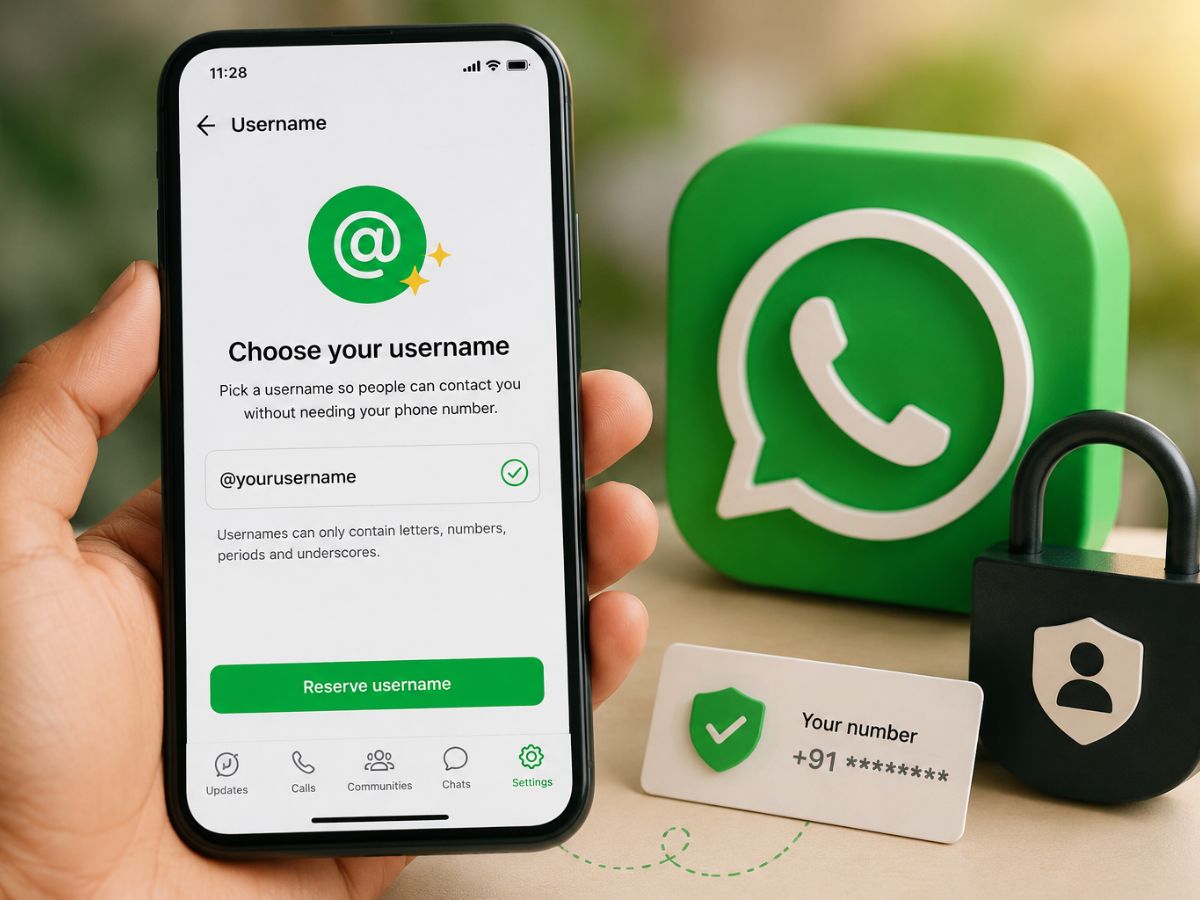
WhatsApp recently announced the rollout of usernames, allowing users to communicate without revealing their phone numbers. The feature is intended to enhance user privacy by letting people interact using unique usernames instead of mobile numbers, similar to platforms such as Telegram and Signal.
However, Indian authorities believe that the same feature could make it easier for fraudsters to conceal their identities while impersonating government officials, banks, businesses or well-known personalities.
Officials are particularly worried about the surge in cyber fraud cases, including digital arrest scams, investment fraud, fake customer support schemes and identity theft, which have already caused significant financial losses across the country. They fear that removing visible phone numbers from first-time interactions may make it harder for users to verify who they are communicating with.
According to government sources, cybersecurity cannot become an afterthought. Authorities have reportedly made it clear that technology platforms introducing new features must ensure they do not create fresh vulnerabilities for users.
Meta asked to pause rollout
Sources said MeitY has formally communicated to Meta that the username feature should not be rolled out in India until consultations with the government are completed to its satisfaction.
The ministry has also reportedly asked the company to submit supporting documents explaining the feature, its safeguards and the mechanisms in place to prevent misuse within three days. The government is expected to examine these submissions before taking a final view on whether the feature can be introduced in the country.
The scrutiny reflects India's increasingly proactive approach towards regulating digital platforms, particularly when new features have the potential to affect public safety, cybersecurity or financial fraud.
The impersonation challenge
One of the government's biggest concerns is the possibility of malicious actors creating usernames that closely resemble those of trusted institutions or individuals.
Officials believe such usernames could be exploited to deceive users into believing they are interacting with legitimate organisations, government departments, banks or customer care representatives. Combined with sophisticated social engineering techniques, such impersonation could make online scams even more convincing.
Authorities are also evaluating whether anonymity through usernames could complicate investigations into cybercrime by making it more difficult for victims to identify fraudsters during initial interactions.
These concerns gain significance against the backdrop of India's continuing battle against digital fraud, where scammers increasingly exploit messaging platforms to establish trust before convincing victims to transfer money or disclose sensitive information.
WhatsApp's privacy argument
WhatsApp, however, has defended the feature, describing it primarily as a privacy enhancement rather than an anonymity tool.
The company has said usernames are intended to reduce the need to share personal phone numbers, especially when communicating with people or businesses for the first time.
Unlike traditional social media platforms, WhatsApp says usernames will not be searchable through a public directory. A person will need to know another user's exact username before initiating contact, limiting random discovery.
The company also emphasises that users will continue registering their WhatsApp accounts using mobile numbers. The username simply acts as an additional layer of identity during conversations.
Safeguards proposed by Meta
Responding to the government's concerns, Meta has highlighted several safeguards built into the feature to minimise impersonation risks.
Among the measures outlined by the company are:
-
Reservation of usernames associated with high-profile personalities, public figures and organisations to prevent misuse.
-
Blocking repeated attempts to claim protected usernames.
-
Displaying additional information when a user receives a first message from an unknown person using a username.
-
Optional "username key" protection, allowing users to control who can initiate conversations through their username.
-
No public username directory, making usernames non-discoverable through search.
Meta argues that these protections have been specifically designed to strike a balance between privacy and security while reducing opportunities for impersonation.
How the username feature works
WhatsApp recently began allowing users to reserve usernames before the wider rollout.
According to the company, usernames can contain between three and 35 characters using Latin letters, numbers, periods and underscores.
Once enabled, users who choose to adopt a username can communicate with new contacts without exposing their mobile number. Existing contacts and ongoing chats linked through phone numbers remain unaffected.
The company also plans to allow businesses to communicate using usernames, offering another privacy-focused option for customer interactions in the future.
Digital fraud remains a major concern
The government's cautious approach comes amid a sharp rise in sophisticated cybercrime across India.
Digital arrest scams, in which fraudsters impersonate police officers, investigative agencies or government officials, have become one of the country's fastest-growing forms of online fraud. Victims are often coerced into transferring large sums of money after being falsely accused of criminal activity.
Authorities believe messaging platforms play an increasingly important role in these scams because fraudsters rely on convincing identities and trusted communication channels.
Officials have therefore indicated that any platform introducing features capable of masking identities or increasing impersonation risks must demonstrate adequate safeguards before deployment.
Regulatory oversight of digital platforms
The latest development also reflects the Indian government's broader emphasis on platform accountability.
Over the past several years, technology companies operating in India have faced heightened scrutiny over user privacy, misinformation, cybersecurity and regulatory compliance.
Government officials have reportedly made it clear that companies cannot shift responsibility for fraud arising from new features entirely onto users. Instead, platforms are expected to proactively assess risks before introducing significant product changes.
What happens next?
For now, the rollout of WhatsApp usernames in India appears to be on hold pending further discussions between Meta and the government.
The company is expected to submit a comprehensive explanation detailing how the feature works, the safeguards against impersonation and fraud, and why it believes the privacy benefits outweigh the associated risks.
Following this review, the government will decide whether additional conditions, modifications or regulatory measures are necessary before permitting the feature's launch.
The outcome could shape not only the future of WhatsApp usernames in India but also establish an important precedent for how emerging digital features balancing privacy and security are evaluated in one of the world's largest technology markets.
With inputs from agencies
Image Source: Multiple agencies
© Copyright 2026. All Rights Reserved. Powered by Vygr Media.