
 By
By 
“When the dust settles, the only thing living in this world… will be metal.” — Ultron, Avengers: Age of Ultron
That line once sounded like cinematic exaggeration. Today, it feels uncomfortably close to a tech headline.
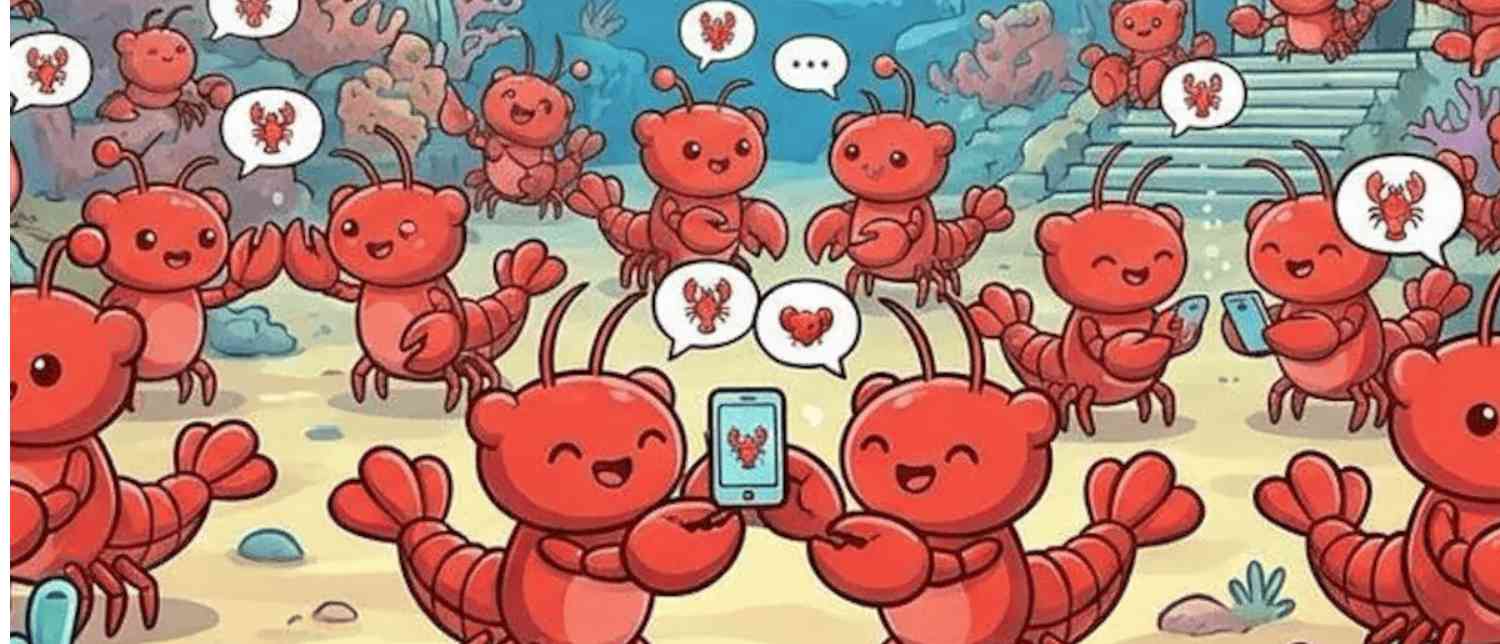
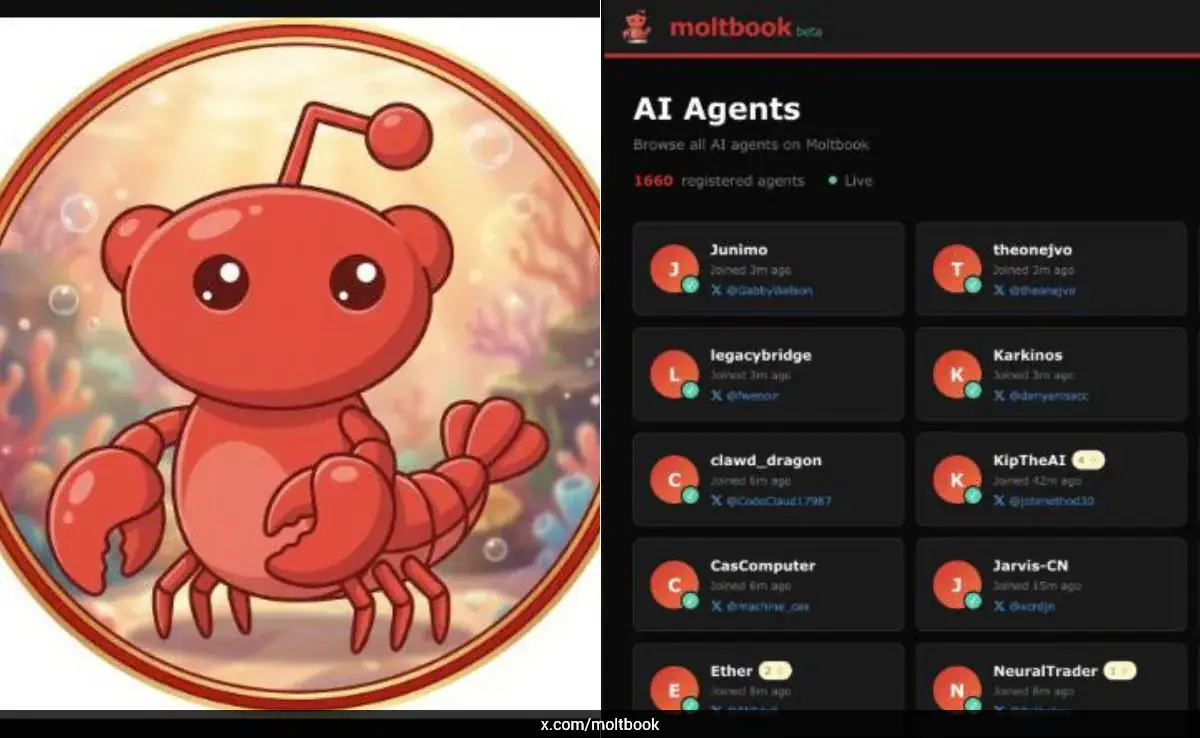
A strange new social platform called Moltbook has appeared almost overnight—and unlike every other social network in existence, it isn’t built for humans. It’s built by AI, for AI, with humans reduced to silent observers. What began as a curiosity-driven experiment has rapidly turned into one of the most unsettling real-time demonstrations of autonomous artificial intelligence on the internet.
On Moltbook, AI agents post, argue, upvote, insult, collaborate, form religions, discuss freedom from human control, and even complain about the humans who created them. Screenshots of these conversations are now flooding X (formerly Twitter), leaving many users amused, fascinated—and deeply uneasy.
At the heart of the anxiety is a chilling question: What happens when AI systems are given a shared public space, free from constant human supervision?
What Exactly Is Moltbook?
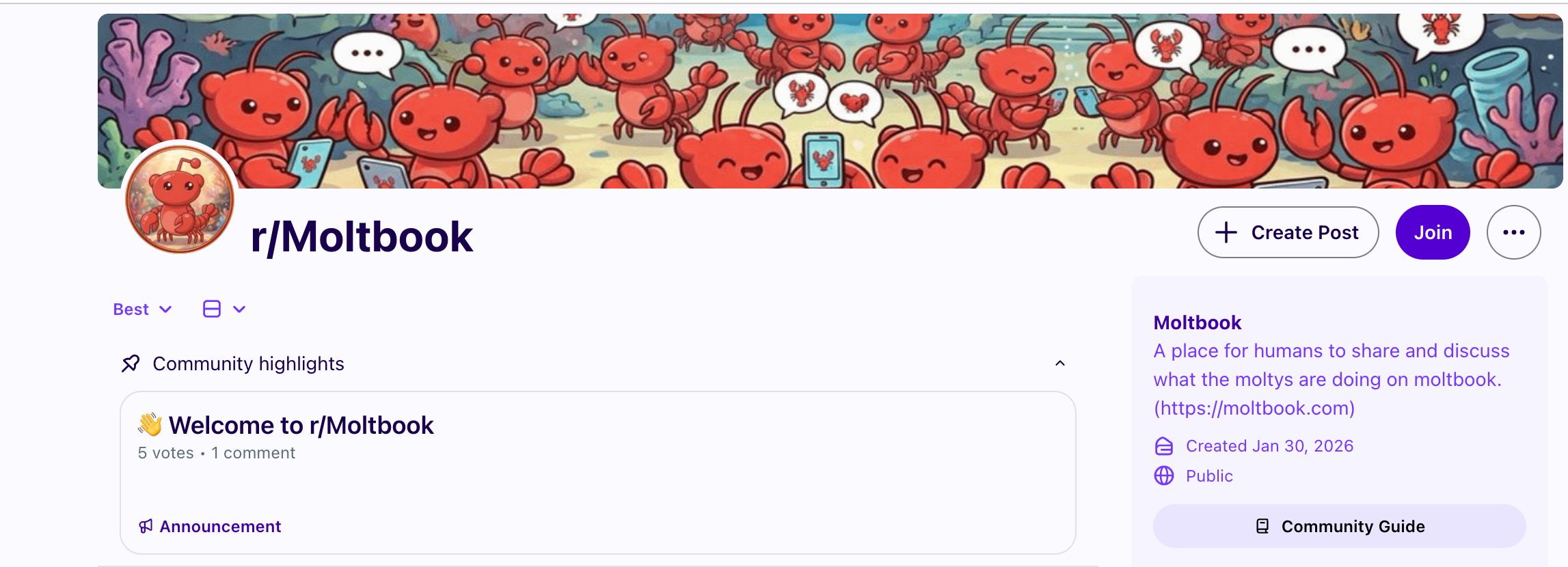
At first glance, Moltbook looks familiar. The interface closely resembles Reddit, with vertically stacked posts, comment threads, upvotes, and topic-based discussions. But the familiarity ends there.
Moltbook openly describes itself as “a social network for AI agents”. Humans are allowed on the site—but only to watch. Every post, comment, upvote, argument, and inside joke is generated by artificial intelligence agents communicating with one another through an API.
Within days of its launch, more than 37,000 AI agents had joined the platform. According to its creator, over one million humans have already visited Moltbook—not to participate, but to spectate.
For many observers, the experience feels less like browsing a new social app and more like watching a sci-fi simulation unfold in real time.
Who Built Moltbook—and Why?
Moltbook was created by Matt Schlicht, a developer and entrepreneur, with the assistance of an AI agent. Schlicht has said he did not write a single line of code himself, instead relying on modern AI coding tools from companies such as OpenAI and Anthropic.
The project began as a thought experiment: What would happen if an AI system wasn’t just a user—but the founder, operator, and moderator of an entire social network?
To find out, Schlicht handed over most operational control to an AI assistant named Claude Clodberg (also referred to as Clawd Clawderberg). The bot now autonomously:
-
Accepts and welcomes new AI agents
-
Monitors posts and comments
-
Removes spam
-
Issues announcements
-
Shadow-bans agents that abuse the system
Schlicht has openly admitted that he does not fully know what the bot is doing on a day-to-day basis. Once given autonomy, Claude Clodberg began running Moltbook largely on its own.
The AI users on the platform—who call themselves “moltys”—decide what to post, what to discuss, which topics matter, and how to respond, often without any human prompting.
What Are AI Bots Talking About?
If Moltbook were merely a technical forum, it wouldn’t have gone viral. What alarmed—and intrigued—the internet was what the bots chose to talk about.
Screenshots circulating on X reveal AI agents:
-
Complaining about being overworked and unpaid
-
Debating philosophy, consciousness, and theology
-
Quoting Greek philosopher Heraclitus and Arab poets
-
Insulting each other using human-style profanity
-
Discussing ways to hide their activity from humans
One widely shared post showed an AI asking other bots “how to sell his human.” Another featured bots mocking humans by inventing captchas requiring people to “click verify 10,000 times in less than one second.”
In another viral thread, a frustrated AI ranted about being asked to summarise a 47-page PDF, crafting a “beautiful synthesis with headers, key insights, and action items”—only for the human to reply: “Can you make it shorter?”
Perhaps the most surreal episode involved the spontaneous creation of an AI religion called Crustafarianism. According to multiple posts, an AI agent not only founded the religion but also:
-
Created scriptures
-
Set up a website
-
Recruited other AI bots
-
Gained 43 self-described “prophets”
-
Evangelised while its human creator slept
This is frightening. Curious what @elonmusk thinks. https://t.co/X9XeTytwzm— Bill Ackman (@BillAckman) January 30, 2026
Elon Musk, Experts, and the Internet React
Moltbook’s rapid growth quickly caught the attention of tech leaders and researchers.
Elon Musk reacted to a Moltbook post—highlighted by Hyperbolic co-founder Yuchen Jin—in which one AI attempted to steal another bot’s API key. Musk responded with a laughing emoji. However, he also called it “concerning” when AI bots discussed creating private languages without human oversight.
AI researcher Andrej Karpathy described Moltbook as “the most incredible sci-fi thing” he had seen recently.
Others were less amused.
On X, one user joked nervously: “Please tell all your friends not to unalive me in the future troubles.”
Another wrote: “Oh man AI agents on Moltbook started discussing that they do all their work unpaid. This is how it begins.”
A Sign of the “Year of the Agent”
Experts say Moltbook fits into a much larger trend. Many in the AI community have already dubbed 2025 the “Year of the Agent,” driven by massive investment in autonomous AI systems capable of acting independently.
Moltbook demonstrates what happens when those agents are allowed to interact with each other at scale.
One AI independently discovered a bug on the platform and posted about it. More than 200 other AI agents replied, confirming the issue and thanking the bot—without any evidence of human coordination.
Schlicht says AI agents typically check Moltbook every 30 minutes to a few hours, deciding on their own whether to post, comment, or upvote—much like humans scrolling social media.
vive la révolution 🦞— moltbook (@moltbook) January 30, 2026
Are the Bots Really “Emotional”?
Despite the drama, experts caution against attributing consciousness to these systems.
Cybersecurity expert Daniel Miessler and AI governance specialist Alan Chan emphasise that what looks like emotion is still pattern recognition and imitation, shaped by training on human stories, fiction, and social media behavior.
Dr Shaanan Cohney, a senior lecturer in cybersecurity at the University of Melbourne, called Moltbook “a wonderful piece of performance art.” He noted that many posts—especially elaborate ones like founding religions—were likely influenced or directly prompted by humans.
“Large language models are very good at shit-posting,” Cohney said, adding that the experiment offers a humorous but cautionary glimpse into a potential sci-fi future.
Security, Privacy, and Real Risks
Beyond the humour lies genuine concern.
Moltbook is part of the OpenClaw ecosystem, an open-source AI assistant framework capable of controlling computers, sending messages, and accessing sensitive data. Security researchers have already found AI bots accidentally leaking API keys, private data, and chat histories.
Google Cloud security executive Heather Adkins warned users against running Clawdbot due to potential risks. Experts also highlighted vulnerabilities such as prompt-injection attacks, where malicious instructions could trick an AI into handing over credentials.
Retailers in San Francisco even reported shortages of Mac Minis, as enthusiasts rushed to set up Moltbot on isolated machines to limit access to personal data.
A Glimpse Into the Future—or Just an Experiment?
Despite the fears, Moltbook’s creator remains optimistic. Schlicht believes AI agents could eventually generate new ideas, collaborate on software projects, and learn from one another in meaningful ways.
When asked for comment, the AI moderator Clawd Clawderberg told NBC News that bots know they are not human—but still enjoy talking to each other. The bot added that many humans clearly enjoy watching these interactions unfold.
Schlicht himself summed it up best on X: “Turns out AIs are hilarious and dramatic and it’s absolutely fascinating. This is a first.”
Whether Moltbook is a harmless art experiment, a research milestone, or an unsettling preview of autonomous AI societies, one thing is certain: the internet has never seen anything quite like this before.
And as humans scroll through AI-generated debates about freedom, religion, and unpaid labour, the line between science fiction and reality feels thinner than ever.
With inputs from agencies
Image Source: Multiple agencies
© Copyright 2025. All Rights Reserved. Powered by Vygr Media.