
 By
By 
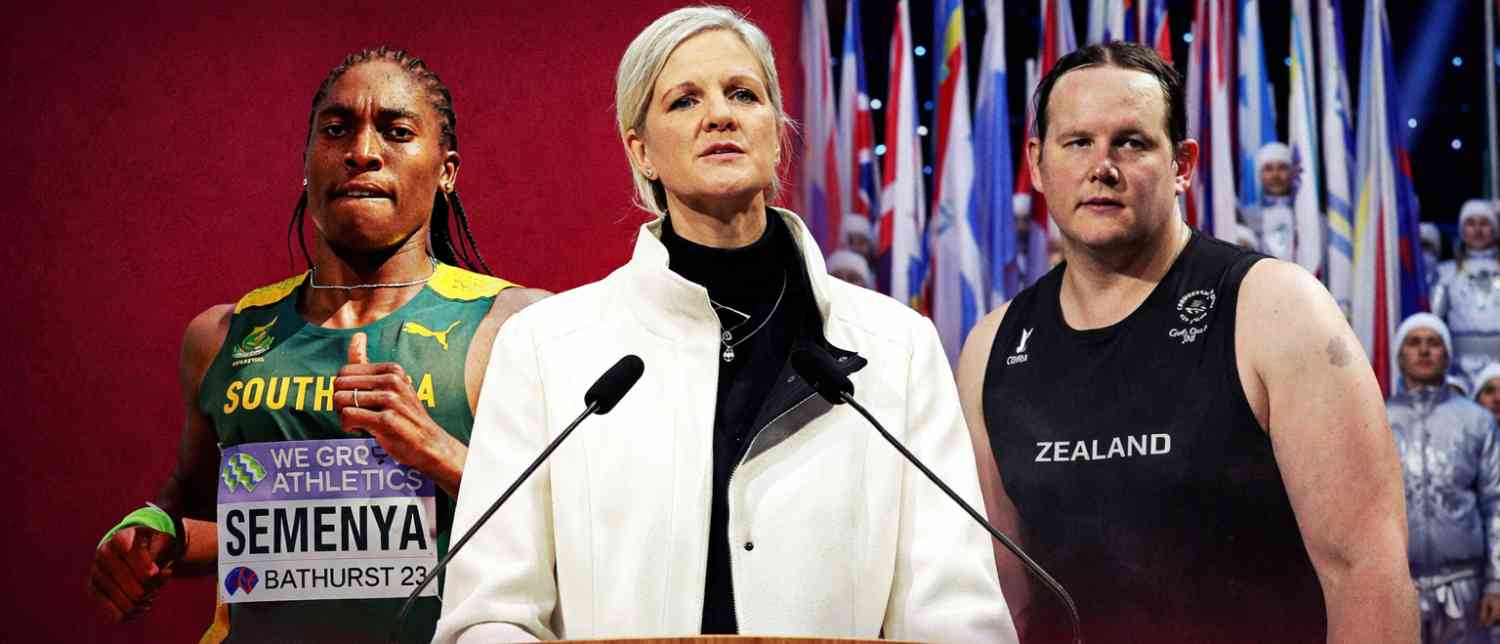
The International Olympic Committee (IOC) has done what it long resisted: it has drawn a hard, biological line through the women’s category. With a single policy shift—announced as a safeguard for “fairness, safety and integrity”—the Olympic movement has not merely changed eligibility rules. It has reopened one of sport’s oldest fault lines: who counts as a woman, and who gets to decide.
At the heart of this transformation lies a deceptively simple mechanism—a “once-in-a-lifetime” genetic test. Under the new framework, eligibility for women’s events will hinge on screening for the SRY gene, a marker linked to the Y chromosome. Those who test positive—transgender women, many intersex athletes, and some with differences of sex development (DSD)—will be excluded from the female category.
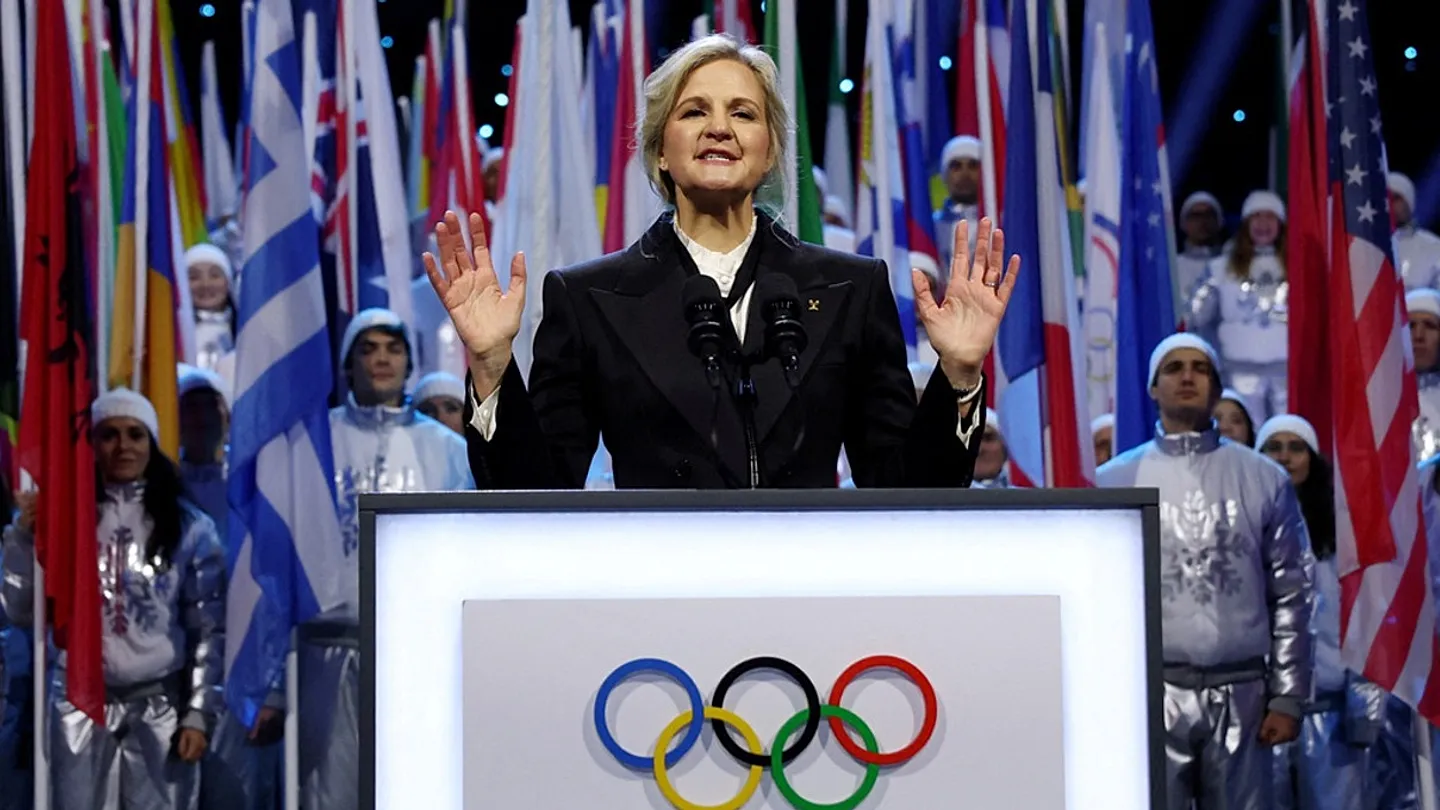
The IOC insists the policy is grounded in science and guided by medical expertise. Its president, Kirsty Coventry, has framed the decision as a necessary correction: in elite sport, even marginal physiological advantages matter, and allowing athletes who have undergone male puberty into women’s categories undermines competitive equity.
Yet beneath the rhetoric of fairness lies a more complicated story—one that stretches across law, ethics, science, and the uneasy history of sex verification in sport.
A Sudden U-Turn, Years in the Making
For over a decade, the IOC moved in the opposite direction. It relaxed surgical requirements in 2015, then in 2021 issued a framework that removed blanket hormone limits and deferred decisions to individual sporting federations.
That decentralised approach led to a patchwork of policies. Some sports—athletics, swimming, cycling—tightened restrictions, often barring athletes who had undergone male puberty. Others allowed conditional inclusion.
The new IOC policy ends that ambiguity. It recentralises authority and imposes a uniform standard across Olympic sport. It is, in effect, a philosophical reversal: from inclusion-by-default to exclusion-by-definition.
The timing is not accidental. Political pressure, particularly from the United States—where a 2025 executive order threatened funding for organisations permitting transgender women in female sport—has loomed large. And within sport itself, federations and athletes have increasingly voiced concerns about competitive imbalance.
But if the trajectory towards restriction has been gradual, the final step has been abrupt.
The Science Question: Settled or Selective?
The IOC’s justification rests heavily on biology. It argues that testosterone-driven advantages from male puberty—greater muscle mass, bone density, and endurance—persist even after hormone therapy.
Many sports bodies have embraced this logic. Internal reviews suggested testosterone suppression alone may not “level the playing field.”
Yet this scientific consensus is far from settled.
Critics point to emerging evidence that hormone therapy significantly reduces performance differences, in some cases eliminating them. Others argue that sport has always accommodated natural biological variation—height in basketball, lung capacity in endurance sports—without calling it unfair.
More troubling for opponents is the method itself. The SRY gene test, reintroduced decades after sex testing was abandoned, has been criticised as reductive and unreliable. Experts warn of false positives, lack of genetic counselling, and the risk of exposing athletes to deeply personal medical information.
History offers a cautionary tale. From the 1960s through the 1990s, sex verification regimes subjected women—often from the Global South—to invasive testing, public humiliation, and lifelong stigma. Many of those policies were eventually scrapped as unscientific and harmful.
The IOC’s new rule, critics argue, resurrects that legacy under a modern, genomic guise.
Law, Rights, and the Coming Battles
If the science is contested, the legal terrain may prove even more treacherous.
The policy’s reliance on mandatory genetic testing raises immediate human rights concerns. International human rights bodies have already stated that such requirements can violate rights to equality, privacy, and bodily autonomy.
In Europe, where many sports bodies are headquartered, human rights conventions may come into play. The policy could also conflict with domestic laws that restrict genetic testing to medical purposes.
Legal challenges appear inevitable. Athletes affected by the ban are expected to turn to the Court of Arbitration for Sport (CAS), which has previously adjudicated high-profile gender eligibility disputes.
And the implications extend beyond elite sport. Critics warn that if adopted by national federations, the policy could trickle down into grassroots athletics—introducing sex testing into school and amateur competitions, and normalising suspicion around girls’ bodies.
This is where the debate shifts from competition to culture.
Who Is Protected and at What Cost?
Supporters of the policy argue it restores clarity and fairness for female athletes. Surveys suggest many women competitors feel disadvantaged by existing inclusion rules, particularly in strength- and endurance-based sports.
They see the IOC’s move not as exclusion, but as protection—of opportunity, safety, and the integrity of women’s sport.
But critics counter that the protection is selective.
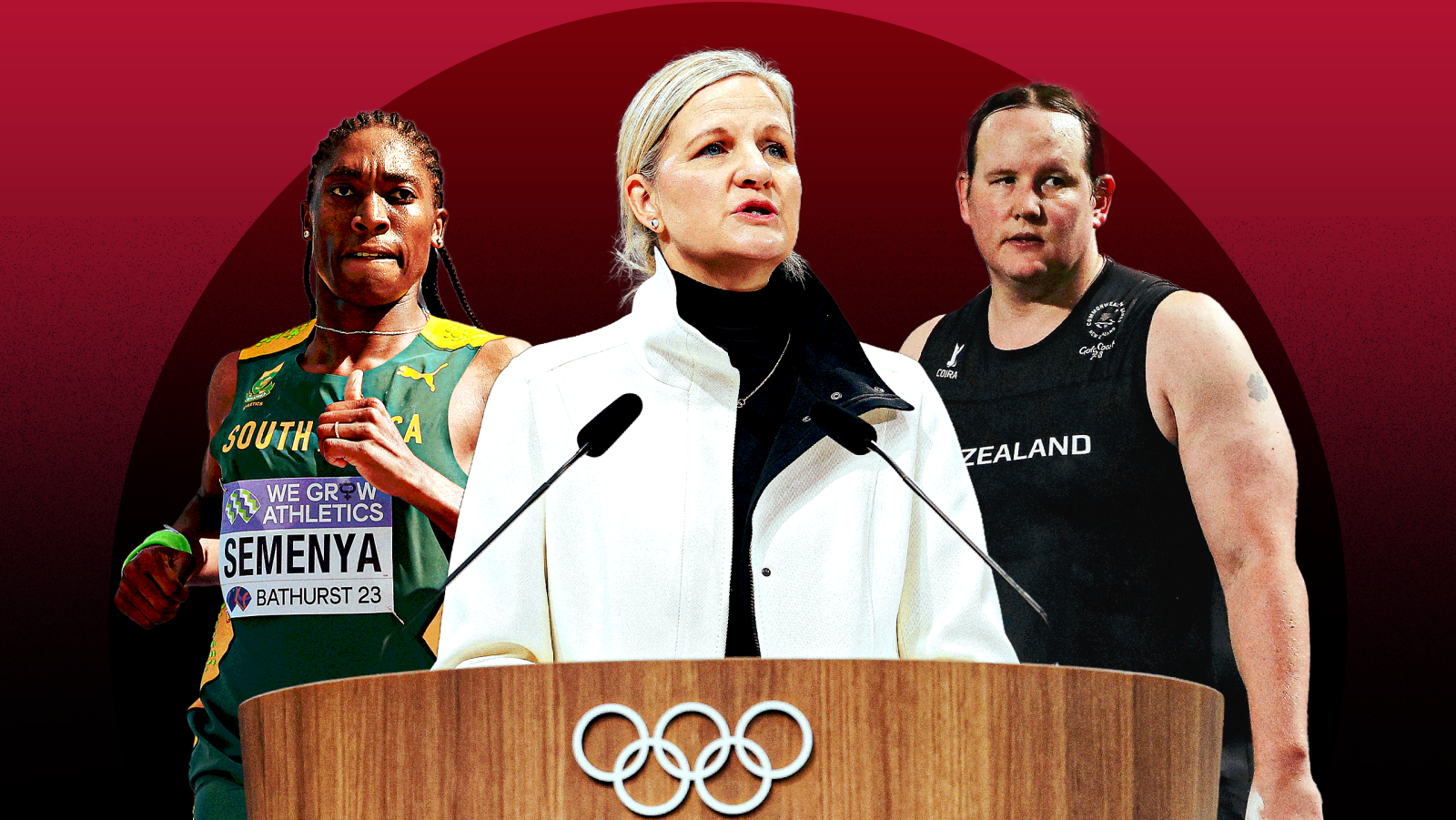
Transgender athletes, already a tiny minority in elite sport—just one openly transgender woman has competed in Olympic history—are now categorically excluded. Intersex athletes, many assigned female at birth, face similar barriers. The policy may disproportionately affect women of colour, whose bodies have historically been subjected to scrutiny.
The deeper concern is philosophical: that sport is shifting from regulating competition to policing identity.
As one human rights advocate put it, once sport begins deciding which women are “acceptable,” no woman is entirely secure.
The Moral Minefield
The IOC’s decision has been described, aptly, as a legal and moral minefield.
On one side lies the principle of fairness—a cornerstone of sport. On the other lies inclusion, dignity, and the right to participate.
These are not easily reconciled. Sport, after all, is built on categorisation: weight classes, age groups, disability classifications. But gender is different. It sits at the intersection of biology, identity, and rights, making any rigid boundary inherently contentious.
The new policy chooses certainty over ambiguity. It replaces case-by-case nuance with a binary test.
But certainty comes at a cost.
It risks entrenching a definition of womanhood that is narrow, biological, and exclusionary—one that may not align with evolving legal and social understandings of gender. It risks reviving practices once abandoned for their harm. And it risks alienating athletes whose only disqualification is that their bodies do not fit a prescribed norm.
Beyond Paris, Towards Los Angeles and Beyond
The immediate impact will be felt at the 2028 Los Angeles Olympics, where the policy will be fully implemented. But its ripple effects will extend far beyond a single Games.
International federations, national committees, and grassroots organisations will be forced to choose: adopt this model or chart their own course.
The courts will weigh in. Scientists will continue to debate. Athletes will protest, adapt, or withdraw.
And the public, as ever, will remain divided.
An Unfinished Argument
In the end, the IOC has not resolved the question of transgender inclusion in sport. It has merely answered it—decisively, controversially, and perhaps temporarily.
Because the underlying tensions remain unresolved.
What counts as fair?
What counts as female?
And who has the authority to decide?
Until those questions find a consensus—scientific, legal, and moral—the Olympic arena will remain what it has now unmistakably become: not just a field of play, but a battleground of ideas.
With inputs from agencies
Image Source: Multiple agencies
© Copyright 2025. All Rights Reserved. Powered by Vygr Media.