
 By
By 
Who would have imagined that, with just over a week to go before the final of the ICC Men’s T20 World Cup 2026, the narrative would flip so dramatically?
Three major Asian teams are struggling in subcontinental conditions. The pre-tournament title favourites are suddenly vulnerable. And a new contender—disciplined, prepared, and quietly ruthless—staking an undeniable claim.
That’s T20 cricket for you. It is fickle. It is merciless. It is allergic to reputation.
And nowhere is that more evident than in the case of India.
From Invincible to Vulnerable
India entered this tournament as the undisputed team to beat.
-
The No.1 ranked T20I side in the world.
-
Riding a 17-match unbeaten streak in ICC tournaments.
-
Boasting a staggering 26-3 win-loss record in T20Is between the 2024 T20 World Cup final and the start of this one.
-
Playing in largely home conditions.
-
Defending champions.
-
Overwhelming pre-tournament favourites.
On paper? Nearly invincible.
In reality? One defeat and a few flawed performances later, they find themselves in a virtual quarter-final against the West Indies at Eden Gardens. Win and progress. Lose and go home. No second chances.
Let that sink in.
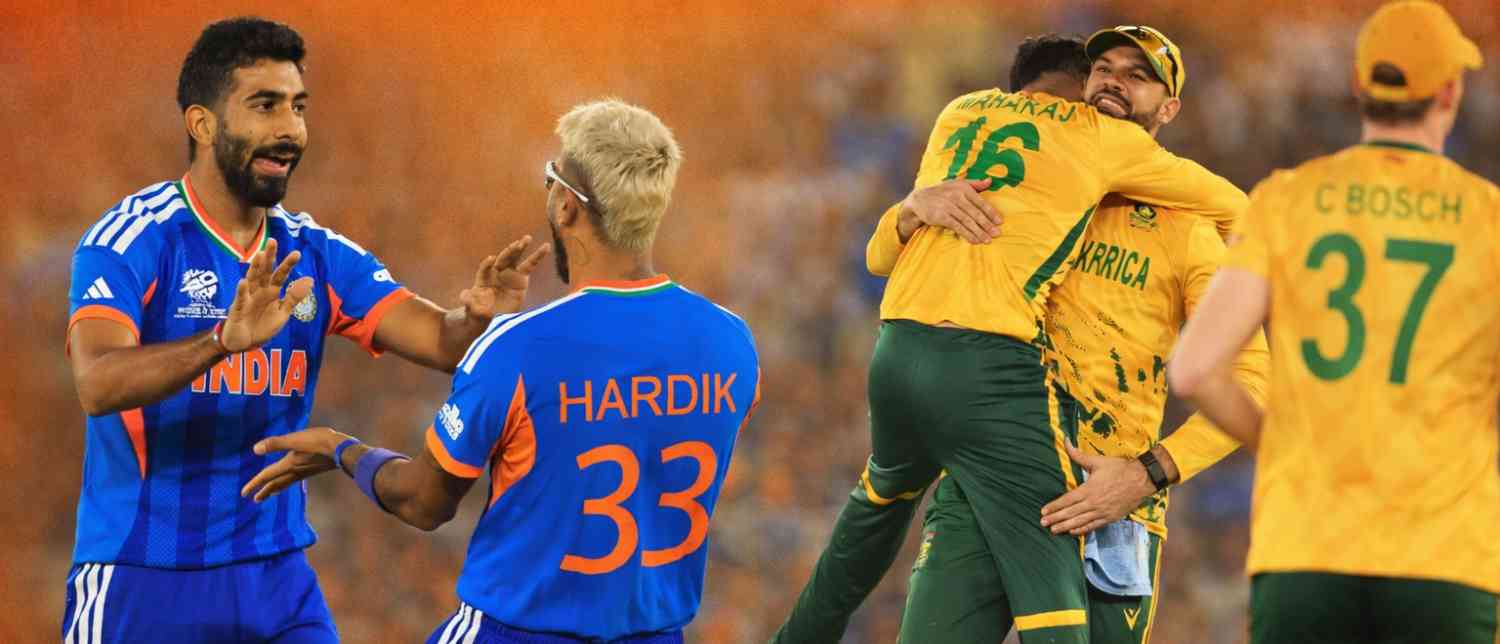
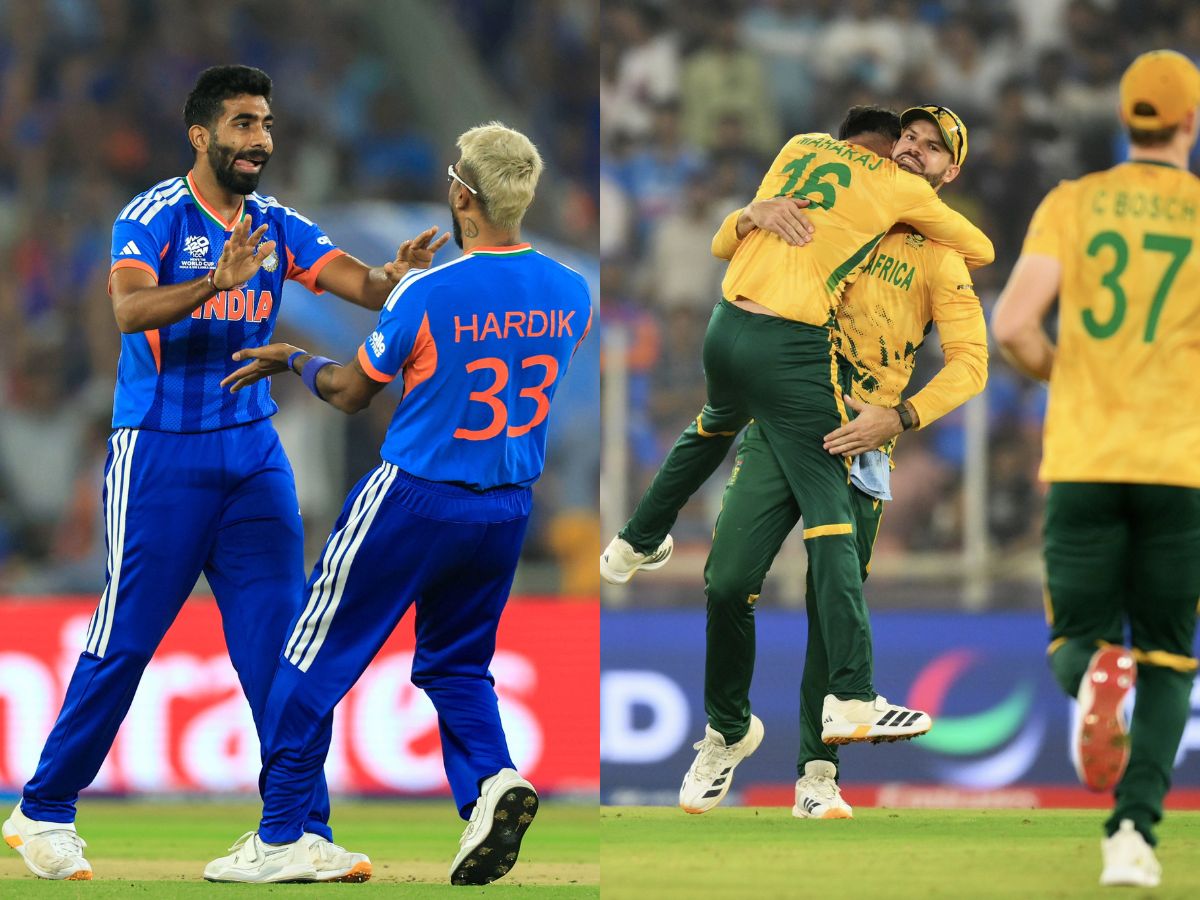
Meanwhile, England and South Africa have already sealed their semi-final spots.
And here’s the uncomfortable truth: India is still alive largely because South Africa beat the West Indies. Had that result gone the other way, India could have been knocked out—even if they beat the Windies—on net run rate.
That is how thin the margins have become.
This World Cup is no longer India’s to lose.
The Super 8 Equation: Simple, Brutal, Final
After a dramatic round of Super 8 fixtures, the Group 1 scenario is crystal clear.
-
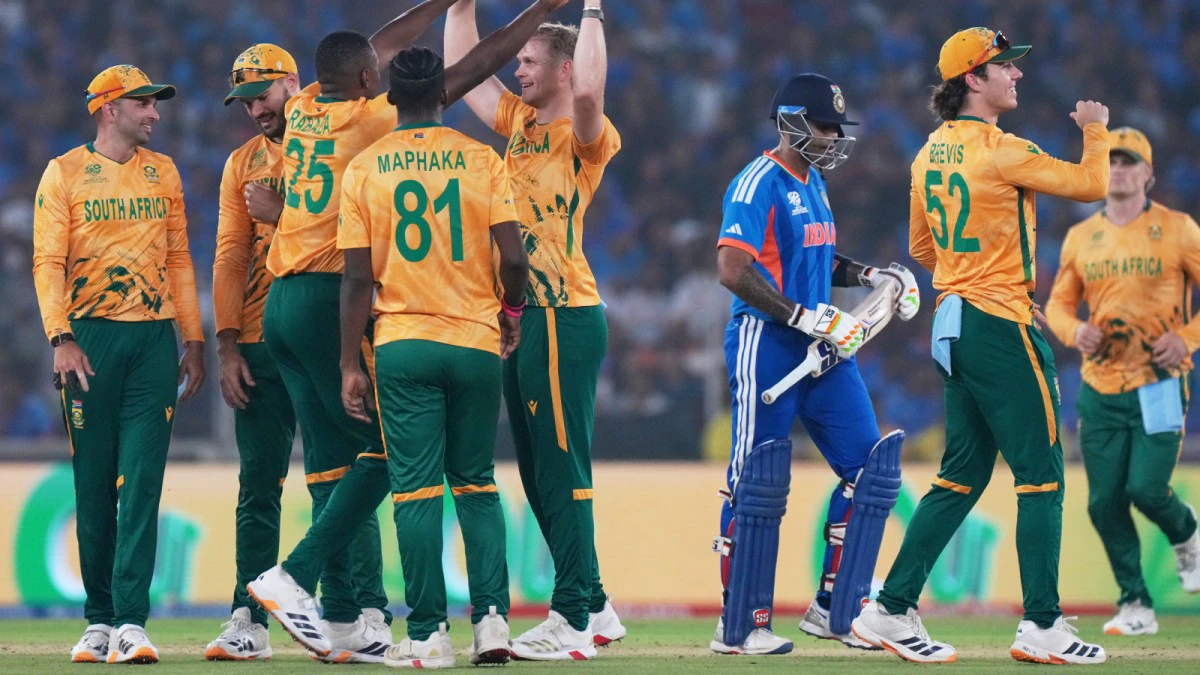
South Africa, after a commanding nine-wicket win over West Indies in Ahmedabad, is through.
-
Zimbabwe are eliminated.
-
India and the West Indies both have 2 points.
The final group clash at Eden Gardens is effectively a knockout.
India must beat the West Indies to qualify.
There is one caveat: if rain washes the game out (and there is no reserve day), West Indies advance on superior net run rate. As of now, Kolkata’s forecast shows no imminent weather threat.
So the calculators are back in the bag.
For India, it’s straightforward: win and move on.
The Zimbabwe Game: Momentum, But Not Perfection
India’s 72-run win over Zimbabwe in Chennai was emphatic on paper.
At the MA Chidambaram Stadium, India piled up 256/4—the second-highest total in men’s T20 World Cup history and the highest of this edition.
It was a batting masterclass:
-
Abhishek Sharma returned to form with a blistering half-century.
-
Sanju Samson provided early momentum.
-
Ishan Kishan, Suryakumar Yadav, Hardik Pandya, and Tilak Varma all struck at rates above 150.
-
The top order looked liberated.
-
The intent was intelligent rather than reckless.
The left-right opening combination of Abhishek and Samson worked. Promoting Ishan to No. 3 disrupted the opposition off-spin strategies that teams like Pakistan, the Netherlands, and South Africa had previously exploited successfully.
But here’s the uncomfortable counterpoint: Zimbabwe still scored 184/6.
Opener Brian Bennett smashed an unbeaten 97 off 59 balls. Zimbabwe scored at 9.2 runs per over.
That’s not insignificant.
India’s bowling—apart from Arshdeep Singh—looked ordinary.
The Bowling Concern No One Can Ignore
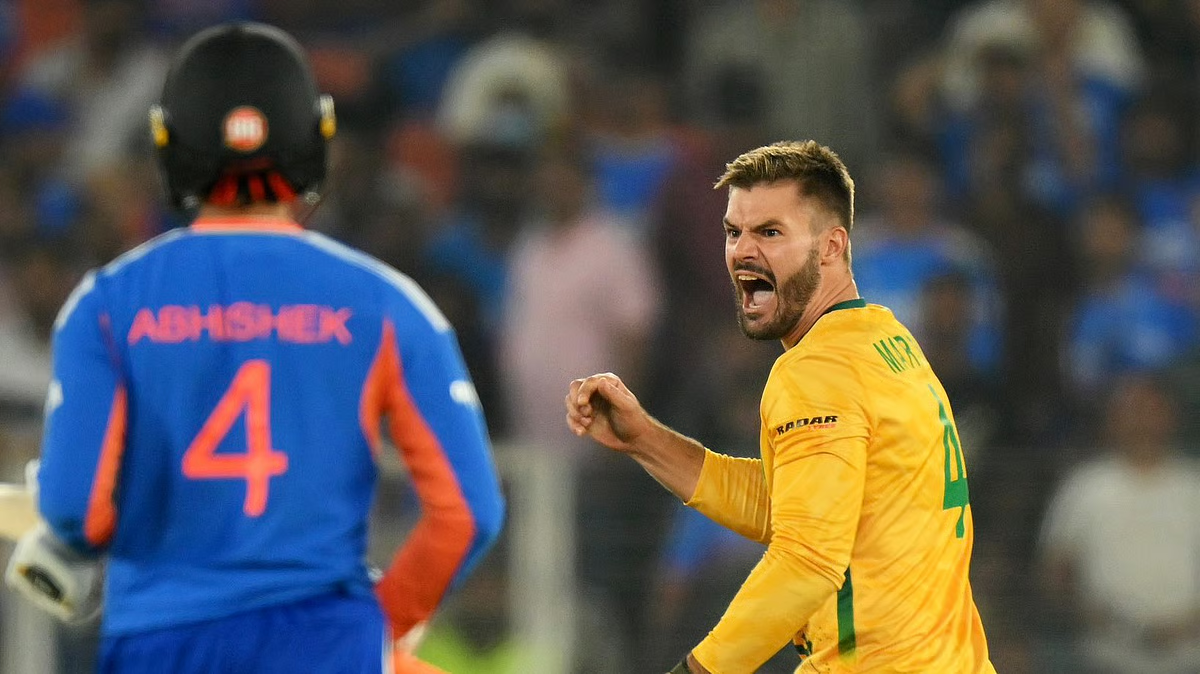
Arshdeep Singh (3/24) was outstanding and recently became India’s most successful bowler in men’s T20 World Cup history with 35 wickets, surpassing Jasprit Bumrah (33).
But beyond him?
-
Jasprit Bumrah and Hardik Pandya were economical but wicketless.
-
Axar Patel and Varun Chakravarthy conceded nearly 9 per over.
-
Shivam Dube leaked 46 runs in just 2 overs.
-
The spinners plus Dube gave away 116 runs in 12 overs—almost 10 per over.
Captain Suryakumar Yadav didn’t sugarcoat it.
“To be very honest, we could have been a little bit more clinical with the ball… we’ll tighten our screws when we go and play West Indies.”
That tightening cannot wait.
Because if there is one team that can punish loose bowling, it’s the West Indies. They bat deep. Shai Hope’s side has Romario Shepherd coming in at No.9. As South Africa found out, they are never quite out of a contest.
India cannot afford to be merely good.
They must be clinical.
The South Africa Problem
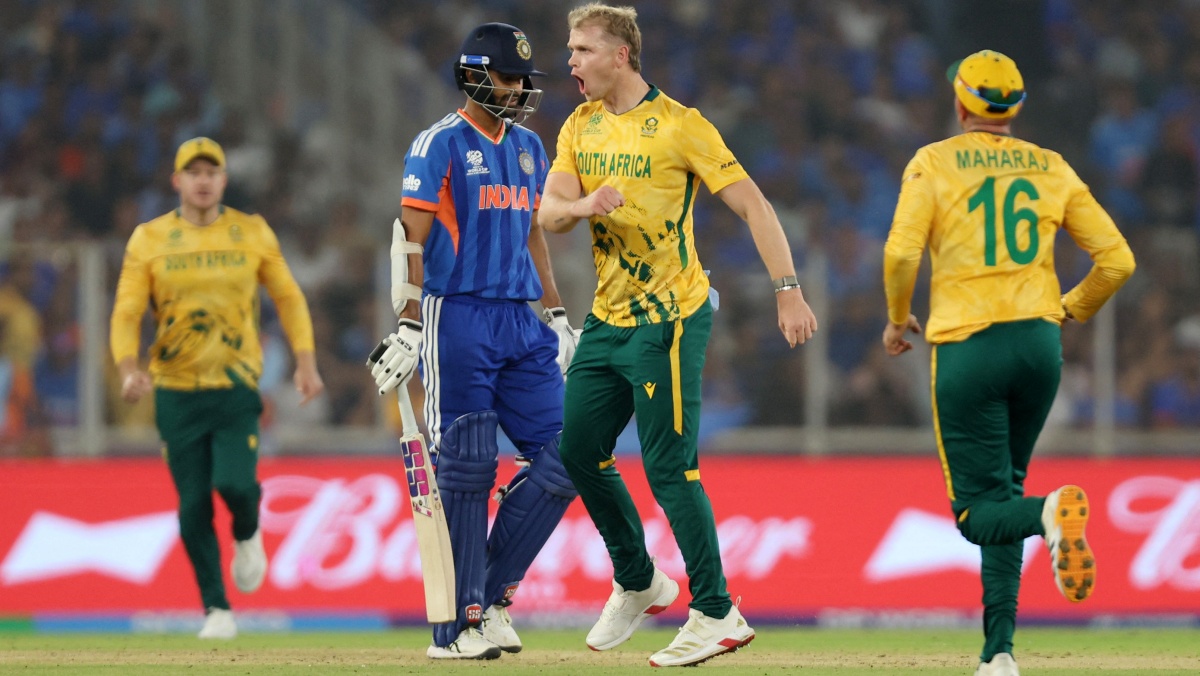
The biggest test India faced in this tournament came against South Africa—and it exposed something.
The Proteas dismantled the West Indies by chasing 177 with nine wickets in hand. The opening stand between Aiden Markram and Quinton de Kock was surgical. Calm. Calculated. Ruthless.
They look sorted:
-
A well-oiled fast bowling unit.
-
A balanced batting lineup.
-
An unbeaten record.
-
Tactical clarity.
-
Homework done to the last detail.
India, in contrast, hasn’t yet produced a “perfect” game against a top-quality opposition (Pakistan doesn’t count here).
The message that has gone out after India’s near-collapse against South Africa is simple:
This Indian team can be beaten.
Once that aura cracks, the path becomes treacherous.
Bilateral Bullies, Tournament Learners
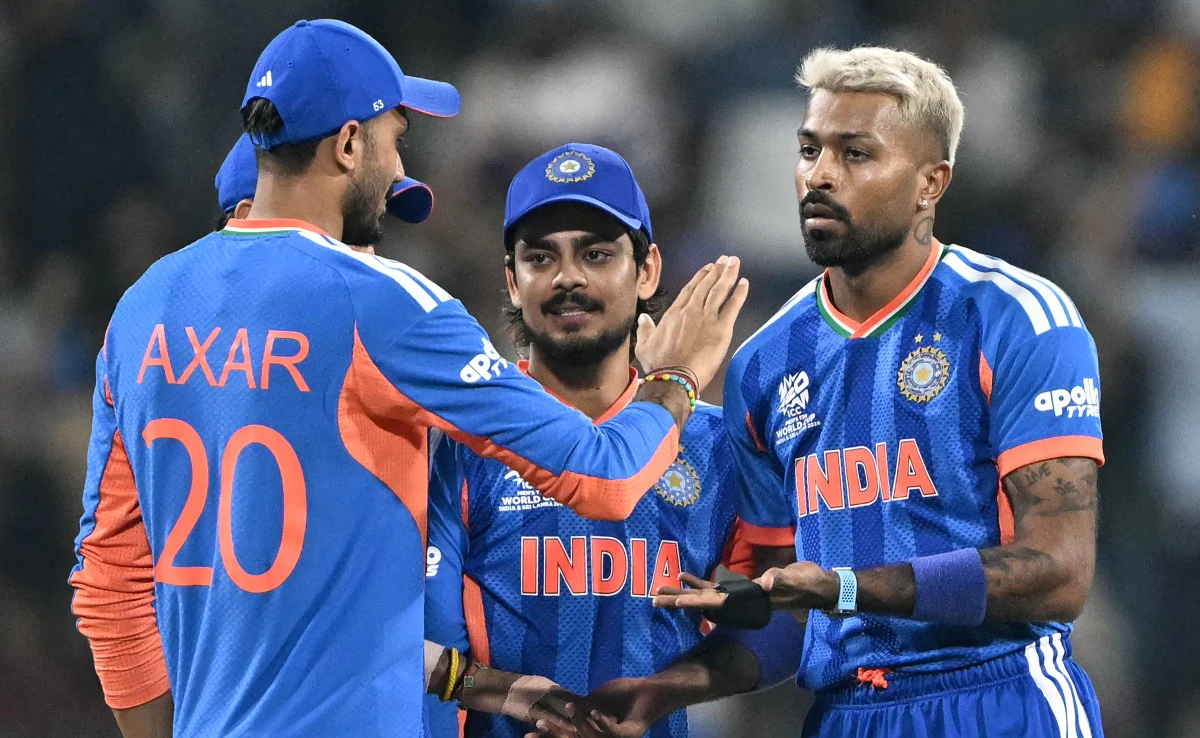
Over the past two years, India has transformed into a terrifying T20I force.
In 2024: 26 matches played, 24 wins.
In 2025: 21 matches played, 16 wins and 2 no-results.
Combined win percentage: over 85%.
Scoring 200-plus totals became routine. Chasing big targets with overs to spare became habitual.
In a five-match series just months ago, India beat South Africa 3-1 (one abandoned). Their highest score batting first in that series—231/5—came in Ahmedabad, the very venue where South Africa later beat them comprehensively in this World Cup.
That contrast matters.
Because World Cups are different.
Pitches are prepared under ICC supervision weeks in advance. Independent consultants ensure “competitive balance.” These are not flat, dew-assisted bilateral tracks designed for 220 chases.
Yet India seemed to enter this tournament in the same top gear they used in bilaterals.
And it has cost them.

The Batting Approach: Recalibration Required
India’s philosophy has been simple: attack every ball.
Arshdeep admitted it:
“Our game plan over the last year or two has been to score big and then try to defend it.”
That approach works on flat tracks.
It doesn’t always work in World Cups.
So far, Indian batters have registered 11 ducks in this tournament—the most among all teams.
That’s not a coincidence. That’s over-commitment to risk.
In 2025 alone, there were at least 15 instances of 200-plus totals in men’s T20Is. The 2025 IPL season had a record 52 team scores of 200+.
In this World Cup?
Only two 200-plus totals have been recorded in matches featuring two full-member sides.
And yet, some spoke of a 300-run barrier being broken.
Reality has been far more restrained.
The Zimbabwe game showed signs of correction. The hitting was intelligent, not blind. Momentum was built, not forced.
That recalibration must continue.
Eden Gardens: A Different Test Awaits
The clash at Eden Gardens won’t resemble Chennai’s flat deck.
Yes, it may assist stroke-play. But it’s unlikely to be as docile as Chepauk. Spinners are expected to play a bigger role. Bowlers will be tested differently.
Even Bumrah was hit for sixes in Chennai. That should serve as a warning.
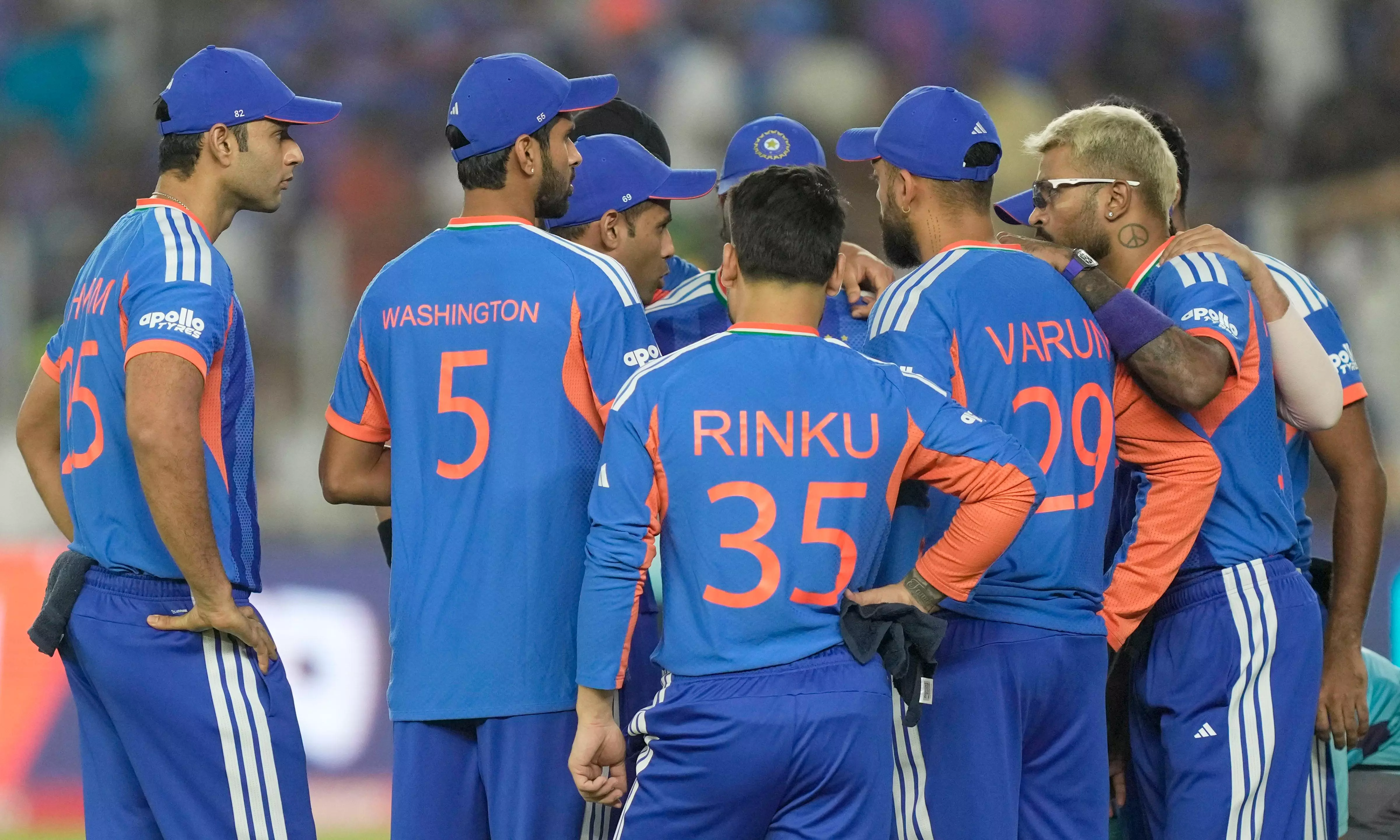
Player roles may need tweaking beyond the top four. Courageous calls may be required.
Suryakumar acknowledged it:
“When we are in such situations, we’ll have to be more courageous in taking calls and there’s no other option other than taking that positive route.”
The margin for error? Zero.

The Format Factor
The Super 8 group format is unforgiving. With just four teams per group, one early loss pushes you to the brink.
That’s exactly what happened to India after their defeat to South Africa.
Unlike the round-robin structure of the 2023 ODI World Cup, there’s little room for recovery.
Momentum in T20 cricket is worth its weight in gold.
Zimbabwe provided India with a chance to regain it.
But the West Indies will not.
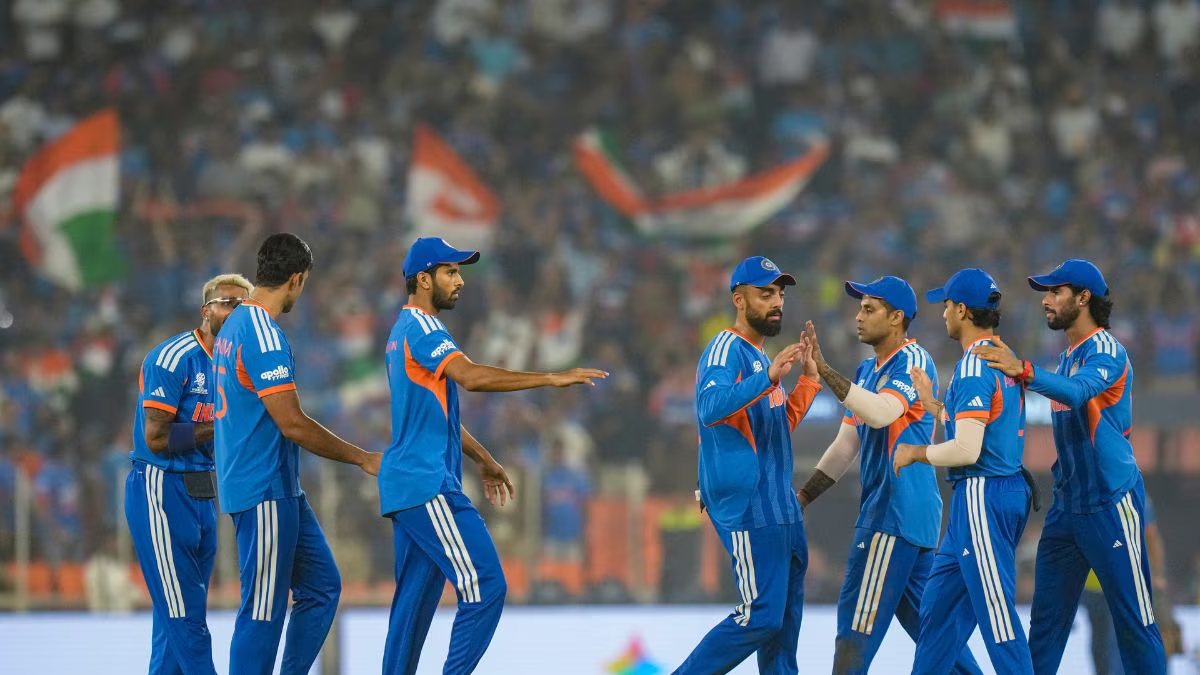
A New Favourite Emerges
Before the tournament, India wore the crown.
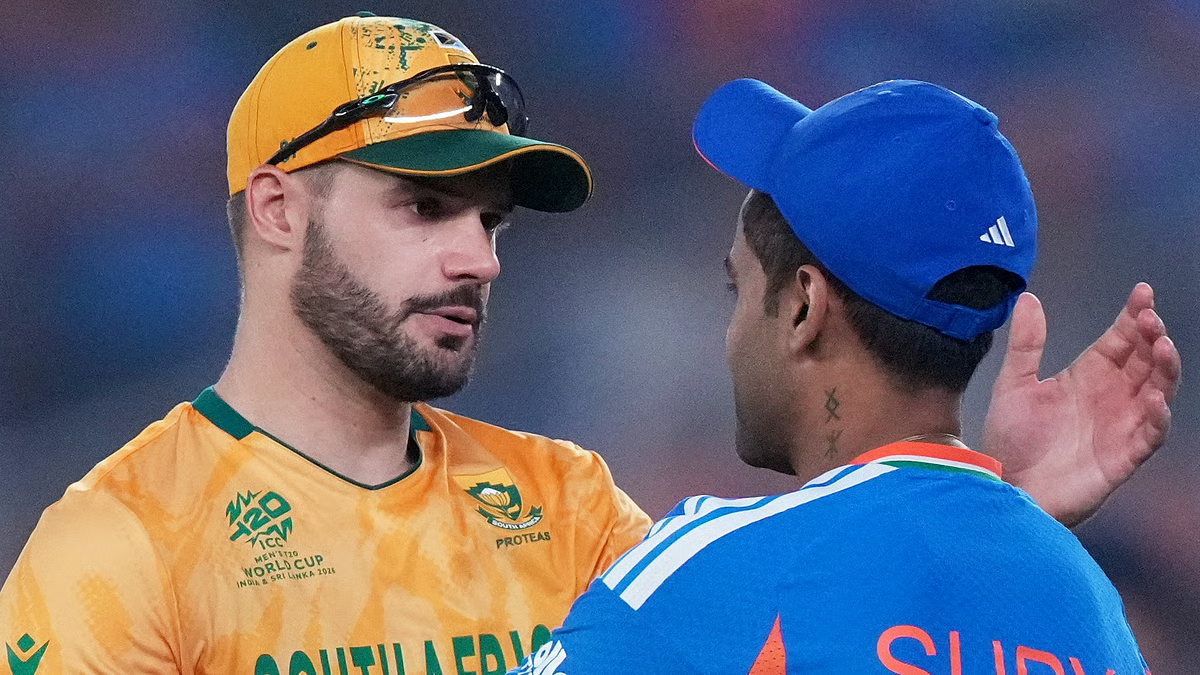
Now, that crown sits comfortably on the heads of Aiden Markram and his men.
They are unbeaten.
They are balanced.
They are prepared.
They are clinical.
Even Arshdeep publicly thanked them for beating the West Indies and admitted they look like finalists.
That shift in psychological hierarchy matters.
India is no longer the untouchable giant.
They are challengers again.
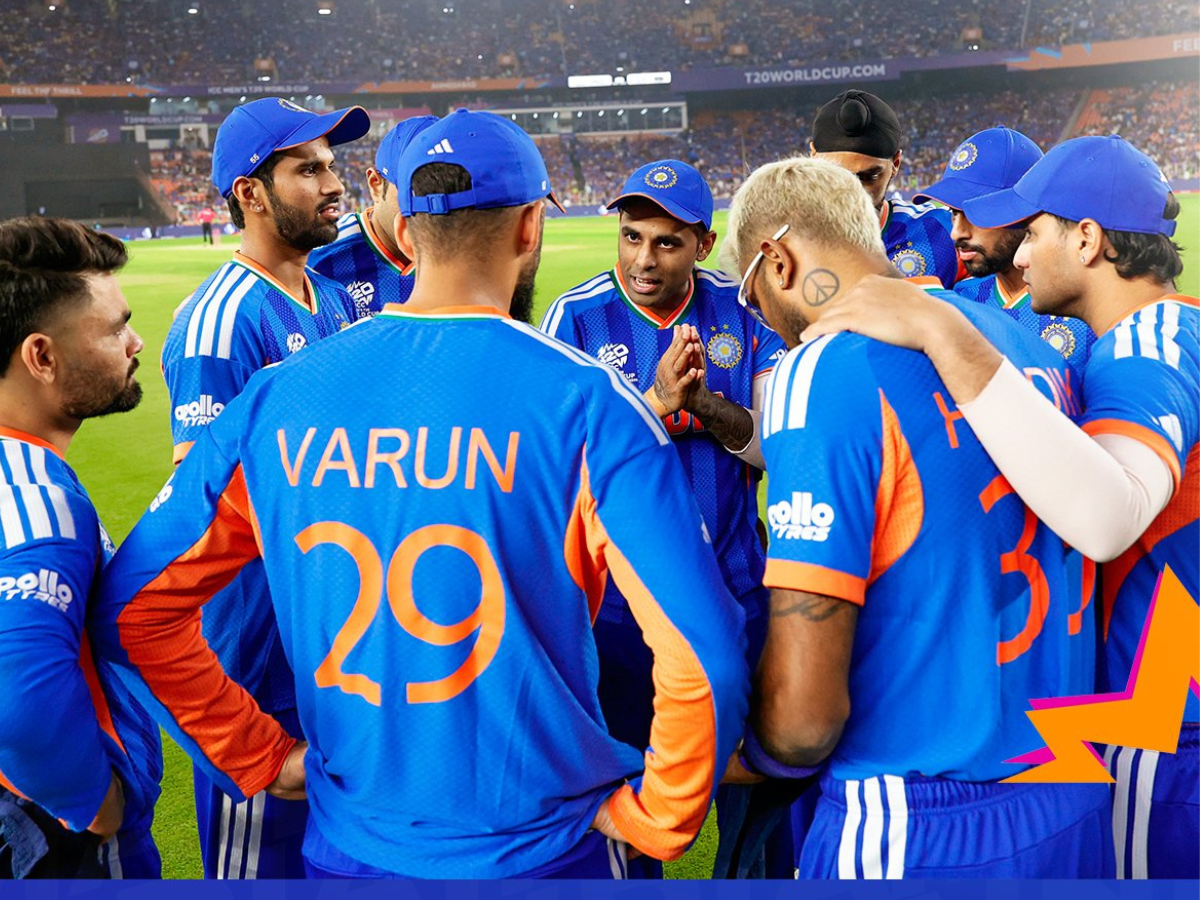
The Bigger Lesson
Regardless of how this tournament ends for India, one lesson is unavoidable:
There is a world of difference between bilateral dominance and World Cup success.
-
Pitches change.
-
Opposition preparation intensifies.
-
Formats compress margin for error.
-
Pressure magnifies flaws.
India’s aura—built on 200-plus totals and bilateral series triumphs—has cracked under tournament scrutiny.
They remain immensely talented. On paper, perhaps still the most individually gifted side in the competition.
But tournaments are not won on paper.
They are won on adaptability.
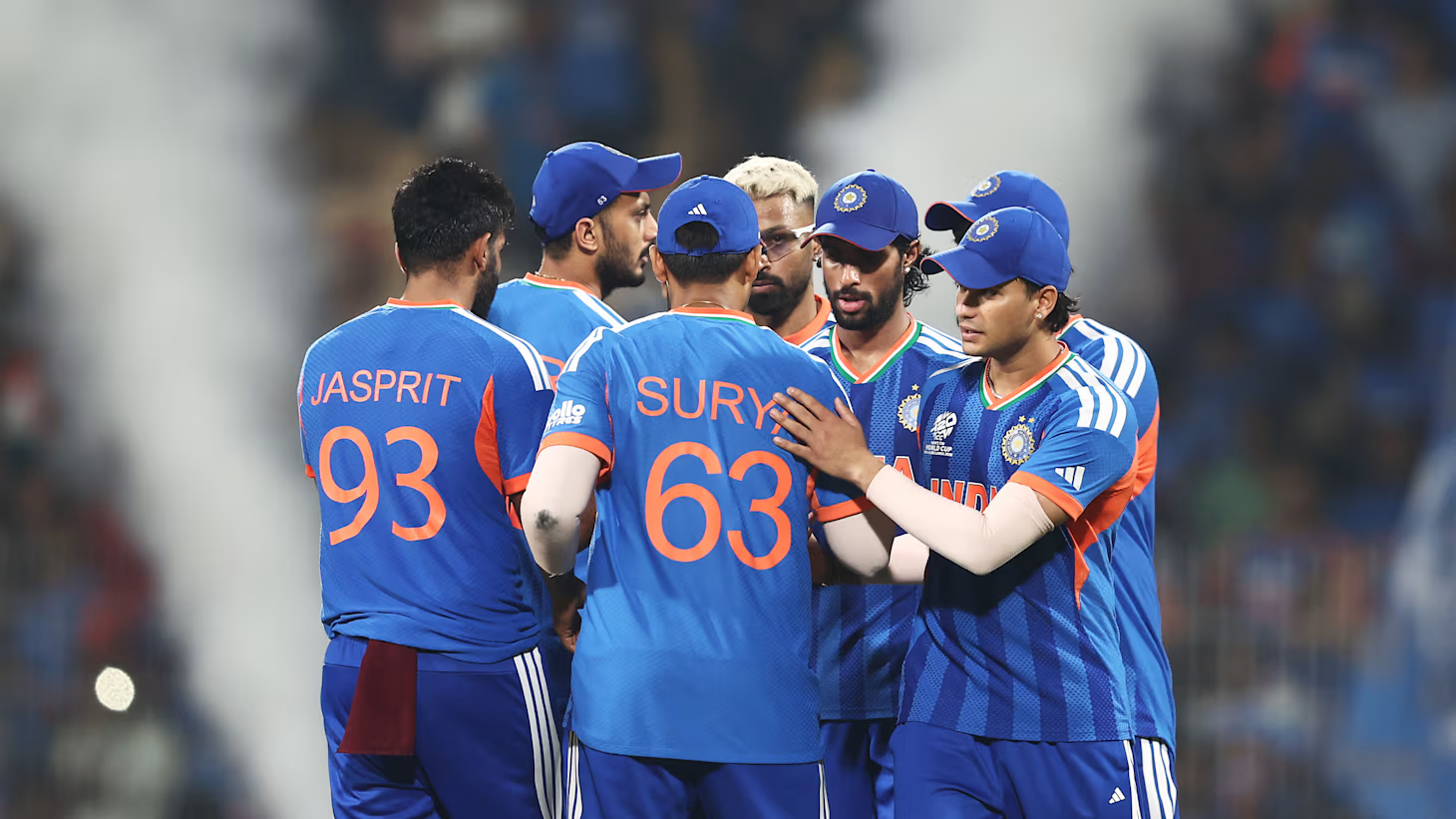
Three Wins Away — But First, One
India is technically three wins away from defending their crown.
But before dreaming of finals and legacy, they must win a virtual quarter-final.
Beat West Indies.
Secure semi-final qualification.
Restore belief.
Prove the aura isn’t shattered—just dented.
Because make no mistake: South Africa can see it.
And if India do reach the knockout stages, there’s every chance they’ll have to confront the Proteas again—the team that prepared better, executed smarter, and exposed vulnerability.
This World Cup is no longer India’s procession.
It is a contest.
And in that contest, adaptability—not reputation—will decide who lifts the trophy.
For now, India stands at a crossroads in Kolkata.
Win—and the narrative changes again.
Lose—and the aura that once felt indestructible will officially belong to someone else.
With inputs from agencies
Image Source: Multiple agencies
© Copyright 2025. All Rights Reserved. Powered by Vygr Media.