 By
By 
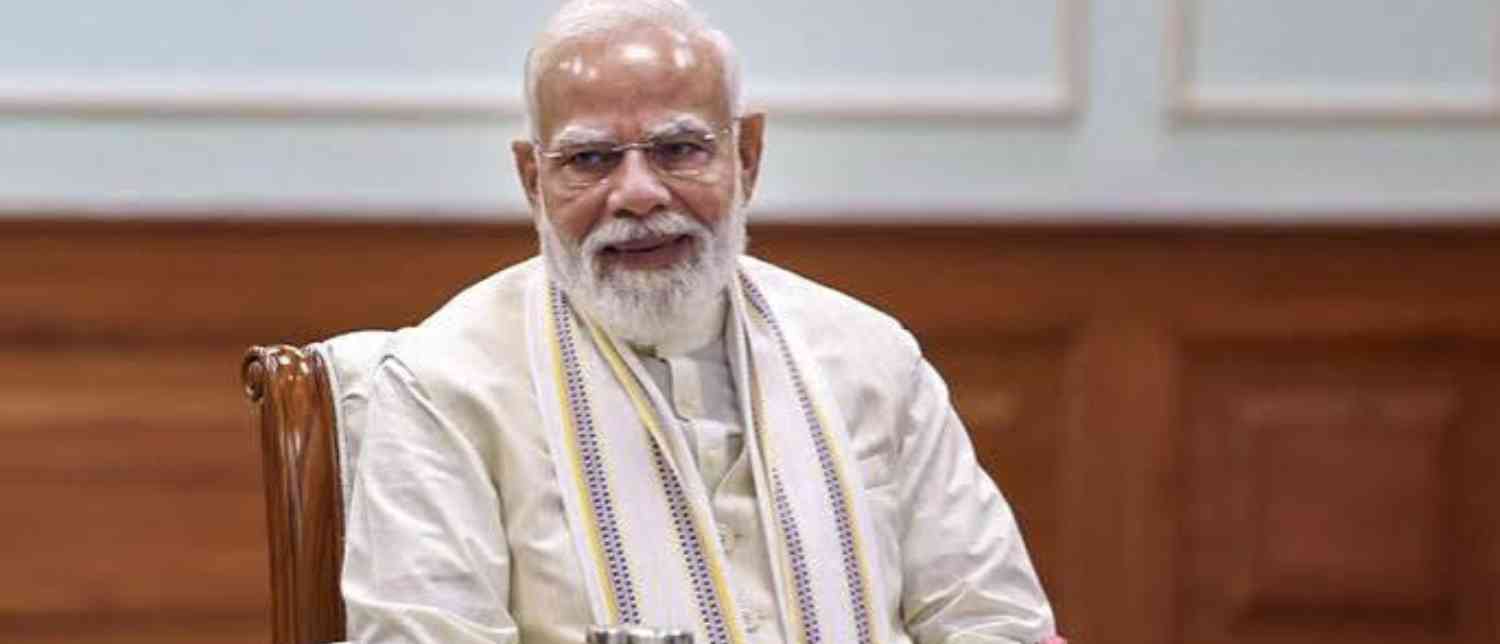
Prime Minister Narendra Modi has achieved a landmark milestone in India’s democratic history, becoming the country’s longest-serving continuously elected Prime Minister. On June 10, 2026, Modi completed 4,399 consecutive days in office, surpassing the record of 4,398 days held by India’s first Prime Minister, Jawaharlal Nehru, in the post-election era. The achievement marks a defining moment in modern Indian politics and underscores Modi’s enduring electoral appeal across three consecutive general elections.
The milestone comes just a day after Modi completed 12 years in office, a period during which he has led India through significant political, economic, technological, and geopolitical transformations.
_1781035925.jpg)
A Record Rooted in Electoral Democracy
The record specifically pertains to uninterrupted service as a democratically elected Prime Minister after a general election. Modi first took oath as Prime Minister on May 26, 2014, after leading the Bharatiya Janata Party (BJP) to a decisive victory in the 2014 Lok Sabha elections. He secured a second consecutive mandate in 2019 and returned for a third term following the 2024 general election.
Nehru’s benchmark of 4,398 days was calculated from May 13, 1952—when he took office after India’s first general elections—until his death on May 27, 1964. While Nehru served longer overall as Prime Minister, the comparison excludes his tenure before India’s first electoral mandate, making Modi the longest-serving continuously elected head of government in independent India’s democratic era.
The achievement also follows another major political milestone. In July 2025, Modi surpassed former Prime Minister Indira Gandhi’s uninterrupted tenure of 4,077 days in office, becoming the second-longest-serving Prime Minister overall before now overtaking Nehru’s elected-term record.
Winning in an Era of Intense Political Competition
Political observers have noted that Modi’s achievement stands out because it has been accomplished in a vastly different electoral environment than the one that existed during India’s early decades after Independence.
India’s population was approximately 34 crore when Nehru governed the newly independent nation. By the time Modi assumed office in 2014, the population had crossed 131 crore and has since risen to more than 146 crore. The electorate has expanded dramatically as well, from around 17 crore voters during the first general election to more than 83 crore voters by 2014.
The political landscape has also become significantly more competitive. While only 53 political parties contested India’s first general election in 1951-52, the number increased to 464 parties in the 2014 Lok Sabha elections and surged to 744 parties in the 2024 general election. Modi’s supporters argue that maintaining electoral dominance in such a crowded and competitive democratic arena makes the achievement particularly notable.
Furthermore, Modi remains the first non-Congress leader to win three consecutive general elections and secure three successive terms as Prime Minister, a feat previously achieved only by Nehru.
_1781035959.jpg)
From Gujarat to National Leadership
Modi’s political journey has often been described as one of the most remarkable stories in contemporary Indian politics. Rising from humble beginnings, he served as Chief Minister of Gujarat before being projected as the BJP’s prime ministerial candidate in 2014.
His campaign focused on development, governance reforms, and economic growth, helping the BJP secure a majority in the Lok Sabha on its own—something no party had achieved in three decades. He repeated the feat in 2019 with an even larger mandate and returned to power again in 2024, cementing his position as one of India’s most influential political leaders.
Over the years, Modi has become synonymous with several flagship initiatives and governance programs aimed at expanding infrastructure, digital connectivity, financial inclusion, welfare delivery, sanitation, healthcare access, and economic modernization. On completing 12 years in office, he highlighted progress in poverty alleviation, infrastructure development, health services, and digital transformation, while reaffirming his commitment to continue working toward national development goals.
Global Recognition and International Standing
The historic milestone has drawn congratulatory messages and praise from leaders around the world. Several international dignitaries lauded Modi’s leadership, highlighting his role in elevating India’s global profile and advocating for the interests of developing nations and the Global South.
World leaders acknowledged his contribution to strengthening India’s economic position, expanding its diplomatic influence, and shaping conversations on global issues ranging from climate action to development partnerships. The international recognition reflects India’s growing prominence on the world stage during Modi’s tenure.
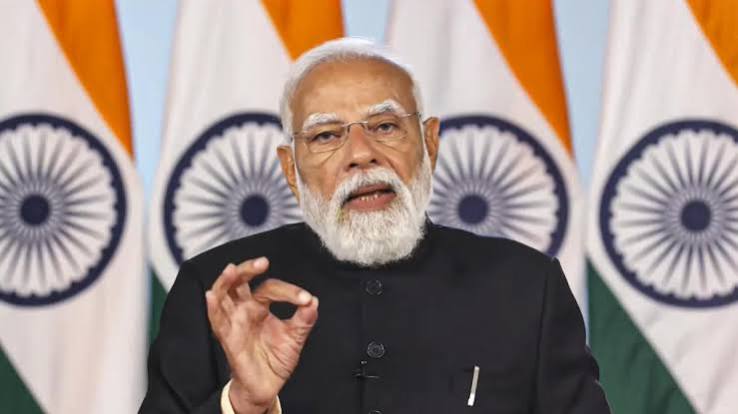
The milestone comes ahead of Modi’s participation in the upcoming G7 Summit, further reinforcing India’s increasingly influential role in global diplomacy and multilateral engagement.
A Defining Political Era
Supporters and political commentators have described Modi’s tenure as transformational, arguing that it has reshaped the grammar of Indian politics. Beyond the numerical achievement of serving the longest uninterrupted elected term, they contend that his leadership has redefined political communication, governance priorities, and public expectations from government.
His tenure has witnessed major policy initiatives, large-scale welfare programs, increased emphasis on infrastructure creation, and a stronger focus on national identity and strategic autonomy. Analysts note that the Modi era has significantly influenced political narratives and electoral strategies across the country, with rival parties often adapting their approaches in response to his political dominance.
Comparing Nehru and Modi
The milestone has inevitably sparked comparisons between Nehru and Modi—two leaders separated by decades but linked by their long tenures and ambitions to shape India’s future.
Nehru led a newly independent nation through its formative years, laying the foundations of democratic institutions, industrialization, and foreign policy. Modi, meanwhile, has governed a vastly larger, more interconnected, and economically complex India, emphasizing technological advancement, infrastructure expansion, economic reforms, and global engagement.
While their ideological approaches differ significantly, commentators have observed that both leaders sought to transform India in accordance with their respective visions and the demands of their times. The comparison, therefore, extends beyond tenure and enters the realm of legacy and national transformation.
What the Milestone Means
For the BJP and Modi’s supporters, the record is evidence of sustained public trust and political resilience over more than a decade. For political analysts, it represents a rare moment in democratic history where a leader has retained broad electoral support across multiple election cycles despite changing political and economic circumstances.
With 4,399 consecutive days in office, Narendra Modi has now etched his name into the record books as India’s longest-serving democratically elected Prime Minister. Whether viewed through the lens of electoral success, governance, political transformation, or global influence, the milestone stands as one of the most significant moments of his political career and a defining chapter in India’s democratic journey.
With inputs from agencies
Image Source: Multiple agencies
© Copyright 2026. All Rights Reserved. Powered by Vygr Media.