 By

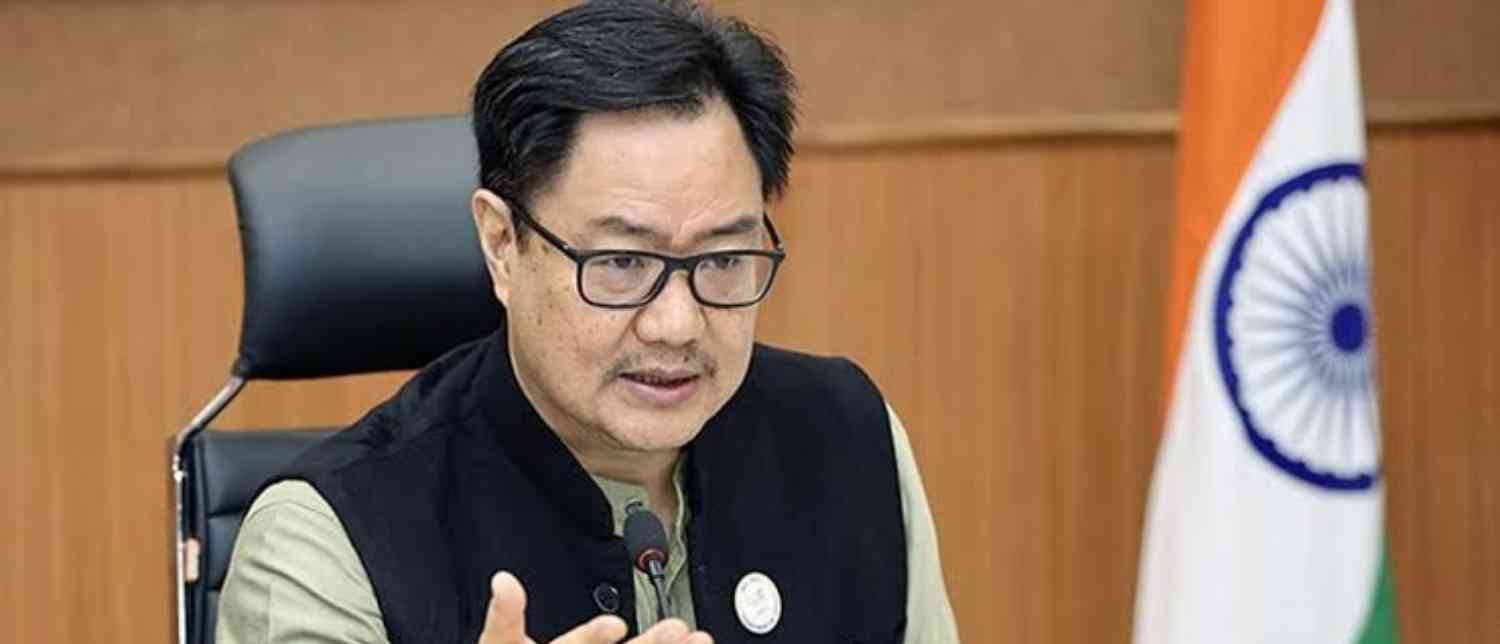
New Delhi, October 27, 2026: A political confrontation has erupted after the Indian Army debunked two viral social media videos alleging Chinese intrusion into Indian territory and Chinese control over parts of Arunachal Pradesh. Union Minister Kiren Rijiju has demanded an apology from the Congress, accusing the opposition party of spreading fabricated information that could damage the reputation of the armed forces and create confusion over India's national security.
The controversy centres on posts shared by Ritu Choudhary, a Congress spokesperson from Bihar, which claimed that Chinese vehicles had entered Indian territory and that China had captured strategically sensitive areas in Arunachal Pradesh. The Indian Army subsequently issued fact-checks, explaining that one video showed commercial vehicles at an authorised border trade point, while the other contained digitally manipulated footage falsely attributed to a senior Army officer.
The episode has reignited a wider debate over political misinformation, AI-generated deepfakes, India-China border security and the growing risks of sharing unverified content on social media.
How the China Intrusion Controversy Started
The controversy gained momentum after Ritu Choudhary shared videos on social media suggesting that China had made incursions into Indian territory and taken control of areas along the Arunachal Pradesh border.
In one post, Choudhary claimed that Chinese vehicles were entering India from the border region. She also alleged that the footage was spreading rapidly online while mainstream media outlets were not adequately highlighting the development.
A second post made more serious allegations. It claimed that Lieutenant General Girish Kalia, associated with the Army's Spear Corps, had acknowledged that Chinese forces had captured Asafila, Longju and Taksing in Arunachal Pradesh. The post further alleged that Indian troops were facing shortages of essential supplies and that the military was being deployed against Generation Z protesters rather than addressing the alleged Chinese threat.
These claims quickly attracted attention because they touched on two highly sensitive issues: India's territorial security and the preparedness of its armed forces.
However, the Indian Army's fact-checking unit subsequently challenged both videos, stating that the material had been misrepresented or digitally altered. The clarification shifted the focus from the alleged Chinese intrusion to questions about the authenticity of the videos and the responsibility of political leaders when sharing information about national security.
Indian Army Fact-Checks Viral Chinese Vehicles Video
Addressing the first allegation, the Indian Army clarified that the video presented as evidence of Chinese vehicles entering Indian territory actually showed JAC-branded commercial vehicles at Nathu La Pass in Sikkim.
Nathu La is a designated India-China border trade point where commercial movement operates under established arrangements. According to the Army, the footage of civilian commercial vehicles was being portrayed misleadingly as evidence of an unauthorised Chinese military intrusion.
The distinction is crucial. The presence of Chinese commercial vehicles at an authorised border trade location does not, by itself, establish that Chinese military forces have crossed into Indian territory.
By removing the location's legitimate trade context, the viral post created an impression of a border-security incident that the footage did not substantiate.
The Army's clarification also highlighted how genuine video footage can be used to spread misleading narratives when captions omit important details about the location, purpose and circumstances of the activity shown.
The incident underscores the importance of verifying the original footage and its geographical context before drawing conclusions about Chinese military movements or India's border security situation.
Arunachal Pradesh Claims Debunked as AI-Generated Deepfake
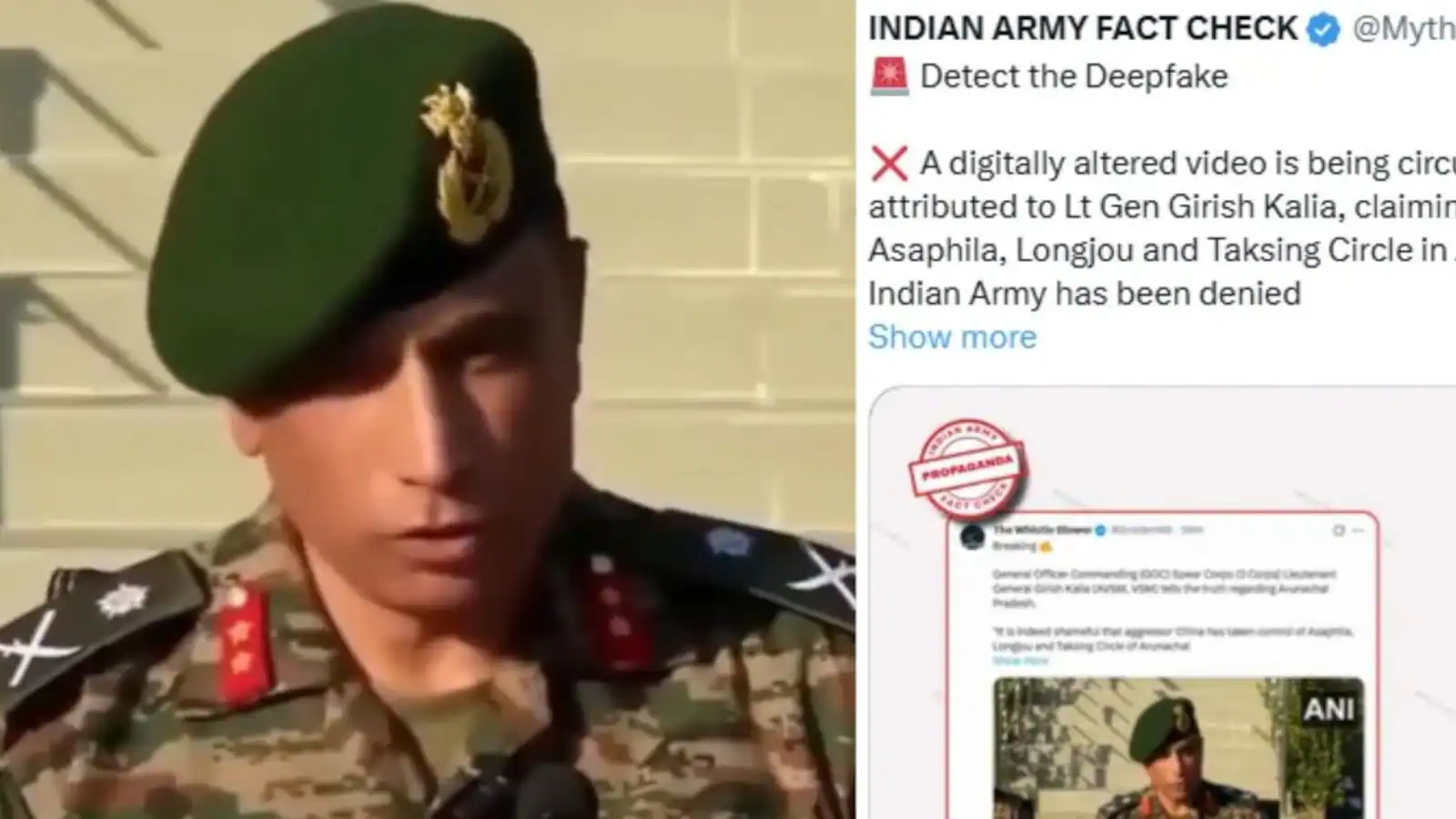
The second video proved even more contentious because it allegedly showed Lieutenant General Girish Kalia making statements about Chinese control over parts of Arunachal Pradesh and the denial of essential supplies to Indian troops.
The Army identified the clip as digitally altered, with fabricated remarks attributed to the officer. It said the video used synthetic-generated content to present false statements as though they were an authentic disclosure by a senior military official.
According to the Army's clarification, the original footage came from a press briefing held in Kupwara, Jammu and Kashmir, on October 27, 2023.
At that briefing, then Major General Girish Kalia discussed counter-infiltration operations along the Line of Control. The Army said the briefing concerned infiltration attempts and related security operations, not Chinese control over Arunachal Pradesh.
The original remarks reportedly covered 10 foiled infiltration attempts, the elimination of 27 terrorists and the recovery of weapons and narcotics.
The Army categorically rejected the claim that the officer had made statements about China capturing Asafila, Longju or Taksing, or about Indian troops being denied essential supplies.
The clarification exposed a significant problem with the viral video: authentic footage from an unrelated military briefing had been repurposed to attribute statements to an officer that he had not made.
Such manipulated material can be particularly persuasive because it combines a recognisable official, a real military setting and a seemingly credible statement. Viewers may accept the clip as genuine without realising that its audio, context or purported remarks have been altered.
The episode has therefore brought the issue of AI-generated fake videos into sharper focus, particularly when manipulated content concerns national security and the armed forces.
🚨 Coordinated Inauthentic Behaviour Exposed ❌ Social media accounts are circulating a video showing Chinese vehicles near the India-China border, falsely portraying it as an unauthorised entry of Chinese vehicles into Indian territory. The misleading caption further alleges that mainstream Indian media is deliberately concealing the incident. ✅ The original footage is of the JAC-branded Chinese commercial vehicles at Nathu La Pass in Sikkim, a designated India-China border trade point. ✅ The movement of commercial vehicles at an authorised border trade route is being misrepresented as evidence of a Chinese military intrusion. Trade at Nathu La operates under established bilateral agreements, designated trading facilities and regulated procedures. 📍 @GoI_MeitY: The following 12 handles have been identified as circulating the same content between 0826 hrs and 1256 hrs on 26 October 2026: @VarisRajput01, @RituChoudhryINC, @AsdhirDubey, @imharshchhikara, @SunilYadav990, @ANKITVERMA90648, @Ravipandey4AAP, @rastrijans19021, @Pradeep_JAAT_00, @fahad_4884_, @vikrampanchal68 and @MohitArjun1. ♻️ Disinformation Pattern: Chinese commercial vehicles + Omission of authorised border trade context + False narrative of unauthorised Chinese entry + Coordinated posting = Misleading India-China border security narrative. ⚠️ Always check the location, original footage and official context before sharing. #IndianArmy #NathuLa #Sikkim #IndiaChinaBorder #FactCheckIndia @adgpi @easterncomd @trishakticorps @PIBFactCheck @GoI_MeitY @SpokespersonMoD— INDIAN ARMY FACT CHECK (@MythbusterXX) October 26, 2026
Kiren Rijiju Calls for Congress to Apologise to the Nation
Following the Army's fact-checks, Union Minister Kiren Rijiju launched a sharp attack on the Congress and demanded an apology to the nation.
Rijiju accused the opposition party of circulating a fake AI-generated video to tarnish the Indian Army's image. He described the alleged campaign as a serious and irresponsible act, arguing that spreading fabricated claims about the armed forces could serve the interests of India's adversaries.
His criticism went beyond the accuracy of the videos. The minister framed the controversy as a question of national responsibility, insisting that political parties should exercise greater care when discussing military operations and territorial security.
The BJP has also accused the Congress of using manipulated content for political advantage. The dispute has consequently expanded from a fact-checking controversy into a broader confrontation between the ruling party and the opposition over national security and political accountability.
Rijiju's demand places pressure on the Congress to address questions about the material shared by its spokesperson. It also raises a wider issue for political organisations: whether the urgency of criticising the government is being allowed to overshadow the need to verify potentially consequential claims.
At the same time, the demand for an apology remains part of the political dispute. The Army's clarification establishes that the specific videos and claims were misleading, but the political responsibility of individual leaders and the party remains a separate question.
Himanta Biswa Sarma Accuses Congress of Political Misuse
Assam Chief Minister Himanta Biswa Sarma also criticised the Congress over the circulation of the disputed videos.
Sarma alleged that the doctored material was being used to malign the armed forces and embarrass the country for political gain. He further claimed that the circulation of the video reflected a deliberate strategy rather than an isolated mistake.
The chief minister called for those responsible to face legal consequences, intensifying the demand for accountability over the spread of the manipulated content.
These allegations added another dimension to the controversy, with BJP leaders questioning whether the videos were shared without adequate verification or as part of a broader political campaign.
However, allegations about political motives should be distinguished from the technical findings of the Army's fact-checking unit. The Army's explanation addressed the footage's origin and authenticity; claims about political coordination or intent are separate allegations made by political figures.
The distinction matters because a credible response to misinformation requires both factual verification and careful assessment of responsibility, without treating every political accusation as an established finding.
Congress Pushes Back Against Rijiju's Criticism
The controversy has also prompted a response from the Congress camp.
The Indian Youth Congress questioned Rijiju's criticism, pointing to the minister's own sharing of the disputed video and asking why he would circulate material he considered fake.
The organisation's response turned attention towards the handling of the video by political figures on both sides of the dispute. It also highlighted a recurring difficulty in the social media era: even people sharing content to condemn or expose misinformation can inadvertently increase its reach.
At the time of the reports, no other senior Congress leader had publicly commented on the matter. The status of the disputed posts and the demand for a formal party apology therefore remained central to the developing political row.
The exchange demonstrates how quickly an online fact-check can become a larger political confrontation. Once a misleading video gains traction, the discussion can move beyond its original claim to include questions about who shared it, who amplified it and whether those involved acted responsibly.
Fake News and AI Deepfakes Raise National Security Concerns
The controversy involving the Indian Army, Kiren Rijiju and the Congress highlights a growing challenge for India's digital information environment.
AI-generated videos and digitally manipulated footage can make false claims appear authentic, particularly when they feature public figures, military officers or official-looking briefings. When such content concerns border disputes, troop deployments or territorial control, its potential impact can extend beyond ordinary political debate.
False claims about Chinese intrusion into Arunachal Pradesh can create unnecessary alarm, undermine public confidence and distort discussions about India's defence preparedness. Similarly, unverified allegations about shortages of supplies to troops can damage the reputation of military institutions and confuse the public about operational realities.
The incident also demonstrates why social media users should not rely solely on captions or the apparent authority of the person sharing a video. Checking the original recording, identifying the location, examining the date and consulting official clarifications can help prevent manipulated footage from spreading further.
Political parties and public representatives have an especially important role in this process because their statements can reach large audiences and influence public opinion rapidly.
Responsible communication does not mean avoiding scrutiny of government policy or military preparedness. It means ensuring that criticism rests on verifiable evidence rather than fabricated statements or misleading visual material.
What Happens Next in the Political Row?
The immediate controversy centres on the Congress's disputed posts, the Army's rejection of the claims and Rijiju's demand for an apology. The episode has also renewed questions about how political organisations should respond when content shared by their representatives is publicly debunked.
For the Congress, the challenge is to address the credibility concerns raised by the Army's clarification. For the BJP, the controversy has provided an opportunity to challenge the opposition's handling of national security issues. For the public, the priority is to separate verified facts from partisan accusations.
The most important finding remains clear: the Indian Army said the viral videos did not establish the alleged Chinese intrusion or the claimed loss of territory in Arunachal Pradesh. One showed commercial vehicles at an authorised trade point in Sikkim, while the other used altered footage from an unrelated military briefing in Jammu and Kashmir.
As the political exchange continues, the episode serves as a reminder that misinformation can travel quickly, but correcting it requires evidence, transparency and responsible communication.
Ultimately, the debate over Kiren Rijiju's demand for a Congress apology is part of a larger question facing India's political and digital landscape: how can public discourse remain robust and critical without allowing fabricated videos to distort sensitive matters of national security?
© Copyright 2026. All Rights Reserved. Powered by Vygr Media.