 By
By 
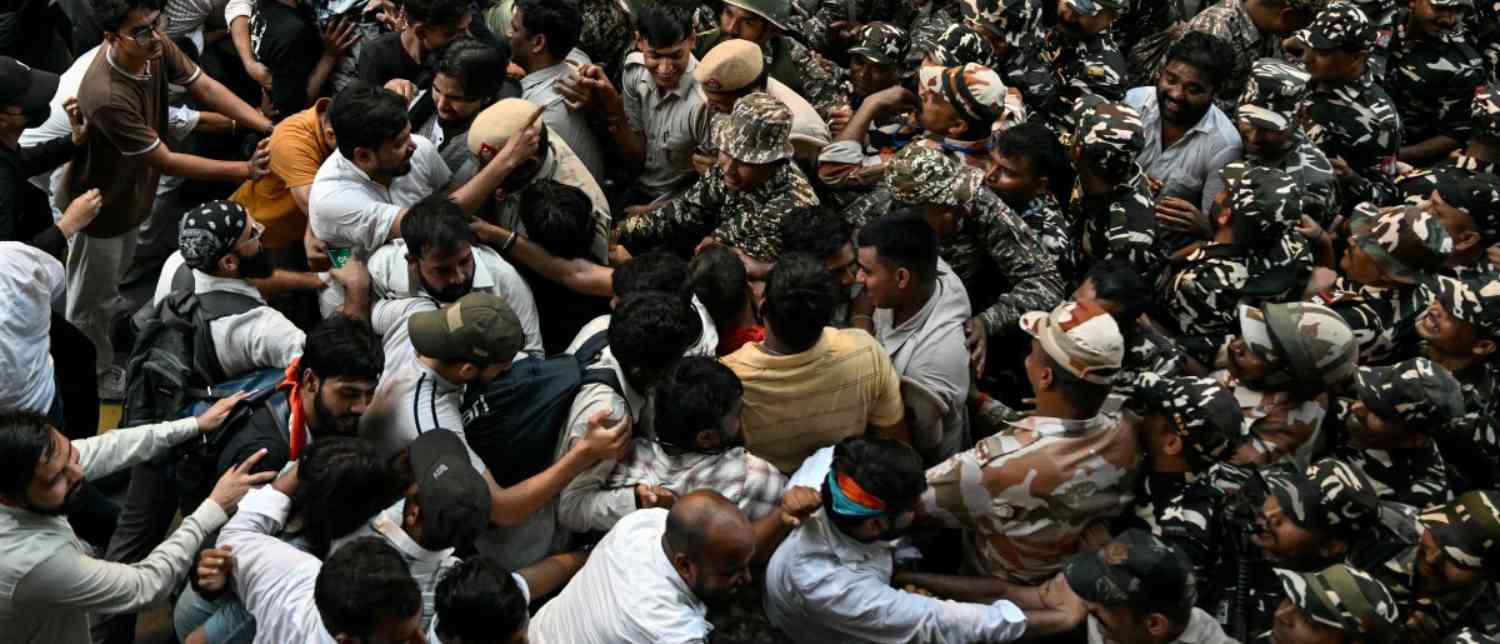
New Delhi, October 13, 2026: Cockroach Janta Party (CJP) leaders Saurav Das, Ashutosh Ranka and several other party members were detained by Delhi Police on Tuesday after attempting to enter Jantar Mantar, a day after the historic protest venue was officially removed from the list of designated demonstration sites. The incident has intensified the debate over the right to protest, electoral transparency and the future of public demonstrations in the national capital.
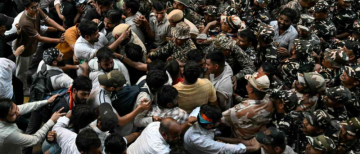
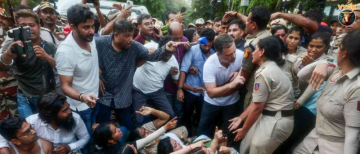
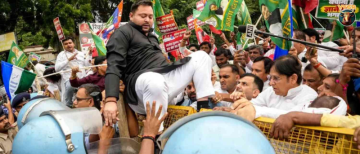
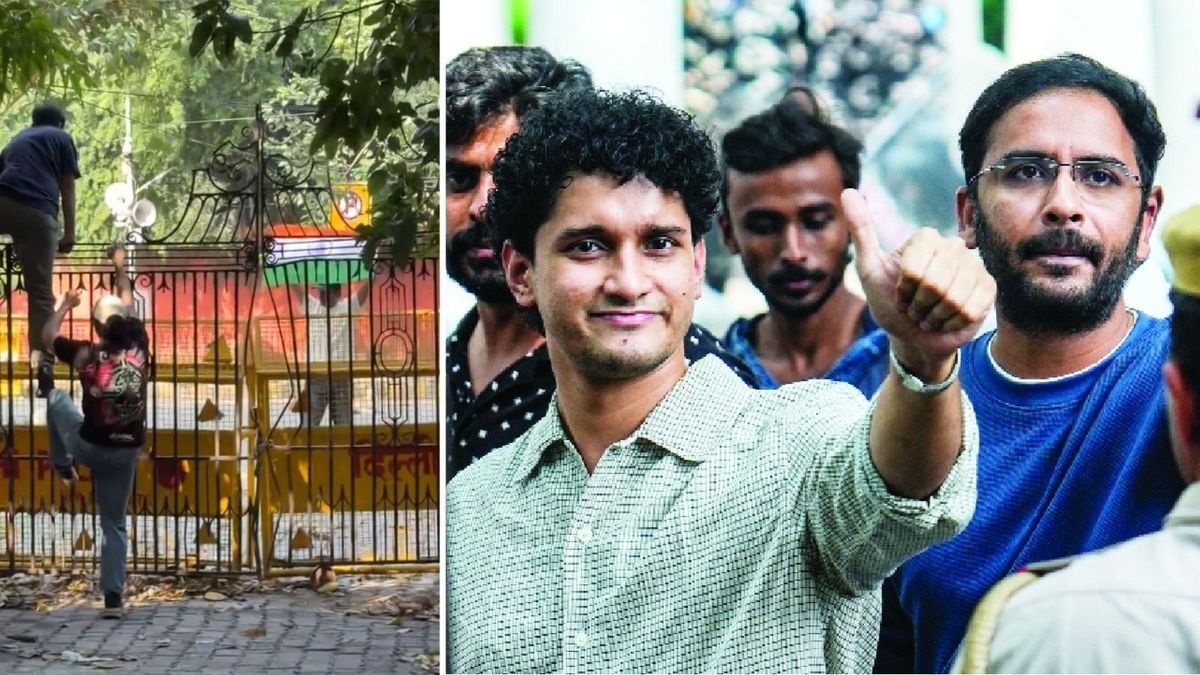
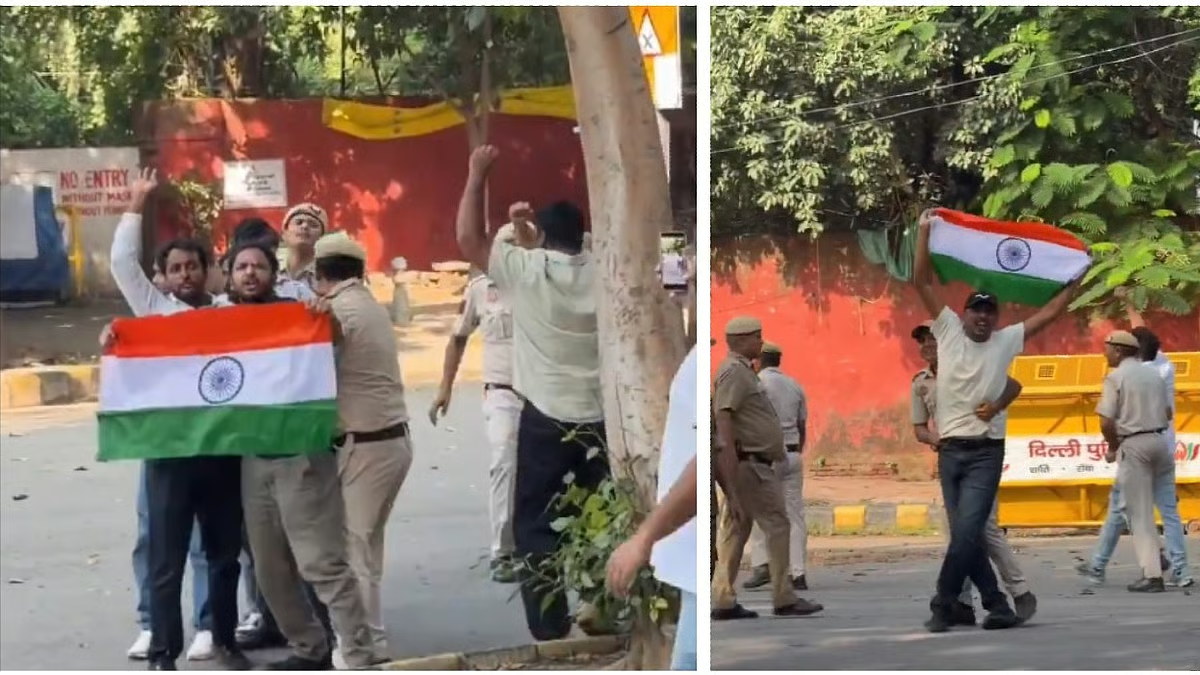
The protesters, carrying the national flag, reportedly climbed over a locked iron gate and a police barricade to enter the restricted area. They raised slogans, including “Bharat Mata Ki Jai” and “Inquilab Zindabad”, before police personnel intervened and detained them.
CJP founder Abhijeet Dipke announced the detentions on social media, sharing a video of the protest and challenging the Centre's decision to denotify Jantar Mantar as an authorised protest site. His message was defiant: the removal of a designated venue, he argued, would not bring resistance to an end.
The confrontation came amid heightened political tensions over alleged irregularities in electoral rolls and demands for the resignation of Chief Election Commissioner Gyanesh Kumar. It also followed a series of protests and detentions in Delhi over the preceding days.
CJP Leaders Detained After Attempt to Enter Jantar Mantar
Tuesday's incident unfolded as CJP members attempted to stage a protest at Jantar Mantar despite the change in its official status.
Saurav Das, the party's chief spokesperson, and Ashutosh Ranka, its national spokesperson, were among those detained. Ajinkya Shinde and other team members were also named in Dipke's social media post.
Footage circulated by the party showed protesters climbing over the locked gate while holding the Tricolour. After entering the area, they raised slogans against Gyanesh Kumar and demanded action over alleged electoral roll irregularities. Police personnel stationed nearby moved in to stop the group, and the demonstrators were subsequently taken away.
Das later described the action as a message to young people, suggesting that the protest had demonstrated their ability to challenge restrictions. Ranka also posted a message opposing the removal of Jantar Mantar from the list of approved protest venues.
The detention of the CJP leaders quickly became a flashpoint in the wider dispute over access to public spaces for political demonstrations. For the party, the action represented a confrontation over the ability of citizens to make their grievances heard. For the authorities, the immediate issue was an attempt to enter a site that was no longer authorised for demonstrations.
The incident has therefore placed two questions at the centre of the controversy: how public protests should be regulated in a crowded, security-sensitive capital, and whether relocating demonstrations could weaken their visibility and political impact.
Why Was Jantar Mantar Removed as a Designated Protest Site?
Jantar Mantar has long been one of India's most recognisable venues for demonstrations, sit-ins and public campaigns. Located in central Delhi, it has provided protesters with a prominent platform to draw attention to political, social and administrative issues.
Its location has also made it symbolically important. Demonstrations held there can attract media coverage and bring public grievances into the national political conversation.
That role changed on October 12, when Delhi Police issued an official notice removing Jantar Mantar from the list of designated venues for protests and demonstrations.
The decision followed recommendations from a committee constituted by the Union Ministry of Home Affairs to examine alternative locations where citizens could organise public gatherings. According to the official notice, three replacement venues have been designated for such activities.
The newly designated sites are:
-
Ramlila Ground: A major public gathering venue in central Delhi.
-
Burari Ground: A large open area in north Delhi.
-
CBD Ground: A designated venue in east Delhi.
The change means that Jantar Mantar is no longer an officially designated location for protests under the revised arrangements. Organisers seeking to stage demonstrations are expected to use the newly identified venues and comply with the applicable permissions and procedures.
The authorities' stated approach centres on identifying alternative spaces for public gatherings. However, the move has prompted objections from CJP members, who argue that the decision was arbitrary and undermines the ability of citizens to exercise their right to protest.
The controversy is not simply about the availability of open ground. It is also about location, accessibility and symbolism. A protest venue's distance from political institutions, ease of access and visibility can influence how effectively demonstrators communicate their demands to the public and decision-makers.
For groups that have traditionally relied on Jantar Mantar, shifting to a different part of Delhi could change the character and reach of their campaigns.
Abhijeet Dipke Challenges Centre's Decision
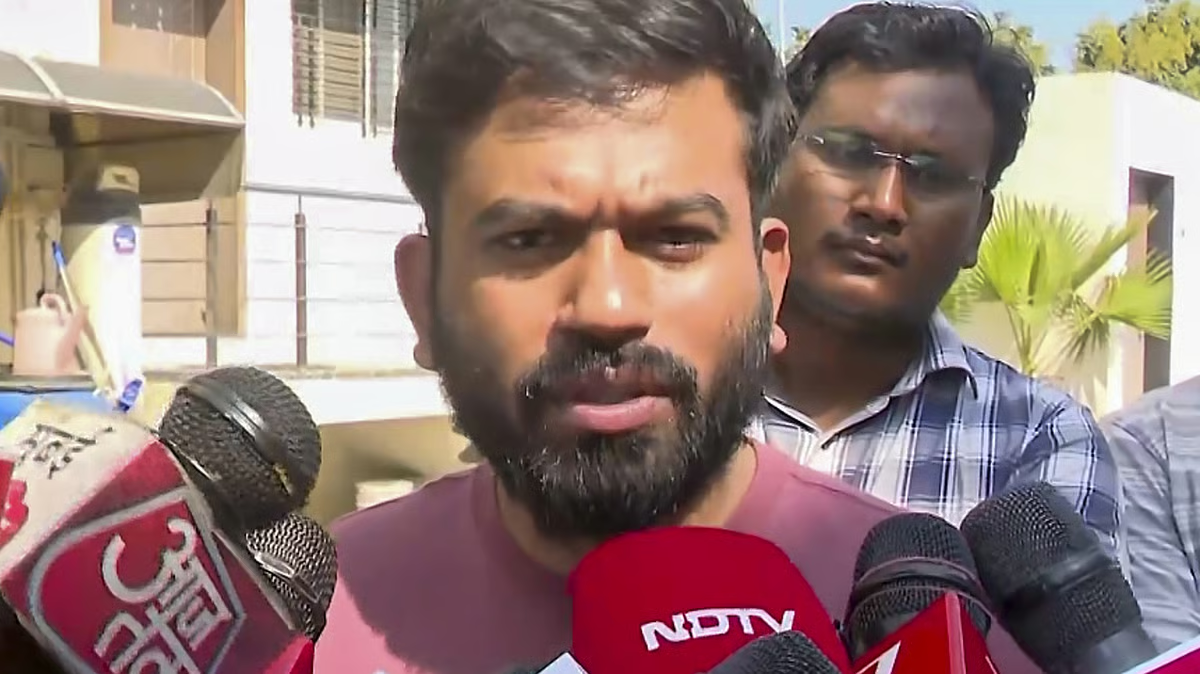
CJP founder Abhijeet Dipke strongly criticised the decision to remove Jantar Mantar from the list of designated protest sites. In his social media post following Tuesday's detention, he declared that resistance could not be stopped simply by changing the official status of a location.
Dipke also argued that the decision reflected a broader reluctance to accommodate protests against the government. He warned that demonstrations would not disappear because one established venue had been withdrawn from use, adding that similar protest centres could emerge across the country.
His remarks framed the controversy as a question of democratic participation rather than a dispute over a particular location.
The party's position is that citizens must retain meaningful opportunities to express dissent, particularly when raising concerns about electoral processes and public institutions. CJP members have also objected to what they describe as a unilateral decision taken without adequate consultation with protest organisers.
The Centre's decision, meanwhile, was announced through an official process involving a committee set up by the Ministry of Home Affairs to consider alternative venues. The authorities have identified three replacement sites, although their suitability for different types of protests remains an important consideration for organisers.
The disagreement highlights the challenge of balancing public order and security requirements with the practical need to preserve accessible spaces for peaceful demonstrations.
Electoral Roll Controversy Adds to Political Tensions
The Jantar Mantar protest was linked to growing criticism of the Special Intensive Revision (SIR) of electoral rolls, a process that has become a major point of contention in Indian politics.
Opposition groups and CJP have raised concerns about alleged irregularities in the revision of voter lists and have called for accountability from Chief Election Commissioner Gyanesh Kumar. The protesters have demanded his resignation, arguing that questions surrounding the electoral process require urgent attention.
The allegations have not been established as proof of wrongdoing by the Chief Election Commissioner. The dispute remains part of a wider political and institutional debate over voter registration, the accuracy of electoral rolls and public confidence in elections.
Electoral rolls are fundamental to the democratic process because they determine who is registered to vote. Changes to these lists can therefore attract considerable scrutiny, especially when political parties believe that eligible voters may have been excluded.
The controversy has extended beyond the CJP demonstration. On October 12, opposition leaders and supporters marched towards the Supreme Court in Delhi to challenge the voter-list revisions. The march took place amid heightened security, traffic restrictions and disruption to some public transport services.
The opposition's legal and political objections have added to the pressure surrounding the Election Commission and its handling of the revision exercise. The ruling Bharatiya Janata Party (BJP), however, has rejected accusations that the criticism represents a legitimate case against the electoral process, portraying the political confrontation as an attempt to undermine institutions.
Against this backdrop, the detention of CJP leaders at Jantar Mantar has brought two contentious issues together: concerns about electoral transparency and questions about the space available for public dissent.
Delhi Police Steps Up Security Amid Protests
Security arrangements across the national capital have been tightened following calls for demonstrations by different political groups and organisations.
Jantar Mantar has been particularly sensitive since its designation as a protest venue was withdrawn. Police had strengthened security around the site from October 10 and restricted protesters from entering the area.
The latest detention also follows earlier action against CJP leaders. Dipke, Das and Ranka were reportedly detained on October 10 after arriving in Delhi, while protests over the electoral roll controversy led to further detentions during the weekend.
The authorities have deployed substantial police personnel across the city to maintain law and order amid successive demonstrations. Security measures have also accompanied opposition mobilisation and marches in central Delhi.
Tuesday's attempt to enter Jantar Mantar nevertheless demonstrated that the removal of the site's official designation has not ended efforts to use it as a platform for protest.
The confrontation raises practical questions about how future demonstrations will be managed, how organisers will secure permission for gatherings and whether the alternative venues will offer the same level of visibility and accessibility as the former protest site.
Can New Protest Venues Replace Jantar Mantar?
The designation of Ramlila Ground, Burari Ground and CBD Ground provides alternative locations for public demonstrations in Delhi. However, whether these venues can fulfil the role played by Jantar Mantar will depend on factors beyond their physical capacity.
Protest organisers must consider transport connections, crowd management, access for participants, the availability of facilities and proximity to the institutions they wish to address. A location that can accommodate a large crowd may not necessarily offer the same political visibility as a centrally located protest venue.
Ramlila Ground has an established history of hosting large public gatherings. Burari Ground offers substantial open space, while CBD Ground provides another option in east Delhi. Their practical suitability will vary according to the size, purpose and logistics of each demonstration.
For the authorities, designated venues can help organise gatherings and manage public safety. For protesters, however, the ability to reach a location and attract public attention remains crucial.
The Jantar Mantar decision has consequently triggered a larger debate about the relationship between protest regulation and democratic participation. The issue is not only whether demonstrations can take place, but also whether alternative arrangements allow citizens to communicate their demands effectively.
The coming days may offer a clearer indication of how political parties, campaigners and civil society groups respond to the revised arrangements.
A Larger Debate Over the Right to Protest
The detention of Saurav Das, Ashutosh Ranka, Ajinkya Shinde and other CJP members has turned an attempt to stage a demonstration into a wider political flashpoint.
For the party, entering Jantar Mantar was a symbolic challenge to the decision to remove the venue's designated status. Dipke's declaration that resistance cannot be denotified captures the group's central argument: restrictions on a particular protest site should not be mistaken for an end to public dissent.
For the authorities, the immediate challenge is to enforce the revised arrangements while maintaining public order in a city that hosts major political institutions and frequent demonstrations.
The broader question concerns how these competing considerations can be reconciled. Peaceful protest is an important feature of democratic participation, while authorities also have responsibilities relating to security, traffic and the management of public spaces.
The effectiveness of the new arrangements will depend partly on whether the alternative venues provide practical and accessible opportunities for peaceful gatherings, rather than simply relocating them geographically.
As the controversy over electoral roll revisions continues, the dispute surrounding Jantar Mantar is likely to remain part of the wider discussion about political accountability, institutional trust and the right to dissent.
Tuesday's detention has made one point clear: removing a location from the list of authorised protest sites does not automatically remove the grievances that bring people onto the streets. Whether the new venues can accommodate those voices without further confrontation remains an important question for Delhi's authorities and the country's political establishment.
© Copyright 2026. All Rights Reserved. Powered by Vygr Media.