 By

Chhath Puja is about far more than prayers. It brings together family, stories, laughter and a kitchen full of aromas that people carry in their hearts until the next Chhath.
Long before the first conch is blown at the riverbank, you can smell Chhath. It arrives as the scent of ghee warming in a heavy pan, of jaggery melting into milk, of wheat dough being pressed into a wooden mould. In homes across Bihar, Jharkhand, eastern Uttar Pradesh and in the apartments of cities where families have settled far from home, the festival begins in the kitchen.
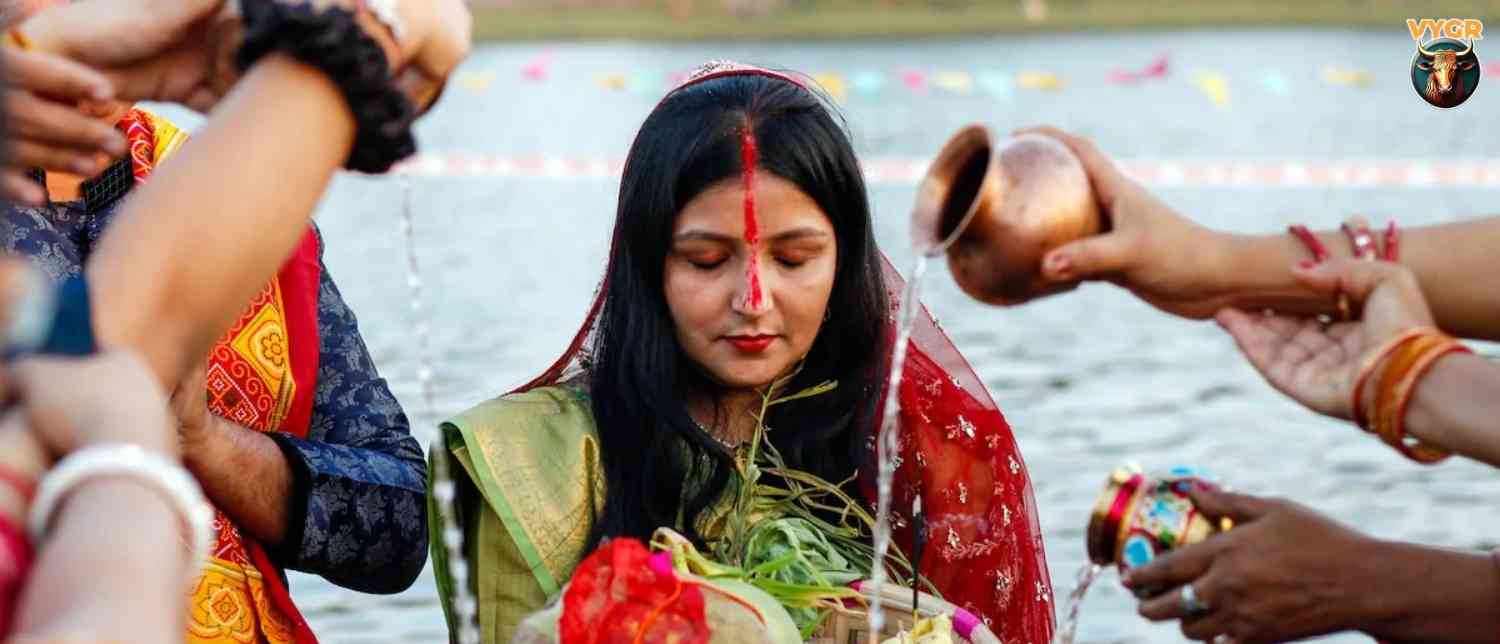
This year, the four days run from Friday, November 13, to Monday, November 16. Today, Saturday, is Kharna, the day of the long fast and the sweet kheer that ends it. Tomorrow evening, devotees will stand in water at sunset to offer arghya to the setting sun, and on Monday morning they will do the same at dawn.
In a season of bright lights, imported decorations and ready-made everything, Chhath stands out for what it refuses to need. The offerings are simple, earthy and local: sugarcane, bamboo baskets, clay lamps, fruit from the season and sweets made by hand. There is a gentle pride in that. No glitter, no gadgets, just dadi’s thekua.
A festival that begins with a kitchen
Chhath honours the Sun and Chhathi Maiya, and it is known for its discipline. Devotees, called vratis or parvaitins, observe a demanding fast, including a stretch of roughly 36 hours without even water. Yet the festival’s emotional centre is not austerity. It is generosity. Everything is made at home, shared with neighbours and offered with care.
The rules of the kitchen are strict and deeply respected. Food is strictly vegetarian, prepared without onion or garlic, and cooked in a space that has been scrubbed clean. The family often keeps the cooking area separate and the utensils reserved for the puja. Many households still prefer a mud stove fired with mango wood, which is said to give the food a flavour nothing else can match. The idea is simple: purity is not only a ritual condition but a form of love for the people who will eat the prasad.
Day one: Nahay Khay and the comfort of kaddu-bhaat
The festival opens with Nahay Khay, which means “bathe and eat.” The vrati takes a dip in a river or pond, or bathes at home, and the house is cleaned from corner to corner. Then comes the first meal, simple and soothing: kaddu-bhaat. This is rice served with bottle gourd cooked with chana dal, a gentle meal that prepares the body for the fast ahead.
Ask people what they remember about this day and many will describe the same quiet scene. A grandmother supervising the pot, children told to stay out of the kitchen until the offering is made, and the first plate going to the person who will fast. There is no fuss, and that is exactly what makes it special.
Day two: Kharna, rasiao and the sweetness after the fast
Kharna is the heart of the food story. The vrati fasts through the day without water, and after sunset the fast is broken with a small, sacred meal. At its centre is rasiao, also called rasiaw or gur ki kheer: rice slowly cooked in milk and jaggery, often with a touch of cardamom or ginger. It is served alongside rotis or puris and first offered to Chhathi Maiya before anyone eats.
Rasiao is different from the kheer made with sugar at other celebrations. It is earthier, deeper in colour and not overly sweet. Many families say it tastes of patience, because it must be stirred and watched for a long time. When the vrati eats, the household waits quietly. Then the prasad is shared, first with the family and then with neighbours who drop by, which is half the joy.
After this meal, the 36-hour waterless fast begins and continues until the sunrise offering.
Dadi’s thekua: the taste of Chhath
If Chhath had a single flavour, it would be thekua. This crisp, golden, lightly sweet biscuit is made from wheat flour, jaggery or sugar, ghee, and often coconut and cardamom. The dough is kneaded firm, shaped by pressing it into a carved wooden mould that leaves a pattern on the surface, and then fried slowly until it turns the colour of old gold.
Everyone has a version. Some grandmothers swear by jaggery syrup, others by sugar. Some add dry coconut, some sesame, some a pinch of fennel. The recipes are rarely written down. They live in the hands of the women who have made them for decades, and the instructions are usually the same: “Make the dough until it feels right.”
Packaged thekua now fills shop shelves, and it has its place for families living far away or short of time. But for many, nothing replaces the batch made at home. The reason is not only taste. The thekua made by dadi carries the memory of afternoons spent beside her, of small hands pressing dough into moulds and being told to stop eating the raw pieces.
It is also practical. Thekua keeps well, travels easily and holds its crunch for days. That is why it ends up in so many suitcases, tucked into steel boxes and sent to sons, daughters and cousins who cannot make it home.
The rest of the prasad thali
Thekua may steal the spotlight, but the offering baskets, known as soop and daura and woven from bamboo, hold much more:
- Kasar: small laddus made from roasted rice flour and jaggery, rolled by hand.
- Fruits of the season: bananas, sweet limes, coconut, and above all sugarcane, which stands tall around the ghat.
- Rice laddus and other sweets: prepared in smaller batches, depending on the family’s tradition.
- Other treats: malpua, kheer-puri and semolina pudding appear in some households, adding to the spread.
Everything is chosen for its closeness to the land. The baskets, the stalks of sugarcane, the earthen lamps and the leaves reflect a festival that grew out of fields and riverbanks, not shops. It is no accident that the sense of “local” runs so deep in Chhath.
The ghat: where food, faith and family meet
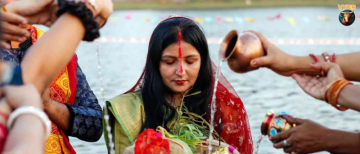
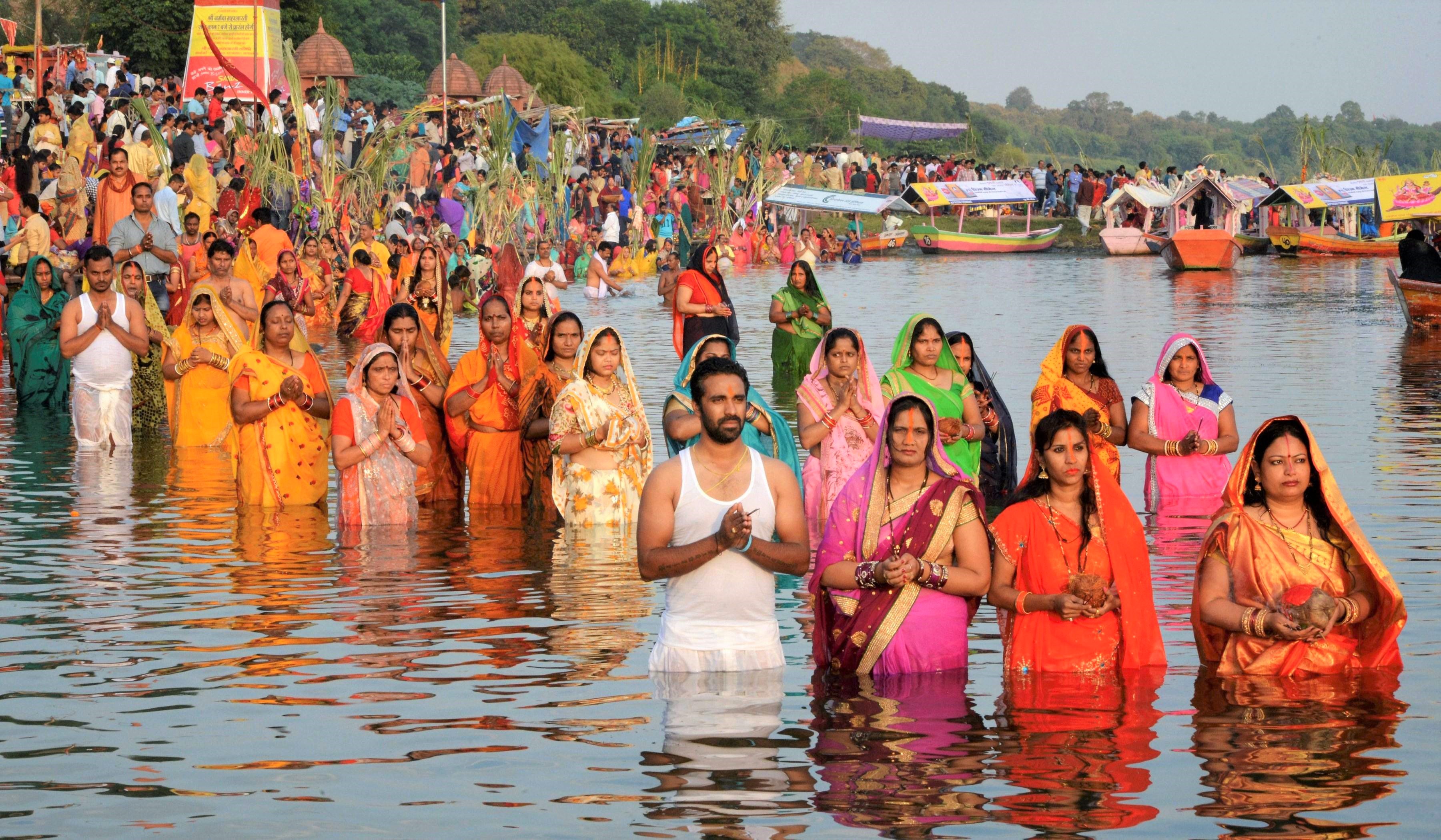
On the evening of Sandhya Arghya, families walk to the river or pond with baskets on their heads, carrying their offerings carefully through the crowd. Women in bright saris, men carrying heavy loads, children running ahead with lamps: the procession is a living picture of a community moving as one. In Patna, sunset on November 15 is expected around 5 pm, and local timings will vary, so families check their own panchang.
Standing in the water, the vrati offers arghya to the setting sun, and the baskets are lifted high. Folk songs fill the air. Many of these songs, sung for generations, are inseparable from Chhath itself. The late folk singer Sharda Sinha, whose voice became the soundtrack of the festival for millions, remains a presence in homes and ghats each year, and her songs are still played in kitchens as the thekua fries.
The next morning, before dawn, the family returns for Usha Arghya. When the first ray of sun touches the water and the offering is made, the long fast ends. The vrati breaks it with a little ginger, water and a piece of thekua. Then the prasad is shared with everyone present, and neighbours, relatives and strangers all go home with something sweet.
Why the memories matter
What makes Chhath food special is not just the recipes. It is who is standing around the pot. In many families the festival is a rare moment when everyone returns: migrant workers take trains home, students plan their holidays around it, and relatives who rarely meet gather in one house. Children learn how to shape thekua and arrange the offering by watching their elders. Younger women are taught how to make rasiao by the grandmother who has stirred the pot for fifty years.
These small lessons carry a larger meaning. In a time when festivals can feel commercial, Chhath keeps its focus on the handmade, the shared and the remembered. The festival asks very little of the market. It asks much more of people: time, discipline and each other.
Keeping the tradition alive, wherever you are
For families far from home, the challenge is to keep these traditions going. Some adapt by baking thekua instead of frying it, while others video-call grandmothers to get the recipe right. Many build a small ghat on a balcony or at a community pond. The setting changes, but the spirit stays.
A few simple ways to keep the festival’s food traditions alive:
- Record your grandmother’s thekua recipe, with her measurements and tips, before they are lost.
- Cook with children, even if the first attempt is uneven.
- Choose local, seasonal ingredients wherever possible.
- Share prasad with neighbours, as the festival intends.
- Keep the kitchen simple, clean and unhurried.
The bottom line
Chhath is a festival of the sun, but its warmth is found in the kitchen. A plate of kaddu-bhaat, a bowl of rasiao, a handful of thekua still warm from the pan: these are small things that hold a whole world of meaning. They carry the patience of grandmothers, the excitement of children and the quiet strength of those who fast. Until the next Chhath arrives, the taste will stay with the people who shared it.
Frequently asked questions
When is Chhath Puja in 2026?
It runs from November 13 to 16. Sandhya Arghya is on Sunday, November 15, and Usha Arghya is on Monday, November 16.
What is thekua made of?
Wheat flour, jaggery or sugar, ghee and often coconut and cardamom, shaped in a wooden mould and fried.
What is eaten on Kharna?
Rasiao, a kheer made with rice, milk and jaggery, served with roti or puri, after the daylong fast.
What is eaten on Nahay Khay?
Kaddu-bhaat, which is rice with bottle gourd and chana dal, after the ritual bath.
Is onion or garlic used in Chhath food?
No. The food is strictly vegetarian and cooked without onion or garlic.
© Copyright 2026. All Rights Reserved. Powered by Vygr Media.