 By
By 
In the modern workplace, exhaustion has quietly become a status symbol. Long hours, constant notifications, and an endless cycle of meetings are often framed as proof of dedication. Yet behind the façade of productivity lies a growing crisis: burnout. Across industries and continents, employees are increasingly grappling with chronic stress, emotional exhaustion, and a sense that work has consumed the very energy required to do it well.
Recent evidence suggests the scale of the problem is staggering. More than 75% of people report experiencing burnout, demonstrating how deeply workplace stress has infiltrated everyday life. The World Health Organization classifies burnout as an occupational phenomenon caused by chronic workplace stress that has not been successfully managed, often manifesting through emotional exhaustion, detachment, and reduced productivity.
The implications are profound—not just for individual well-being but for organizations and economies worldwide. As burnout grows more pervasive, the need for meaningful breaks, structural workplace reform, and a rethinking of productivity has never been more urgent.
The Hidden Epidemic of Workplace Burnout
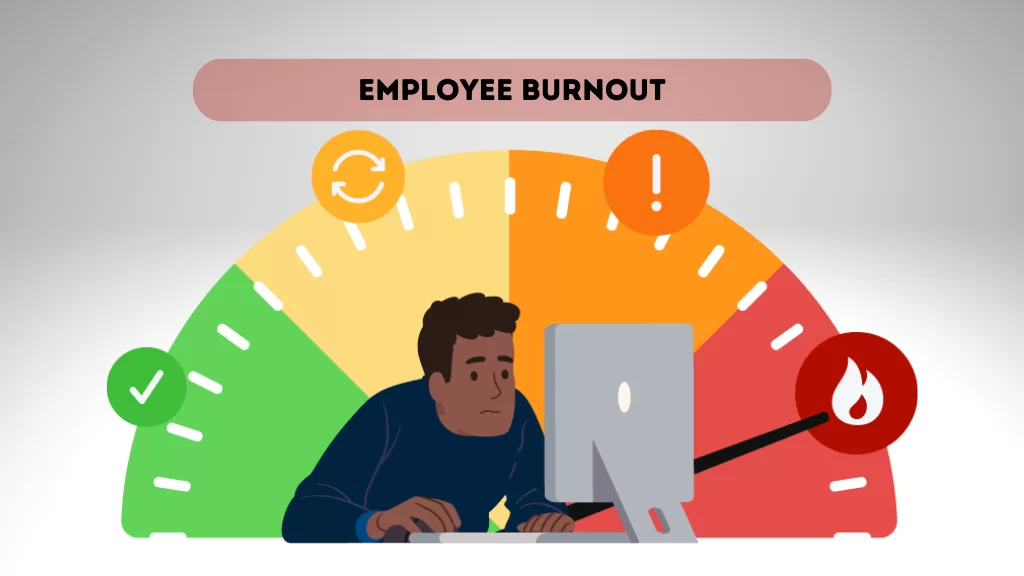
Burnout rarely arrives with dramatic warning signs. In many organizations, employees continue to attend meetings, meet deadlines, and appear outwardly functional even while struggling internally. This makes burnout particularly dangerous: it erodes energy, focus, and engagement slowly and quietly until performance and morale begin to collapse.
Psychologically, burnout is typically defined by three core symptoms:
-
Emotional exhaustion
-
Cynicism or detachment from work
-
A diminished sense of professional accomplishment
These symptoms are often accompanied by cognitive and behavioral changes such as declining enthusiasm, slower response times, withdrawal from collaboration, and minor but recurring errors.
Over time, these subtle changes accumulate into a measurable organizational problem. Employees may still show up to work, but they operate in a state of “presenteeism”—physically present but mentally depleted. Productivity drops, innovation slows, and teamwork weakens, even though the workplace appears stable on the surface.
Burnout is also not merely psychological. Chronic stress can weaken the immune system, trigger headaches, disrupt sleep, and increase blood pressure, illustrating the powerful link between workplace stress and physical health.
The Scale of the Crisis
If burnout once seemed like an occasional workplace challenge, today it resembles a global epidemic.
Research indicates that 66% of employees reported experiencing burnout in 2025, with younger workers particularly affected. Among those aged 18–24 and 25–34, burnout rates reached 81% and 83% respectively.
The reasons employees cite for burnout are telling:
-
24% say they have more work than time to complete it
-
24% lack adequate resources or tools
-
20% feel economic pressures affecting their wellbeing
-
19% are forced to take on extra responsibilities due to labor shortages
Globally, the financial consequences are equally striking. Burnout is estimated to cost employers $190 billion in healthcare expenses and $322 billion in lost productivity annually, while overall workplace stress may drain the global economy by around $1 trillion each year.
These numbers reveal that burnout is no longer just a personal health issue—it is a systemic economic challenge.
Why Burnout Happens: It’s the Workplace, Not the Worker
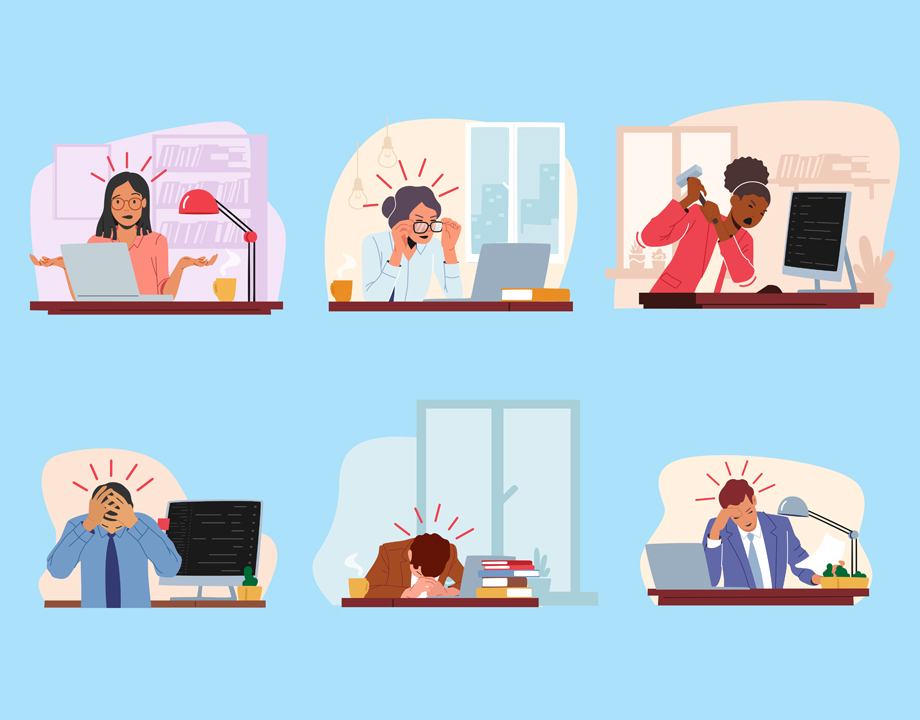
One of the most persistent myths surrounding burnout is that it stems from individual weakness or poor stress management. In reality, mounting evidence suggests the opposite.
Workplace experts argue that burnout is primarily an organizational problem, not an individual failure. Simply encouraging employees to practice yoga, meditation, or resilience training may help temporarily, but it does little to address the deeper structural causes.
These structural causes often include:
-
Excessive workloads
-
Unrealistic deadlines
-
Lack of managerial support
-
Ambiguous job roles
-
Insufficient recognition or reward
-
Toxic workplace culture
In many organizations, the pressure to “do more with less” has intensified burnout. Surveys show that 51% of employees reported experiencing burnout in the previous year, with mental and emotional stress cited as the primary cause.
Long working hours, workforce shortages, and constant digital communication further compound the problem, creating an environment where employees struggle to disconnect from work even during personal time.
Ironically, the employees most vulnerable to burnout are often the most dedicated ones—the high performers who care deeply about their work and push themselves hardest.
The Silent Damage to Productivity and Workplace Culture
Burnout weakens organizations in ways that are not always immediately visible.
When employees are exhausted, creativity declines and decision-making deteriorates. Concentration becomes harder, motivation fades, and mistakes increase.
Team dynamics also suffer. Burned-out employees may become less patient, less cooperative, and less willing to contribute ideas. Over time, this shift can erode workplace culture, making even highly committed employees consider leaving.
The consequences extend beyond productivity. Companies with high burnout levels experience higher turnover rates, increased sick days, and lower engagement, forcing organizations to spend more on recruitment and training.
In extreme cases, burnout can even lead to severe health risks. Chronic stress has been linked to cardiovascular disease, anxiety, depression, and other long-term health conditions.
Taken together, these effects reveal a paradox: workplaces that push employees hardest in pursuit of productivity may ultimately undermine the very productivity they seek.
Why Taking a Break Matters
In a culture that glorifies constant activity, taking a break often feels counterintuitive. Many professionals worry that stepping away from work signals laziness or lack of commitment. Yet research suggests the opposite: rest and recovery are essential for sustained performance.
Mental health breaks allow individuals to step away from daily pressures, reduce stress levels, and return to work with renewed energy and focus.
These breaks provide multiple benefits:
-
Reduced stress and anxiety
-
Improved mood and emotional well-being
-
Better sleep quality
-
Greater creativity and problem-solving ability
-
Stronger relationships and social connections
Even short pauses during the workday can help restore mental clarity and improve decision-making.
The logic is simple: the human mind, like any complex system, requires periodic recovery. Without that recovery, mental fatigue accumulates, eventually impairing performance.
The Limits of Quick Fixes
Despite growing awareness of burnout, many organizations still rely on superficial solutions—wellness apps, occasional mental-health days, or motivational workshops.
Experts warn that these interventions often address only the symptoms, not the root causes. Chronic burnout cannot be solved with a weekend getaway or a few meditation sessions if employees return to the same overwhelming conditions.
Instead, meaningful change requires structural reform. Organizations must reconsider how work is distributed, how performance is measured, and how employees are supported.
Researchers suggest several strategies for reducing burnout at the systemic level:
-
Balance “perform mode” and “grow mode.” Employees need opportunities to learn new skills and explore new challenges, not just repeat existing tasks.
-
Set clear goals and realistic priorities. Overloaded to-do lists and unclear expectations often create unnecessary stress.
-
Establish healthy boundaries around communication and working hours. Constant availability leads directly to chronic exhaustion.
When organizations address these systemic factors, they not only reduce burnout but also create conditions for sustainable high performance.
The Cultural Shift We Need
Perhaps the greatest barrier to solving burnout is cultural rather than logistical. Modern work culture often equates busyness with success. Employees feel pressure to stay connected, respond instantly, and accept ever-increasing workloads.
But as burnout becomes more widespread, this culture is beginning to reveal its flaws. A workforce operating in a constant state of exhaustion cannot innovate, collaborate, or sustain long-term growth.
The challenge, therefore, is not merely to encourage individuals to rest. It is to reshape the values of the workplace itself.
Organizations must recognize that rest is not the opposite of productivity—it is a prerequisite for it.
Reclaiming the Power of Pause
Burnout is not simply an unfortunate side effect of modern work; it is a warning signal that our current approach to productivity is unsustainable. The statistics are clear, the health consequences are real, and the economic costs are enormous.
Yet the solution is not mysterious. It lies in recognizing that human beings are not machines designed for uninterrupted output. They require rest, recovery, and meaningful engagement to perform at their best.
Taking a break—whether through short pauses during the day or longer periods of reflection—can be the first step toward restoring balance. But lasting change will require organizations to move beyond superficial wellness initiatives and confront the structural pressures that drive burnout in the first place.
In the end, the question is not whether we can afford to give employees time to recover. It is whether we can afford not to.
Because in a world where exhaustion has become the norm, learning when to pause may be the most productive decision of all.
With inputs from agencies
Image Source: Multiple agencies
© Copyright 2025. All Rights Reserved. Powered by Vygr Media.