 By
By 
In a rapidly intensifying geopolitical crisis involving the United States, Iran, and Israel, one country has unexpectedly inserted itself into the centre of diplomatic maneuvering: Pakistan. Neither a traditional neutral broker like Norway nor a global heavyweight like China or Russia, Islamabad’s emergence as a potential mediator has raised eyebrows, invited ridicule, and sparked serious strategic questions.
Why Pakistan? And more importantly, can it realistically play peacemaker in one of the most volatile conflicts in the world today?
A Diplomatic Flurry: Too Many Voices, Too Little Clarity
The sequence of events that brought Pakistan into focus is as telling as it is chaotic.
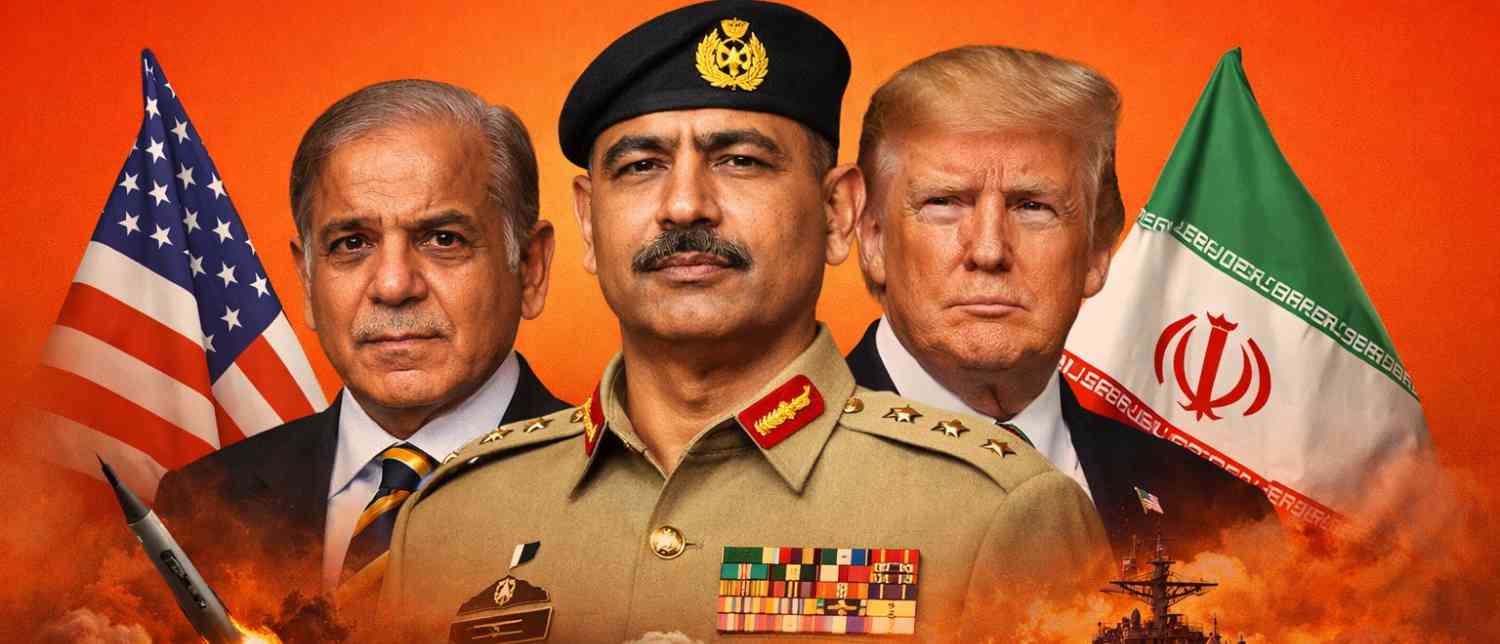
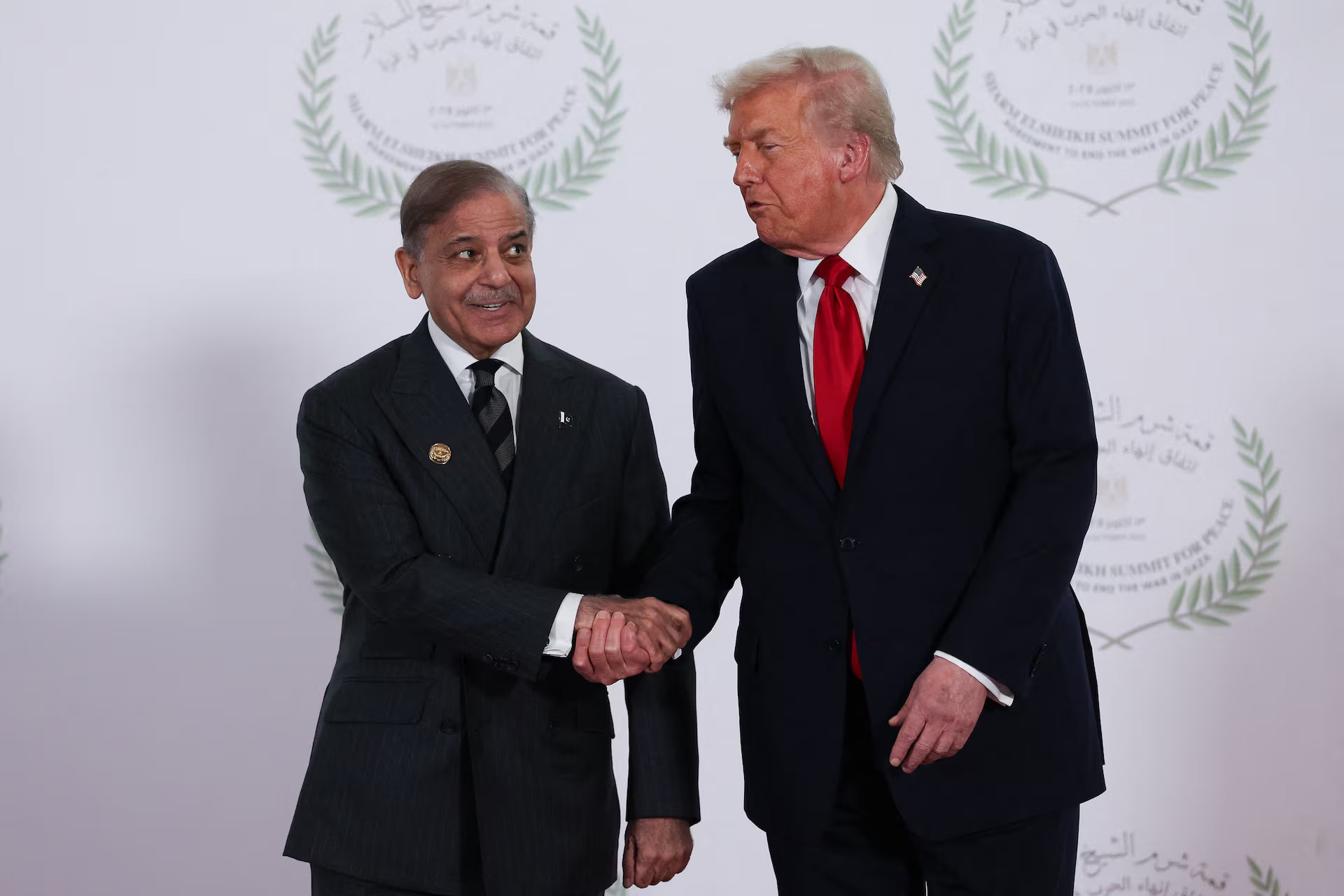
Reports indicate that Pakistan’s army chief, Asim Munir, reached out to Donald Trump around March 23, proposing Pakistan as a venue for negotiations. Around the same time, Trump announced a five-day pause in hostilities—though whether the two developments are directly linked remains unclear.
Simultaneously, Pakistan’s Prime Minister Shehbaz Sharif was in contact with Iranian President Masoud Pezeshkian. Pakistan’s foreign minister, Ishaq Dar, was engaging with Turkey and Iraq, while Saudi Arabia was being briefed. Even China entered the diplomatic fray, urging Tehran toward de-escalation.
This overlapping outreach reflects a crowded diplomatic space where multiple actors—Turkey, Egypt, Russia, and others—have pushed for peace but stopped short of direct involvement. Pakistan, in contrast, has stepped forward publicly, perhaps too eagerly.
The optics were further amplified when Trump reposted Sharif’s tweet supporting “ongoing” peace efforts—despite Tehran’s immediate denial that any such process existed.
The Saudi Factor: A Strategic Constraint
Pakistan’s activism cannot be understood without examining its deep ties with Saudi Arabia. A “Strategic Mutual Defence Agreement” signed in September last year binds Islamabad to assist Riyadh in the event of an attack.
While framed as mutual, the relationship is asymmetrical. Saudi Arabia provides financial backing and access to advanced weaponry, while Pakistan contributes manpower, training, and military expertise.
This arrangement became immediately relevant when drone attacks struck Saudi territory. Saudi Defence Minister Prince Khalid summoned Munir, explicitly invoking the defence pact. The message was clear: Pakistan may be expected to act.
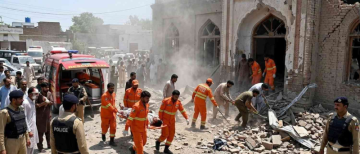
Yet, confronting Iran—a powerful Shia-majority state—poses risks for Pakistan, which itself hosts the world’s second-largest Shia population. Domestic tensions surfaced dramatically on March 1, when protests in Karachi escalated into violence, including breaches of foreign embassy premises.
For Islamabad, this internal volatility presents a stark limitation. Mediation, therefore, may be less about altruism and more about avoiding being dragged into a regional war.
Energy Crisis and Economic Fragility
Beyond geopolitics, Pakistan’s economic vulnerabilities make peace an urgent necessity.
The country imports 99% of its LNG from Qatar. Iranian strikes on key energy infrastructure, including Ras Laffan, have disrupted supply chains. Panic buying has already begun, prompting rationing measures and a government app to manage subsidised fuel distribution.
Meanwhile, Pakistan’s domestic energy situation is deteriorating:
-
Indigenous gas reserves are declining
-
Circular debt has ballooned to PKR 3.2 trillion
-
Petrol prices have surged by 200%
Despite the crisis, informal trade routes with Iran—through Taftan, Mand, and Panjgur—continue to supply fuel, albeit at higher prices. Any escalation or alignment with US military efforts risks cutting off even this fragile lifeline.
In short, Pakistan’s mediation push is deeply rooted in self-preservation.
Iran’s Position: Defiance and Demands
The success of any diplomatic initiative ultimately hinges on Iran—and Tehran is not yielding easily.
A reported 15-point US proposal includes:
-
Complete cessation of nuclear activity
-
Removal of fissile material
-
Dismantling of proxy networks like Hezbollah and Hamas
-
Limits on missile programs
In return, Washington has offered sanctions relief, civilian nuclear assistance, and removal of the “snapback” sanctions mechanism.
Iran has rejected the proposal, demanding:
-
Guarantees against future attacks
-
Immediate cessation of strikes on its proxies
-
Recognition of its right to control and levy fees on the Strait of Hormuz
The last demand, while controversial, draws parallels with the Panama and Suez canals. However, the US has its own strategic interests in the strait, and any shared control arrangement would likely face resistance from multiple stakeholders.
Global Reactions: Support and Skepticism
Pakistan’s efforts have drawn mixed reactions internationally.
Leaders like Malaysia’s Prime Minister Anwar Ibrahim have endorsed Islamabad’s role as “constructive.” Several Asian nations—including Bangladesh, Sri Lanka, and Thailand—have begun energy conservation measures amid rising oil prices, indirectly underscoring the urgency of de-escalation.
Europe, too, has distanced itself from the conflict. Germany’s Chancellor Friedrich Merz has stated unequivocally that this is not Europe’s war.
However, skepticism remains strong—particularly in the United States.
Retired US Army colonel Douglas Macgregor dismissed Pakistan’s mediation bid as “ludicrous nonsense,” likening it to “a man in a burning building offering you a spare room.” He questioned Islamabad’s credibility and suggested that countries like India, with broader diplomatic ties, would be more suitable mediators.
The Credibility Problem
Critics argue that Pakistan’s internal contradictions undermine its claims to neutrality.
The country faces:
-
Ongoing conflict with Afghanistan
-
Persistent allegations of supporting extremist groups
-
A top ranking in the Global Terrorism Index 2026
-
Separatist violence, particularly in Balochistan
Militant organizations such as Al-Qaeda, Lashkar-e-Taiba, and Jaish-e-Mohammad have historically operated from its soil. Additionally, recent military actions in Afghanistan—including a strike on a Kabul hospital reportedly killing over 400 people—raise further questions about its role as a peace broker.
This mismatch between domestic instability and international ambition has made Pakistan’s offer appear, to many, less like diplomacy and more like audacity.
Trump, Optics, and Political Theatre
The role of Donald Trump adds another layer of complexity.
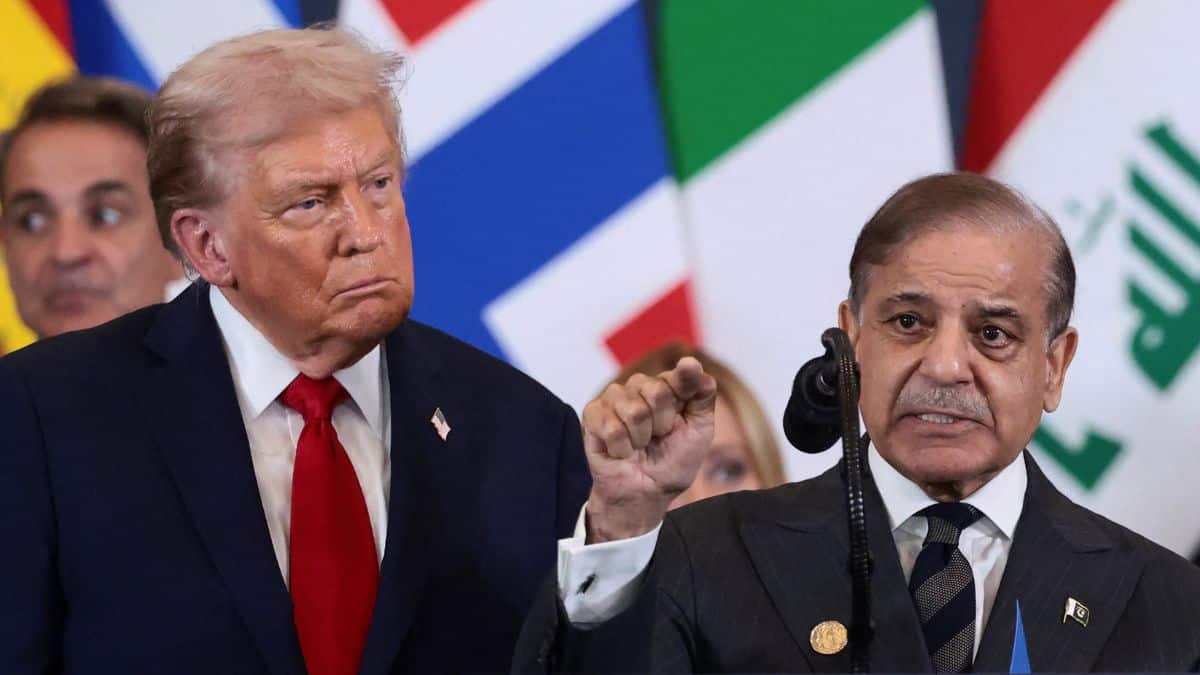
Sharif’s repeated praise of Trump—including nominations for the Nobel Peace Prize—has not gone unnoticed. Trump’s public acknowledgment and reposting of Pakistani messaging suggest a transactional dynamic.
Islamabad’s mediation push may also be an attempt to position itself for diplomatic credit. If talks materialize, Pakistan could claim a historic breakthrough. If not, the effort still elevates its visibility on the global stage.
Yet, as critics point out, mediation requires credibility—not just access.
Backchannel Diplomacy and Strategic Positioning
Despite skepticism, Pakistan does have certain advantages:
-
It maintains working ties with both Washington and Tehran
-
It does not host US military bases, unlike Gulf states
-
It has historical experience as an intermediary, including facilitating early US–China contacts
Recent reports suggest Pakistan has already acted as a conduit, passing messages between the US and Iran and even influencing Israeli targeting decisions.
The possibility of a visit by US Vice President JD Vance to Pakistan for talks further underscores Islamabad’s emerging role in backchannel diplomacy.
However, these efforts coexist with continued military escalation, including potential deployment of US troops and ongoing strikes across the region.
The Saudi Dilemma
Pakistan’s biggest strategic risk remains its defence pact with Saudi Arabia.
If Iran continues targeting Gulf states, Islamabad could be forced into a direct confrontation—undermining its neutrality and derailing any mediation efforts.
Security sources indicate that Pakistan is trying to avoid this outcome through diplomacy. But the balancing act is precarious.
Implications for India
For India, Pakistan’s rise as a diplomatic player presents both opportunities and risks.
In theory, successful mediation would stabilize the region and benefit all. In practice, however, increased international stature could embolden Pakistan.
Statements by former Pakistani diplomat Abdul Basit suggesting potential attacks on Indian cities in response to US actions reflect a concerning shift in strategic thinking.
Combined with a global environment increasingly tolerant of drone and missile warfare, this raises the risk of miscalculation.
Ironically, a prolonged conflict may act as a restraint on Pakistan, given its severe energy constraints. Wars, after all, cannot be sustained without fuel—and Pakistan’s economic limits are already stretched.
Ambition Meets Reality
Pakistan’s sudden prominence in US–Iran diplomacy is a product of necessity, ambition, and geopolitical opportunity.
On one hand, it reflects Islamabad’s desire to:
-
Avoid economic collapse
-
Prevent regional spillover
-
Reassert global relevance
On the other, it exposes deep contradictions:
-
A country battling internal instability seeks to broker external peace
-
A state accused of fostering militancy positions itself as a neutral mediator
-
Strategic utility is mistaken for credibility
Whether Pakistan succeeds or not, its involvement highlights a broader truth: in today’s fractured world, diplomacy is no longer the domain of the stable alone. Even the most unlikely actors can find themselves at the centre of global negotiations.
But ambition without credibility is a fragile foundation. And unless Pakistan resolves its internal contradictions, its role as a peacemaker may remain more perception than reality.
With inputs from agencies
Image Source: Multiple agencies
© Copyright 2025. All Rights Reserved. Powered by Vygr Media.