 By
By 
Saudi Arabia and Yemen's Iran-aligned Houthi movement have entered a dangerous new phase of confrontation after Riyadh said its air defences intercepted a drone south of Mecca before it could enter the holy city's restricted airspace. The claim has triggered a sharp regional reaction, with Saudi authorities warning that the security of Islam's holiest sites is a "red line", while the Houthis have categorically denied attempting to target Mecca.
The incident, reported on Tuesday evening and followed by statements from both sides on Wednesday, comes amid a broader escalation involving Saudi territory, Yemeni military positions, oil infrastructure and vital Red Sea shipping routes. It also unfolds against the backdrop of the wider conflict involving Iran and other regional actors, increasing the risk that the Saudi-Houthi confrontation could become another major front in an already volatile Middle East.

Saudi Arabia says drone was intercepted south of Mecca
According to Saudi-led coalition spokesperson Major General Turki al-Malki, Saudi air defences detected and destroyed a Houthi drone south of Mecca before it entered the restricted airspace around the holy city.
Saudi authorities described the incident as a hostile act and said the protection of the Two Holy Mosques and pilgrims was non-negotiable. Al-Malki also said the latest incident represented the second alleged attempt by the Houthis to target Mecca, referring to a ballistic missile incident in July 2017.
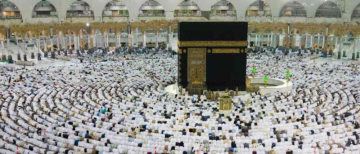
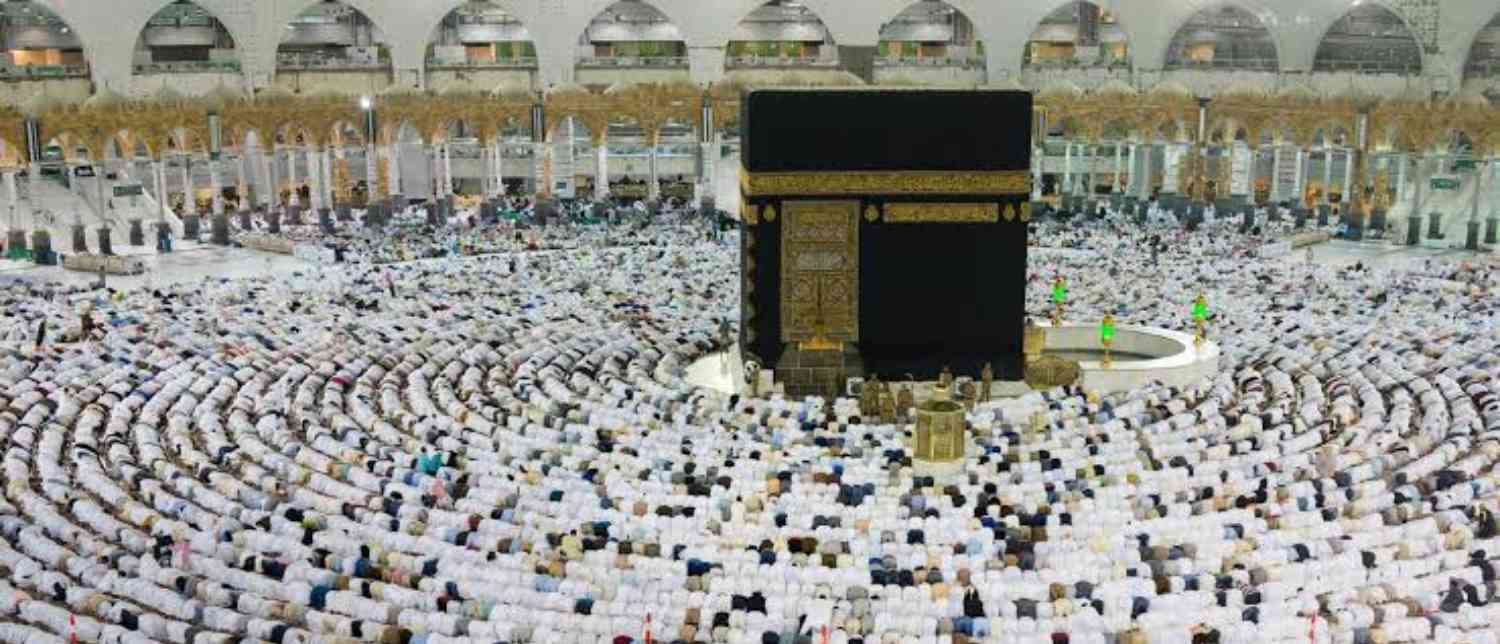
The significance of the allegation goes far beyond another exchange of fire between Saudi Arabia and the Houthis. Mecca is Islam's holiest city and the destination of millions of Muslims during the annual Hajj pilgrimage. Any reported military threat close to the city therefore carries an immediate religious and political dimension across the Muslim world.
Saudi Arabia's warning came as security alerts were issued across several parts of the kingdom, including Mecca, Jeddah and Taif. Authorities later said the immediate danger had passed.
Houthis reject accusation, call it a fabrication
The Houthis have strongly rejected Riyadh's account. Their military spokesperson, Brigadier General Yahya Saree, said the group did not target Mecca or other Islamic holy sites and accused Saudi authorities of fabricating the allegation.
The Houthi position is that its military operations are directed at Saudi military installations and oil infrastructure rather than religious sites. Saree also alleged that Saudi aircraft had carried out hundreds of airstrikes across Yemen during the preceding week. Those claims, like the competing Saudi account of the drone's intended target, have not been independently established in the reports reviewed.
The Houthis also claimed that they had shot down a Saudi F-15 fighter jet over Yemen's Marib province using a locally manufactured surface-to-air missile. The group said Saudi aircraft subsequently attempted to locate the wreckage and were forced to withdraw. Saudi authorities did not immediately confirm the claim, and it could not be independently verified.
The competing narratives have made it difficult to establish precisely what the drone's intended target was. What is clear, however, is that the episode has significantly heightened tensions at a time when Saudi Arabia is already facing pressure on several security fronts.
OIC condemns alleged attack
The reported interception near Mecca quickly drew condemnation from the Organisation of Islamic Cooperation, which represents 57 Muslim-majority countries.
The organisation described the alleged attack as a serious violation of the sanctity of holy sites and expressed solidarity with Saudi Arabia. Its statement came after Riyadh said the drone had been destroyed before entering the restricted airspace around Mecca.
Pakistan's Prime Minister Shehbaz Sharif also condemned the alleged attempt and said Pakistan and Saudi Arabia stood together. The reaction is particularly significant because Saudi Arabia, Pakistan and Türkiye signed a mutual defence agreement in August 2026. However, officials from Türkiye and Pakistan said Saudi Arabia had not requested military assistance in response to the latest Houthi escalation.
That distinction highlights one of the central questions facing Riyadh: how far its regional partners are prepared to go if the confrontation continues to intensify.
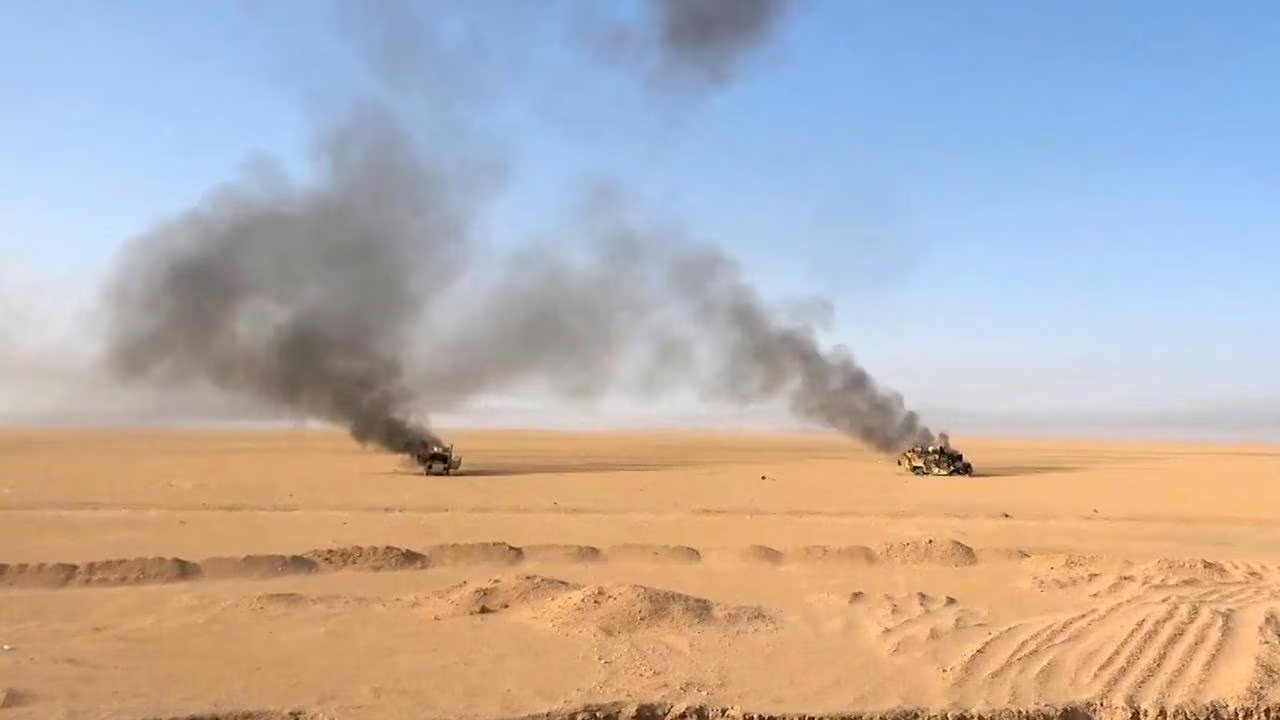
US signals caution as Saudi Arabia faces mounting pressure
The United States has also indicated that it does not currently want to become directly involved in the Saudi-Houthi confrontation.
US President Donald Trump said the Houthis had contacted Washington and did not want to fight the United States, adding that their focus appeared to be on Saudi Arabia. Vice President JD Vance separately said Washington remained in close contact with Riyadh and had also been communicating directly with the Houthis. He described the situation as fluid and dynamic.
The US embassy in Saudi Arabia has meanwhile issued a travel advisory urging Americans to reconsider travel to the kingdom. The warning cited risks including Iranian drone and missile attacks, armed conflict and terrorism, while specifically warning against travel near the Yemen border.
The cautious US position leaves Riyadh facing a complicated strategic calculation. A major military response could further escalate the conflict, while restraint could allow Houthi attacks on Saudi infrastructure and shipping to continue.
Oil and shipping routes add another layer of risk
The confrontation is not limited to the skies around Saudi cities. The Houthis have expanded their military reach along Yemen's Red Sea coast, including areas close to the strategically important Bab el-Mandeb Strait.
The narrow waterway connects the Red Sea with the Gulf of Aden and is a critical route for international shipping. Any sustained disruption there could affect energy shipments and global trade, particularly as the wider regional conflict has already put pressure on shipping through the Strait of Hormuz.
Saudi Arabia has increasingly relied on routes that bypass Hormuz, including its East-West Pipeline, which carries crude from the kingdom's eastern oil-producing areas to the Red Sea port of Yanbu. That infrastructure has now become another potential vulnerability.
An attack on the pipeline reportedly forced Saudi Arabia to halt oil shipments from Yanbu temporarily. Oil prices rose sharply following the disruption, although prices subsequently eased as markets assessed supply conditions. On Wednesday, Brent crude was reported at around $107.82 a barrel, while West Texas Intermediate stood near $104.86.
The developments illustrate why the Saudi-Houthi conflict matters well beyond the Arabian Peninsula. A prolonged confrontation could threaten energy infrastructure, shipping routes and global oil supplies at the same time.
Why the Houthis remain a major challenge for Riyadh
Saudi Arabia's confrontation with the Houthis is not new. Riyadh launched its military intervention in Yemen in 2015 after the Houthis seized Sanaa and large parts of northern Yemen. Years of airstrikes failed to produce a decisive defeat of the movement.
The Houthis have since developed and expanded their use of ballistic missiles, cruise missiles, drones and anti-ship weapons. UN experts have documented similarities between some Houthi weapons and Iranian systems, while Iran has denied arming the group. Weapons and components linked to Iran have nevertheless been intercepted in shipments bound for Yemen, according to reporting cited in the latest coverage.
The group's resilience is also linked to Yemen's difficult geography and the fragmentation of forces opposing it. Mountainous terrain and dispersed military infrastructure have made it difficult for air power alone to eliminate Houthi capabilities.
A UN experts' report from 2024 estimated that Houthi recruitment may have reached as many as 350,000 fighters, compared with an estimated 30,000 in 2015, although the UN panel cautioned that it could not independently verify the recruitment figure.
What happens next?
The alleged drone incident near Mecca has created a particularly sensitive moment for Saudi Arabia. Riyadh has publicly described the protection of the holy sites as a red line, while the Houthis insist they have not targeted them.
The immediate danger may have been contained by the interception of the drone, but the broader confrontation remains unresolved. Houthi attacks on Saudi military and energy infrastructure, Saudi airstrikes in Yemen and growing pressure around Bab el-Mandeb have created multiple points where another escalation could occur.
For Saudi Arabia, the challenge is balancing the need to protect its territory and critical infrastructure with the risk of widening the conflict. For the Houthis, continued attacks demonstrate their ability to threaten a significantly more powerful regional military, while also increasing the possibility of retaliation.
The Mecca episode has therefore become more than a dispute over a single drone. It has exposed the increasingly interconnected nature of the Saudi-Houthi conflict, the Iran-linked regional confrontation, global energy security and the safety of one of Islam's most important religious centres.
For now, the two sides remain locked in sharply conflicting accounts of what happened. Saudi Arabia says a Houthi drone was intercepted before reaching Mecca. The Houthis deny targeting the holy city. As tensions continue to rise, establishing the facts surrounding the incident will be crucial to understanding whether the episode remains a contained confrontation or becomes the trigger for a much broader escalation across the region.
With input from agencies
Image Source: Multiple agencies
© Copyright 2026. All Rights Reserved. Powered by Vygr Media.