
 By
By 
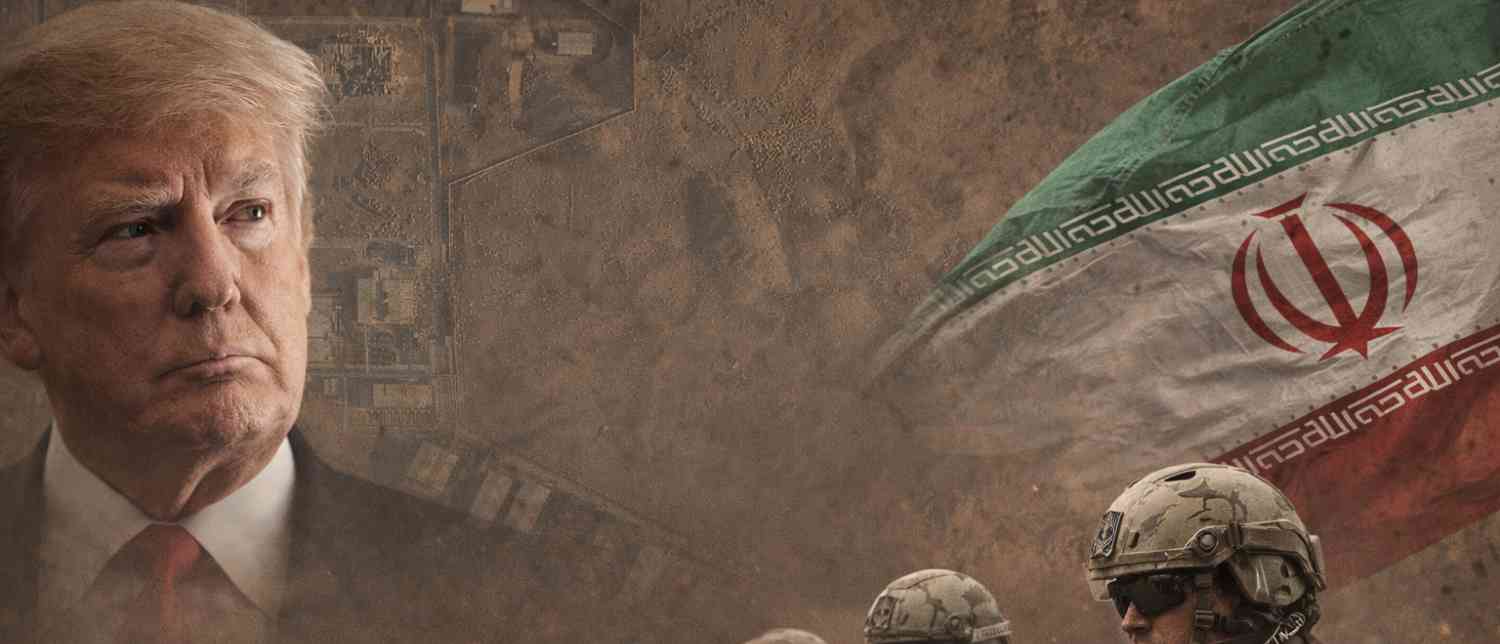
The idea of American boots on Iranian soil to seize enriched uranium would have sounded unthinkable not long ago. Today, it is reportedly under active consideration. As the United States and Iran inch toward either a fragile diplomatic breakthrough or a deeper military confrontation, former U.S. President Donald Trump’s alleged plan to extract nearly 400 kilograms of enriched uranium from Iran reflects both strategic urgency and dangerous overreach.
At its core, this is not just a story about nuclear material. It is about how wars are conceived, miscalculated, and fought in an era where simplicity often defeats sophistication—and where the cost of getting the equation wrong could be catastrophic.
The Nuclear Question: What Really Remains?
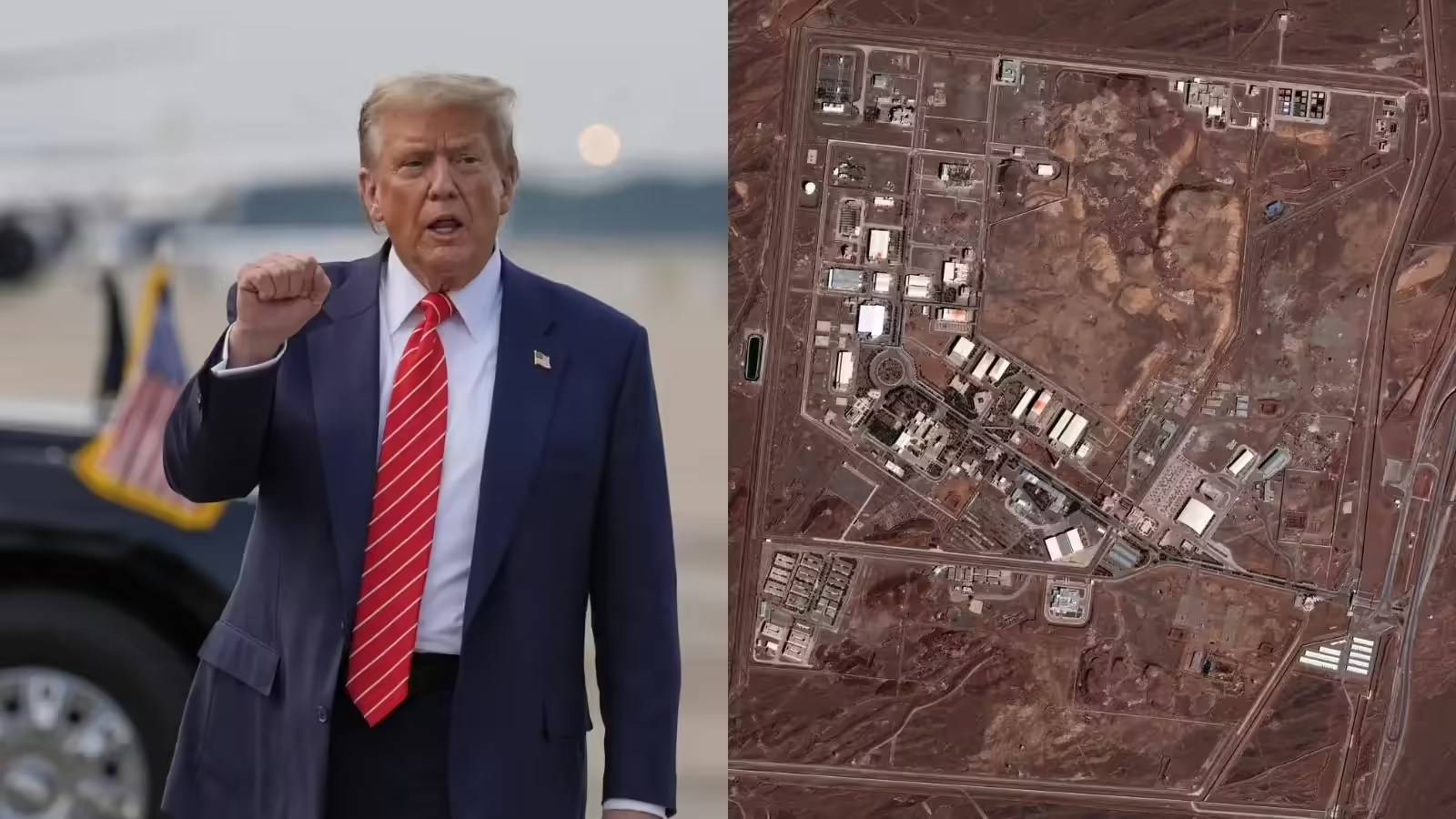
Before the U.S. and Israel launched airstrikes on Iran in June last year, Tehran was believed to possess more than 400 kilograms of uranium enriched to 60 percent, along with nearly 200 kilograms enriched to 20 percent. This matters because uranium at 60 percent enrichment is already perilously close to weapons-grade, which typically requires about 90 percent purity.
Despite claims that the strikes had “obliterated” Iran’s nuclear program, subsequent assessments paint a far less definitive picture. According to International Atomic Energy Agency Director General Rafael Grossi, much of Iran’s nuclear material remains intact, stored across key locations such as underground tunnels in Isfahan and facilities in Natanz.
More troubling is the uncertainty. Since the escalation of hostilities in early 2026, the IAEA has lost its ability to verify the precise size and location of Iran’s uranium stockpile. Grossi has warned that “a lot has survived,” with estimates suggesting that roughly half of the 60 percent enriched uranium—around 200 kilograms—may still be secured deep underground.
That alone could theoretically be enough to produce five to six low-yield nuclear devices, should further enrichment or alternative design pathways be pursued.
Trump’s Strategy: Diplomacy Backed by Force
Trump’s position appears straightforward, at least on the surface: Iran must not retain its enriched uranium. Reports suggest he has encouraged advisers to press Tehran to surrender the material as a precondition for ending the conflict. Failing that, he has floated the possibility of seizing it by force.
At the same time, Trump has indicated that indirect talks—reportedly facilitated by Pakistan, Egypt, and Turkey—are making progress. “A deal could be made fairly quickly,” he has said, even as he continues to threaten escalation, warning that Iran must comply or risk losing its statehood altogether.
This dual-track approach—negotiation under the shadow of force—is not new in international politics. What makes it different here is the operational ambition behind the threat. Seizing nuclear material from fortified, hostile territory is not a symbolic act; it is a deeply complex military undertaking with enormous risks.
The Ground Reality: What a Seizure Operation Entails
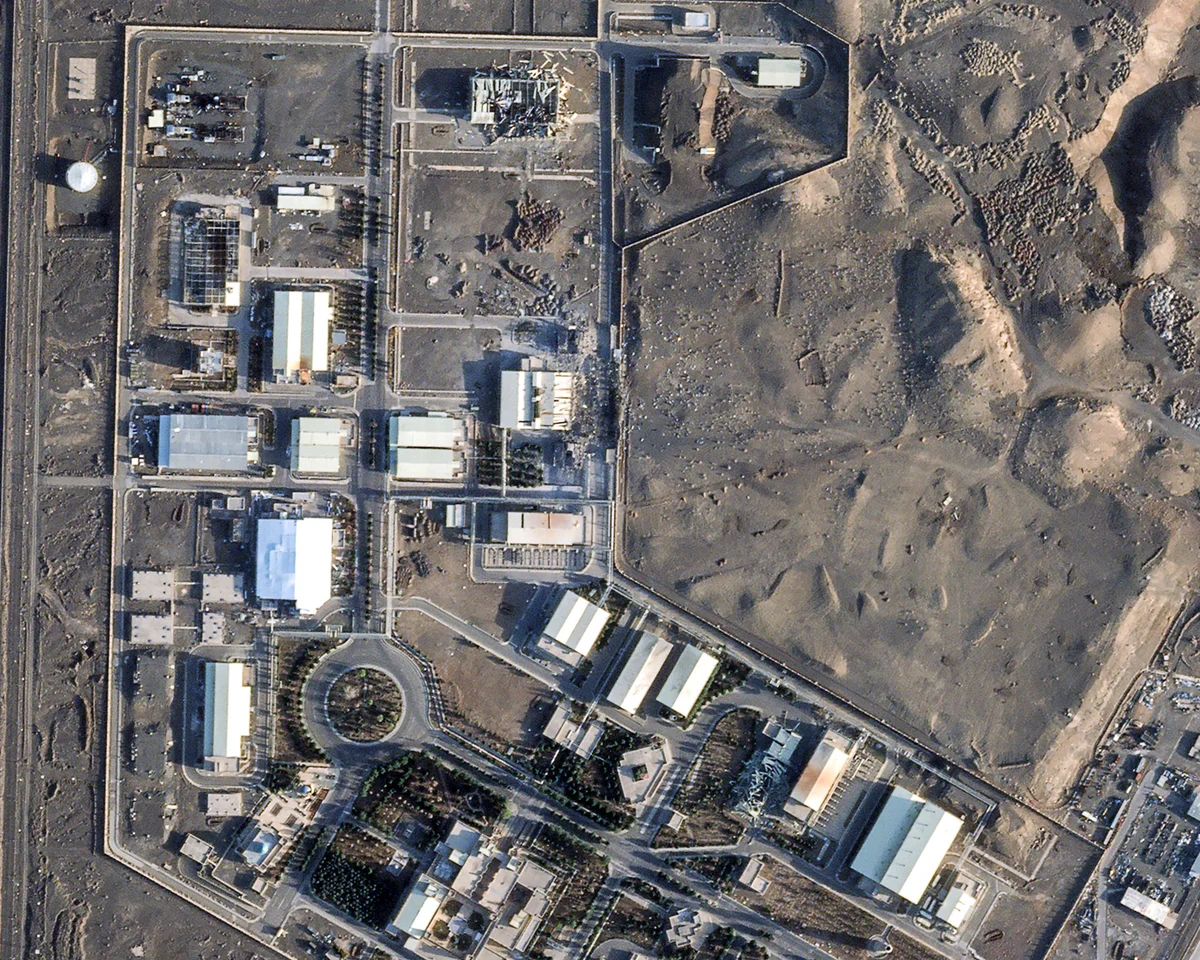
The mechanics of such an operation are daunting. Military experts suggest that extracting enriched uranium from Iranian facilities would require a significant deployment of U.S. forces into hostile territory—precisely the kind of prolonged entanglement Trump has historically pledged to avoid.
The process would likely unfold in multiple stages. First, American forces would have to penetrate heavily defended sites, potentially under fire from Iranian drones and surface-to-air missile systems. Once inside, they would need to secure the perimeter, allowing engineering teams to move in with excavation equipment.
These teams would face the task of navigating rubble, neutralizing mines and booby traps, and locating the uranium itself—likely stored in 40 to 50 specialized cylinders resembling scuba tanks. The extraction phase would then require elite special operations units to safely transfer the material into protective casks for transport.
Even this is only part of the challenge. Moving the uranium out of Iran would necessitate an operational airfield. If none were available, one would have to be constructed under combat conditions. Experts estimate the entire operation could take several days, if not a full week.
Far from being a quick surgical strike, this would be a high-risk, resource-intensive mission with significant potential for escalation.
The Strategic Contradiction
Trump has made it clear that he does not want a “protracted war,” reportedly mindful of domestic political pressures, including upcoming midterm elections where Republicans could face losses. Yet the very operation being considered could trigger exactly the kind of extended conflict he seeks to avoid.
Any attempt to seize uranium by force would almost certainly provoke Iranian retaliation. It could also draw the United States deeper into a conflict with no clear exit timeline, undermining the publicly stated goal of wrapping up the war within four to six weeks.
Even within the administration’s broader circle, there appear to be differences in approach. Trump himself has acknowledged that Director of National Intelligence Tulsi Gabbard holds a “softer” stance on Iran, while Vice President JD Vance and other Republicans have expressed caution about the conflict’s economic and political costs.
This lack of consensus reflects a deeper uncertainty: not just about what to do, but about how to understand the threat itself.
The Illusion of Strategic Clarity
One of the most striking aspects of the current discourse is how easily complexity obscures common sense. As the saying goes, if something cannot be explained simply, it is probably not fully understood.
In many ways, the U.S. and Israeli approach to Iran appears to suffer from precisely this problem. Strategic planners, armed with vast data and sophisticated models, may overlook simpler, more adaptive forms of warfare.
Iran, often underestimated, has demonstrated a different approach—one rooted in cost efficiency and asymmetry. Its use of Shahed drones illustrates this perfectly. With a reported stockpile of around 80,000 units and a production rate of 400 per day before the war, these drones cost between $20,000 and $50,000 each.
In contrast, intercepting them can require systems like the Patriot missile, which costs approximately $4 million per shot. The imbalance is stark: a cheap offensive tool forcing an expensive defensive response. It is, quite literally, a case of using a sledgehammer to kill a fly.
Rethinking the Threat: Beyond ICBMs
Much of the American strategic conversation has focused on the threat of intercontinental ballistic missiles (ICBMs). Yet Iran is not expected to develop such capabilities before 2035, and even then, the geographical distance—over 11,500 kilometers—adds further complexity.
This has led some to argue that the nuclear threat is not immediate. But such reasoning may be dangerously narrow.
History offers a sobering lesson. The attacks of September 11, 2001, did not involve missiles or advanced weaponry. Instead, they relied on hijacked commercial airplanes—tools of everyday life turned into instruments of mass destruction. With minimal investment, the attackers caused devastation that reshaped global security for decades.
Similarly, Iran does not need ICBMs to pose a nuclear threat. A crude nuclear device, even one based on 60 percent enriched uranium, could be delivered through unconventional means: a cargo container, a boat, or a vehicle. The Strait of Hormuz, where Iran has reportedly used explosive-laden unmanned boats to target shipping, offers a glimpse into such tactics.
The Reality of “Portable” Nuclear Weapons
The concept of a suitcase nuclear bomb is often dismissed as fiction, but it has historical precedent. During the Cold War, both the United States and the Soviet Union developed small, portable nuclear devices known as Special Atomic Demolition Munitions (SADMs).
These weapons, weighing between 50 and 100 pounds, were designed to be carried by small teams and deployed behind enemy lines. While constructing such compact devices requires highly enriched uranium, even less efficient designs using lower enrichment levels could still produce devastating effects—albeit in larger, heavier forms.
A crude 1-kiloton nuclear device, delivered through unconventional means, could kill tens of thousands of people in a densely populated city. In terms of impact, a single such detonation could exceed the devastation of 9/11 many times over.
The implication is clear: the absence of advanced delivery systems does not eliminate the threat. It merely changes its form.
Warfare Without Rules
Compounding these concerns is the erosion of traditional constraints on warfare. International treaties, such as the Convention on Cluster Munitions, are increasingly disregarded. Major powers, including the United States, Russia, China, and India, are not signatories, and neither are Iran and Israel.
Recent reports indicate that Iran has used cluster munitions—banned by much of the international community—against Israel. These weapons scatter submunitions over wide areas, many of which fail to detonate immediately, effectively creating long-term minefields.
In such an environment, the notion of a “rules-based” conflict becomes increasingly tenuous. As the old adage goes, everything is fair in love and war—and in this case, that reality is playing out in real time.
The Real Equation: Simplicity vs. Complexity
If there is one overarching lesson from the current conflict, it is that simplicity often outperforms complexity. Whether it is drones overwhelming expensive الدفاع systems, or low-tech delivery methods bypassing high-tech defenses, the advantage frequently lies with those who think differently, not just more deeply.
This is where strategic miscalculations become most dangerous. A plan to seize uranium through a complex military operation may appear decisive, but it risks ignoring the broader, simpler truth: threats evolve faster than strategies designed to counter them.
Even within the United States, there are reminders of this reality. During the Cold War, elite “Green Light” teams were trained for one-way missions to deploy portable nuclear devices behind enemy lines. The logic was brutally simple—maximum disruption with minimal resources.
Today, similar thinking could be employed by adversaries in far less predictable ways.
A Dangerous Crossroads
Trump’s reported plan to seize Iran’s enriched uranium encapsulates the dilemma facing modern military strategy. On one hand, it seeks to eliminate a clear and present danger. On the other, it risks triggering a chain of events that could amplify that very danger.
The operation itself is fraught with logistical, military, and political challenges. It could provoke retaliation, extend the conflict, and draw the United States into a deeper entanglement in the Middle East. At the same time, failing to address the uranium stockpile leaves open the possibility of its use in ways that defy conventional expectations.
Ultimately, this is not just a question of whether the United States can seize Iran’s uranium. It is a question of whether it fully understands the nature of the threat it is trying to contain.
In a world where information is abundant but clarity is scarce, the greatest risk may not be inaction—but acting on a flawed understanding of the battlefield.
With inputs from agencies
Image Source: Multiple agencies
© Copyright 2025. All Rights Reserved. Powered by Vygr Media.