 By
By 
Passengers aboard a Sepehran Airlines Boeing 737 in Iran went through terrifying moments on September 15 after the aircraft developed a technical problem shortly after take-off, triggering violent vibrations and forcing the pilot to make an emergency return to Mashhad. As the aircraft shook heavily, sections of the cabin's interior ceiling lining and overhead compartments came loose, sending panels and passengers' belongings tumbling into the cabin.
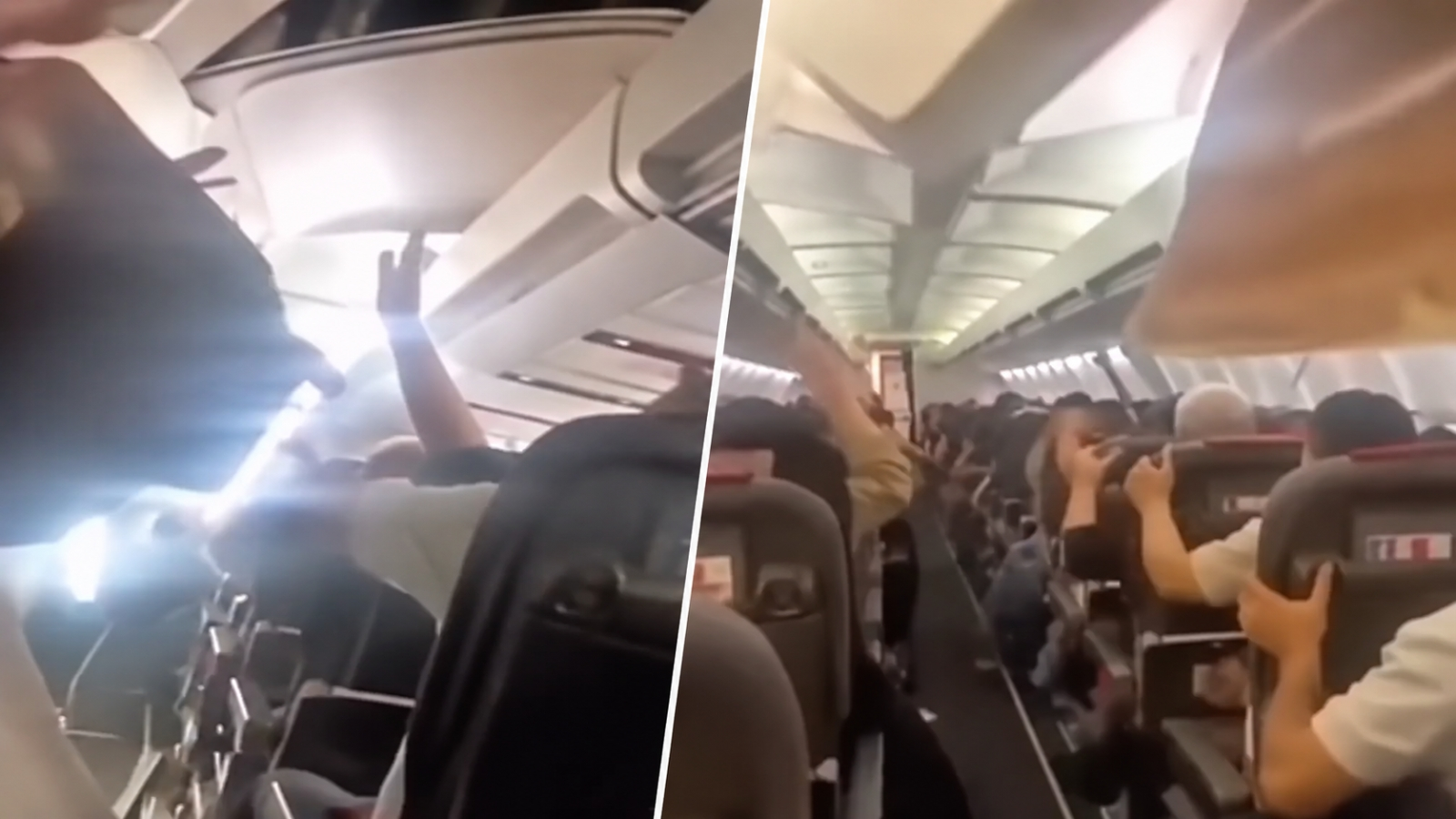
Dramatic videos recorded inside the aircraft showed frightened passengers gripping their seats, shouting and praying as the plane headed back to Mashhad's Shahid Hasheminejad International Airport. Despite the chaotic scenes inside the cabin, the aircraft landed safely and no injuries were reported.
The flight was operating domestically from Mashhad in northeastern Iran to Kermanshah in western Iran. What initially appeared to be a potentially catastrophic in-flight emergency ultimately ended with passengers and crew safely evacuated from the aircraft.
Boeing 737 Develops Trouble Shortly After Take-Off
The aircraft reportedly departed Mashhad at around 5:39 pm local time on September 15 after having already been delayed twice. Shortly after take-off, the crew encountered a serious technical problem involving the aircraft's landing gear and an engine.
Early reports described the incident as a tyre burst. However, an account attributed to Hassan Jafari of the Razavi Khorasan Airports Authority later provided a more specific description: the tread on one of the aircraft's tyres separated during take-off, rather than the entire tyre bursting. The distinction is significant because investigators are still working to establish the exact chain of events that followed.
According to reports, the tyre-related problem may have caused debris or damage around one of the engines. The resulting engine problem was accompanied by severe vibrations, prompting the pilot to inform air traffic control about the emergency and request permission to return to Mashhad.
At this stage, however, authorities have not publicly confirmed that the tyre-tread separation directly caused the engine problem. The precise technical sequence remains under investigation.
Cabin Starts Shaking Violently
As the Boeing 737 made its emergency return, the vibrations inside the aircraft became severe enough to affect the cabin's interior fittings.
Videos circulating online captured the aircraft shaking dramatically. Overhead compartments opened and passengers' bags and other belongings spilled into the aisle and onto seats. In some footage, large sections of the cabin ceiling lining can be seen detaching and dropping down over passengers.
The scenes understandably triggered panic. Passengers could be heard screaming and praying while the aircraft continued its return to the airport. Some passengers reportedly braced themselves against their seats as the cabin shook.
The dramatic footage has led to descriptions online of the aircraft's "roof collapsing." However, available information indicates that it was the interior cabin lining and associated fittings that came loose. There is no evidence from the reports that the aircraft's primary fuselage or structural roof failed.
That distinction is important. Cabin ceiling panels are part of the aircraft's interior rather than the main pressure-retaining structure of the aircraft. The available footage shows the interior panels becoming detached amid the intense vibrations, while a full technical examination will be required to establish why the fittings failed.
Plane Makes Safe Emergency Landing in Mashhad
Despite the alarming conditions inside the aircraft, the pilots managed to turn the Boeing 737 around and bring it back to Mashhad.
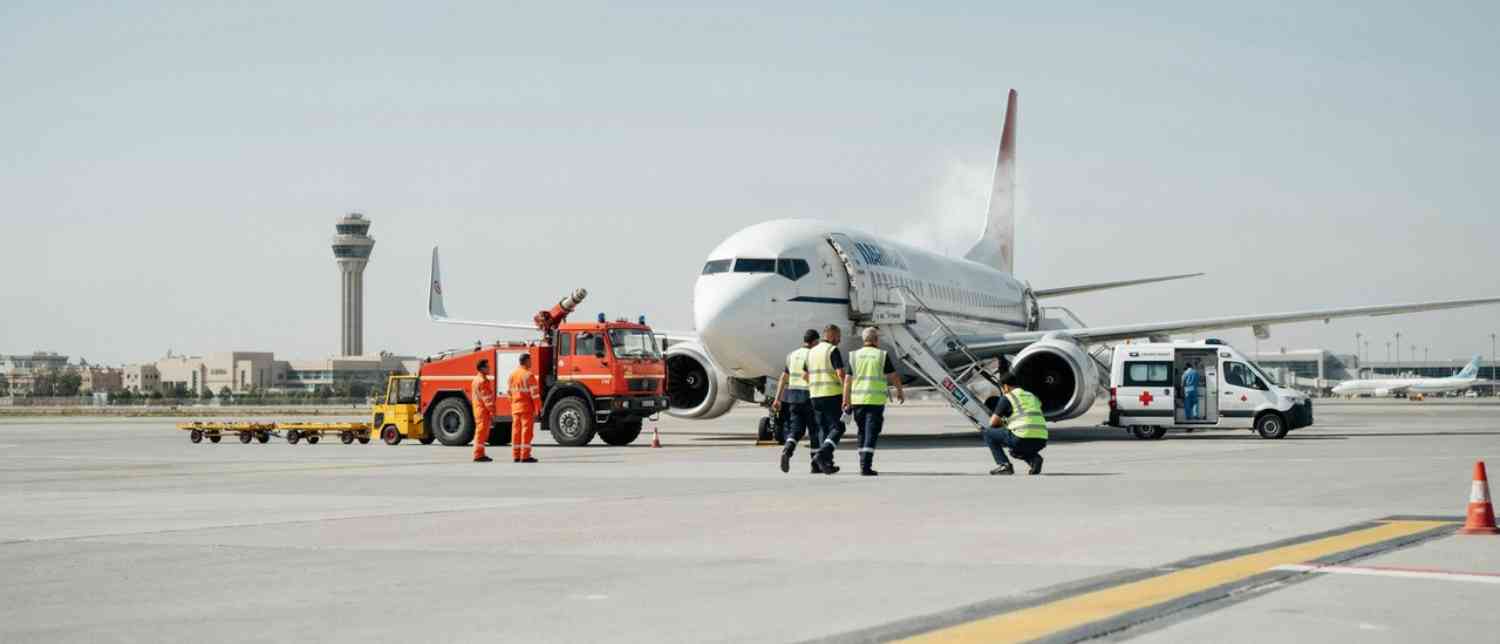
Emergency services were reportedly placed on standby at the airport as the aircraft approached. It subsequently landed safely, allowing passengers and crew to leave the plane.
No injuries were reported following the incident. Passengers were later transferred to another aircraft to continue their journey to Kermanshah. The airport runway was temporarily closed for assessment before normal operations resumed.
The safe outcome brought relief after what passengers described through their reactions as an extremely frightening experience. For those onboard, the sight of ceiling panels falling and luggage flying around the cabin while the aircraft was experiencing intense vibrations would have made an already serious technical emergency appear even more threatening.
An Iranian Sepehran Airlines Boeing 737 was forced to return to Mashhad Airport after a tire reportedly burst shortly after takeoff and the aircraft suffered engine damage.
The flight had been heading to Kermanshah.
Video from inside the plane showed tense passengers. pic.twitter.com/5yR8l6t3cH— Clash Report (@clashreport) September 15, 2026
What Caused the Boeing 737 Emergency?
The exact cause remains under investigation, and several details circulating in the immediate aftermath should therefore be treated cautiously.
The initial version of events widely described a tyre burst shortly after take-off. Later information from the Razavi Khorasan Airports Authority said that the tread separated from one of the landing-gear tyres. Reports have also suggested that the tyre-related event may have damaged an engine, resulting in the severe vibrations experienced during the return flight.
However, authorities have not yet established the complete causal sequence publicly. Investigators will need to determine what happened to the tyre, whether debris reached or damaged the engine, why the aircraft experienced such intense vibrations and why sections of the cabin interior subsequently became detached.
This distinction is particularly important because dramatic passenger videos can show the consequences of an incident without explaining its underlying mechanical cause.
The Iran Civil Aviation Organisation is expected to examine the aircraft and determine what went wrong. A detailed investigation should help establish whether the tyre and engine problems were directly connected and whether the cabin damage resulted solely from the vibrations or involved another technical issue.
Another Sepehran Airlines Incident Reported Weeks Earlier
The latest emergency has also drawn attention because it came only weeks after another incident involving a Sepehran Airlines Boeing 737 at Mashhad.
On August 25, a Boeing 737-500 operating a flight from Tehran Mehrabad to Mashhad reportedly veered off the runway during landing after its nose landing gear collapsed. There were 127 people onboard according to aviation incident databases, and no injuries were reported. Iranian aviation authorities opened an investigation into that incident as well.
The two incidents are separate, and there is currently no publicly established evidence connecting their causes. That means the recent emergency involving the Boeing 737 flying to Kermanshah should not, by itself, be treated as proof of a wider systemic problem within the airline.
Nevertheless, the close timing of the two incidents is likely to draw additional attention to aircraft inspections, maintenance procedures and operational safety at the carrier.
Why the Viral Videos Have Raised So Many Questions
The videos from inside the aircraft have become a major part of the story because they provide a rare view of what passengers experienced during the emergency.
Rather than simply showing an aircraft making an emergency landing, the footage captures the frightening progression inside the cabin: violent shaking, opening overhead bins, falling belongings and sections of the interior ceiling coming loose.
But the images also illustrate why information surrounding aviation incidents needs to be handled carefully.
A video can establish that the cabin was shaking and that interior panels became detached. It cannot, by itself, establish whether the tyre problem caused the engine issue, whether the engine problem caused the extreme vibration or whether another technical factor contributed to the cabin damage.
Those questions will require examination of the aircraft, maintenance records, flight data and other technical evidence.
Passengers Safe After Frightening Flight
For the passengers onboard the Sepehran Airlines Boeing 737, the most important outcome was that the emergency ended without reported casualties.
The aircraft returned to Mashhad safely, passengers and crew evacuated, and those travelling to Kermanshah were subsequently accommodated on another flight.
The incident nevertheless highlights how quickly a technical problem can turn an ordinary domestic flight into a frightening emergency. What began as a problem shortly after take-off escalated into severe aircraft vibrations and extensive disruption inside the passenger cabin before the pilots brought the aircraft back to its departure airport.
As investigators examine the aircraft, the central questions will be whether the tyre-tread separation caused subsequent engine damage, what produced the extreme vibrations and why the cabin's interior fittings failed under those conditions.
Until those findings are released, the most accurate picture is one of a serious but safely contained aviation emergency: a Boeing 737 experienced a technical problem shortly after leaving Mashhad, returned under emergency conditions, suffered significant cabin-interior damage during the violent shaking and ultimately landed without reported injuries.
The dramatic images may have made the incident look even more catastrophic, but the safe landing and evacuation meant that a terrifying flight ended without loss of life or reported physical injuries.
With input from agencies
Image Source: Multiple agencies
© Copyright 2026. All Rights Reserved. Powered by Vygr Media.