 By
By 
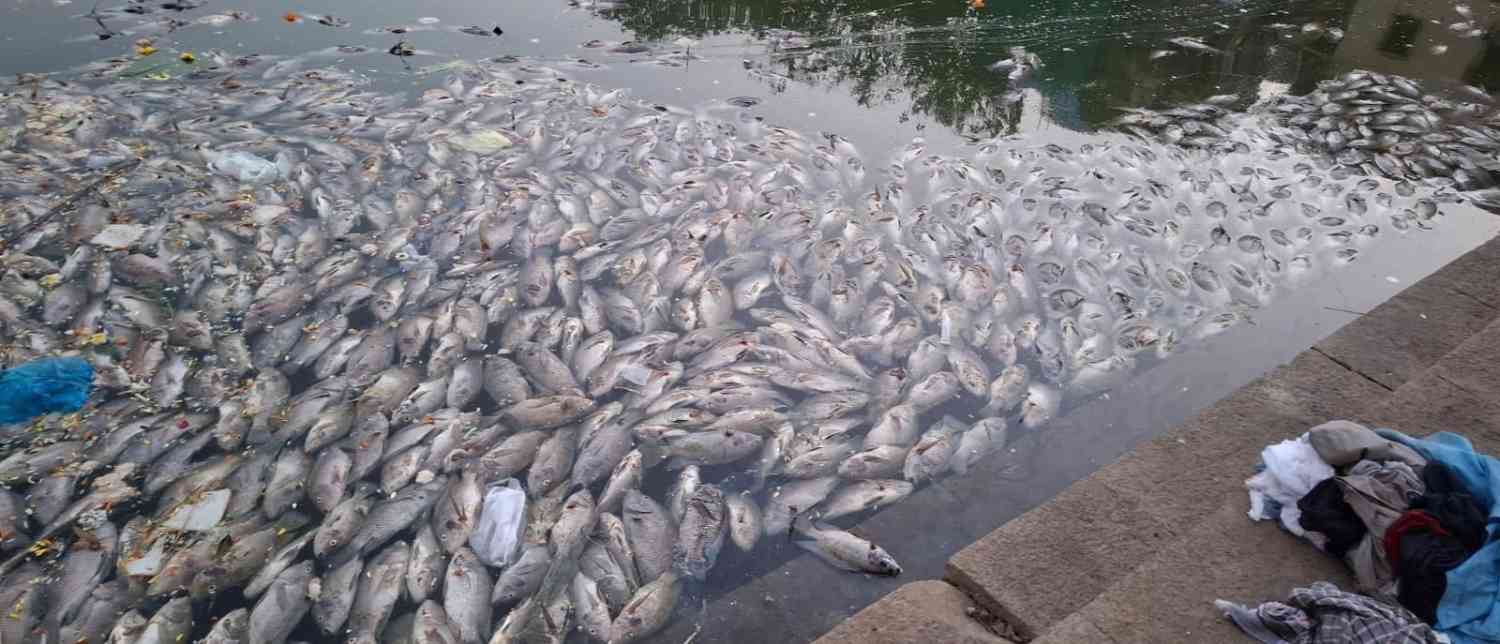
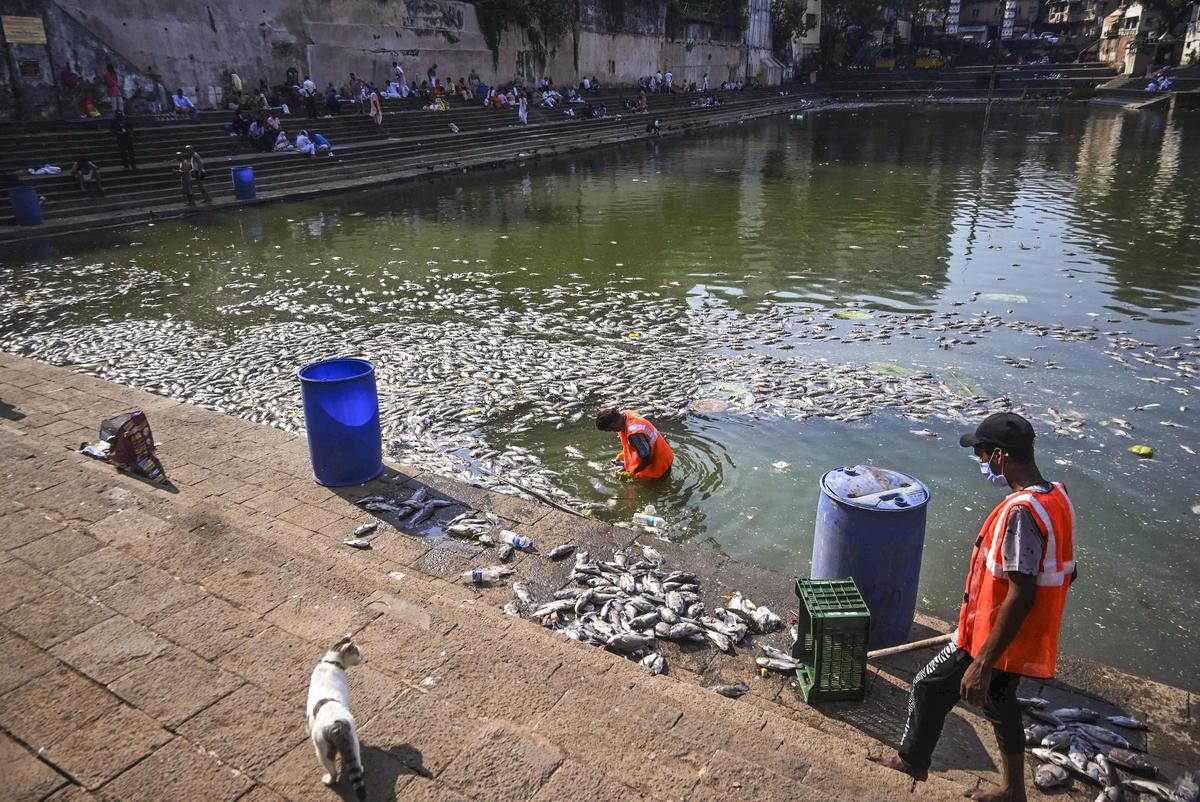
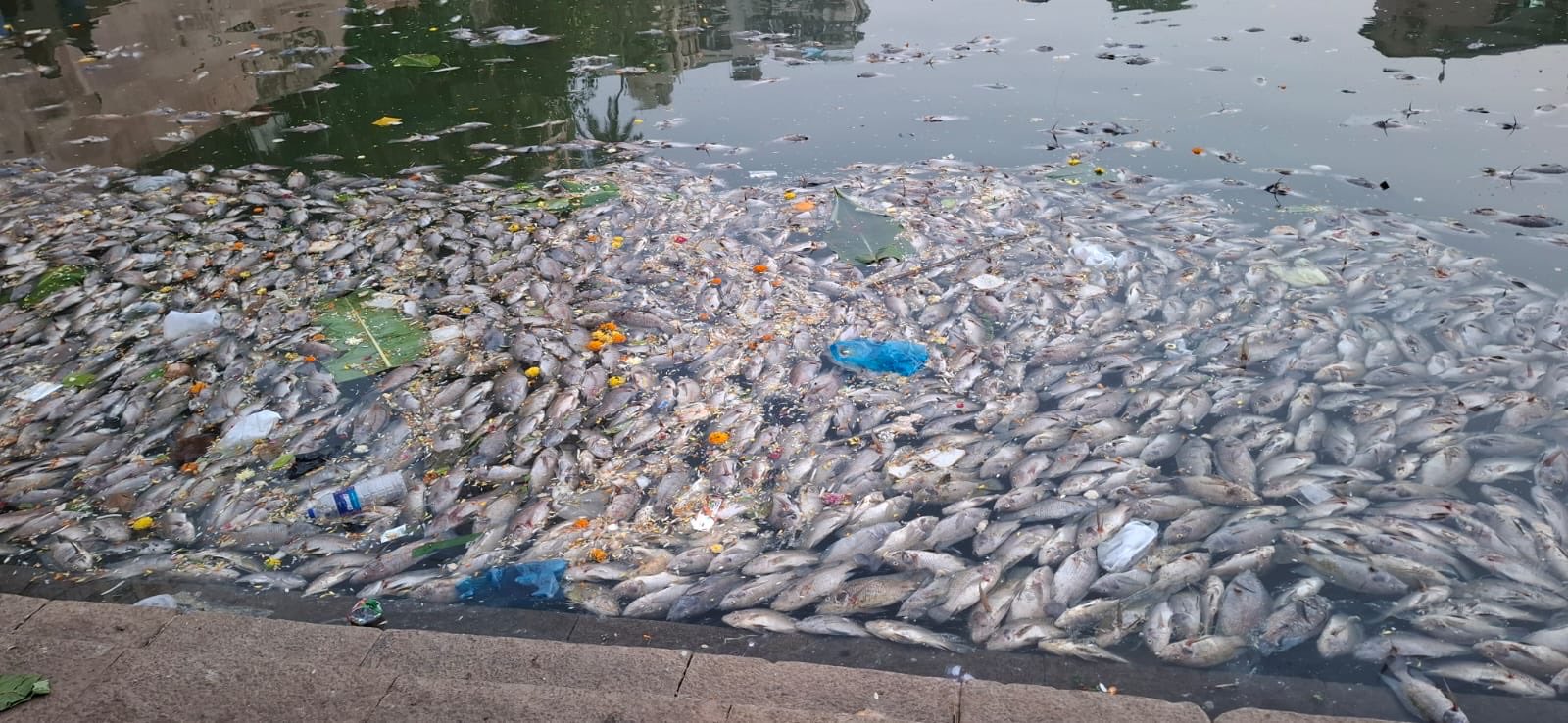
Mumbai: Thousands of fish have died at the historic Banganga Tank in Walkeshwar, South Mumbai, during the ongoing Pitru Paksha period, triggering fresh concerns over water pollution, declining oxygen levels and the long-term health of one of the city's most revered heritage water bodies.
The mass fish deaths have also revived an uncomfortable question: why does Banganga Tank continue to witness a similar ecological crisis year after year despite repeated clean-up drives and preventive measures?
The Brihanmumbai Municipal Corporation (BMC) has now stepped in, calling a meeting with local residents and priests to discuss the deaths and ways to prevent further damage to the tank's aquatic ecosystem. Civic authorities have also intensified cleaning operations, installed an aeration pump and sent water samples for testing. Plans are also underway to pump out and refill the tank in an effort to improve water quality and oxygen levels.
Why are fish dying at Banganga Tank?
The exact cause of the latest Banganga Tank fish deaths has not yet been conclusively established. However, pollution caused by the accumulation of food and other organic material from rituals has emerged as a major concern.
The fish deaths were reported while Pitru Paksha rituals were being performed at the sacred water body. Pitru Paksha began on September 26 this year, and residents noted that the fish deaths appeared much earlier in the ritual period than they normally do.
During these rituals, devotees may use or offer materials such as rice or flour-based pind, sweets, milk, oil and flowers. When large quantities of organic matter enter a relatively contained water body, its decomposition can increase the biological demand for oxygen.
As the organic waste breaks down, dissolved oxygen in the water can fall. Fish and other aquatic organisms depend on adequate dissolved oxygen to survive. A sharp decline can therefore create stressful or even fatal conditions for aquatic life.
Oil and flour-based offerings have also been flagged as potential contributors to the problem. Along with food and floral waste, such material can add to the pollution burden inside the tank.
However, ritual activity is not the only possible explanation.
Residents and priests have also pointed to unusually hot conditions as a possible factor. Warmer water can hold less dissolved oxygen, potentially making fish more vulnerable when pollution and organic waste are already placing additional pressure on the aquatic ecosystem.
For now, the water testing ordered by the civic authorities is expected to provide a clearer picture of what triggered the latest fish deaths.
Priests reject blanket blame for ritual practices
The connection between Pitru Paksha rituals and the fish deaths has become a sensitive issue because Banganga is not simply a pond. It is a sacred site where religious ceremonies have been performed for generations.
Local priests have disputed the suggestion that ritual practitioners routinely throw all ceremonial material into the tank.
According to priest Sevalal Tiwari, priests conducting pind daan rituals generally touch the water as part of the ceremony but place the ritual material in drums kept outside the tank. He acknowledged, however, that some individuals performing rituals independently may dispose of material directly into the water.
That distinction has added another layer to the debate. While residents are demanding urgent measures to stop pollution, priests are seeking to ensure that traditional religious practices are not collectively blamed for actions that may be carried out by only some devotees.
The challenge for authorities is therefore to protect the environment without unnecessarily disrupting legitimate religious activity.
Banganga fish deaths are not a new problem
The most striking aspect of the latest incident is that it is not an isolated event.
Banganga Tank has witnessed repeated fish deaths during or following Pitru Paksha in previous years. In 2025, the BMC reportedly removed approximately 10,000 kg of dead fish, floral waste and other organic material from the tank over three days. At the time, increased pollution and depleted dissolved oxygen were identified as major concerns.
Similar incidents have also been recorded in 2023 and 2021.
In 2021, thousands of dead fish were reported at Banganga, with residents linking the recurring deaths to the period following Pitru Paksha. An earlier episode was also reported in 2014, when hundreds of fish were found dead after the ritual period.
The recurring nature of the crisis has now become almost as concerning as the latest fish deaths themselves.
Every year, the pattern appears to follow a familiar cycle: increased ritual activity, accumulation of organic material, deterioration in water conditions, fish deaths, removal of dead fish and waste, and emergency measures to restore the tank.
Yet the underlying problem remains.
BMC steps up cleaning and oxygenation measures
The BMC has responded to the latest crisis with a combination of immediate clean-up measures and discussions with people involved in activities at Banganga Tank.
A meeting was held with local residents and priests at the civic body's D ward office to discuss possible solutions. The objective is not merely to remove dead fish but to prevent conditions that could lead to further deaths.
The civic body has increased manpower and cleaning operations at the site. An aeration pump has also been installed to increase oxygen levels in the water.
Authorities are additionally planning to pump out and refill the tank, while water samples have been sent for laboratory testing.
Aeration is particularly important because low dissolved oxygen is one of the suspected reasons behind the fish deaths. By increasing oxygen transfer into the water, aeration can temporarily improve conditions for aquatic organisms while authorities investigate the larger pollution problem.
The BMC has also previously placed collection bins at the site so that devotees can dispose of food and floral offerings without immersing them directly into the tank. However, residents say significant quantities of ritual material continue to find their way into the water.
A heritage site caught between faith and conservation
Banganga Tank occupies a unique position in Mumbai's cultural landscape.
Located in Walkeshwar, the ancient water body is considered sacred by Hindus and is closely associated with the Ramayana. According to local religious belief, Lord Rama created the water source by shooting an arrow into the ground while searching for water during his journey to Lanka. The site is also associated with Parshuram in Hindu tradition.
Its religious importance means that Banganga continues to attract devotees for ceremonies throughout the year, with ritual activity becoming particularly significant during Pitru Paksha.
At the same time, the tank is a fragile aquatic ecosystem. Its ability to absorb large amounts of food waste, flowers, oil and other organic material is limited.
This creates a difficult balancing act.
Religious rituals cannot simply be treated as an environmental nuisance, but neither can environmental consequences be ignored because a site is sacred.
The solution may therefore lie in changing how rituals are conducted around the water rather than stopping the rituals themselves.
Who is responsible for protecting Banganga?
Another challenge is the complicated administrative framework surrounding the historic tank.
Banganga is a protected heritage water body associated with the Archaeological Survey of India (ASI), while its religious use and management involve other stakeholders, including the temple trust. The BMC has maintained that its role is largely connected to activities such as cleaning and desilting, limiting the extent to which it can independently intervene.
This division of responsibility becomes particularly important when an environmental crisis occurs.
Residents have called for stronger and more permanent action, with some suggesting that an alternative facility could be provided for rituals so that the historic tank is not subjected to excessive pollution.
A long-term solution would likely require coordination among the civic administration, heritage authorities, temple management, priests, residents and devotees.
The bigger question: can the annual cycle be broken?
The latest Banganga Tank fish deaths are more than an isolated pollution incident.
They highlight the vulnerability of an enclosed urban water body that serves simultaneously as a religious site, heritage monument and living aquatic ecosystem.
Emergency cleaning can remove dead fish. Pumps can temporarily improve oxygen levels. Aerators can help revive deteriorating water conditions. But none of these measures alone addresses the recurring source of pollution.
The fact that thousands of fish have died this year—and that substantial quantities of dead fish and organic waste had to be removed in previous years—suggests that a permanent preventive strategy is needed.
That could include stricter waste collection around ritual areas, better monitoring during Pitru Paksha, clearer instructions for devotees, dedicated disposal systems for flowers and food offerings, greater supervision during peak ritual days and regular water-quality testing.
Most importantly, any solution will need cooperation from the people who use the site.
Banganga's religious significance is unlikely to diminish. But protecting its sacred character should also mean protecting the water itself.
For now, the BMC's meeting with priests and residents, along with water testing and restoration efforts, marks an attempt to address the immediate crisis. Whether these steps finally break the cycle of annual fish deaths will depend on what happens after the dead fish are cleared and the headlines move on.
For Mumbai, the real test is not simply saving Banganga Tank this year. It is ensuring that the same crisis does not return during the next Pitru Paksha.
© Copyright 2026. All Rights Reserved. Powered by Vygr Media.