 By
By 
As geopolitical tensions in West Asia disrupt global energy supply chains, India has found itself at the centre of a storm of misinformation regarding its fuel reserves. Viral social media claims suggesting that the country has only a few days’ worth of petrol or oil left have sparked panic among citizens. However, multiple fact-checks, government statements, and live developments from the region collectively paint a far more stable picture while also acknowledging real logistical challenges posed by the ongoing crisis.
Viral Claims vs Reality: “2 Days” and “9 Days” Narratives Debunked
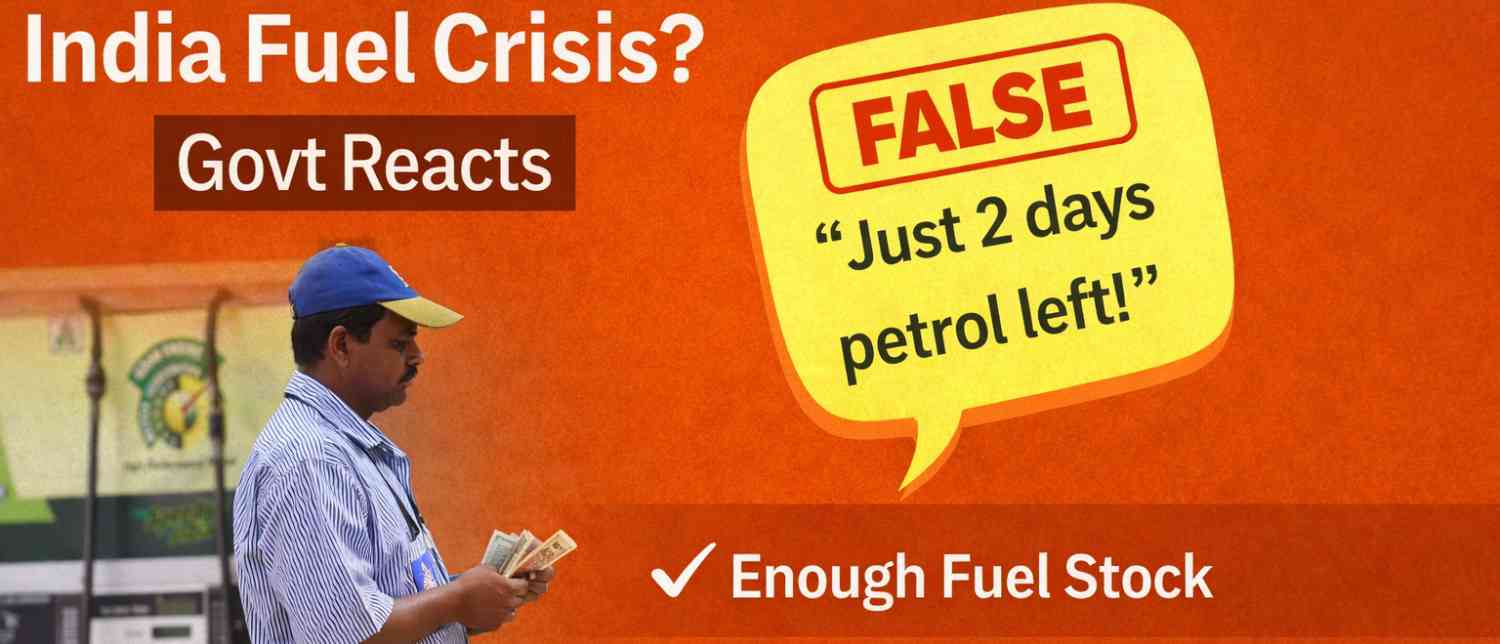
In recent days, misleading claims circulated widely online alleging that India has only “two days” or “nine days” of petrol or crude oil reserves remaining. Fact-checks by credible agencies have categorically dismissed these assertions as false and baseless.
According to official sources, India’s fuel preparedness is significantly stronger. The government has clarified that the country has secured approximately 60 days of crude oil supply, aided by diversified sourcing and robust refinery operations.
Far from being dependent on a narrow supply base, India now sources crude oil from over 41 countries, reducing its vulnerability to disruptions in any single region.
The government has also reiterated that there is no immediate shortage of petrol, diesel, or LPG, and that panic-inducing claims lack a factual basis. This aligns with statements from public sector oil companies that supplies remain stable and sufficient for domestic consumption.
The Strait of Hormuz Crisis: A Real but Managed Threat
The backdrop to these rumours is the ongoing geopolitical conflict involving the United States, Israel, and Iran, which has severely disrupted maritime traffic through the Strait of Hormuz—a critical global energy chokepoint.
Roughly 20% of the world’s oil supply passes through this narrow waterway, making it vital not only for global markets but also for India’s energy imports.
Since late February 2026, escalating tensions have led to attacks on vessels, threats of mining sea routes, and a dramatic fall in shipping traffic, at one point dropping by as much as 95%.
For India, the stakes are particularly high. About 90% of its LPG imports transit through the Strait of Hormuz, exposing the country to potential supply shocks.
LPG Concerns: Temporary Strain, Strategic Response
While petrol and diesel supplies remain stable, the LPG segment has faced more visible stress due to its heavy dependence on Middle Eastern imports.
India consumes over 33 million metric tonnes of LPG annually, with around 60% imported, most of it routed via the Gulf region.
Disruptions in shipping have led to temporary logistical challenges. Several Indian-flagged vessels—carrying LPG, crude oil, and LNG—were stranded in the Persian Gulf. At one point, 24 ships, including LPG carriers, were caught in the crisis zone.
To mitigate the impact, the government initiated a series of emergency measures:
-
Redirecting and loading LPG onto available ships
-
Increasing domestic LPG production by up to 40%
-
Securing 800,000 tonnes of LPG cargo from countries such as the United States, Russia, and Australia
These efforts have ensured at least one month of LPG supply, with further procurement underway to stabilise availability.
Additionally, authorities have prioritised household consumption by diverting supply away from industrial users, a move aimed at preventing shortages in essential cooking fuel.
Oil Supply: Strong Buffers and Strategic Diversification
Despite the turmoil, India’s broader oil supply situation remains robust.
Government data indicates that the country has enough oil and fuel stocks to meet nearly two months of demand, supported by a total storage capacity of around 74 days.
India’s position as a net exporter of petroleum products further strengthens its domestic fuel security. Even amid global disruptions, petrol and diesel availability remains structurally stable.
To reduce dependence on the Middle East, India has expanded imports from alternative regions, including the Western hemisphere and Russia. This diversification has been crucial in insulating the domestic market from external shocks.
Shipping Developments: Gradual Relief Amid Volatility
There have also been signs of easing pressure on supply chains. Several LPG carriers have successfully navigated the Strait of Hormuz despite ongoing tensions.
For instance, two India-bound tankers carrying over 92,000 tonnes of LPG recently passed through the strait and are expected to reach Indian ports shortly.
Other vessels have either returned safely or are en route, providing incremental relief to supply concerns. However, the situation remains volatile, with analysts warning of continued risks due to the possibility of further conflict escalation.
Ground Impact: Mixed Signals from the Market
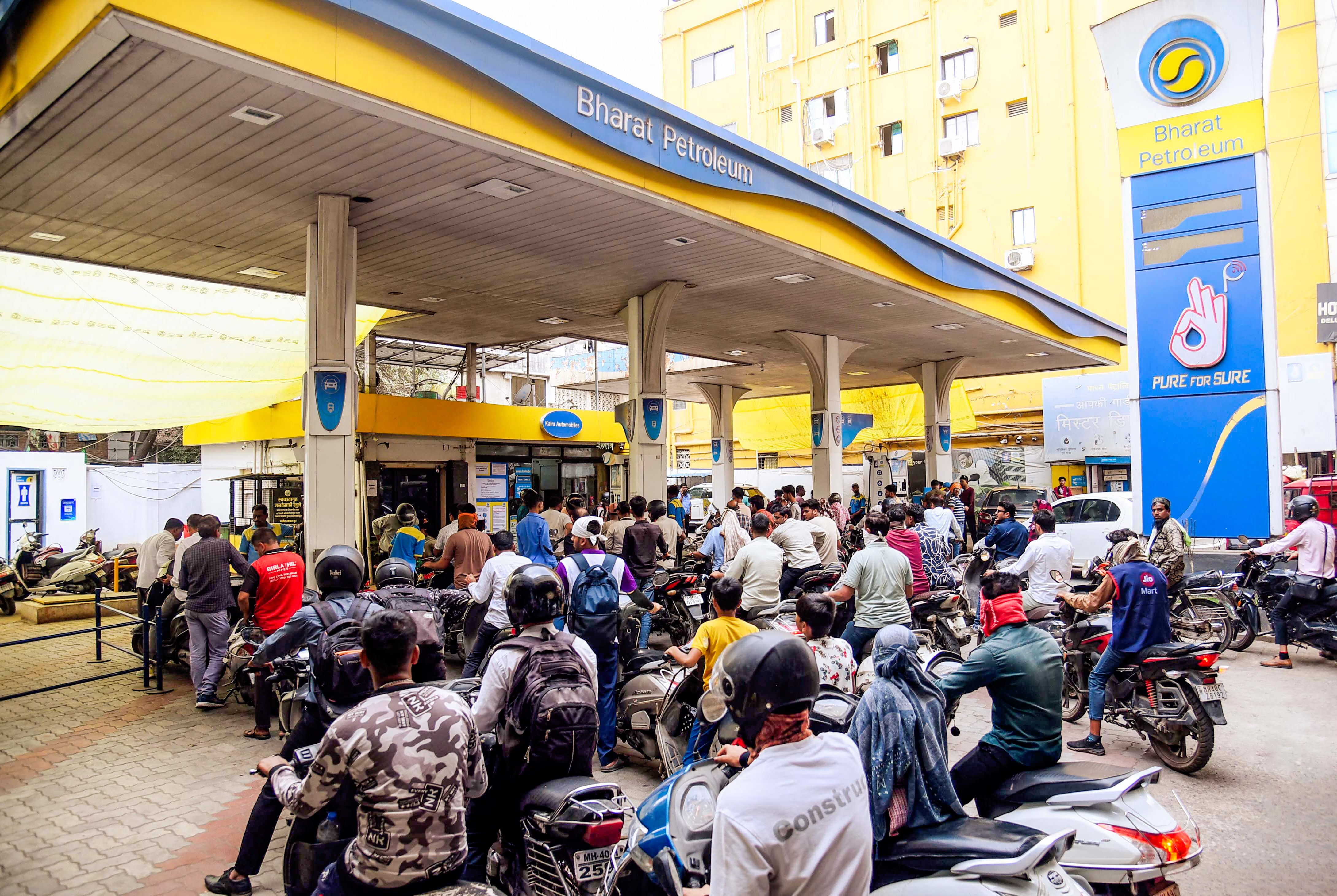
While official data points to adequate supply, some ground-level disruptions have been reported, particularly in the LPG segment.
In major cities, restaurants and small businesses have faced shortages, prompting some to switch to alternative fuels like coal or firewood. In certain cases, LPG cylinders have reportedly been sold at inflated prices in informal markets.
These developments underscore the uneven impact of the crisis—where macro-level stability coexists with localised supply constraints.
A social media post claims that India’s Petroleum Ministry has officially announced that only 2 days worth of petrol is left in the India#PIBFactCheck
❌ This claim is #FAKE
✅ @PetroleumMin has made NO such announcement
✅ Indian refineries are running at over 100%… pic.twitter.com/hVwnoyaFvg— PIB Fact Check (@PIBFactCheck) March 26, 2026
Government Messaging: Avoid Panic, Trust Supply Chain
Authorities have consistently urged citizens not to panic or engage in hoarding. Oil marketing companies and government agencies have emphasised that:
-
Fuel stocks are sufficient
-
Supply chains are being actively managed
-
Additional imports and production are underway
The government has also flagged misinformation as a major concern, warning that false claims about fuel shortages could trigger unnecessary panic buying and disrupt distribution systems.
Crisis Management in a Globalised Energy Market
India’s handling of the current situation highlights both its vulnerabilities and its resilience.
On one hand, heavy reliance on imported LPG—especially via a single chokepoint—remains a structural risk. On the other, proactive diversification, strategic reserves, and rapid logistical responses have helped prevent a full-blown crisis.
The Strait of Hormuz disruption is being described as one of the most significant energy shocks in recent history, with oil prices surging and global supply chains under strain.
Yet, India’s ability to maintain stable petrol and diesel supplies, while managing LPG constraints, reflects a calibrated crisis response.
The Bigger Picture
The viral claims of India running out of petrol in “two days” or having just “nine days” of reserves are not only misleading but also contradicted by official data and ground realities. With around 60 days of secured oil supply, diversified sourcing, and ongoing efforts to stabilise LPG availability, India’s energy position remains far from precarious.
However, the situation is dynamic. Continued geopolitical tensions mean that vigilance, strategic planning, and transparent communication will be critical in ensuring that misinformation does not outpace reality—and that supply chains remain resilient in the face of global uncertainty.
With inputs from agencies
Image Source: Multiple agencies
© Copyright 2025. All Rights Reserved. Powered by Vygr Media.