 By
By 
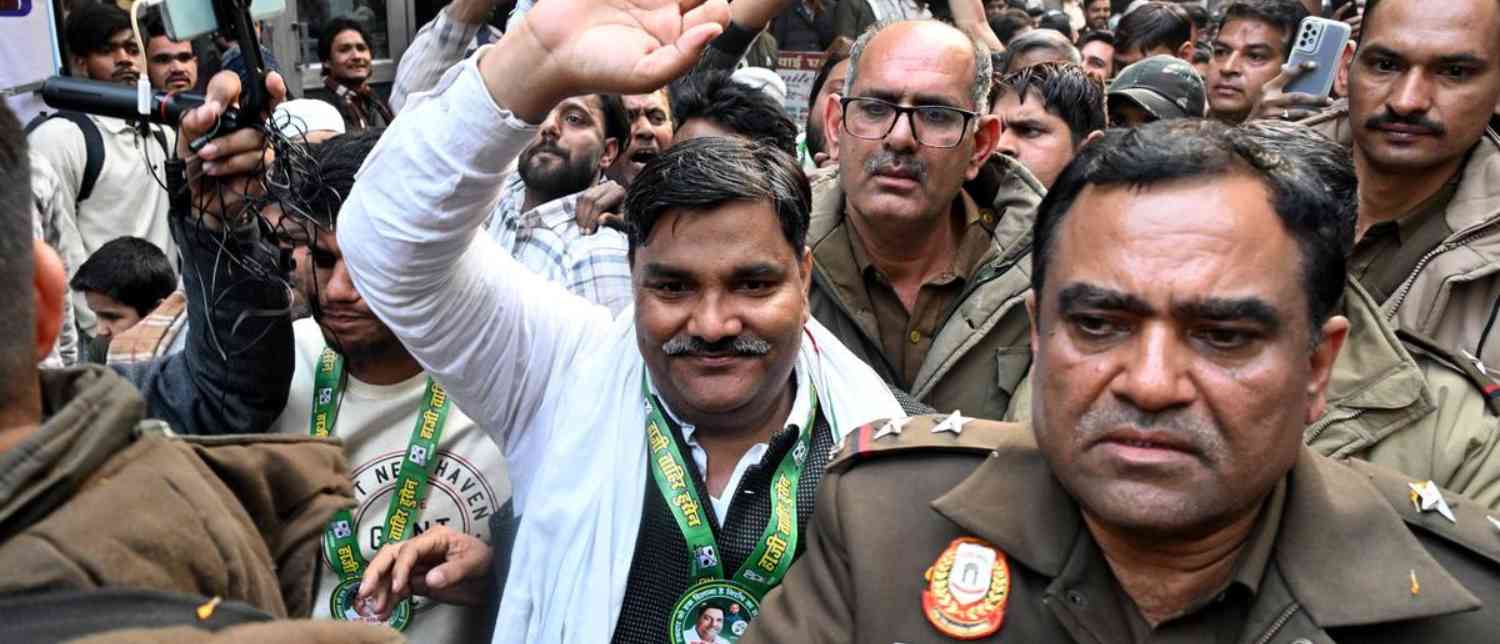
New Delhi: More than six years after the 2020 Northeast Delhi riots shook the national capital, a Delhi court on Friday sentenced former Aam Aadmi Party (AAP) councillor Tahir Hussain and four co-convicts to life imprisonment for the murder of Intelligence Bureau (IB) staffer Ankit Sharma. The verdict marks one of the most significant judicial outcomes arising from the communal violence that claimed over 50 lives and left hundreds injured.
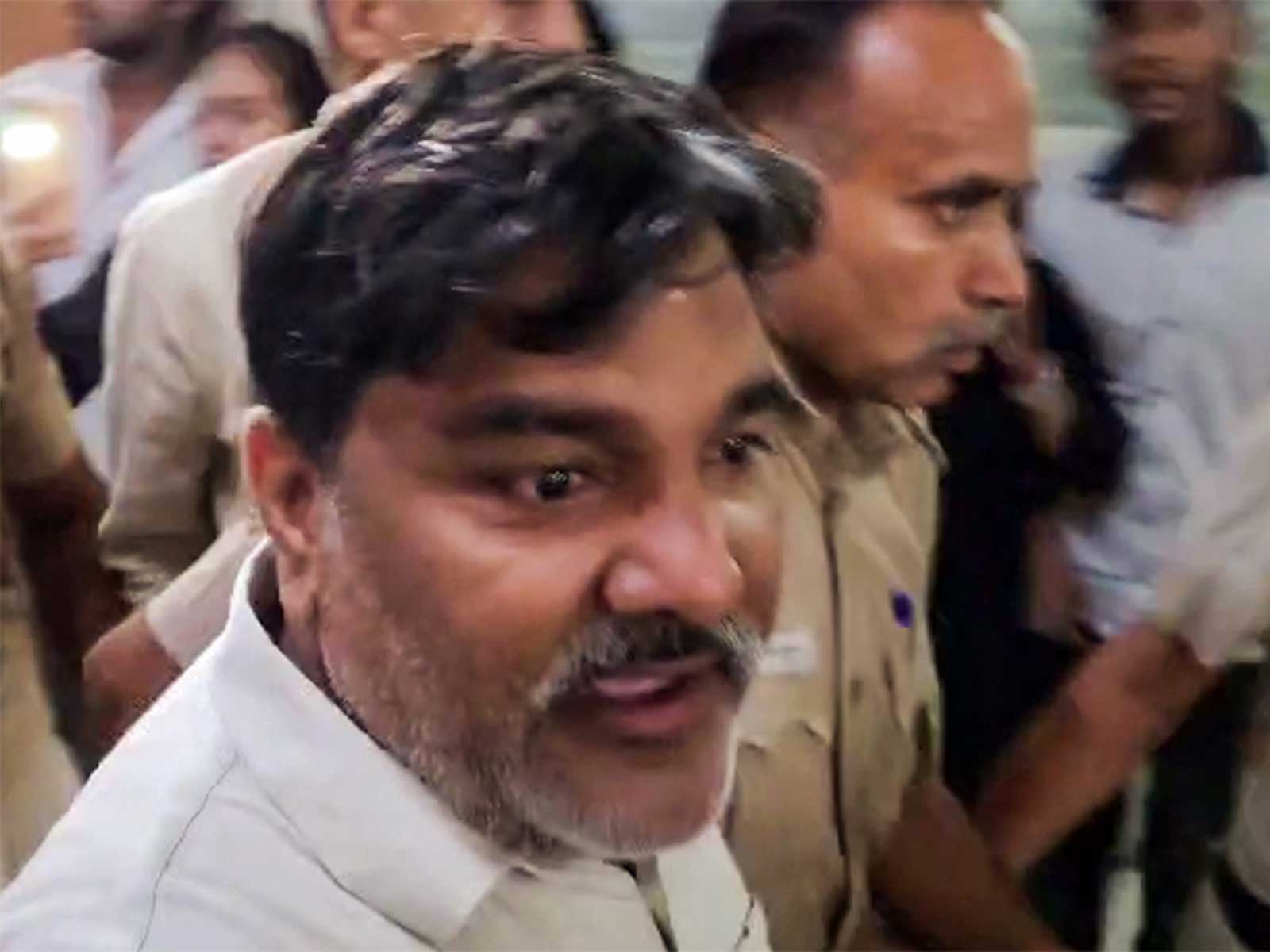
The court sentenced Tahir Hussain along with convicts Shah Alam, Gulfaz, Mohammad Riyan and Arif to imprisonment for the remainder of their natural lives. While acknowledging the extreme brutality of the crime, the court declined the prosecution's demand for capital punishment, ruling that the case did not fall within the "rarest of rare" category required for imposing the death penalty.
Court Rules Against Death Penalty
The sentencing was pronounced by Additional Sessions Judge Praveen Singh of Delhi's Karkardooma Court, days after all five accused were convicted for offences including murder, criminal conspiracy, rioting and unlawful assembly.
During sentencing arguments, Delhi Police had urged the court to award the death penalty, describing the killing as "heinous", "cold-blooded" and meticulously planned. Prosecutors argued that the brutality inflicted on Sharma, whose body bore dozens of injuries before being dumped in a drain, warranted the harshest punishment under law.
However, the court observed that although the crime was exceptionally grave, the possibility of reform and rehabilitation could not be completely ruled out. Consequently, it held that life imprisonment would serve the ends of justice while declining to invoke the death sentence.
The 2020 Delhi Riots Case
The conviction stems from one of the most high-profile cases linked to the communal violence that erupted in Northeast Delhi in February 2020 following protests over the Citizenship (Amendment) Act (CAA). The clashes between rival groups escalated into widespread violence, resulting in more than 50 deaths, extensive property damage and hundreds of injuries.
Ankit Sharma, a 26-year-old Intelligence Bureau staffer, went missing on February 25, 2020, amid the violence. The following day, his mutilated body was recovered from a drain near Chand Bagh.
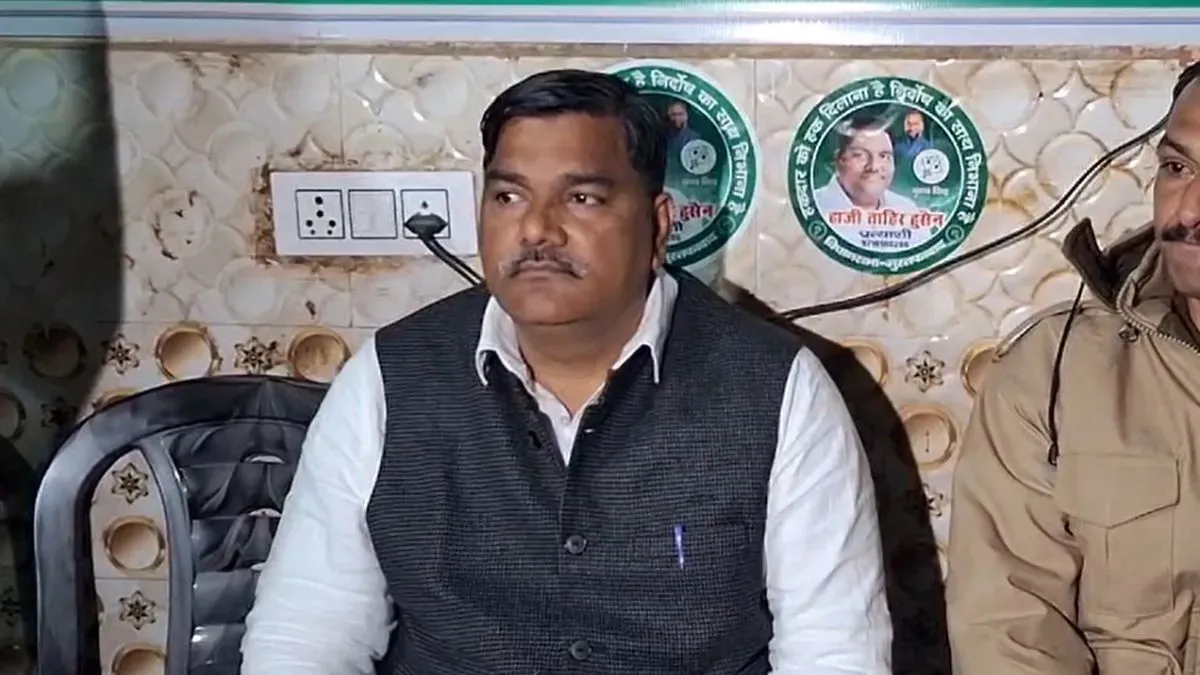
According to the prosecution, Sharma was attacked by a violent mob allegedly led by Tahir Hussain and his associates after being dragged into the area surrounding Hussain's property. The prosecution maintained that the murder formed part of a larger conspiracy during the riots and was supported by eyewitness accounts, forensic evidence and electronic records.
The court accepted the prosecution's version during the conviction phase, concluding that Hussain was not merely present during the violence but played an active role in the events that led to Sharma's killing.
Why the Prosecution Sought Capital Punishment
While arguing for the death penalty earlier this week, the prosecution highlighted the severity of the assault, pointing to multiple injury marks on Sharma's body and alleging that the murder was premeditated and executed with extreme cruelty.
Investigators argued that Sharma suffered dozens of injuries, including several fatal wounds, before his body was disposed of in a nearby drain with cloth tied around his neck. These circumstances, according to the prosecution, demonstrated exceptional brutality deserving of capital punishment.
The court, however, maintained that sentencing principles require balancing the gravity of the offence with the possibility of reformation, ultimately deciding against imposing the death sentence.
Political Reactions Rekindle Old Debate
The verdict immediately triggered a fresh political confrontation between the Bharatiya Janata Party (BJP) and the Aam Aadmi Party.
AAP reiterated that Tahir Hussain had already been expelled from the party years ago and argued that it should not be held responsible for the actions of a former member. Delhi AAP leaders also alleged that attempts were being made to politically link the party with Hussain despite his expulsion.
Delhi AAP chief Saurabh Bharadwaj went a step further, claiming Hussain had effectively been working in the BJP's interest and accusing the ruling party of attempting to exploit the verdict politically.
The BJP, meanwhile, asserted that Hussain's past association with AAP could not be erased and accused the opposition party of distancing itself only after the criminal proceedings gathered momentum. Party leaders described the life sentence as a significant step towards justice for the victim's family.
The political exchange reflected the continued sensitivity surrounding the 2020 Delhi riots, which remain a deeply contested chapter in India's recent political and communal history.
A Landmark Verdict in Riot-Related Cases
Legal observers view Friday's sentencing as one of the most consequential judgments arising from the Northeast Delhi riots.
The Ankit Sharma murder case became one of the most closely watched investigations because it involved a serving Intelligence Bureau official and allegations of organised mob violence. Over the past six years, multiple riot-related prosecutions have continued in Delhi courts, with several cases still pending trial.
The life imprisonment awarded to Hussain and his co-convicts represents one of the strongest judicial actions taken so far in connection with the 2020 violence and underscores the court's finding that the killing was not an isolated incident but part of coordinated rioting.
Long Legal Journey Reaches Sentencing Stage
Since his arrest in 2020, Tahir Hussain has faced multiple criminal cases linked to the Delhi riots. Although he secured bail in some of the related FIRs over the years, he remained in custody because of the more serious charges, including the Ankit Sharma murder case and the larger conspiracy case connected to the riots.
Friday's sentencing concludes a major chapter in one of the most prominent criminal trials arising from the communal violence, though other riot-related prosecutions continue before Delhi courts.
For Sharma's family, the verdict brings legal closure after more than six years of proceedings. For the justice system, it represents another milestone in addressing accountability for one of the capital's deadliest episodes of communal unrest.
With input from agencies
Image Source: Multiple agencies
© Copyright 2026. All Rights Reserved. Powered by Vygr Media.