
 By
By 
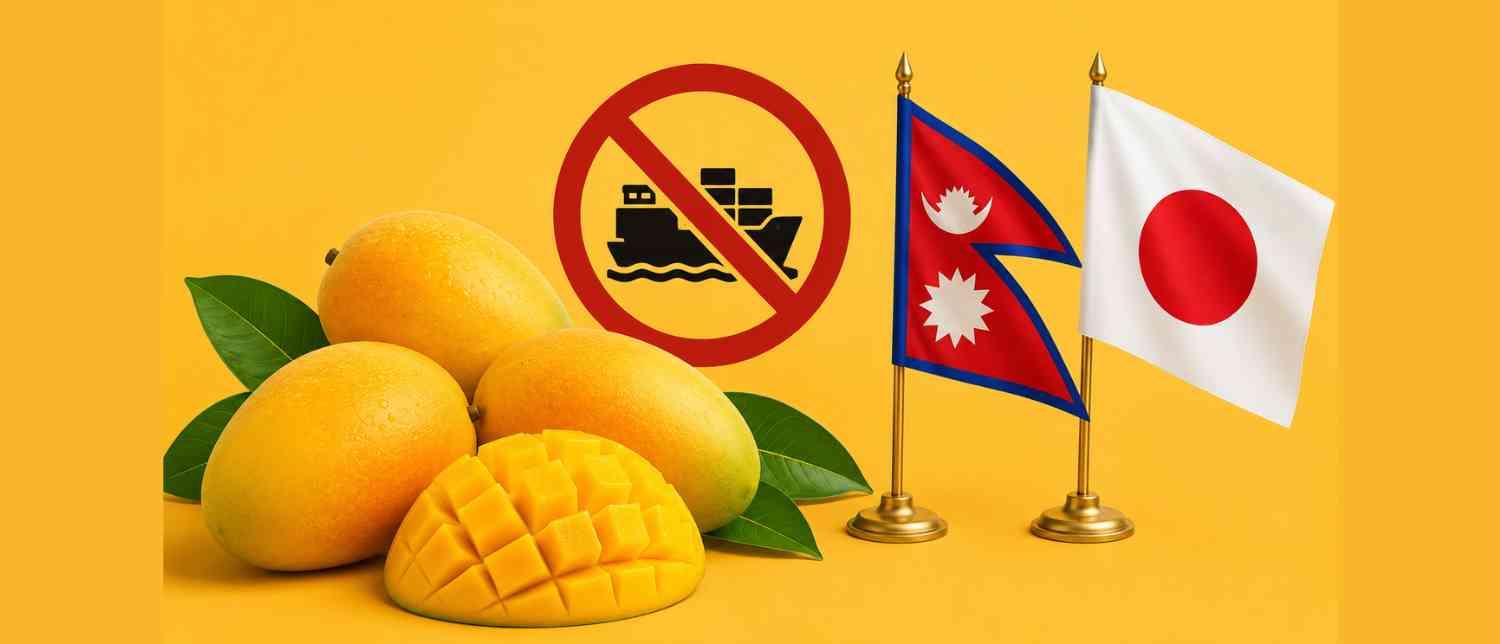
India's mango export sector has suffered another setback after Nepal suspended imports of Indian mangoes over concerns regarding excessive pesticide residues, just weeks after Japan imposed restrictions on Indian mango shipments due to lapses in pest-control procedures. The twin actions by two important overseas markets have sparked fresh concerns about quality control standards, export compliance mechanisms, and the broader reputation of Indian agricultural produce in international markets.
The latest development comes during the peak mango export season, creating uncertainty for growers, traders, and exporters dealing with an already difficult year marked by weather-related production challenges and stricter global food safety requirements.
_1781037134.jpg)
Why Nepal Suspended Indian Mango Imports
According to reports from Nepal, authorities halted imports of Indian mangoes and several other fruits after quarantine inspectors detected pesticide residues exceeding permissible safety limits in imported consignments. The restrictions, introduced by Nepal's Ministry of Agriculture and Livestock Development, have reportedly been in force since April-May 2026.
Nepali officials said the decision was taken after inspections found chemical pesticide levels above acceptable thresholds. Authorities also pointed to inadequate quarantine infrastructure along some border areas, particularly in Madhesh Province, as a contributing factor behind the move.
The suspension affects several premium Indian mango varieties that enjoy strong demand in Nepal, including Alphonso, Dasheri, Chausa, Kesar, Langra, and Banganapalli. These varieties have traditionally dominated Nepal's summer fruit markets due to their popularity among consumers.
Concerns Over Supply Shortages in Nepal
While Nepal's government views the restrictions as an opportunity to promote domestic fruit production, traders have expressed concerns about the impact on local markets.
Bhuvaneshwar Purbe, General Secretary of the Fruit and Vegetable Traders' Association in Janakpurdham, warned that domestic production alone may not be sufficient to meet consumer demand during the summer season, when mango consumption peaks across the country. Traders fear shortages and potential price increases if local supplies fail to bridge the gap left by reduced imports from India.
Purbe also urged authorities to strengthen testing and quarantine systems rather than impose a blanket ban, arguing that Indian fruits could be allowed entry after rigorous quality inspections.
However, Nepalese officials have defended the decision. Representatives from the Ministry of Land Management, Agriculture and Cooperatives in Madhesh Province said the restriction creates a larger market opportunity for local farmers and provides consumers access to safer and healthier produce. Officials noted that domestic growers no longer have to compete with imported Indian mangoes this season.
_1781037394.jpg)
Japan's Earlier Ban Triggered Alarm Across the Industry
Nepal's move follows a separate action by Japan, which recently suspended imports of Indian mangoes after quarantine officials found shortcomings in pest-control procedures at Indian treatment facilities during inspections conducted earlier this year.
Unlike Nepal's concerns over pesticide residues, Japan's restrictions stem from phytosanitary compliance issues. Japanese authorities identified deficiencies in pest-control, fumigation, and disinfection procedures at Vapour Heat Treatment (VHT) facilities used for mango exports. These facilities are designed to eliminate agricultural pests, particularly fruit flies, before shipments leave India.
Japan maintains a strict zero-tolerance policy toward invasive pests because of the potential threat they pose to domestic agriculture. Officials did not report actual pest infestations in exported mangoes but raised concerns about whether prescribed treatment protocols were being consistently followed.
The Yokohama Plant Protection Association reportedly informed exporters that mango consignments carrying export certificates issued after March 25, 2026, would not be accepted until operational standards improved.
A Ban After Nearly Two Decades
Japan's suspension is particularly significant because it marks the first such restriction in nearly 20 years.
The country had previously banned Indian mango imports in 1986 due to concerns about fruit fly infestations. That ban remained in place until 2006, when Japan lifted restrictions after India strengthened its treatment protocols and scientific assessments concluded that the risk had been addressed.
The latest restrictions once again affect some of India's most prized mango varieties, including Alphonso, Kesar, Langra, Banganapalli, Chausa, and Malika.
The timing has compounded concerns for exporters because the suspension coincides with India's key export window between April and June, when international demand for premium mangoes reaches its peak.
What the Restrictions Mean for India's Mango Industry
India remains the world's largest mango producer, generating roughly 24-28 million metric tonnes annually according to various industry estimates. Despite this massive output, the overwhelming majority of production is consumed domestically, with only a small proportion entering export markets.
Government and industry data indicate that India exported approximately 29,938 metric tonnes of fresh mangoes globally during FY 2024-25, earning around $56.5 million in export revenue. Major export destinations include the UAE, the United States, the United Kingdom, Kuwait, Qatar, Oman, Japan, and Nepal.
Although Nepal is not among India's largest export markets in value terms, it remains an important regional buyer. According to APEDA Agri Exchange data cited in reports, Nepal imported nearly 3,330 metric tonnes of Indian mangoes during 2024-25.
Japan, meanwhile, represents a premium-value market. Fresh and processed mango exports to Japan were valued at approximately $1.54 million in 2025-26, with Gujarat's Kesar mangoes accounting for a significant share of shipments.
Because Japanese consumers typically pay higher prices for imported fruit, restrictions in that market can disproportionately affect exporter profitability even if shipment volumes remain relatively small.
Reputation Risks Extend Beyond Immediate Trade Losses
Industry observers say the larger concern extends beyond direct export losses.
The consecutive actions by Japan and Nepal have placed a spotlight on India's agricultural quality assurance systems, raising questions about traceability, monitoring mechanisms, pesticide management, and export certification processes.
Exporters worry that repeated quality-related concerns could undermine confidence among international buyers and encourage other importing nations to increase scrutiny of Indian agricultural products. Such developments could create additional compliance burdens and raise export costs in the future.
At the same time, experts note that India's mango industry remains largely insulated from major economic shocks because domestic consumption accounts for the vast majority of production. Nevertheless, premium export markets play an important role in generating higher returns for growers and exporters, making quality compliance increasingly critical.
A Critical Moment for India's Mango Exports
The back-to-back restrictions from Nepal and Japan have emerged as a warning signal for India's agricultural export ecosystem. While the immediate trade impact may be limited by strong domestic demand, the incidents highlight the growing importance of meeting stringent international standards on pesticide residues, quarantine compliance, pest management, and traceability.
For a country widely regarded as the world's mango capital, maintaining the reputation of its flagship fruit in global markets may now depend as much on quality assurance and regulatory compliance as on production volumes and varietal excellence. As exporters await clarity from both Nepalese and Japanese authorities, the focus is increasingly shifting toward strengthening inspection systems and restoring confidence in Indian mango exports worldwide.
With inputs from agencies
Image Source: Multiple agencies
© Copyright 2026. All Rights Reserved. Powered by Vygr Media.