 By

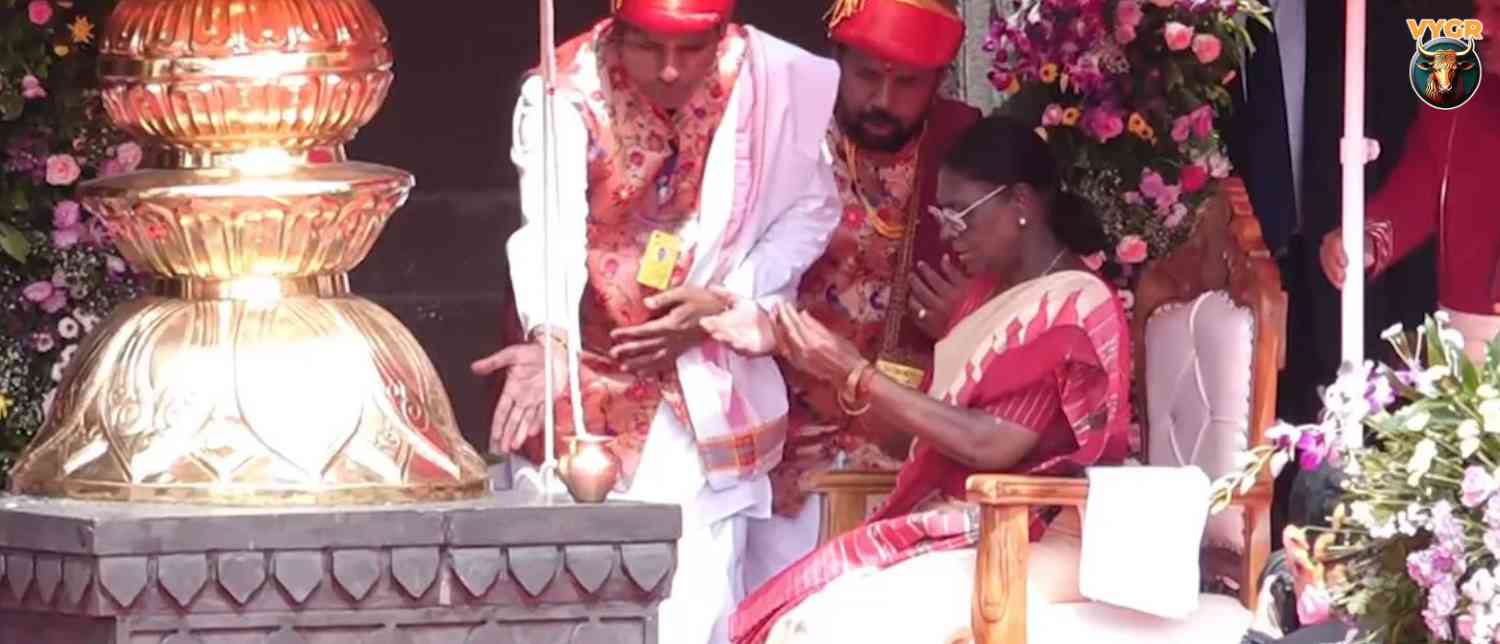
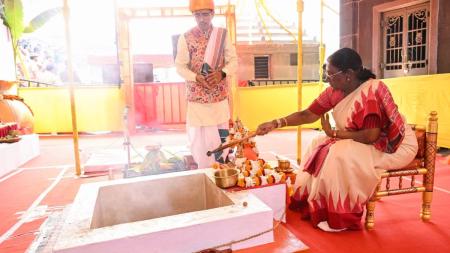
Nashik: The sound of conch shells and Vedic chants filled the banks of the Godavari on Saturday as President Droupadi Murmu formally opened the countdown to the Nashik-Trimbakeshwar Simhastha Kumbh Mela. She took part in the flag-hoisting rituals at Ramkund, attended the Godavari Aarti and launched the Kumbh’s official song, its website and two special postage stamps.
The President called for the upcoming Kumbh to blend its rich spiritual traditions with modern infrastructure, environmental conservation and effective waste management.
What happened on Saturday
According to an official statement, the President attended three linked ceremonies: the Dhwaj Stambh Pujan (worship of the flagpole), the Dhwaja Pujan (worship of the flag) and the Dhwajarohan (hoisting of the flag) at Ramkund, the sacred ghat on the Godavari. She then attended the Godavari Aarti.
The Ganga-Godavari Maha Aarti was scheduled for early evening at Ramkund. About one lakh devotees were expected, with thousands of tribal community members taking part. The event was also reported to include a mass conch-blowing display as a record attempt, though accounts differ on the number of participants (251 in one report, 501 in another).
What the President launched
| Item | Details |
|---|---|
| Kumbh song | The festival’s official anthem. |
| Website | The official portal of the Nashik-Trimbakeshwar Kumbh Mela Authority, for updates and pilgrim facilities. |
| Two stamps | Special stamps featuring Ramkund in Nashik and Kushavarta Tirtha in Trimbakeshwar, some described as “My Stamp” issues. |
| Coffee-table book | A commemorative book on the festival’s heritage. |
Key dates
- October 31, 2026: Flag hoisting; the festival formally begins.
- July 29, 2027: Nagar Pradakshina at Nashik, as announced earlier by the state.
- August 2, 2027: First Amrut Snan, the main ritual dip in the Godavari.
Reports differ on some dates. One account lists July 29 as the first Amrit Snan, while the state’s earlier announcement describes it as the Nagar Pradakshina date. Reports also give different end dates for the festival period: July 24, 2028 and February 20, 2028. Pilgrims should rely on the authority’s official calendar when it is published. The term “Amrut Snan” replaced “shahi snan” in line with the practice adopted at the Prayagraj Kumbh.
Why Nashik’s Kumbh is special
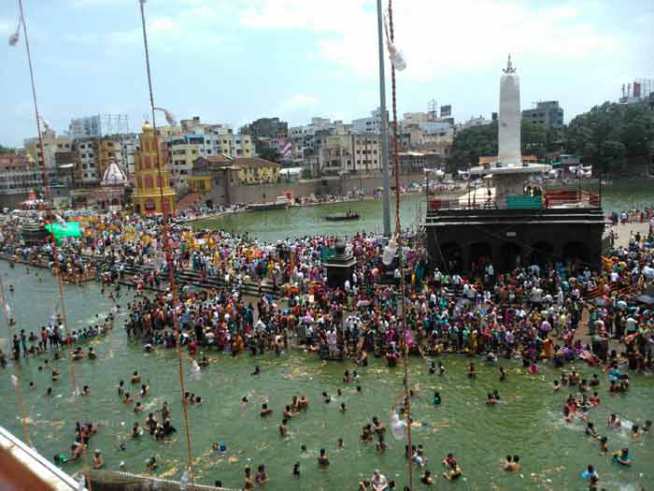
The Simhastha is held at Nashik-Trimbakeshwar about once every 12 years, and it is one of four Kumbh sites that rotate between Haridwar, Prayagraj, Ujjain and Nashik. The Godavari at Nashik is revered as a river sanctified by Lord Rama’s presence, and Ramkund is its best-known bathing spot. The region also draws pilgrims to nearby sites such as Shirdi, Shani Shingnapur, Bhimashankar and Grishneshwar.
The preparations and the money
-
Godavari and infrastructure: One report says the state has committed about ₹2,000 crore for keeping the Godavari clean and improving infrastructure. Earlier, Chief Minister Devendra Fadnavis said tenders for works worth ₹4,000 crore had been issued, with sewage treatment plants, river cleaning and land acquisition for the Sadhugram, the camp for sadhus, in progress. Figures vary between reports, so please verify them against official releases.
- Railways: The Railway Ministry has planned upgrades at five stations near the Mela area, Nashik Road, Devlali, Odha, Kherwadi and Kasbe Sukene, with works projected to cost over ₹1,000 crore. The Railway Minister asked officials to adopt practices from the 2025 Maha Kumbh.
- Crowd estimates: Some local guides cite more than three crore pilgrims, but I could not find an official figure.
Safety: the lessons the state is drawing on
Nashik carries a painful memory. In August 2003, a stampede during the Kumbh killed 39 pilgrims and injured more than 100. After the stampede at the Maha Kumbh in Prayagraj in January 2025, the state asked senior officers to visit Prayagraj and study its precautions. Fadnavis has also urged devotees to spread their visits across the festival period instead of crowding on the main bathing days.
The environmental test
The President’s emphasis on conservation and waste management is directed at the festival’s hardest challenge. Large gatherings strain rivers, sanitation and waste handling in a way few other events do. The Godavari’s quality, the completion of sewage treatment plants and waste handling during the peak days will decide whether the commitments made on Saturday translate into results.
What to watch
-
Official publication of the full list of bathing dates.
- Whether sewage treatment plants and river-cleaning works are finished well before August 2027.
- Progress on Sadhugram and its funding.
- Railway and road upgrades before the peak period.
- Crowd management plans, including entry and exit routes at Ramkund.
FAQ
When is the first Amrut Snan? August 2, 2027, according to the state’s announcement.
Where are the new stamps from? They feature Ramkund (Nashik) and Kushavarta Tirtha (Trimbakeshwar).
How is the Kumbh different from the Maha Kumbh? The Maha Kumbh is held at Prayagraj, and the Nashik-Trimbakeshwar festival is the Simhastha Kumbh, held on its own astrological cycle.
© Copyright 2026. All Rights Reserved. Powered by Vygr Media.