 By
By 
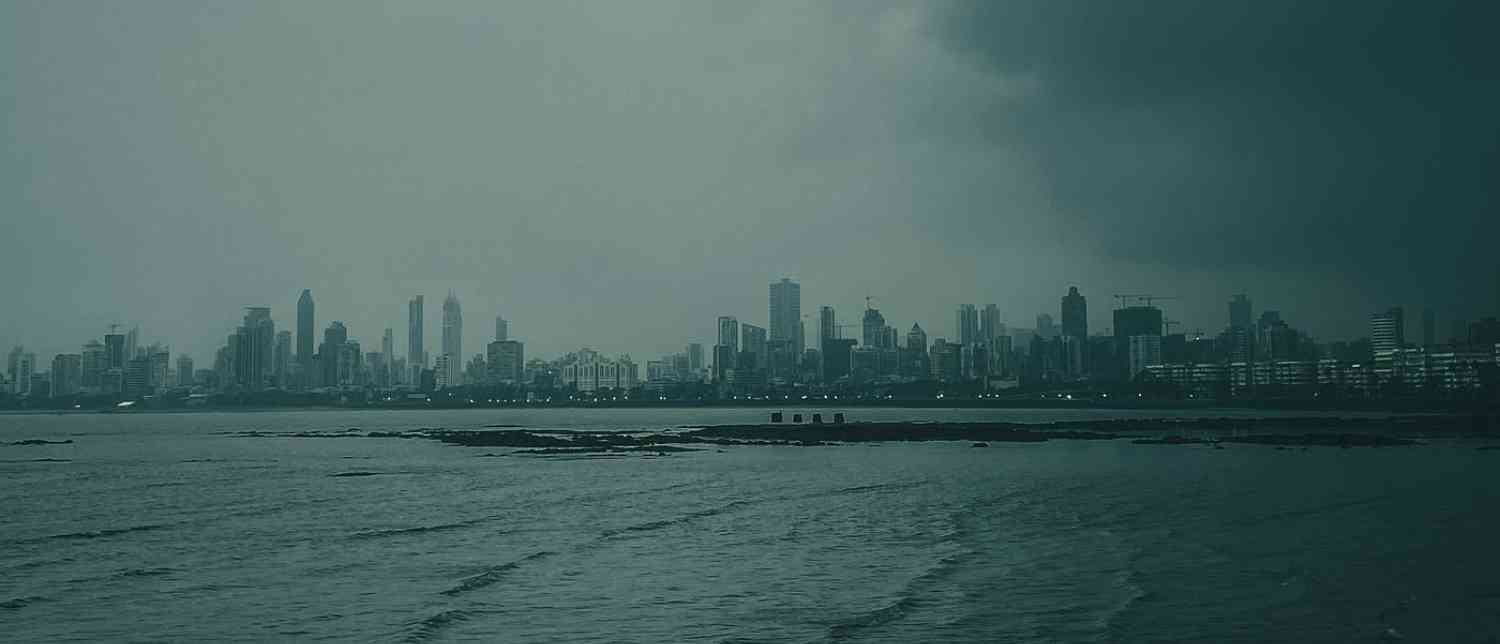
Mumbai is grappling with one of the most intense spells of the 2026 southwest monsoon, with the India Meteorological Department (IMD) placing the financial capital under a red alert amid forecasts of extremely heavy rainfall. The warning, which also covers neighbouring districts including Thane, Palghar and Raigad, has prompted civic authorities to activate emergency response systems, issue public advisories and suspend classes in schools and colleges as the city braces for more rain over the weekend.
The latest weather alert comes after days of relentless showers that have inundated roads, disrupted transport services and exposed the city's recurring monsoon vulnerabilities. Officials have urged residents to avoid unnecessary travel as heavy rain, waterlogging, strong winds and high tides threaten to worsen conditions.
IMD sounds highest-level weather warning
The IMD has forecast heavy to very heavy rainfall across Mumbai and its suburbs, with isolated locations expected to receive extremely heavy showers. Gusty winds reaching up to 60 kmph are also likely, increasing the risk of fallen trees, damaged infrastructure and localised flooding.
The red alert, the highest category of weather warning, signals the possibility of significant disruption to normal life. Authorities have warned residents to remain vigilant, particularly those living in low-lying and flood-prone areas.
Several parts of Mumbai have already recorded substantial rainfall over the past 24 hours. According to civic data, some locations in the city received well over 100 mm of rain, while the Ram Mandir area emerged among the heaviest-hit pockets with more than 200 mm of rainfall, highlighting the uneven but intense nature of the ongoing monsoon spell.
Roads submerged, transport affected
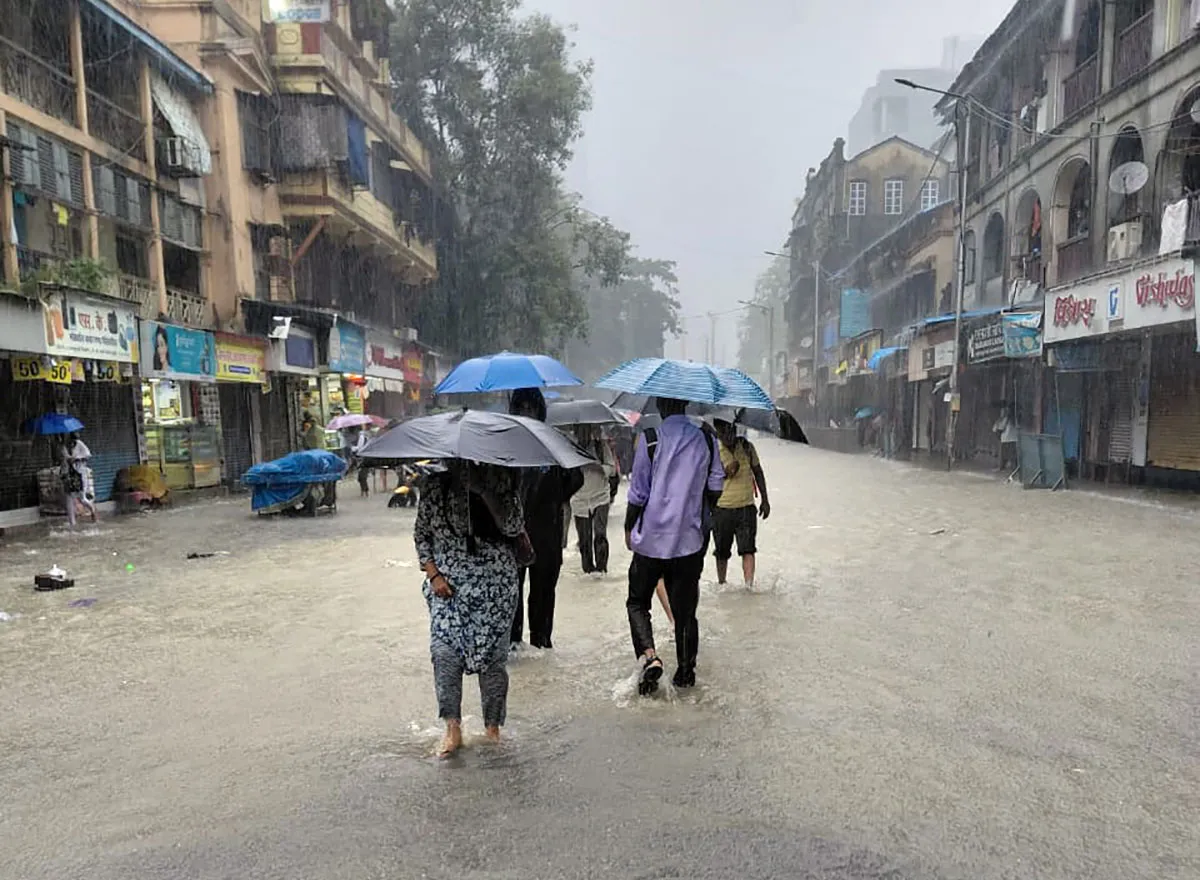
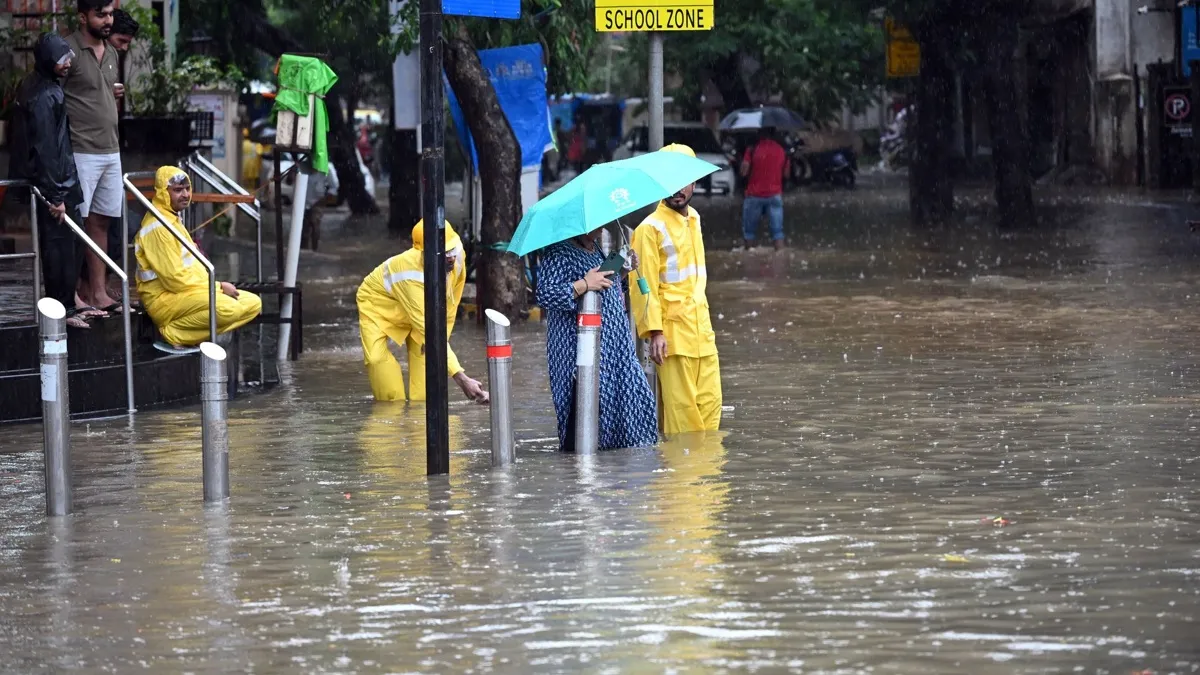
Heavy rainfall has left several roads waterlogged across Mumbai, slowing vehicular movement and causing long traffic snarls in multiple neighbourhoods. Commuters faced delays as water accumulated on key stretches, while civic teams were deployed to clear drains and monitor vulnerable locations.
Suburban rail services—the city's lifeline—continued to operate, although delays were reported on several routes due to water accumulation and adverse weather conditions. Passengers experienced slower services, particularly in sections vulnerable to flooding.
Authorities also kept a close watch on tidal conditions, as periods of high tide reduce the city's ability to drain excess rainwater into the sea, increasing the likelihood of flooding in low-lying areas.
The Brihanmumbai Municipal Corporation (BMC) advised citizens to venture outdoors only if absolutely necessary and to remain updated through official weather bulletins.
Schools shut as precaution
With rainfall expected to intensify, the BMC announced the closure of schools and colleges for the afternoon session on Saturday as a precautionary measure.
The decision was taken to ensure student safety after the IMD upgraded its warning for Mumbai and adjoining districts. Similar precautionary measures were also implemented in neighbouring districts, where educational institutions remained closed due to the severe weather forecast.
Parents were advised to follow updates from school administrations while authorities continued to monitor rainfall intensity and local conditions before deciding on further closures.
Maharashtra government activates emergency response
The worsening weather prompted senior Maharashtra government officials and civic authorities to review preparedness measures. Emergency meetings were held at the BMC headquarters to assess the city's readiness and coordinate responses across departments responsible for disaster management, storm-water drainage, transport and public safety.
Officials reviewed flood-control mechanisms, pumping station operations, rescue preparedness and deployment of emergency personnel. Disaster response teams remained on standby while civic engineers monitored vulnerable infrastructure, including bridges, retaining walls and flood-prone roads.
Public representatives appealed to residents to avoid unnecessary travel unless essential and to cooperate with authorities as emergency services remained on high alert.
Infrastructure once again tested
As with previous monsoon seasons, the heavy downpour quickly exposed the pressure on Mumbai's urban infrastructure.
Reports of waterlogging, road cave-ins, fallen trees and localized structural damage surfaced from different parts of the city. In several areas, commuters were forced to wade through knee-deep water while motorists struggled to navigate flooded roads.
Although civic agencies have invested heavily in storm-water drainage improvements over recent years, the intensity of rainfall during concentrated cloudbursts continues to overwhelm drainage capacity in some locations.
The latest spell has once again revived discussions around Mumbai's long-standing challenges in managing extreme rainfall events amid rapid urbanisation and climate variability.
Heavy rain extends beyond Mumbai
The weather system is not limited to Maharashtra. The IMD has issued red alerts in multiple states as an active monsoon system continues to dump heavy rainfall across large parts of the country.
Besides coastal Maharashtra, heavy to extremely heavy rainfall has been forecast for several regions, increasing the risk of flooding, landslides and disruption to transport and essential services.
State administrations have stepped up disaster preparedness, deployed emergency response teams and advised residents in vulnerable districts to remain alert. Weather experts attribute the widespread rainfall to an active low-pressure system over the Bay of Bengal, coupled with strong monsoon currents feeding moisture across western and central India.
Safety advisories for residents
Authorities have asked residents to remain cautious until weather conditions improve. Citizens have been advised to:
-
Avoid travelling unless absolutely necessary.
-
Stay away from waterlogged roads, open drains and damaged electrical installations.
-
Follow official advisories issued by the IMD and local civic authorities.
-
Keep emergency supplies and mobile devices charged in case of prolonged disruptions.
-
Exercise additional caution during periods of high tide, when flooding risks are significantly higher.
Emergency control rooms remain operational, while municipal workers continue to monitor vulnerable locations around the clock.
More rain likely over the weekend
Forecasts suggest that heavy rainfall activity is expected to persist through the weekend before gradually easing early next week, although localized intense showers cannot be ruled out.
For Mumbai, the immediate focus remains on minimizing disruption while ensuring public safety. As the city navigates yet another severe monsoon episode, authorities continue to balance emergency response with efforts to keep essential services functioning.
With the IMD maintaining its highest level of warning, residents are being urged to stay informed, heed official advisories and avoid complacency as the monsoon continues to test India's financial capital.
With inputs from agencies
Image Source: Multiple agencies
© Copyright 2026. All Rights Reserved. Powered by Vygr Media.