 By
By 
Mumbai, India’s financial capital and home to more than 13 million people, is staring at one of its most serious pre-monsoon water crises in recent years. With the southwest monsoon yet to arrive and reservoir levels continuing to decline, the Brihanmumbai Municipal Corporation (BMC) has intensified conservation measures after officials warned that the city has only around 40 days of drinking water stock remaining.
According to data from the BMC’s Hydraulic Department, the combined water stock in Mumbai’s seven reservoirs has dropped to approximately 9.33–9.34 per cent of total capacity, significantly lower than the corresponding period last year. The reservoirs currently hold about 144,918 million litres of water, enough to sustain the city’s requirements for only the next 40 days if substantial rainfall does not arrive soon.
Seven Lakes That Keep Mumbai Running
Mumbai’s drinking water supply depends on seven reservoirs—Tansa, Vihar, Tulsi, Bhatsa, Upper Vaitarna, Modak Sagar and Middle Vaitarna. Four of these reservoirs are owned by the BMC, while the remaining three belong to the Maharashtra government, which releases water to the city.
The situation inside the reservoir network has become increasingly alarming. Upper Vaitarna has already reached dead stock levels, meaning usable water reserves have effectively been exhausted. Other reservoirs are also witnessing sharp declines. Current storage levels stand at:
-
Modak Sagar: 29 per cent
-
Vihar: 42.11 per cent
-
Tulsi: 23.06 per cent
-
Middle Vaitarna: 10.34 per cent
-
Bhatsa: 9.24 per cent
-
Tansa: 4.71 per cent
-
Upper Vaitarna: Dead stock level reached
These figures underscore the growing stress on the city’s water infrastructure as temperatures remain high and rainfall remains absent.
Delayed Monsoon Pushes City Toward Crisis
The primary reason behind the worsening water situation is the delayed arrival of the southwest monsoon. While catchment areas had received about 101 mm of rainfall by this time in 2025, officials reported virtually no meaningful rainfall across most reservoir catchments this year.
Data from reservoir catchments paints an equally worrying picture. Tansa received only 13 mm of rainfall and Modak Sagar just 7 mm, while several other catchment regions recorded no rain at all. The lack of inflows has accelerated depletion of available reserves.
The delayed monsoon is not affecting Mumbai alone. Maharashtra has experienced a significant rainfall deficit, while weather experts have linked the weak rainfall pattern to developing El Niño conditions in the Pacific Ocean. The India Meteorological Department has also indicated that monsoon advancement across parts of Maharashtra has been slower than normal.
Water Levels Falling Rapidly
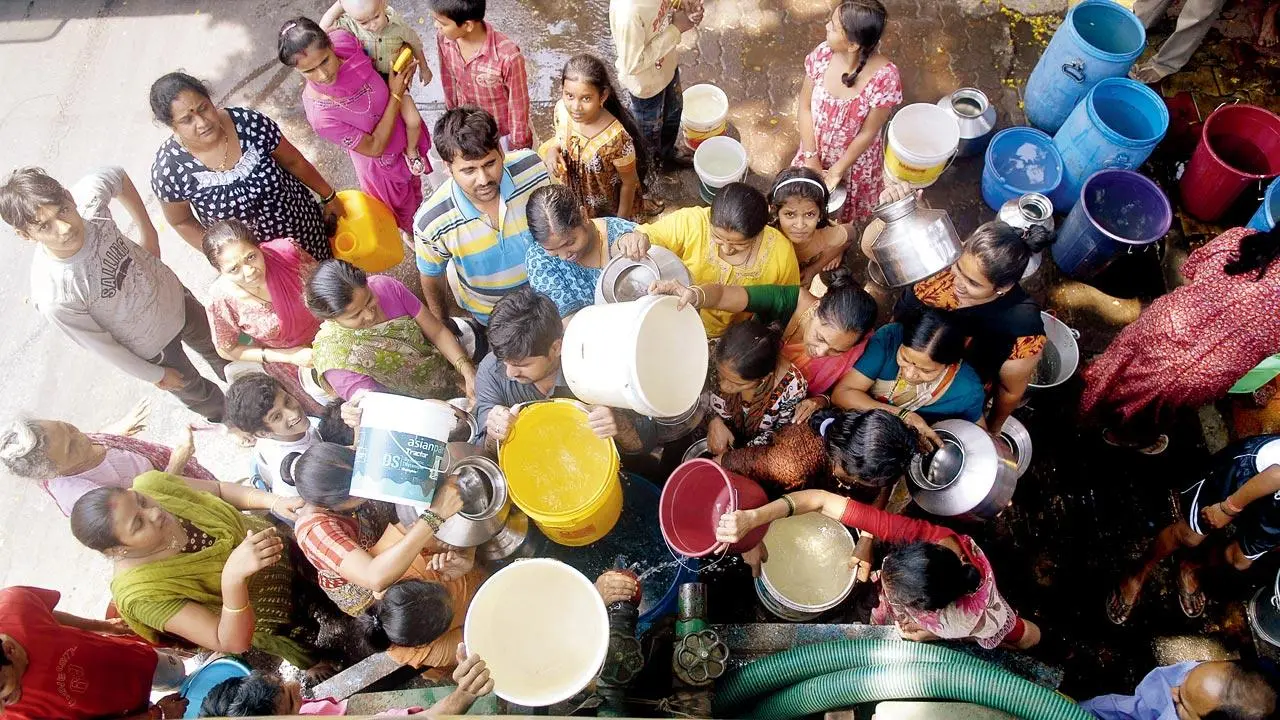
The decline has been dramatic over just a few weeks.
On June 7, Mumbai’s reservoirs held 13.55 per cent of their useful live storage, equivalent to 196,141 million litres. By mid-June, levels had fallen to around 10.72 per cent, before dropping further to approximately 9.33–9.34 per cent.
For comparison, the city’s reservoirs held 12.27 per cent storage during the same period last year and 10.24 per cent in 2024. Despite current stocks being marginally higher than some previous years in absolute terms, the absence of rainfall has intensified concerns because replenishment has effectively stalled.
The seven reservoirs together have a total storage capacity of roughly 1,447,363 million litres. Current reserves represent only a small fraction of that capacity.
BMC Tightens Restrictions Across the City
Faced with shrinking reserves, the BMC has rolled out a series of emergency conservation measures.
The first step came on May 15, when the civic body imposed a 10 per cent water cut across Mumbai. Daily supply was reduced from approximately 4,100 million litres per day (MLD) to around 3,650 MLD. Mumbai’s overall demand, however, remains significantly higher, estimated at roughly 4,664 MLD.
As reservoir levels continued to fall, authorities introduced stricter controls beginning June 17.
The measures include:
-
Complete suspension of water supply to construction sites.
-
Temporary disconnection of water supply to swimming pools.
-
Suspension of approvals for new construction-related water connections.
-
Holding applications for increased or additional water connections until conditions improve.
-
A 20 per cent reduction in water supplied to industrial, commercial and sports establishments.
-
Legal action against misuse or wastage of potable water.
The Maharashtra Water Resources Department has also recommended austerity measures aimed at extending available supplies until the monsoon arrives.
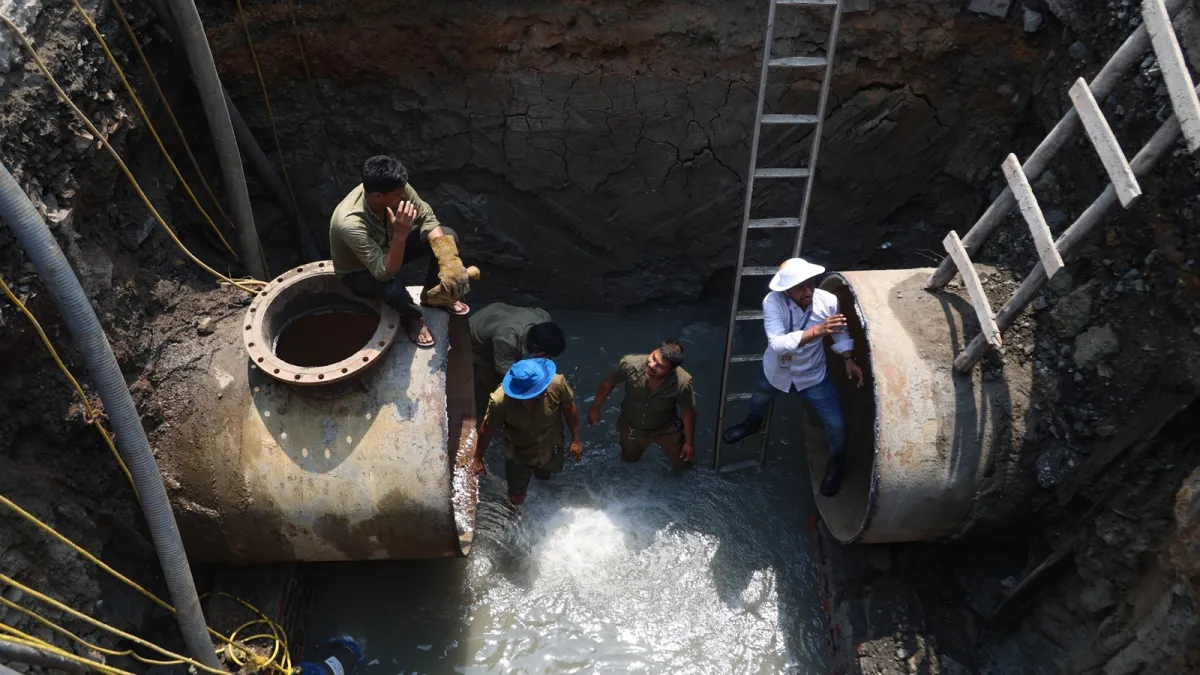
Alternative Water Sources Being Encouraged
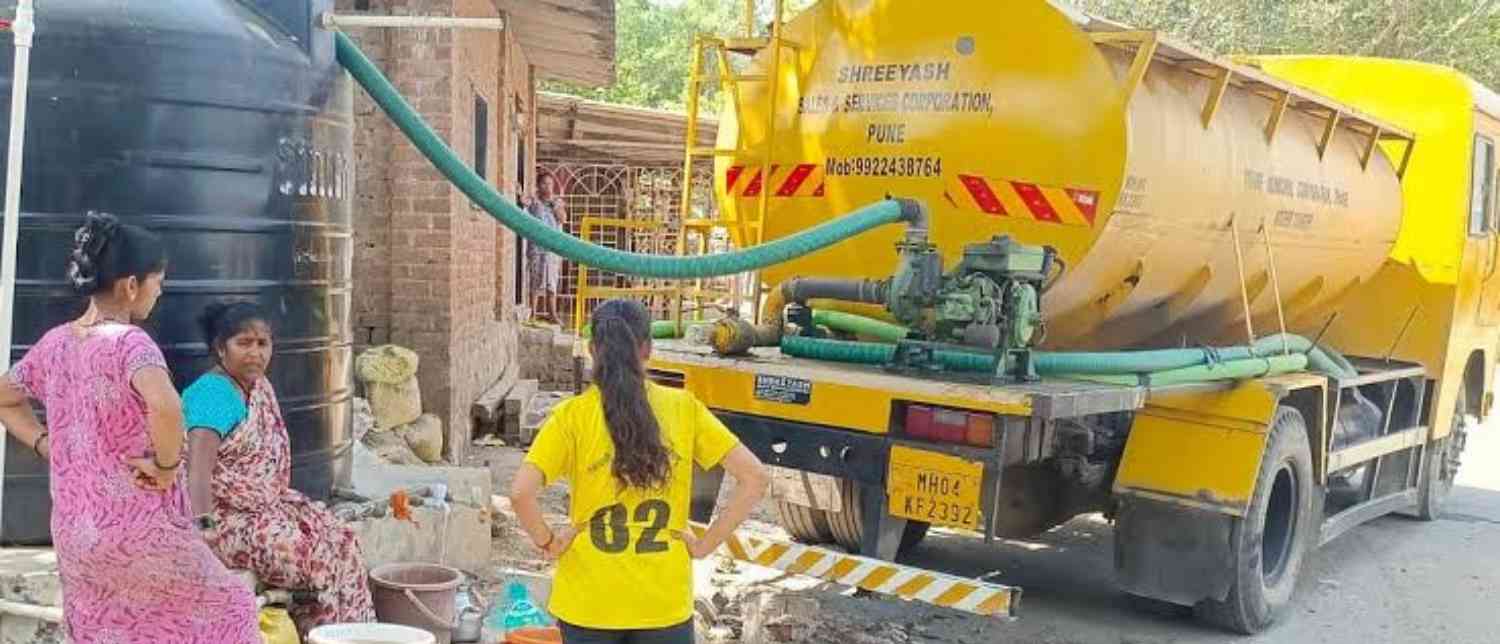
Authorities are increasingly urging institutions and residents to rely on alternative sources for non-drinking purposes.
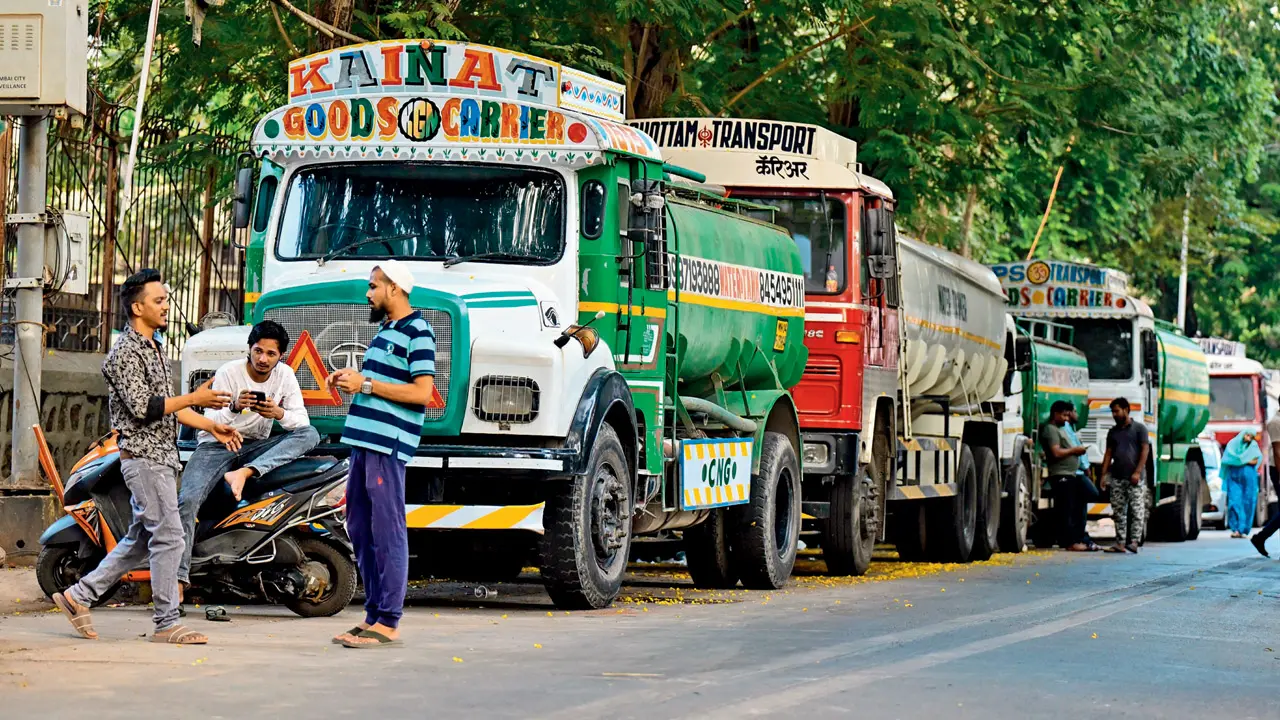
Organizations operating public toilets and restrooms have been directed to maximize the use of tanker water or borewell water wherever possible. Citizens have been advised to use wells, tube wells and borewells for activities such as vehicle washing, gardening, road cleaning and other non-potable applications. The objective is to preserve treated drinking water for essential household consumption.
The BMC has also begun exploring longer-term resilience measures. Municipal Commissioner Ashwini Bhide recently directed departments to revive traditional wells across Mumbai while emphasizing water conservation, groundwater recharge and sustainable water management practices.
Why Mumbai Remains Vulnerable
The current crisis has once again exposed Mumbai’s heavy dependence on monsoon rainfall.
Every year, the city relies on rains in distant catchment areas to replenish reservoirs that supply drinking water throughout the metropolitan region. When monsoon onset is delayed, reservoir levels can decline rapidly because consumption remains steady while inflows disappear.
Urban planners and water experts have long argued that Mumbai needs to diversify its water security strategy. Suggestions frequently include expanding rainwater harvesting, improving groundwater recharge, reducing leakage in distribution networks, increasing wastewater recycling and exploring alternative sources such as desalination. Public discussions around the crisis have also highlighted concerns over rapid urbanisation, growing population pressure, shrinking green spaces and inadequate long-term water planning.
The challenge is particularly significant because Mumbai’s population and economic activity continue to expand, placing additional pressure on infrastructure originally designed for a much smaller city.
What Residents Can Do
With restrictions already in place, authorities are urging residents to adopt water-saving practices immediately.
Conservation efforts include fixing leaking taps and pipes, reducing unnecessary water use, reusing water wherever feasible, limiting vehicle washing, avoiding excessive garden watering and ensuring that treated drinking water is not used for non-essential purposes. These measures can help reduce demand while reservoir levels remain critically low.
Waiting for the Rains
For now, Mumbai’s immediate relief depends largely on the arrival of sustained monsoon rainfall. Until then, the city remains in conservation mode, with officials closely monitoring reservoir levels on a daily basis.
The coming weeks will be crucial. If substantial rainfall reaches the catchment areas soon, reservoir levels could recover quickly. However, if the monsoon delay continues, authorities may be forced to consider even stricter restrictions to ensure that Mumbai’s remaining water stock lasts through the dry spell.
With just around 40 days of water left in storage and reservoirs hovering near historic lows, the crisis serves as a stark reminder of the city’s continuing dependence on seasonal rains—and the urgent need for long-term water security planning.
With inputs from agencies
Image Source: Multiple agencies
© Copyright 2026. All Rights Reserved. Powered by Vygr Media.