 By
By 
In the eternal city of Kashi, where time is believed to dissolve into moksha and history breathes through stone, fire, and faith, the demolition of a portion of Manikarnika Ghat has triggered more than just political outrage. It has reopened an old, unresolved question that India confronts repeatedly but rarely answers with honesty: Can development justify the erasure of cultural memory—and if heritage is lost forever, what exactly are we developing for?
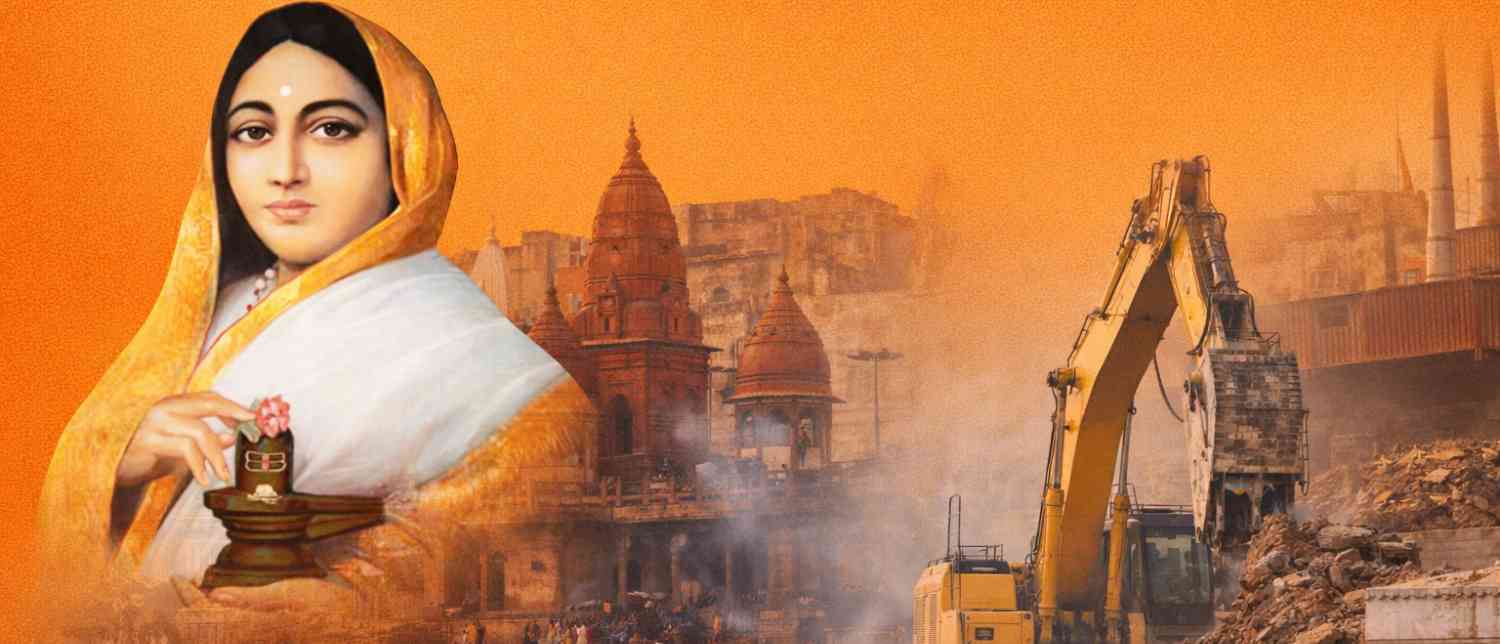
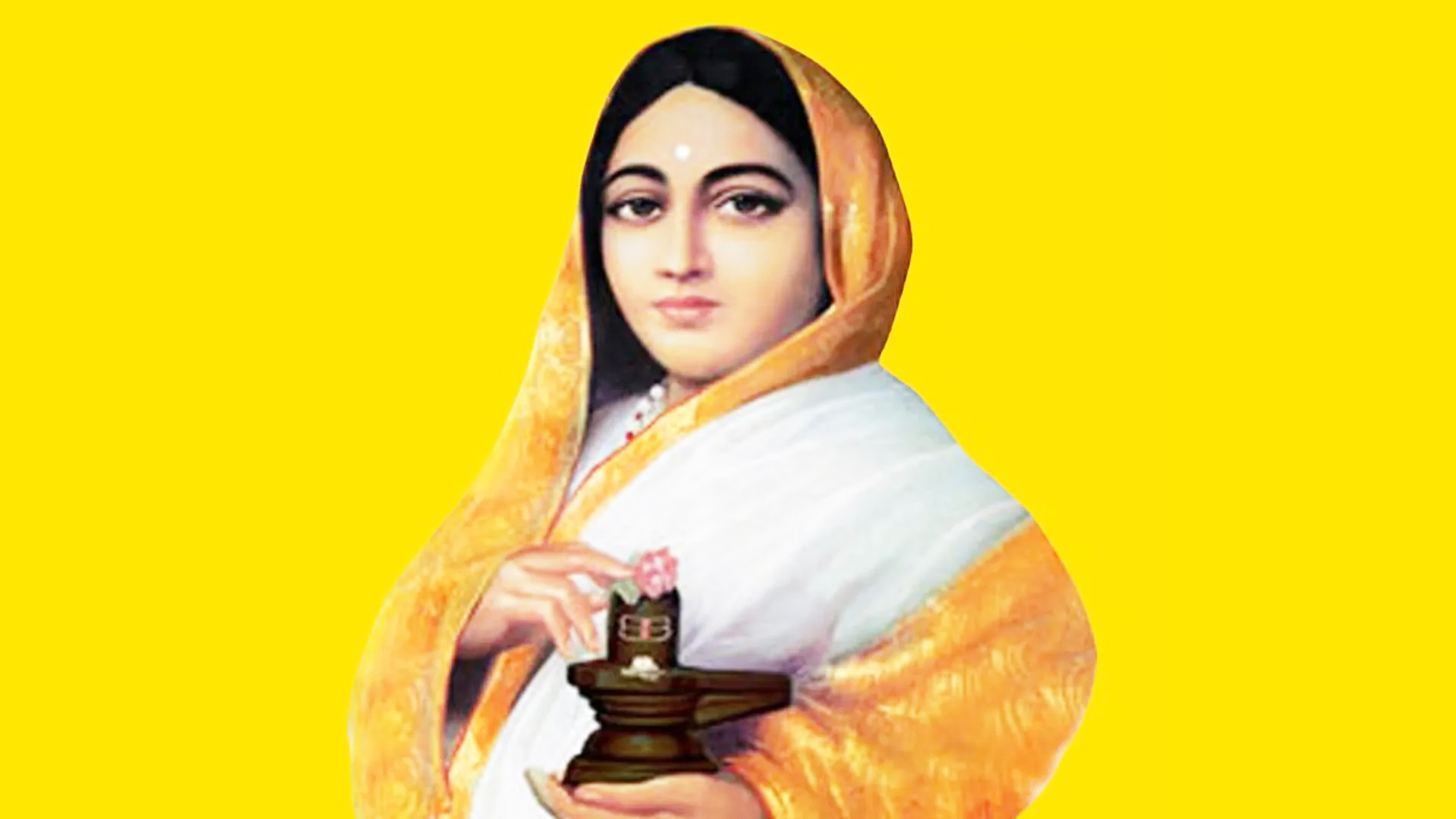
The controversy surrounding Manikarnika Ghat is not merely about a construction project or administrative oversight. It is about the collision of two powerful ideas—modern infrastructure expansion and civilisational continuity. At the centre of this clash stands the legacy of Lokmata Devi Ahilyabai Holkar, a ruler remembered not only for her administrative wisdom but for her unparalleled contribution to India’s spiritual and architectural landscape.
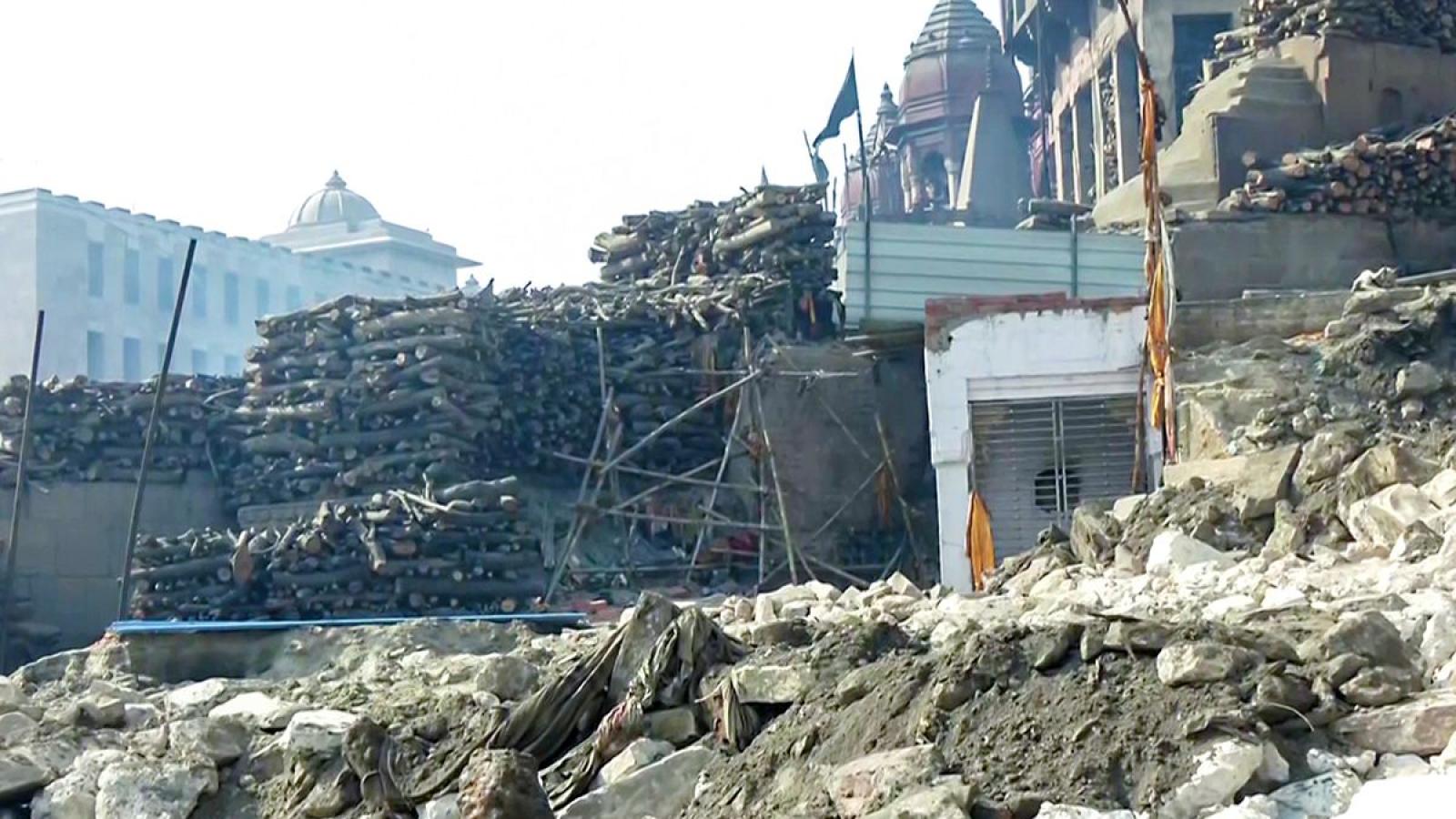
A Ghat Restored by Faith, Reduced to Rubble by Development
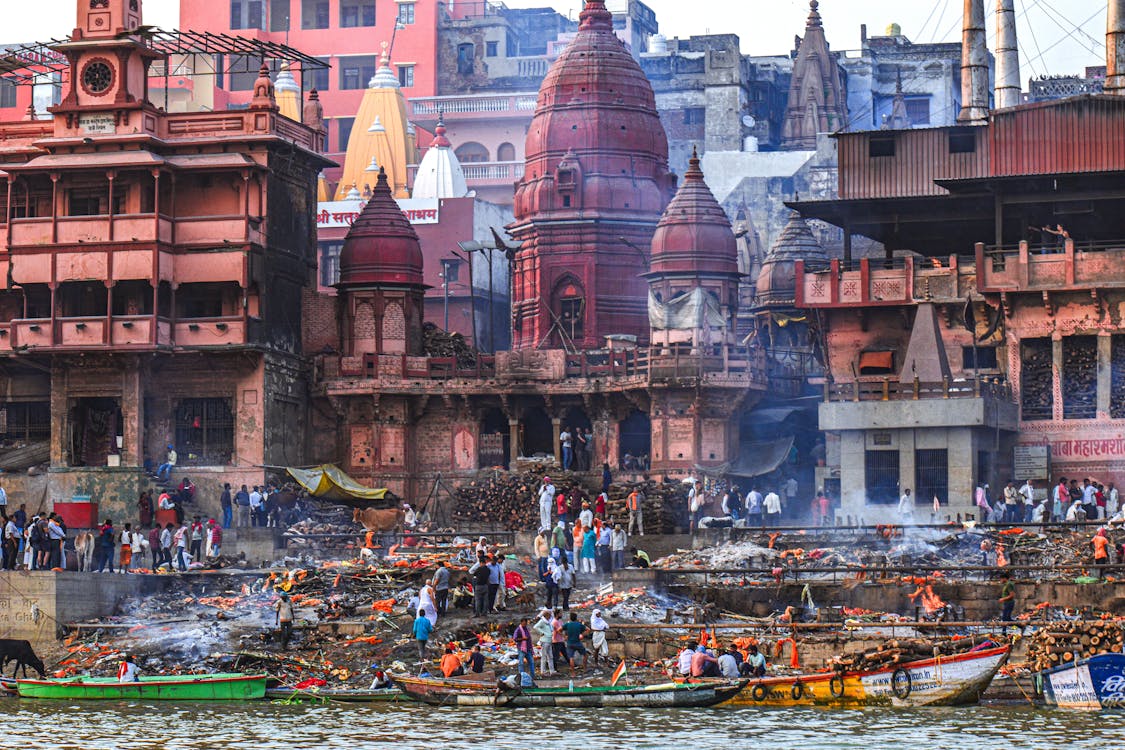
Manikarnika Ghat is not an ordinary riverfront structure. It is one of Kashi’s 84 major ghats, among the most sacred cremation grounds in Hindu belief, where death is not mourned but transformed into liberation. According to mythology, the ghat derives its name from the moment when a jewel—Manikarnika—fell from Goddess Parvati’s ear at this very spot. Cremation here is believed to grant moksha, freedom from the cycle of rebirth.
The ghat was originally constructed in 1771 by Devi Ahilyabai Holkar and was renovated again in 1791 under her direct supervision. Among the hundreds of temples, ghats, dharamshalas, and annakshetras she built or restored across India using her khasgi (private royal property), Manikarnika held special personal significance. It was one of the rare sites where she installed effigies in her own image, depicting herself worshipping the Ganga—an act of humility rather than self-glorification.
It is precisely this section of the ghat—steeped in history, devotion, and identity—that now lies at the heart of the storm.
January 10: Demolition Without Notice
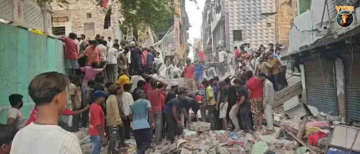
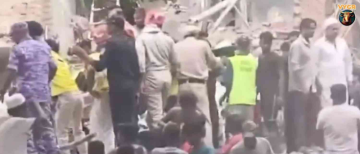
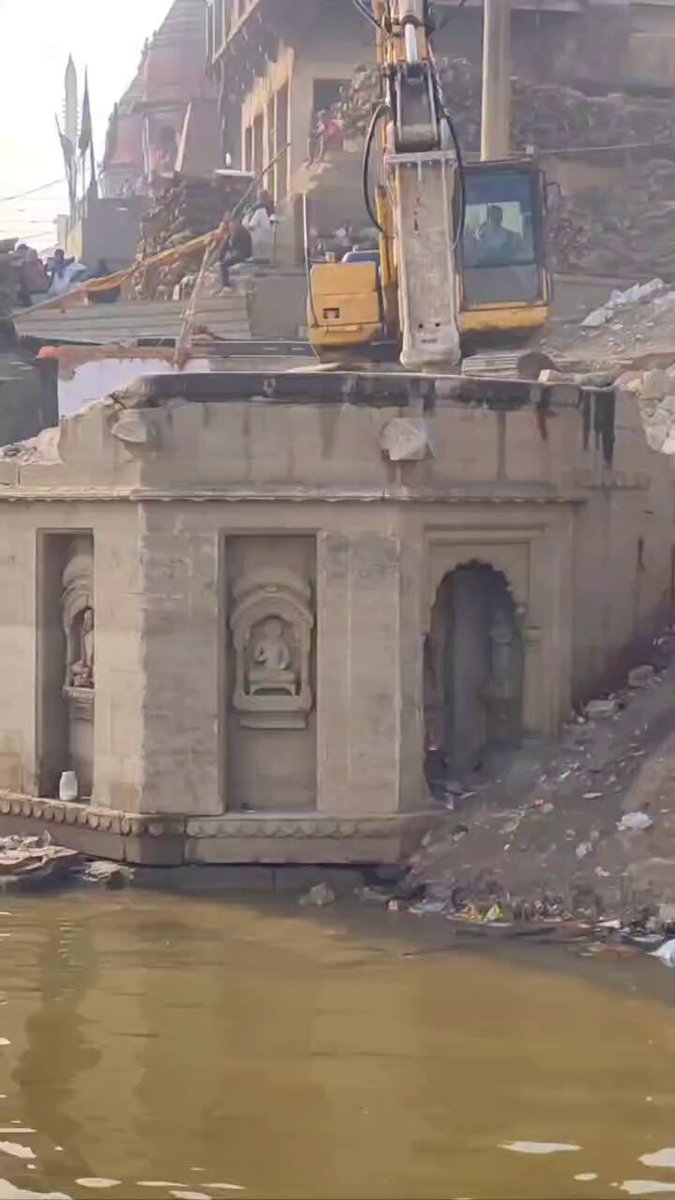
According to the Khasgi Devi Ahilyabai Holkar Charities Trust, which oversees the site and serves as the principal custodian of Ahilyabai Holkar’s legacy, a section of Manikarnika Ghat was demolished on January 10 on the alleged instructions of municipal authorities. The Trust maintains that the demolition was carried out without any prior notice or warning and that the structure was razed within hours.
The Trust described the act as “shocking and outrageous,” accusing authorities of showing complete disregard for the ghat’s historical, cultural, and spiritual importance. Even more distressing, it alleged that sacred idols—including effigies of Devi Ahilyabai Holkar and a Shivling—were damaged or buried under debris during the operation.
The imagery is unsettling: a ruler once honoured as the protector of temples now reduced to fragments beneath construction rubble in the name of progress.
Political Reactions: An ‘Attack’ on Legacy
The incident quickly drew sharp political responses, particularly from Madhya Pradesh, where Ahilyabai Holkar is revered not just as a historical figure but as Lokmata, the moral mother of governance.
Madhya Pradesh Congress Committee president Jitu Patwari described the demolition as a direct assault on Ahilyabai Holkar’s legacy. Writing on social media platform X, he alleged that in Prime Minister Narendra Modi’s own parliamentary constituency, a heritage structure built by Ahilyabai Holkar in the 18th century had been demolished by a government that otherwise seeks votes in the name of culture and Sanatan traditions.
Patwari questioned the contradiction: how can a political establishment celebrate Ahilyabai Holkar symbolically while allowing physical remnants of her work to be dismantled?
The Congress party soon followed up with protests. Former minister Sajjan Singh Verma staged a sit-in at the Ahilyabai Holkar statue site at Rajwada in Indore, condemning the alleged demolition of the ghat, Ahilyabai’s statue, and associated temple structures in Varanasi.
Outrage Beyond Politics: Communities React
What distinguishes this controversy from routine political sparring is the depth of community anger, particularly in Indore and across the Malwa region. Members of the Dhangar, Pal, Baghel, and other communities announced a meeting on January 15 to chart protest strategies.
For them, the timing added insult to injury. The demolition occurred during the concluding phase of celebrations marking Ahilyabai Holkar’s 300th birth anniversary, a year in which the government itself had issued commemorative postage stamps, released memoirs, and unveiled a ₹300 silver coin in her honour.
To many, the demolition felt less like an administrative lapse and more like a betrayal.
Locals Speak: ‘Our Mani Was Taken Without Asking’
On the ground in Kashi, local voices echoed similar anguish. Residents alleged that a 300-year-old Mani (sacred stone structure)—maintained by families for generations—was removed during demolition.
Sanjay Mishra, whose family claims stewardship of the Mani, said the structure contained both an Ahilyabai Holkar statue and a Shivling and was demolished without notice. “Our only demand is that our Mani should be returned to us,” he said.
Another resident, Mayank Pal, warned of larger protests if the broken statue was not reinstalled. He alleged that an ancient idol was damaged but that authorities were unwilling to acknowledge it. Police officials, including DCP, ACP, ADCP, and ADM City, were deployed to manage the situation.
The Project: ₹18 Crore, CSR Funds, and Redevelopment Goals
Administratively, the demolition is part of a ₹18 crore redevelopment project, funded through Corporate Social Responsibility (CSR), aimed at modernising Manikarnika and Harishchandra Ghats. The foundation stone for the project was laid in 2023 by Prime Minister Narendra Modi.
Officials say construction covers approximately 29,350 square metres. Due to the marshy soil along the Ganga, piling has been done to depths of 15–20 metres to ensure flood resistance.
The proposed redevelopment includes:
-
A 25-metre-high chimney to prevent ashes from entering residential areas
-
Covered cremation facilities with five berths
-
18 open cremation platforms
-
Registration rooms, waiting areas, wood storage, waste management systems
-
Sacred water tanks, tonsure areas, and community toilets
Construction materials are to be sourced from Chunar and Jaipur stone.
From a functional standpoint, the administration argues, the upgrade is essential. Millions visit Manikarnika annually, and existing infrastructure struggles with space and sanitation.
The Administration Responds: ‘Nothing Original Will Be Harmed’
District Magistrate Satyendra Kumar has categorically denied allegations of heritage destruction. He stated that the original temples at Manikarnika Ghat would not be harmed and that all idols and artefacts discovered during excavation—including the statue of Ahilyabai Holkar—have been preserved in collaboration with the Sanskrit department.
According to him, some videos circulating online are allegedly AI-generated and misleading. He added that once construction is complete, preserved idols will be reinstalled at the same site. Those spreading misinformation, he warned, could face action.
Yet, for many, reassurance after demolition feels inadequate. Preservation after damage does not erase the damage itself.
Legal Questions That Refuse to Go Away
Beyond sentiment and symbolism, the controversy has raised serious legal concerns. Heritage experts have pointed to potential violations of the Ancient Monuments and Archaeological Sites and Remains (AMASR) Act, 1958, which mandates strict regulation of construction around protected sites.
The Act enforces a 100-metre prohibited zone and a 200-metre regulated zone around monuments, with amendments in 2010 tightening restrictions further. Any intervention at a site like Manikarnika Ghat should, experts argue, have involved formal ASI permissions and heritage impact assessments.
If procedures were bypassed, the issue transcends emotion and enters the realm of administrative accountability.
Why Ahilyabai Holkar Matters—Even Today
Historians stress that Devi Ahilyabai Holkar was not a regional ruler but a pan-Indian cultural force. Senior historian Zafar Ansari called the incident deeply distressing, noting that every structure she commissioned reflected foresight, restraint, and public welfare.
Crucially, her projects were funded not by state revenue but by khasgi wealth, underscoring her personal commitment to preservation. From Kashi to Rameswaram, from Dwarka to Gaya, her architectural imprint stitched together India’s sacred geography.
To damage her work is not to erase a statue—it is to weaken a civilisational thread.
Development Without Memory Is Just Construction
India undeniably needs better infrastructure, cleaner public spaces, and safer facilities—even at sacred sites. But development that ignores history rather than working with it risks becoming hollow.
The Manikarnika Ghat controversy is not a rejection of progress. It is a plea for thoughtful progress, where bulldozers pause for historians, and blueprints consult memory.
If development demands the burial of heritage—literally and metaphorically—then the nation must ask itself: What remains once the past is gone?
Because when history is reduced to debris, no amount of concrete can rebuild its soul.
With inputs from agencies
Image Source: Multiple agencies
© Copyright 2025. All Rights Reserved. Powered by Vygr Media.