
 By
By 
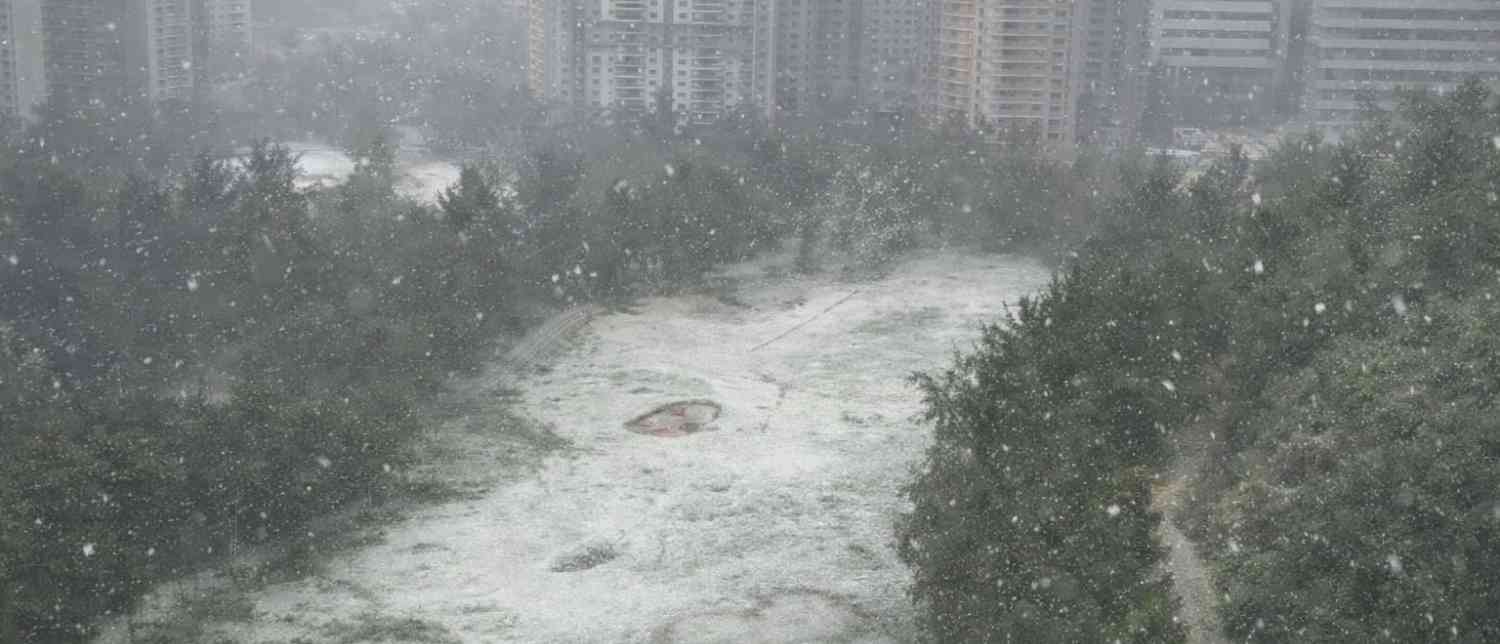
Pune woke up to scenes it rarely witnesses—streets blanketed in white, rooftops coated in ice, and residents scrambling to make sense of an abrupt shift from scorching heat to chilling hailstorms. What began as an unseasonal weather disturbance quickly turned into a citywide spectacle, drawing comparisons to Kashmir and even Switzerland, while raising pressing questions about changing climate patterns.
Over the past few days, multiple parts of Pune, including Pimpri-Chinchwad, Baner, Sinhagad, and Hinjewadi, were battered by heavy rainfall accompanied by intense hailstorms. The sudden downpour brought temporary relief from the intense pre-summer heat but left behind a trail of disruption, damage, and disbelief.
A City Transformed Overnight
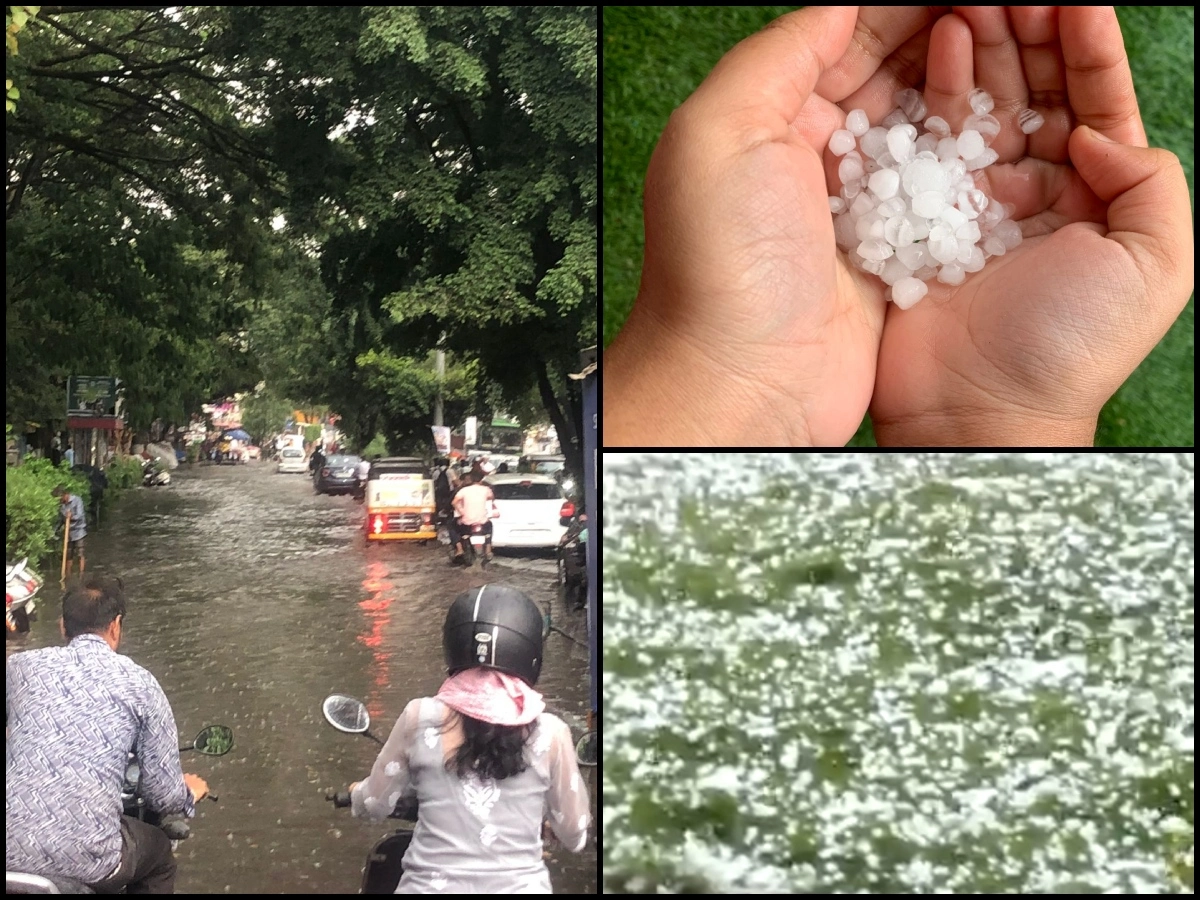
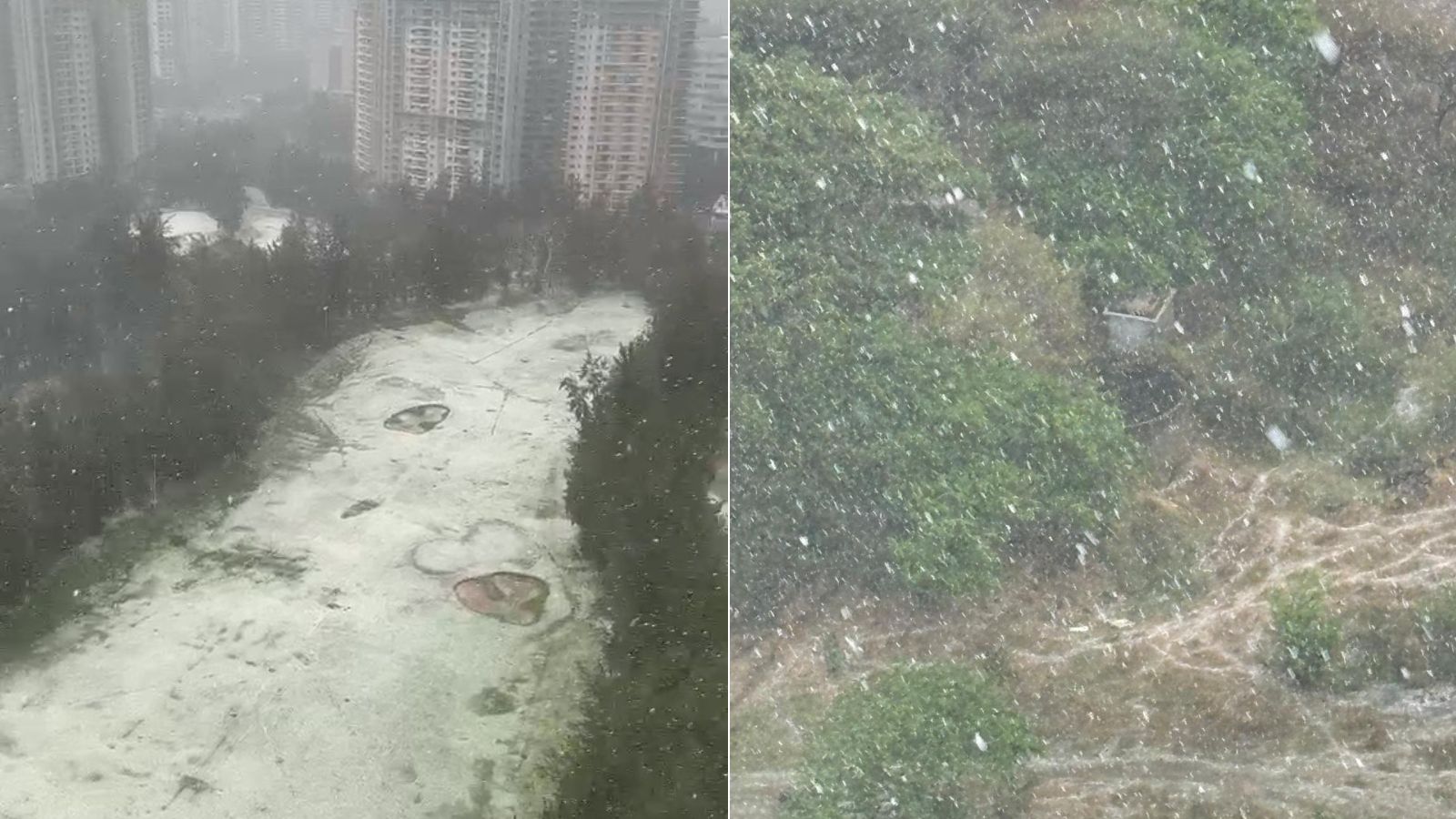
Visuals emerging from Hinjewadi and surrounding areas appeared almost surreal. Thick layers of hailstones accumulated on roads, footpaths, and parked vehicles, creating a white sheet that resembled snowfall. Social media platforms were flooded with videos and images capturing the rare phenomenon, with many users questioning whether the visuals were from Pune or from snow-clad regions like Kashmir.
Residents described the scenes as unprecedented. In several neighborhoods, hailstones piled up so densely that they mimicked freshly fallen snow. Children stepped out to play in what felt like a winter landscape, while adults captured the moment in awe.
The comparisons to Switzerland were not merely hyperbolic. The uniform spread of hail across wide stretches of the city gave it an alpine appearance, prompting viral reactions online. For many Punekars, it was a once-in-a-lifetime experience.
Sudden Shift From Scorching Heat
Just days before the storm, Pune had been grappling with soaring temperatures typical of late March. The mercury had climbed steadily, making the abrupt transition to heavy rain and hail all the more striking.
According to weather observers, such sharp contrasts—moving from heatwave-like conditions to intense thunderstorms—highlight the increasing volatility in local weather systems. The storm not only cooled the city temporarily but also disrupted daily life, affecting traffic, outdoor activities, and local businesses.
In areas like Baner and Pimpri-Chinchwad, heavy rain combined with hail led to waterlogging and reduced visibility, slowing down vehicular movement. Residents reported sudden gusts of wind, loud thunder, and rapid temperature drops within a short span of time.
Hinjawadi, Pune or Kashmir/Switzerland? 🧊❄️ pic.twitter.com/c9THGBh6X8— Vedvrat (@I_am_Vedvrat) March 30, 2026
What Caused the Unseasonal Hailstorm?
Meteorological experts attribute the unusual weather to a combination of atmospheric conditions. A western disturbance—a weather system that typically affects northern India—extended its influence further south than usual. This system interacted with moisture-laden winds and rising temperatures, creating instability in the atmosphere.
The result was the formation of cumulonimbus clouds, known for producing thunderstorms, heavy rainfall, and hail. The intense heat on the ground played a crucial role, as it caused rapid upward movement of warm air, which then cooled and condensed at higher altitudes.
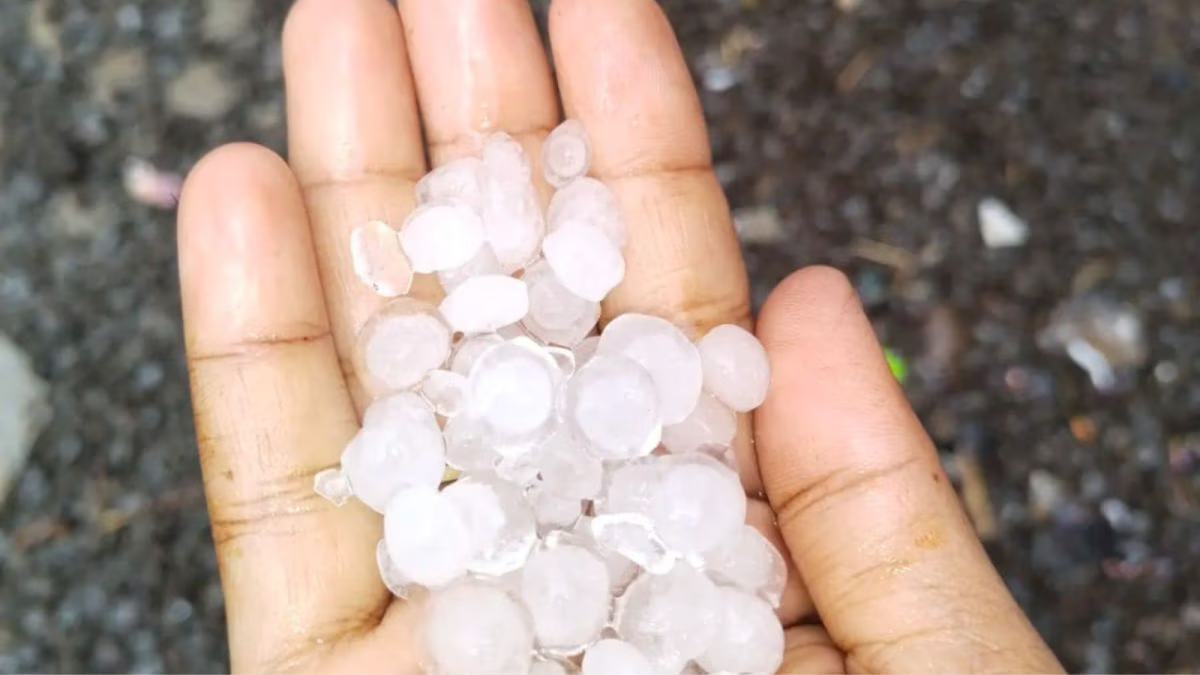
This process led to the formation of hailstones, which grew larger as they cycled within storm clouds before eventually falling to the ground. The widespread nature of the hailstorm suggests a strong and well-developed storm system.
Experts note that while such events are not entirely unprecedented, their frequency and intensity appear to be increasing. Changing climate patterns, rising global temperatures, and shifting atmospheric dynamics are likely contributing factors.
Widespread Impact Across the City
The storm affected multiple parts of Pune simultaneously, with varying degrees of intensity. In Sinhagad and nearby regions, residents reported strong winds and heavy rainfall along with hail. In Pimpri-Chinchwad, the storm caused temporary disruptions to traffic and local infrastructure.
Hinjewadi, a major IT hub, witnessed some of the most dramatic scenes, with hailstones covering large stretches of land. Office-goers and tech employees found themselves stepping out into what looked like a winter wonderland, an unusual sight for a city known for its moderate climate.
The sudden weather event also raised concerns among farmers and agricultural stakeholders in nearby rural areas. Hailstorms can cause significant damage to crops, especially during sensitive growth phases, potentially leading to economic losses.
Social Media Frenzy and Public Reaction
As visuals of the hailstorm spread online, they quickly went viral. Users across platforms expressed disbelief, with many initially assuming the footage was from northern hill stations. Captions comparing Pune to Kashmir or Switzerland became common, reflecting the collective astonishment.
The internet buzz added another layer to the event, turning a local weather phenomenon into a national talking point. Hashtags related to Pune hailstorm trended briefly, with people sharing personal experiences, videos, and humorous takes on the unexpected “snowfall.”
Despite the excitement, some residents also voiced concerns about the broader implications of such extreme weather events. The sudden shift in conditions served as a reminder of the unpredictability of climate patterns.
A Pattern of Changing Weather?
Meteorologists emphasize that while isolated hailstorms can occur during pre-monsoon months, the intensity and scale observed in Pune are noteworthy. The combination of high temperatures, moisture influx, and atmospheric disturbances created a perfect storm scenario.
There is growing evidence to suggest that climate variability is leading to more frequent extreme weather events, including unseasonal rainfall and hailstorms. Urban areas like Pune, which are already dealing with rapid development and changing land-use patterns, may be particularly vulnerable.
The recent event underscores the need for improved forecasting, better urban planning, and increased awareness among residents. Sudden weather changes can have cascading effects, from traffic disruptions to infrastructure strain and agricultural damage.
Relief and Risks
While the hailstorm brought temporary relief from the heat, it also highlighted the risks associated with such abrupt weather changes. The cooling effect was short-lived, and temperatures are expected to rise again in the coming days.
For many residents, the event was a mix of wonder and worry. On one hand, the rare visuals offered a moment of joy and curiosity. On the other, they raised questions about what lies ahead in terms of weather stability and climate resilience.
Looking Ahead
As Pune recovers from the unexpected hailstorm, experts are closely monitoring weather patterns to assess the likelihood of similar events. The interplay of western disturbances, local heat conditions, and moisture levels will continue to influence short-term forecasts.
For now, the city remains abuzz with memories of its brief transformation into a snowy landscape—a phenomenon that blurred geographical boundaries and challenged expectations.
What remains clear is that such events are no longer isolated anomalies. They are part of a broader narrative of changing climate dynamics, one that cities like Pune must adapt to in the years to come.
The hailstorm may have melted away within hours, but its impact—both visual and psychological—will linger far longer in the minds of those who witnessed it.
With inputs from agencies
Image Source: Multiple agencies
© Copyright 2025. All Rights Reserved. Powered by Vygr Media.