 By
By 
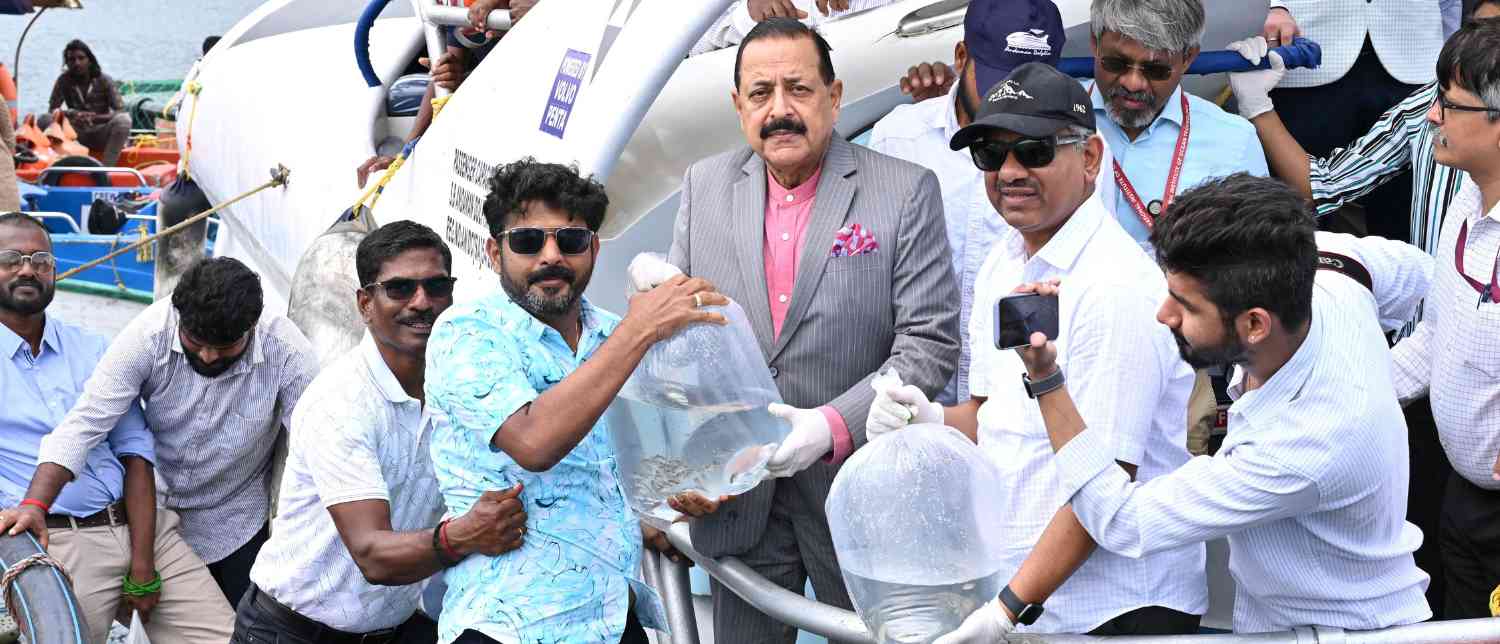
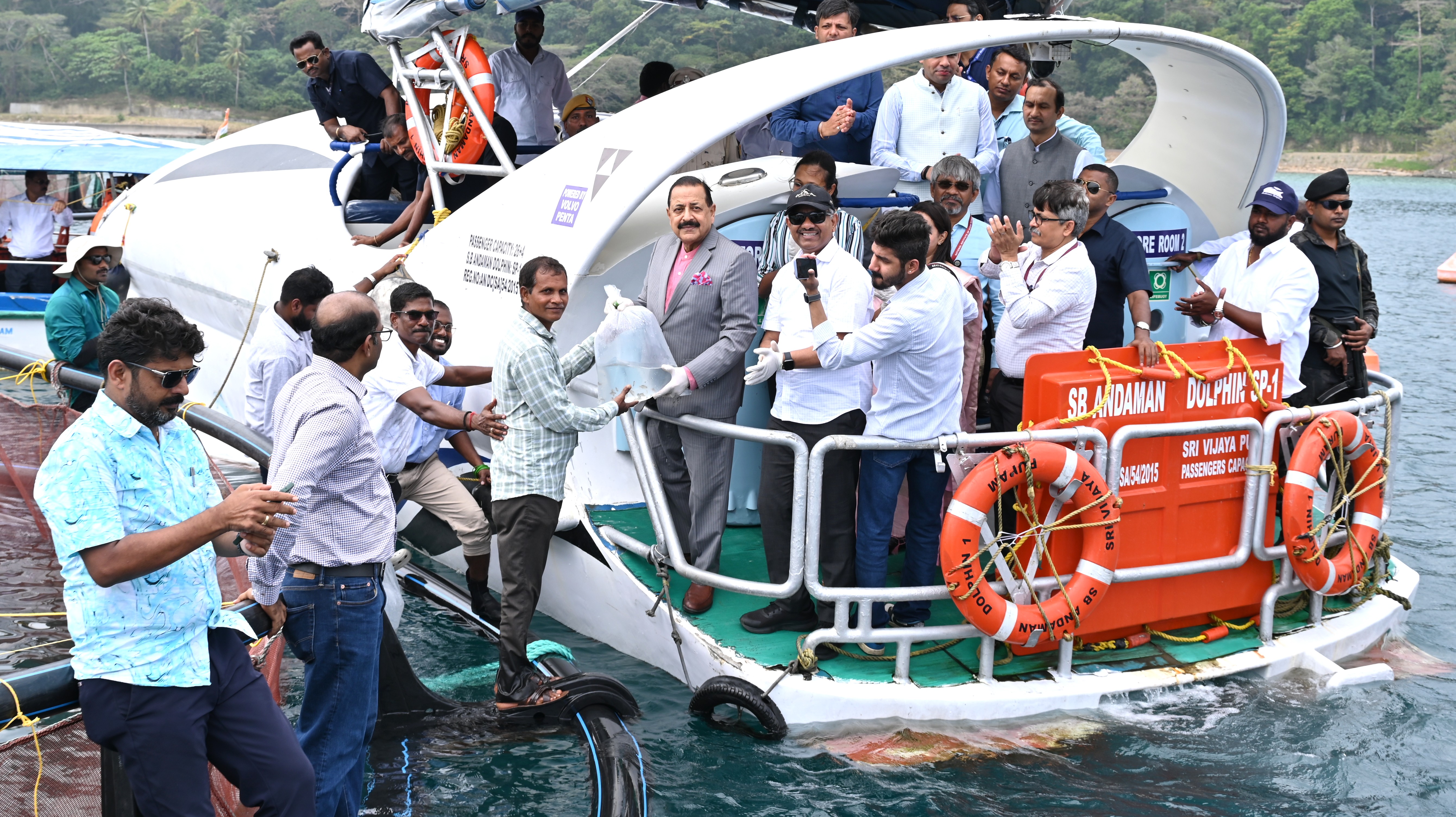
In a landmark development for India’s maritime and coastal economy, Union Minister of State (Independent Charge) for Science & Technology and Earth Sciences, Dr Jitendra Singh, on January 18, 2026, formally launched India’s first-ever open-sea marine fish farming project in the Andaman Sea. The project was inaugurated during the Minister’s on-site field visit to North Bay, Sri Vijaya Puram, underscoring the government’s intent to take advanced science and technology directly to the ocean and into the lives of fishing communities.
Describing the initiative as a historic milestone, Dr Jitendra Singh said the launch represents one of the first major steps towards realising India’s Blue Economy, a vision repeatedly emphasised by Prime Minister Narendra Modi. The Minister highlighted that the project symbolises a broader national shift—one that recognises the immense, long-neglected economic power of India’s oceans and seeks to integrate it into the country’s long-term growth strategy.
Unlocking India’s Vast and Underutilised Ocean Wealth
Addressing officials, scientists, and members of local fishing communities at North Bay, Dr Jitendra Singh stated that India’s oceans possess economic potential comparable to the nation’s Himalayan and mainland resources. However, he noted that this potential remained largely untapped for nearly seven decades after Independence.
“For almost seventy years, India did not sufficiently explore or utilise its maritime wealth,” the Minister said. “It is only in the last decade, since 2014, that there has been a fundamental shift in national thinking. Today, India recognises that its maritime domain holds wealth and opportunity equal to any other natural resource.”
Dr Singh stressed that India’s long coastline and island territories offer a heterogeneous and exclusive marine environment, with the western, southern, and eastern seaboards each possessing distinct characteristics. These regional differences, he said, provide opportunities for diverse forms of marine-based economic activity, ranging from fisheries and aquaculture to biotechnology and renewable ocean energy.
India Begins Cage-Based Marine Fish Farming in Open Seas
The newly launched project marks India’s formal entry into open-sea, cage-based marine fish farming, a method widely used in advanced maritime nations but previously unexplored in Indian open waters at this scale.
The initiative is being implemented through a strategic collaboration involving:
-
The Ministry of Earth Sciences, Government of India
-
The National Institute of Ocean Technology (NIOT), the Ministry’s technical arm
-
The Union Territory Administration of Andaman and Nicobar Islands
At the heart of the project is NIOT’s advanced open-sea cage technology, specifically designed to withstand natural oceanic conditions, including strong currents and varying water depths. Unlike near-shore aquaculture, open-sea fish farming allows for better water circulation, healthier fish stocks, and sustainable production practices.
The pilot project focuses on the open-sea cultivation of marine finfish and seaweed, integrating cutting-edge marine science with livelihood generation for coastal and island communities.
Two Livelihood-Focused Interventions for Fishing Communities
During the field visit, Dr Jitendra Singh personally flagged off two major livelihood-oriented interventions, aimed at directly benefiting local fishermen and self-help groups.
-
Marine Flora Component: Deep-Water Seaweed Cultivation
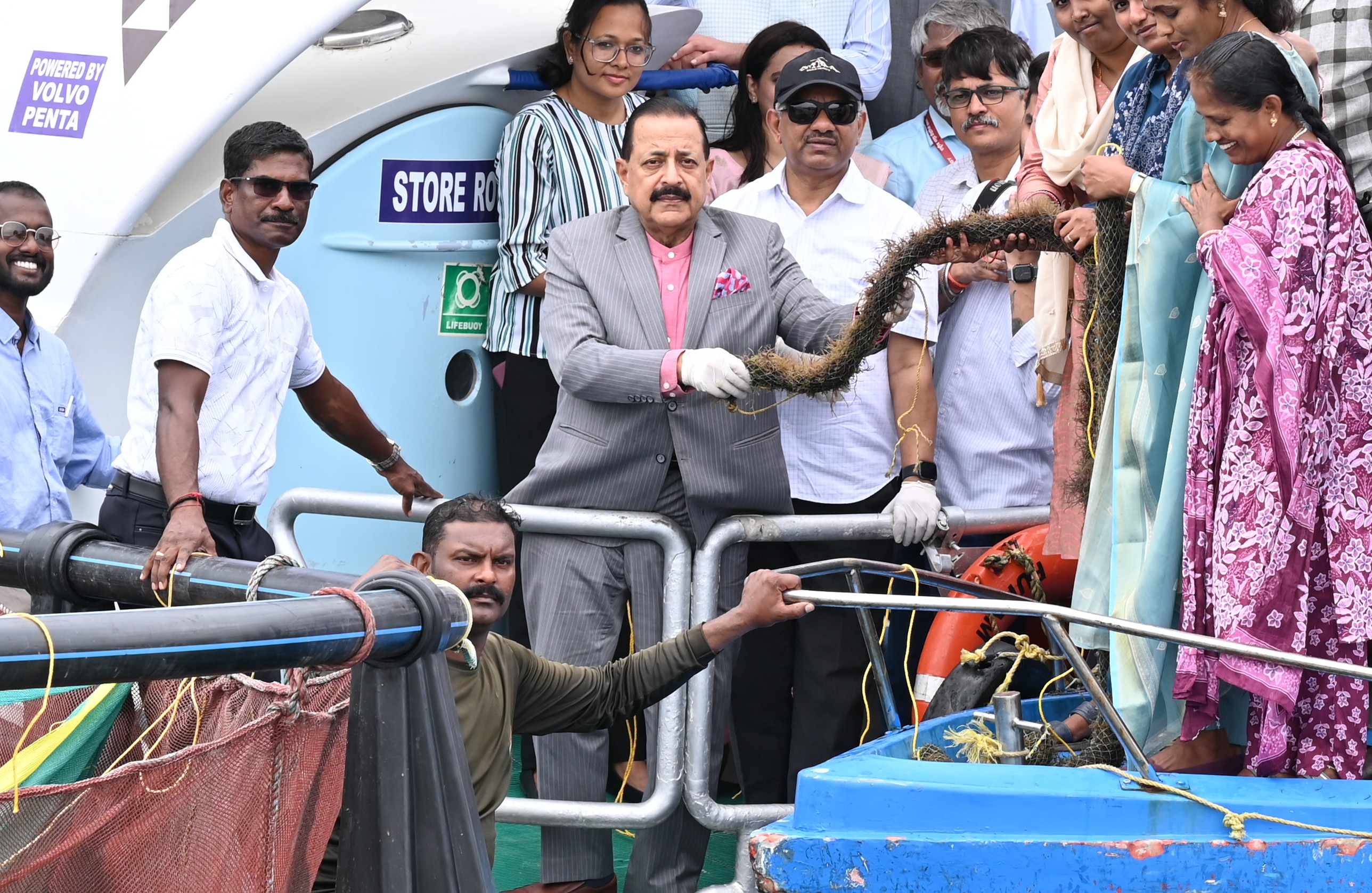
Under the marine flora segment, the Minister handed over seaweed seeds to members of local fishing communities. This initiative is designed to promote deep-water seaweed cultivation in the open sea, moving beyond traditional shallow-water farming methods.
Seaweed cultivation is increasingly recognised for its economic and ecological value, with applications in food processing, pharmaceuticals, cosmetics, fertilisers, and biofuels. By introducing scientific methods of deep-sea cultivation, the project aims to diversify income sources for fishermen while ensuring environmental sustainability.
-
Marine Fauna Component: Finfish Cage Farming
Under the marine fauna component, finfish seeds were distributed for cage-based cultivation using NIOT-developed open-sea cages. These cages are engineered to operate efficiently in open ocean environments, enabling fish farming in areas previously considered unsuitable for aquaculture.
This intervention is expected to enhance fish production, reduce pressure on wild fish stocks, and create new livelihood opportunities for coastal and island communities.
From Government-Led Pilots to Public–Private Expansion
Dr Jitendra Singh noted that while the current initiative is being undertaken through government-led collaboration, it is deliberately designed as a pilot project. The scientific data, operational experience, and feasibility assessments generated through this effort will form the foundation for scaling up open-sea aquaculture across India.
He said the government envisions future expansion through public–private participation (PPP) models, which could accelerate deployment, attract investment, and strengthen India’s emerging Blue Economy ecosystem.
“Once feasibility is established, private participation can help scale these initiatives rapidly, creating more jobs and enhancing economic output from our oceans,” the Minister explained.
Taking Science and Technology Directly to the Sea
The launch at North Bay reflects the Government of India’s broader approach of taking science and technology out of laboratories and into the field. By demonstrating open-sea fish farming in real ocean conditions, the initiative ensures that coastal and island communities become active partners, rather than passive beneficiaries, in India’s ocean-led development.
Officials emphasised that empowering local communities with scientific tools and training is key to ensuring the long-term sustainability of marine resources.
Visit to Mahatma Gandhi Marine National Park Highlights Conservation Balance
As part of his Andaman visit, Dr Jitendra Singh also toured the Mahatma Gandhi Marine National Park (MGMNP) near Wandoor, one of India’s earliest marine parks, established in 1983.
Spread across 15 islands and accessed through the Wandoor Jetty, the park is home to renowned protected islands such as Jolly Buoy and Red Skin. During the visit, the Minister observed the park’s rich and self-sustaining marine ecosystem, which includes vibrant coral reefs, dense mangroves, and diverse marine life such as turtles and a wide variety of fish species.
The visit underscored the government’s commitment to maintaining a delicate balance between marine conservation and economic utilisation, ensuring that development initiatives do not compromise ecological integrity.
A Turning Point for India’s Blue Economy Vision
The launch of India’s first open-sea marine fish farming project represents a turning point in the country’s maritime policy. By recognising the oceans as a critical economic asset—on par with land-based resources—the Modi government is redefining how India approaches growth, sustainability, and livelihoods.
Dr Jitendra Singh’s remarks repeatedly emphasised that India’s oceans are no longer to be viewed as peripheral spaces but as central drivers of economic transformation. With advanced technology, scientific planning, and community participation, the Andaman Sea project is poised to serve as a model for similar initiatives across India’s vast coastline.
As India steps confidently into the realm of open-sea aquaculture, the project at North Bay stands as a powerful symbol of a nation finally embracing the true scale and promise of its maritime wealth—after nearly seventy years of neglect—and charting a future firmly anchored in the Blue Economy.
With inputs from agencies
Image Source: Multiple agencies
© Copyright 2025. All Rights Reserved. Powered by Vygr Media.