 By
By 
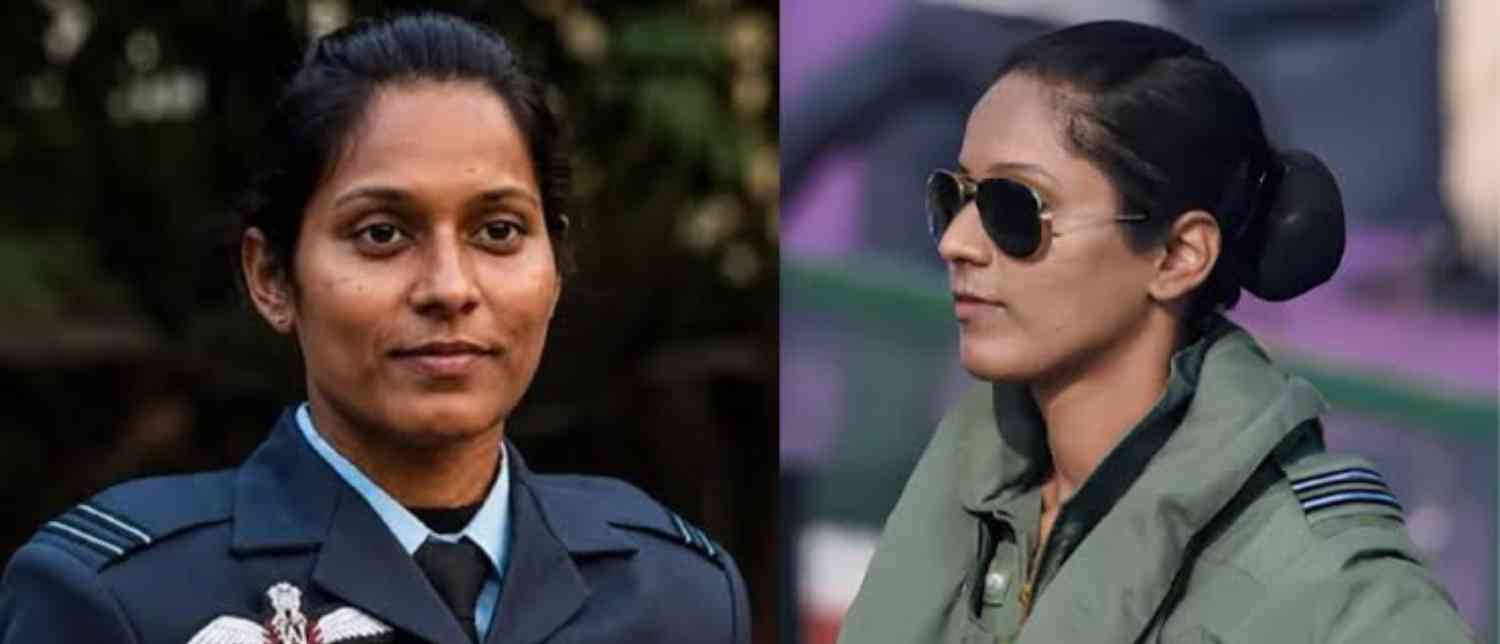
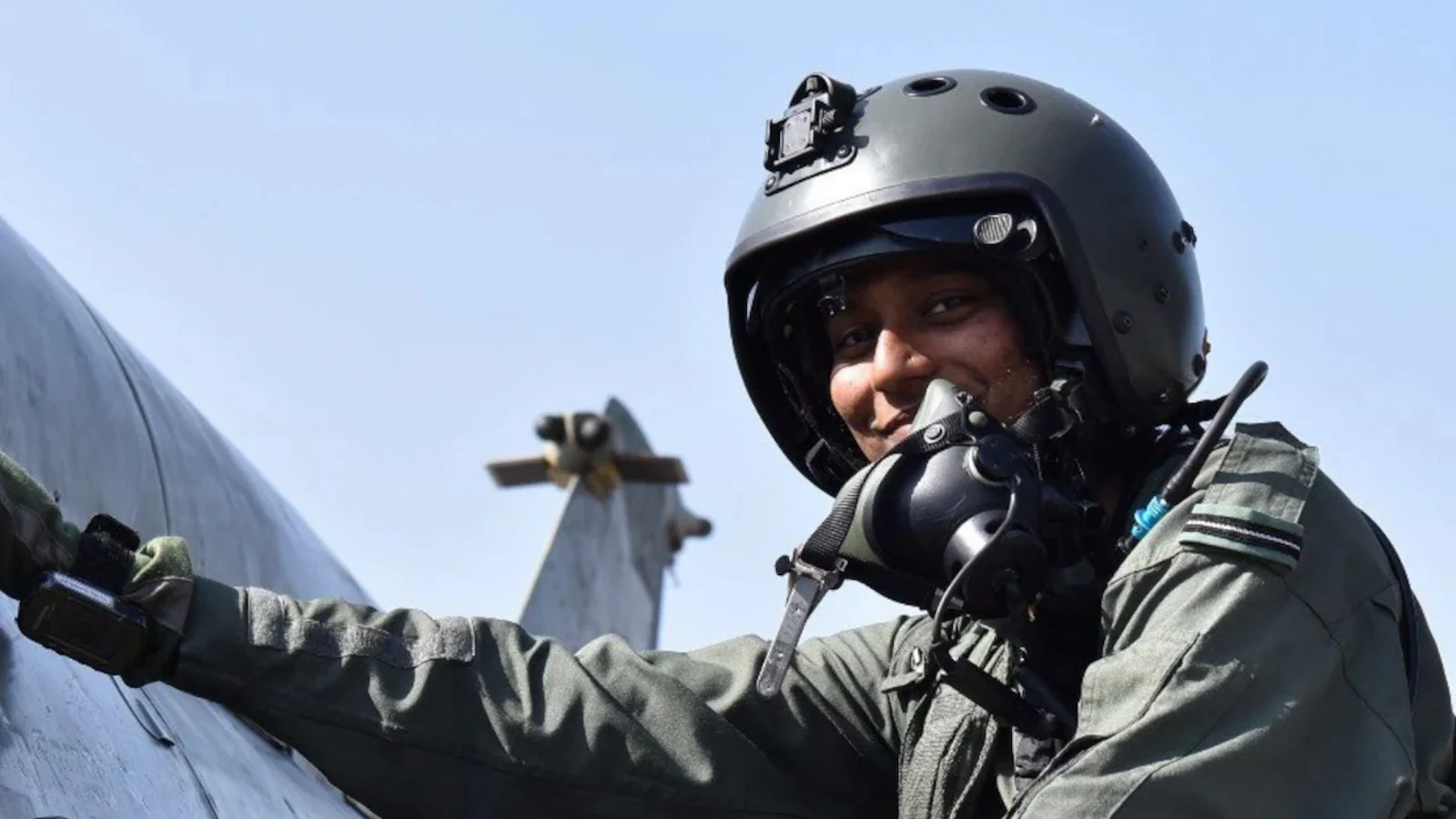
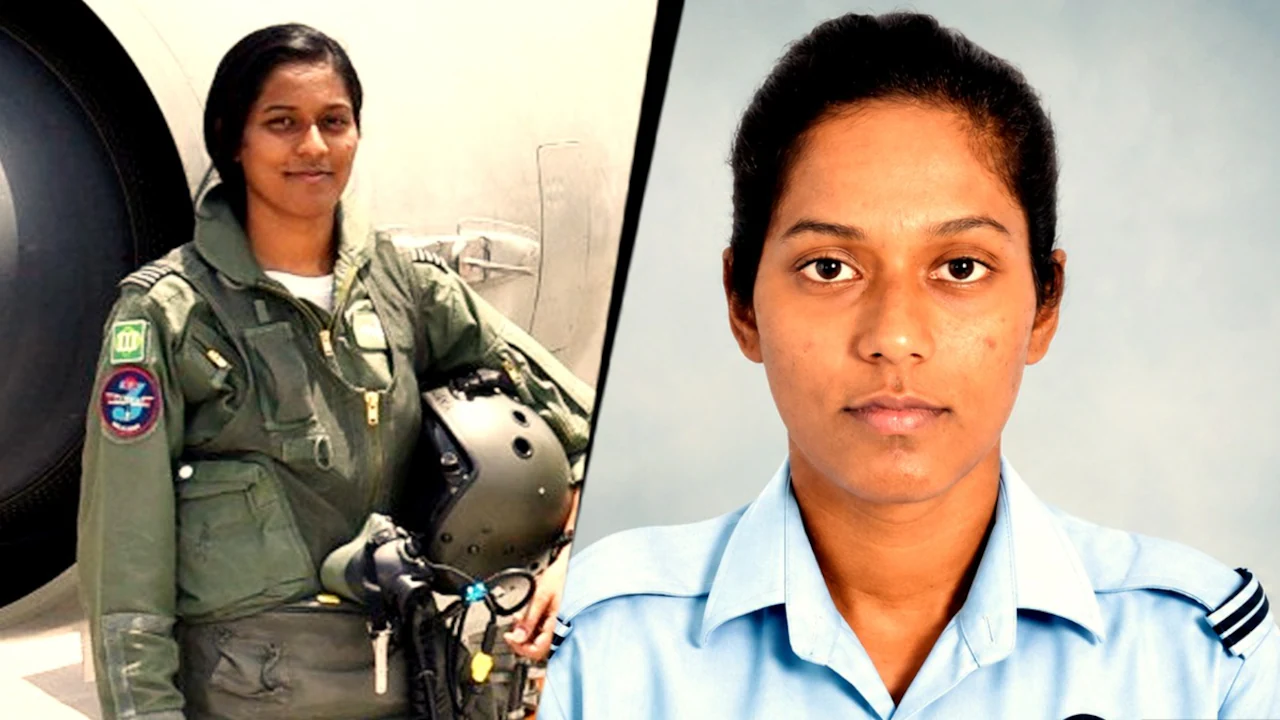
Squadron Leader Bhawana Kanth has added another remarkable chapter to her career in the Indian Air Force (IAF), becoming the first woman fighter pilot to successfully complete the elite Fighter Combat Leader (FCL) course at the Tactics and Air Combat Development Establishment (TACDE) in Gwalior.
The achievement places Kanth among a highly select group of IAF fighter pilots trained to handle complex air combat situations, plan demanding missions and lead operations. The approximately 20-week programme is widely regarded as one of the Indian Air Force’s most challenging advanced combat courses and is often compared with the US Navy’s famed “Top Gun” programme.
For Kanth, however, the latest distinction is not an isolated achievement. It is the latest in a series of milestones that have marked her journey since she became one of India’s first three women fighter pilots in 2016.
Who is Bhawana Kanth?
Born in Darbhanga, Bihar, and raised in the Barauni area of Begusarai district, Bhawana Kanth grew up with a fascination for aviation and a desire to fly. She pursued engineering at BMS College of Engineering in Bengaluru, specialising in Medical Electronics. Before entering the armed forces, she also worked as a software engineer.
Her childhood ambition eventually took her towards the Indian Air Force. In June 2016, Kanth, along with Avani Chaturvedi and Mohana Singh, became part of the first batch of women commissioned into the IAF’s fighter stream. Their induction came after the government opened fighter aviation to women on an experimental basis, marking a major change in the country’s military aviation landscape.
Kanth had earlier described flying as a childhood dream and said that when the opportunity arrived, she did not hesitate to take it. That decision would eventually lead her from the training cockpit to some of the IAF’s most demanding operational and tactical assignments.
From MiG-21 to Su-30MKI
Kanth’s progression through the fighter stream involved several demanding stages of training. After completing her initial flying training, she moved through the Kiran Intermediate Jet Trainer and Hawk advanced jet trainer before entering the fighter squadron.
She joined a fighter squadron in November 2017 and achieved another milestone in March 2018, when she completed her first solo flight on the MiG-21 Bison. The aircraft, known for its demanding flying characteristics, represented a significant step in her operational career.
Her career then progressed to the Sukhoi Su-30MKI, one of the Indian Air Force’s principal multirole fighter aircraft. The transition reflected her growing operational experience and placed her on a path towards increasingly complex combat responsibilities.
In 2019, Kanth achieved another first when she became the first Indian woman fighter pilot qualified to undertake daytime combat missions after completing the required operational syllabus on the MiG-21 Bison. The milestone was significant not simply because it was another “first”, but because it demonstrated her ability to meet the same operational requirements expected of fighter pilots in a demanding combat environment.
A career filled with historic firsts
Kanth’s latest accomplishment follows several other landmark achievements.
In 2021, she became the first woman fighter pilot to participate in the Republic Day Parade and flypast, bringing her journey as a pioneering combat aviator into the national spotlight. India Today also notes that she later participated in the Republic Day flypast in 2024.
Her contribution to military aviation was recognised in 2020 when she received the Nari Shakti Puraskar, one of India’s prominent national honours recognising women’s achievements.
Kanth has also represented India on an international defence platform. In 2024, she was part of a tri-service delegation of women officers at the World Defence Show in Riyadh, where she spoke about expanding opportunities for women in defence, particularly in leadership and command positions.
These milestones illustrate the trajectory of her career: from being among the first women permitted to enter India's fighter stream to becoming an officer trained to lead sophisticated combat missions.
What makes the Fighter Combat Leader course so important?
Kanth’s “Top Gun” designation is not merely a media nickname. Her achievement stems from completing the Fighter Combat Leader course at TACDE, an institution that occupies a particularly important position within the IAF’s operational training structure.
Based in Gwalior, TACDE was established in the early 1970s and has evolved into the Air Force’s premier centre for advanced tactical training. Its responsibilities extend beyond training individual pilots. The establishment develops tactical procedures, prepares operational doctrines and standard operating procedures, and evaluates aircraft, radar systems and weapons before they are integrated into service.
The FCL course is designed for experienced fighter pilots who have already demonstrated a high level of operational competence. Its training covers areas such as advanced air combat tactics, mission planning, air-to-air and air-to-ground operations, weapons employment, electronic warfare and tactical leadership.
The significance of the course lies in the transition it represents. A fighter pilot is trained to fly and operate an aircraft effectively; a Fighter Combat Leader is expected to go further, bringing tactical judgement and leadership into complex combat scenarios.
According to the reports, only a very small proportion of IAF pilots are selected for the programme, with the five-month course described as being limited to roughly one in 100 pilots in some accounts.
That makes Kanth’s achievement noteworthy even beyond its gender dimension. She has not simply become the first woman to complete the course; she has entered an elite professional category within the IAF.
A changing role for women in combat aviation
Kanth’s achievement also comes against the backdrop of a broader expansion of women’s roles in the Indian armed forces.
The 2016 induction of Kanth, Avani Chaturvedi and Mohana Singh was an important starting point for women in India's fighter stream. Since then, women officers have continued to reach new positions in combat aviation, instruction and leadership.
Recent milestones include Squadron Leader Shivangi Singh becoming India's first woman Rafale pilot and later earning a Qualified Flying Instructor badge. Squadron Leader Saanya also became the first woman IAF officer to earn the Category-A Qualified Flying Instructor qualification.
These developments indicate that the conversation around women in military aviation is gradually shifting. The question is increasingly less about whether women can enter traditionally male-dominated combat roles and more about how far they can progress within them.
Kanth’s career offers one answer.
From a childhood dream to an elite combat leadership role
There is a natural tendency to view historic military achievements through the lens of a single “first”. But Kanth’s journey is more compelling when seen as a progression rather than a collection of headlines.
She entered the IAF at a time when women were only beginning to enter the fighter stream. She learned to fly demanding fighter aircraft, qualified for operational missions, moved on to the Su-30MKI, participated in the Republic Day flypast and earned national recognition.
Now, by completing the Fighter Combat Leader course, she has moved into a specialised sphere focused not only on flying but also on tactical decision-making and combat leadership.
Her story therefore represents two forms of progress at once: an individual pilot advancing through one of the world's most demanding military professions, and an institution gradually expanding the boundaries of who can occupy its most challenging operational roles.
For the Indian Air Force, Bhawana Kanth’s latest milestone is another indication that professional excellence and operational capability are increasingly becoming the defining measures of opportunity. For the generation watching her journey, the message is perhaps even simpler: the cockpit that once seemed out of reach is now only the beginning.
With input from agencies
Image Source: Multiple agencies
© Copyright 2026. All Rights Reserved. Powered by Vygr Media.