 By

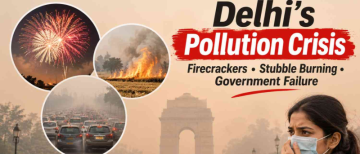
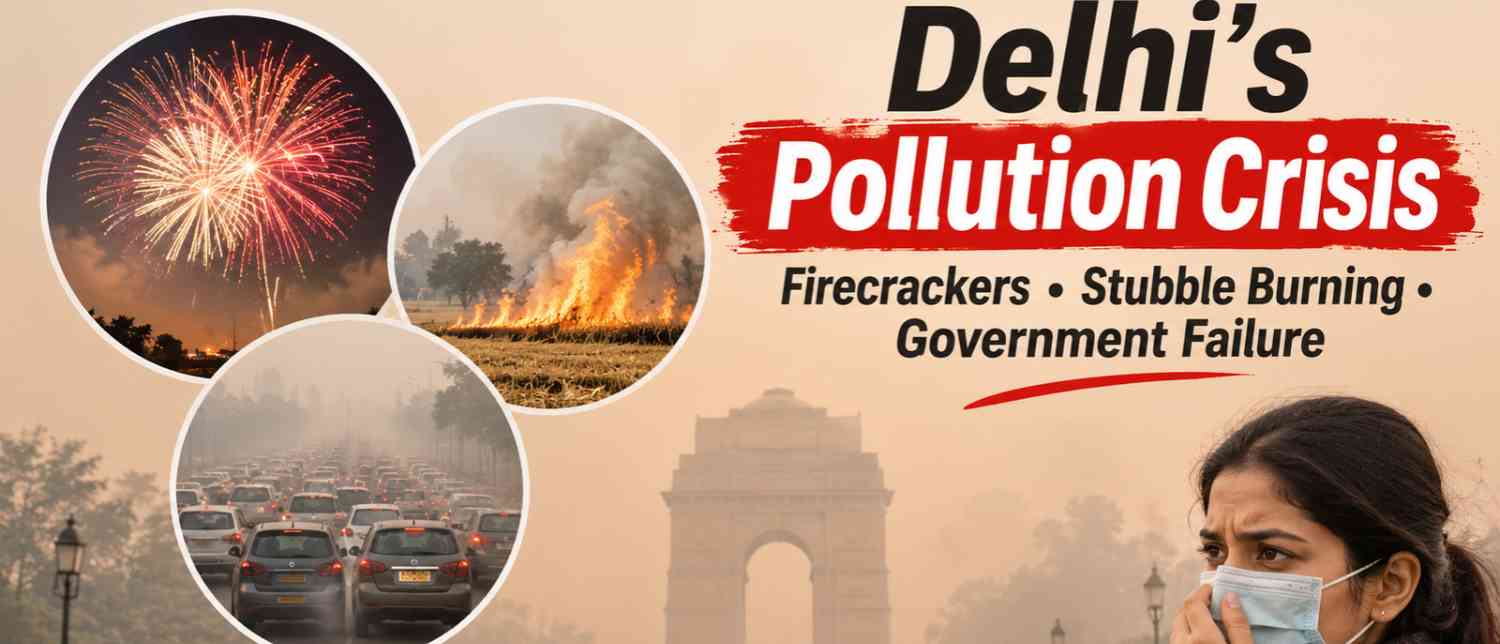
Delhi's air pollution crisis has become an annual ritual. Every winter, the national capital disappears beneath a blanket of toxic smog. Air Quality Index (AQI) readings climb into hazardous categories, residents struggle to breathe, schools consider shutting down, construction activities face restrictions, and governments rush to announce emergency measures. Yet, as soon as the weather changes, the urgency surrounding air pollution gradually disappears.
Another year passes, another winter arrives, and Delhi finds itself confronting the same problem.
The question is no longer whether Delhi has enough pollution control policies. It has them in abundance. There are environmental regulations, judicial orders, monitoring agencies, clean-air programmes, vehicle restrictions and dedicated authorities responsible for improving air quality. Yet, despite decades of interventions, Delhi's air pollution crisis remains largely unresolved.
Perhaps it is time to stop asking what new policy Delhi needs and start questioning why existing policies are failing.
More importantly, it is time to stop treating air pollution as a seasonal inconvenience, blaming individual groups whenever the AQI deteriorates, and allowing governments and regulatory institutions to escape accountability.
Delhi's pollution problem is bigger than Diwali
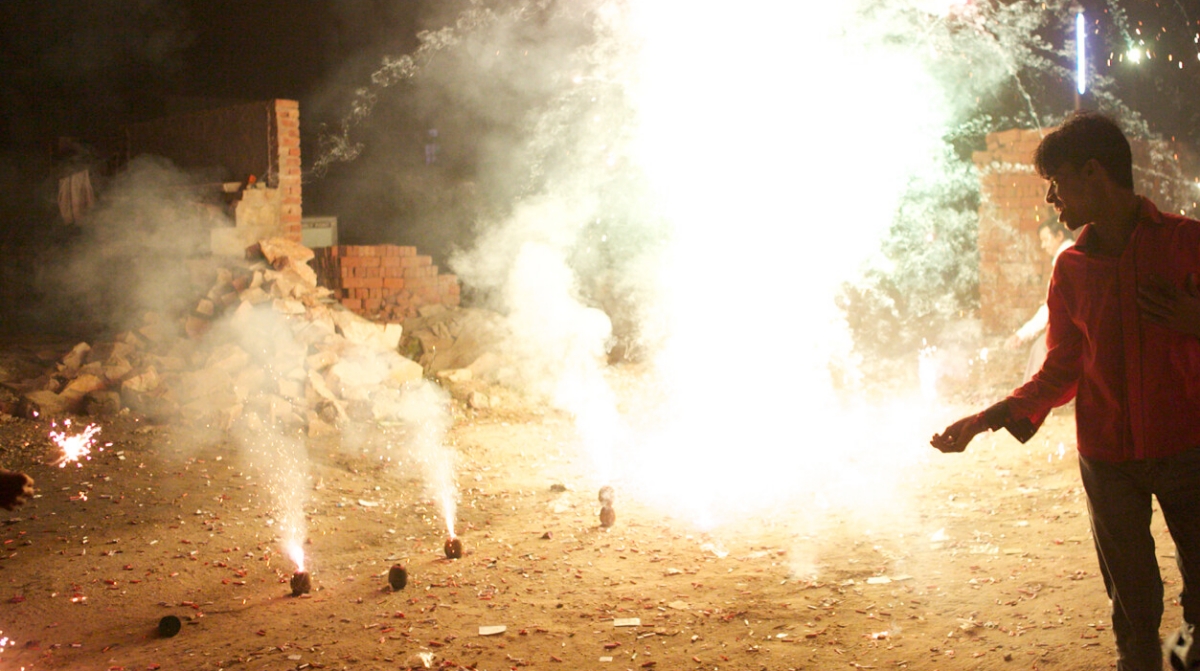
Every year, firecrackers become one of the most prominent talking points during Delhi's pollution crisis, particularly around Diwali. Restrictions are announced, awareness campaigns intensify, political arguments emerge, and public attention shifts towards the festival. However, this approach raises an important question: why is firecracker pollution discussed with such urgency only during Diwali?
Diwali is not firecrackers, and firecrackers are not Diwali.
Firecrackers are used throughout the year for numerous occasions, including weddings, political celebrations, election victories, sporting events, religious gatherings, Christmas, New Year and other public celebrations. Their environmental impact does not change depending on the occasion, the community celebrating or the purpose behind their use.
If fireworks release harmful pollutants, those emissions remain harmful irrespective of when or why they are used. Therefore, restricting their use only during one festival while overlooking similar activities on other occasions creates an inconsistent approach to environmental protection.
This should not become a religious or political debate. It is a public-health issue that requires a consistent environmental response.
The argument should not be about targeting a particular festival or community. Instead, it should be about questioning why an activity recognised as environmentally harmful continues to be normalised throughout the year.
The Supreme Court has previously addressed firecracker restrictions across different occasions, while Delhi has also experimented with year-round prohibitions. Its October 2026 proceedings again highlighted the difficulties of enforcing restrictions and the need for continuous monitoring beyond festival periods.
The solution deserves serious consideration: a comprehensive, year-round prohibition on conventional firecrackers, regardless of the occasion, supported by effective enforcement against manufacturers, sellers and users.
Green crackers may reduce certain emissions, but they should not automatically be treated as pollution-free alternatives. Any relaxation should be based on independently verified environmental and health evidence.
Environmental responsibility cannot be selective. If governments genuinely want to protect public health, firecracker regulation must apply consistently throughout the year.
Stubble burning is a serious problem, not a convenient excuse
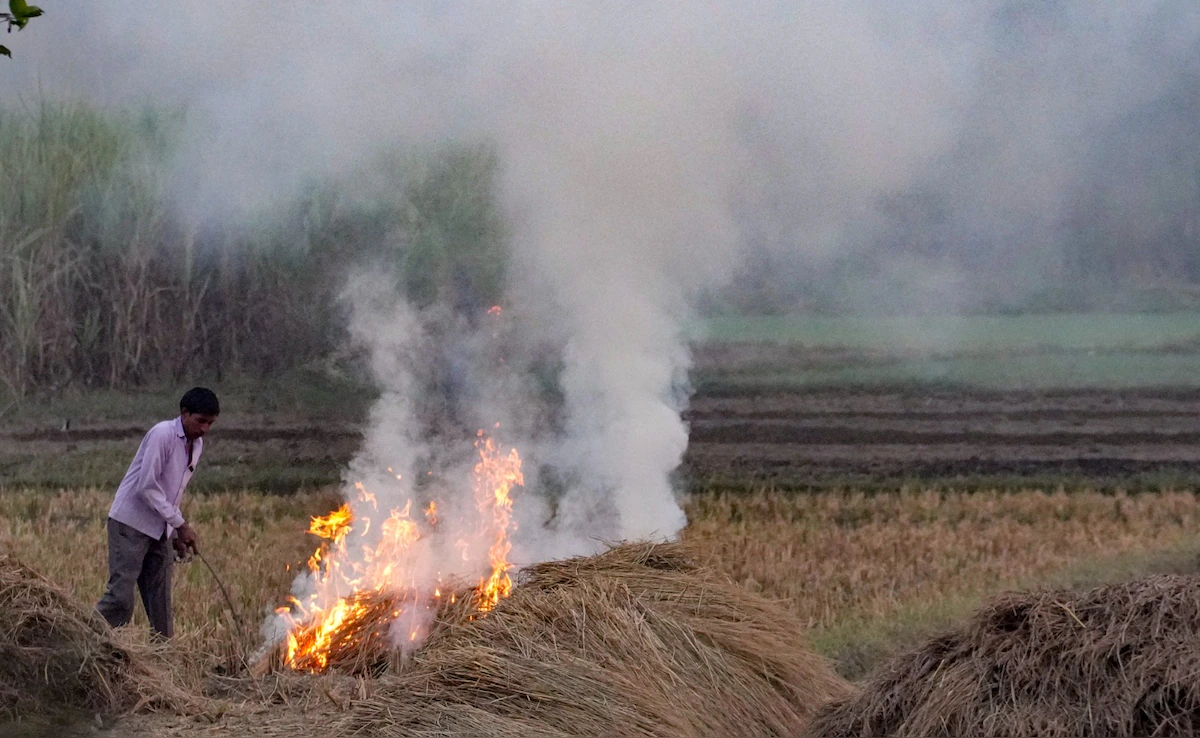
While firecrackers receive considerable attention during the winter pollution season, another major contributor to Delhi-NCR's poor air quality deserves equally serious consideration: agricultural stubble burning.
Every year, crop-residue burning across Punjab and Haryana becomes a recurring concern as the paddy harvesting season approaches. Smoke from agricultural fires travels across state boundaries, contributing to deteriorating air quality in Delhi and surrounding regions.
However, the discussion often becomes polarised. Farmers are blamed for burning crop residue, while others argue that their economic circumstances and agricultural constraints make the practice difficult to eliminate.
Both arguments contain important considerations, but neither should be used to avoid addressing the actual problem.
Stubble burning is not a minor agricultural inconvenience. It is a significant source of seasonal air pollution, contributing to elevated PM2.5 concentrations and worsening public-health risks.
A 2024 study published in Geoscientific Model Development, examining Delhi's air-quality Decision Support System, estimated that biomass-burning contributions to PM2.5 could reach 37% during the first week of November. The study also identified the seasonal influence of agricultural fires from Punjab and Haryana.
Another study published in Environmental Science & Technology in 2020 estimated that non-local crop-residue fires contributed approximately 20% of Delhi's PM2.5 during October and November, with contributions reaching 50–75% during certain pollution episodes.
These findings demonstrate why stubble burning cannot be dismissed or treated as an insignificant contributor to the Delhi pollution crisis.
However, blaming farmers alone is equally unproductive. The practice is connected to agricultural procurement systems, cropping patterns, labour shortages, narrow harvesting windows, financial constraints and inadequate residue-management infrastructure.
Farmers cannot be expected to change established agricultural practices overnight without affordable alternatives.
Governments must ensure timely availability of crop-residue management machinery, financial incentives, reliable procurement systems, crop diversification opportunities and markets for agricultural residue. At the same time, repeated deliberate burning must invite effective enforcement.
Understanding the economic difficulties behind stubble burning should never become an excuse for allowing it to continue indefinitely.
Farmers deserve practical support, but the environment deserves protection too.
Can Uttar Pradesh offer lessons to Punjab and Haryana?
The performance of different states in controlling agricultural fires deserves closer examination.
Uttar Pradesh has implemented several crop-residue management initiatives, including machinery assistance, financial support and monitoring mechanisms. These measures have helped control certain categories of reported farm-fire incidents.
However, it would be premature to claim that stubble burning has become negligible across the entire state. Satellite-based monitoring continues to identify agricultural fires in different parts of Uttar Pradesh, and the problem extends beyond the districts surrounding the National Capital Region.
Interestingly, the Commission for Air Quality Management recorded 259 wheat-season fire incidents in the monitored NCR districts of Uttar Pradesh between April and May 2025, compared with 10,207 in Punjab and 1,832 in Haryana. These figures cover different geographical areas and should not be interpreted as a complete comparison of the three states.
Nevertheless, they demonstrate the importance of examining local enforcement, agricultural practices and management strategies.
Punjab and Haryana have also reported substantial reductions in paddy-season farm fires. According to official figures released in December 2025, Punjab recorded 5,114 incidents and Haryana 662 during that year's monitored paddy season, representing significant reductions compared with previous years.
This shows that government intervention, when combined with machinery availability, financial support, monitoring and enforcement, can produce measurable results.
The question, therefore, is not whether stubble burning can be controlled. It is whether state governments are willing to sustain the necessary interventions.
Punjab and Haryana must strengthen their efforts rather than allowing the issue to return every harvesting season. Uttar Pradesh, meanwhile, must continue improving its performance instead of treating earlier reductions as a permanent solution.
Agricultural pollution requires long-term planning, not political blame games.
The pollution sources Delhi cannot afford to ignore
Focusing exclusively on firecrackers or stubble burning would be another mistake. Delhi's air pollution is a multi-source problem involving vehicular emissions, industrial pollution, construction dust, road dust, waste burning, household fuel combustion and regional emissions.
Vehicular pollution remains a particularly important concern. Traffic congestion, private vehicle dependence, inadequate public transport integration, inefficient parking management and prolonged vehicle idling contribute to the city's pollution burden.
The transition towards electric vehicles and cleaner fuel technologies is necessary, but replacing conventional vehicles alone cannot solve the problem. Delhi also needs accessible public transport, better last-mile connectivity, pedestrian-friendly infrastructure and effective traffic management.
Industrial emissions present another serious challenge. Recent reporting on Delhi's Online Continuous Emission Monitoring Systems revealed that 39 of 87 installed systems were offline. Of the remaining 48 transmitting data, 26 had been flagged for exceeding permissible emission limits.
Such findings raise serious questions about industrial compliance and regulatory oversight. If pollution-monitoring equipment is not functioning properly, how can authorities reliably establish whether industries are meeting environmental standards?
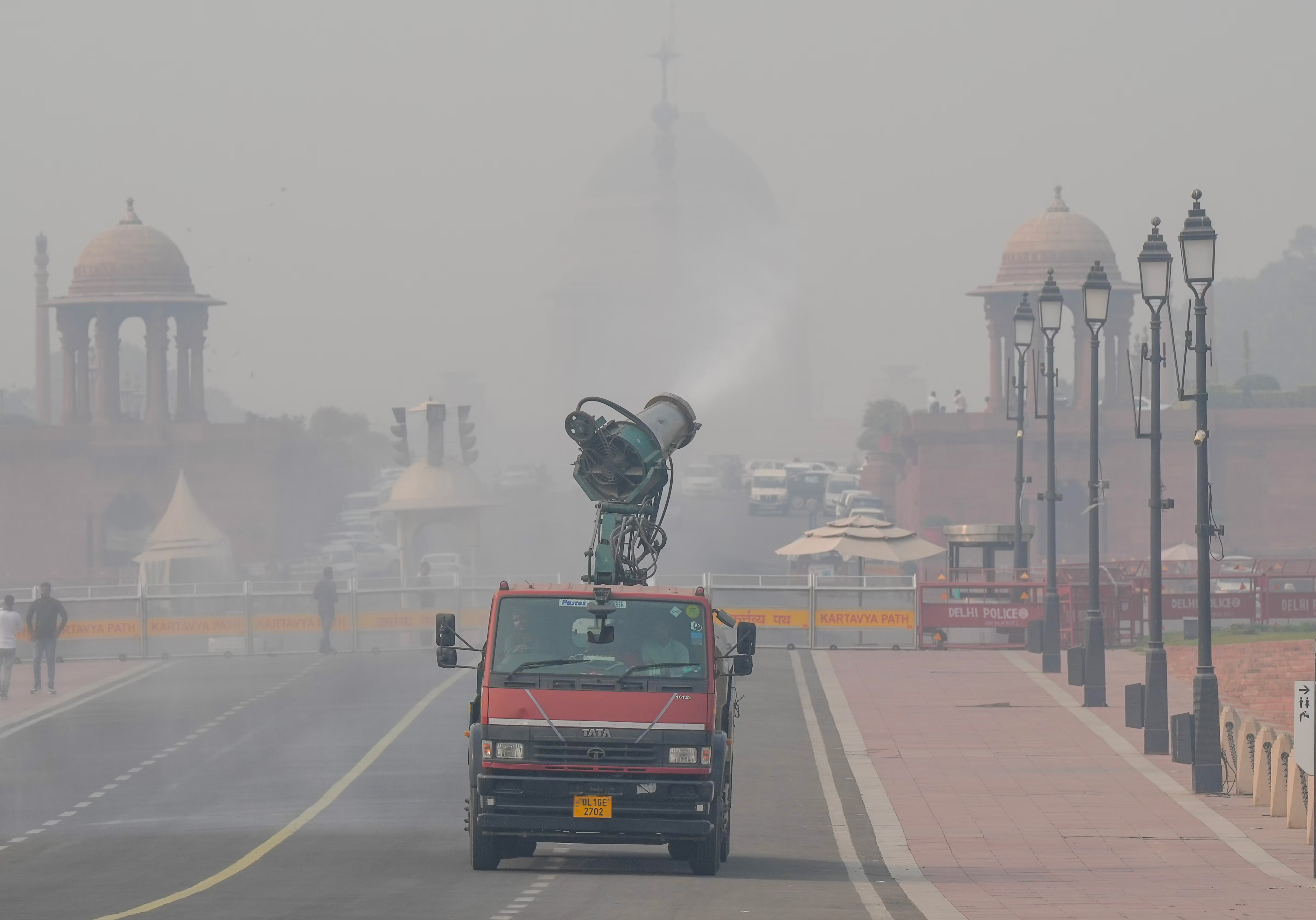
Similarly, construction dust, poorly maintained roads and open waste burning require consistent intervention. Sprinklers, temporary construction bans and emergency restrictions may offer limited relief, but they cannot replace regular road maintenance, effective waste segregation and enforcement of environmental standards.
Delhi cannot continue treating every pollution source as someone else's responsibility.
Pollution monitoring without transparency is meaningless
An effective pollution-control strategy requires reliable information. Yet questions surrounding monitoring infrastructure, missing readings and discrepancies in pollution data threaten public confidence.
Air Quality Index readings provide a useful overview of air quality, but they should not be the only information available to citizens.
PM2.5 concentrations, which measure fine particulate matter capable of penetrating deep into the respiratory system, are particularly important for understanding actual exposure.
Authorities must ensure that monitoring stations function consistently, industrial emission systems remain operational and missing readings are properly explained. Raw data should be accessible, technical anomalies independently investigated and monitoring systems periodically audited.
There is little value in announcing ambitious pollution-control targets if the underlying data used to measure progress cannot be trusted.
More importantly, governments must evaluate policies through measurable improvements in air quality rather than the number of meetings held, inspections conducted or announcements made.
Where is the accountability for public money and policy failures?
Delhi has multiple institutions responsible for controlling pollution, including the Commission for Air Quality Management, pollution-control boards, municipal authorities and government departments.
Yet responsibility often becomes fragmented across institutions and state boundaries.
One department addresses vehicular emissions, another handles construction dust, another monitors industries, while agricultural pollution involves several state governments and central agencies.
When responsibilities overlap without clear accountability, enforcement becomes inconsistent.
The underutilisation of funds allocated under the National Clean Air Programme is another concern. Financial resources intended for pollution mitigation must translate into practical improvements, including better monitoring infrastructure, cleaner transport, dust management and effective waste disposal.
Similarly, regulatory violations must have consequences. Industries exceeding emission limits, construction companies ignoring dust-control requirements and individuals repeatedly violating firecracker restrictions should face meaningful enforcement.
The same accountability must extend to officials and institutions responsible for ensuring compliance.
Environmental laws cannot remain effective only on paper.
The human cost of Delhi's toxic air
Behind every alarming AQI reading are millions of people whose everyday lives are affected by polluted air.
Children, elderly residents and people with respiratory conditions face significant health risks. But the burden is not distributed equally.
Traffic police personnel, sanitation workers, street vendors, construction labourers, delivery workers and daily-wage earners spend extended periods outdoors. Unlike people who can afford air purifiers, cleaner indoor environments or temporary relocation, these workers often have little choice but to continue working in hazardous conditions.
Air pollution is therefore not merely an environmental concern. It is also a question of public health, economic inequality and environmental justice.
A city cannot claim to be addressing its pollution crisis while leaving its most vulnerable residents to bear the greatest consequences.
Delhi needs consistent action, not another winter emergency
Delhi does not need another collection of ambitious pollution-control announcements. It needs institutions capable of implementing existing regulations and governments willing to take responsibility for measurable outcomes.
Firecracker restrictions must apply consistently throughout the year, irrespective of religious festivals, political celebrations or other occasions. Stubble burning must be tackled through a combination of farmer support, viable alternatives, monitoring and strict enforcement. Industrial emissions, vehicular pollution, construction dust and waste burning require equally serious attention.
Most importantly, pollution control must become a year-round priority rather than a seasonal administrative exercise.
The NCR airshed demands coordinated action from Delhi, Punjab, Haryana, Uttar Pradesh and other neighbouring regions. Air pollution does not recognise political boundaries, and neither should environmental governance.
Governments must stop shifting responsibility between states, departments and communities. Farmers cannot be blamed indefinitely without providing alternatives, just as local authorities cannot escape responsibility for their own pollution sources by pointing towards neighbouring states.
The real measure of environmental governance is not how many restrictions are announced when the AQI reaches hazardous levels. It is how effectively pollution sources are controlled when public attention moves elsewhere.
Delhi's toxic air is not the consequence of one festival, one agricultural practice or one government department. It is the outcome of multiple pollution sources combined with years of inconsistent enforcement and inadequate accountability.
Clean air cannot be achieved through selective outrage, temporary restrictions or political convenience. It requires consistent rules, scientific evidence, responsible citizens and governments that are answerable for their failures.
The right to breathe clean air should not become a seasonal privilege. It must be protected every day, for everyone.
© Copyright 2026. All Rights Reserved. Powered by Vygr Media.