 By
By 
A terrifying CNG car explosion in Gujarat has raised fresh questions about vehicle and refuelling safety after a CNG-powered car suddenly exploded while being refuelled at a station on National Highway-48 near Karjan in Vadodara district.
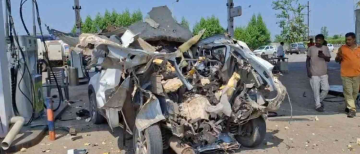
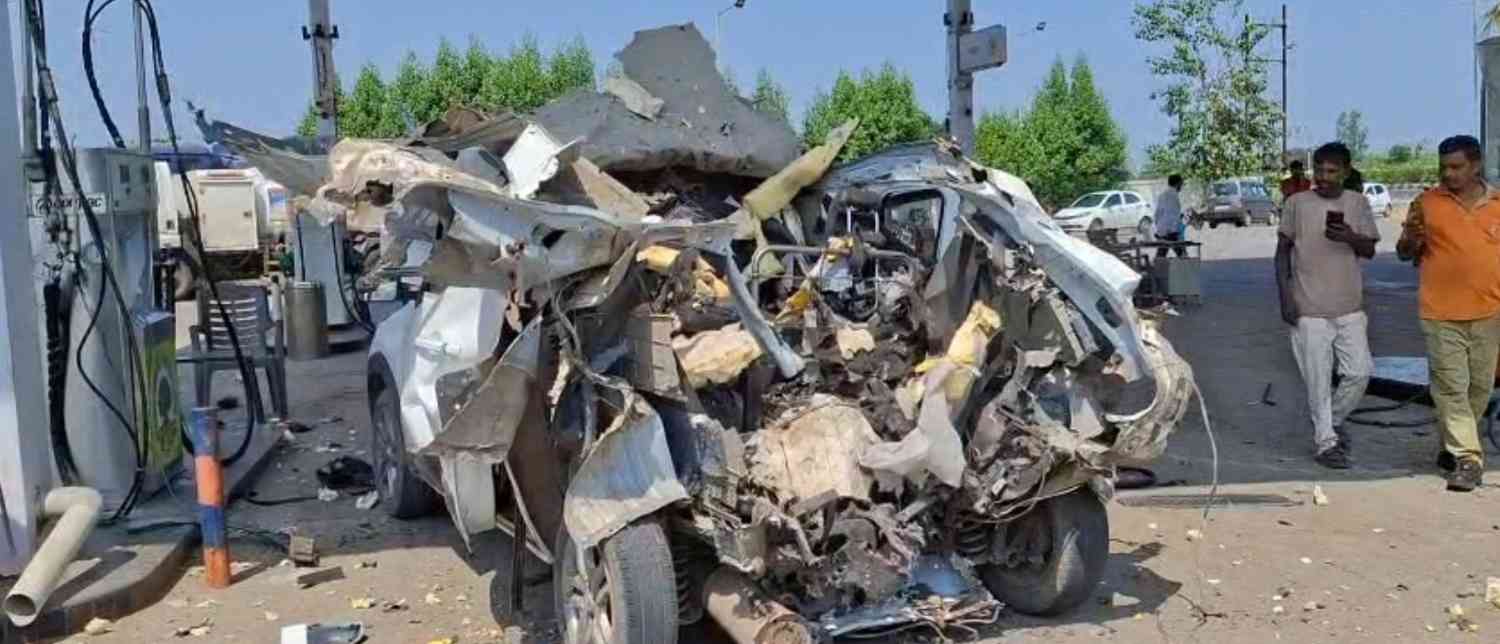
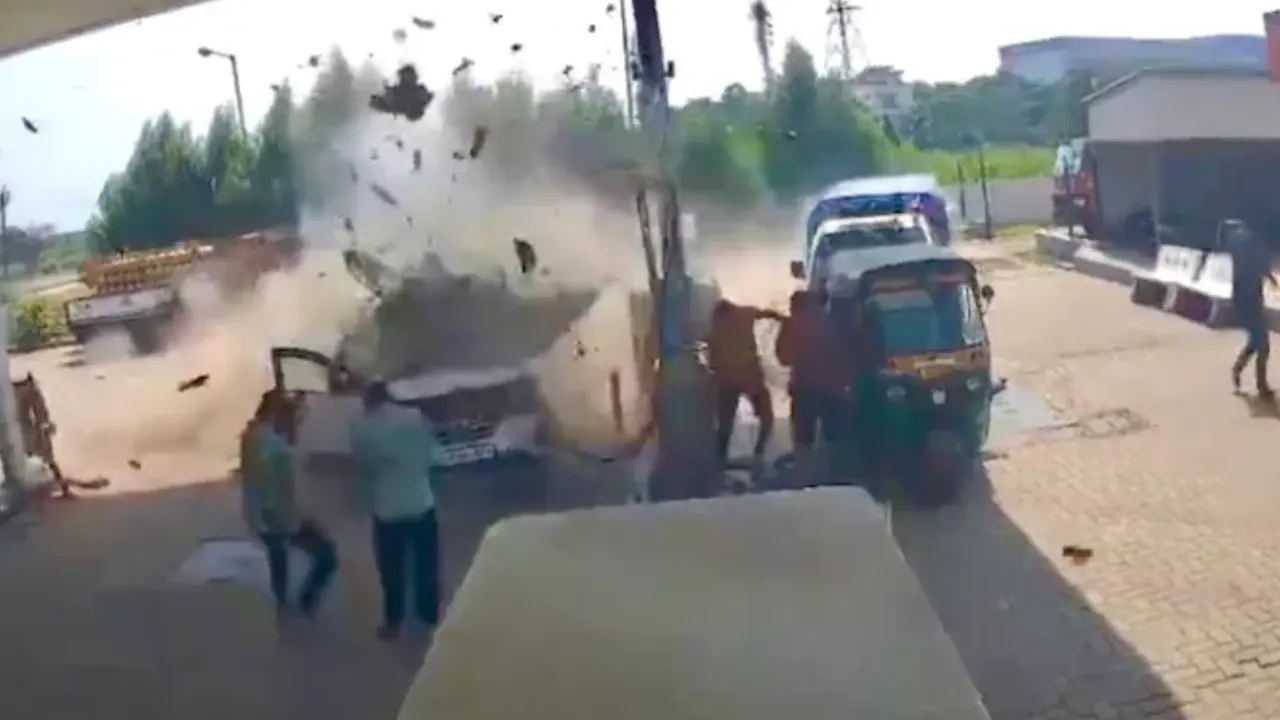
The incident took place on the afternoon of October 1 at a CNG station located opposite Jindal Company. The explosion occurred while CNG was being filled into the vehicle, sending pieces of the car's rear section, metal fragments and shattered glass flying several metres across the area.
Despite the intensity of the Karjan CNG blast, no fatalities were reported. The vehicle was unoccupied when the explosion took place, while the driver and other people associated with the car had reportedly moved away during the refuelling process. Two vehicles parked nearby were, however, damaged in the blast.
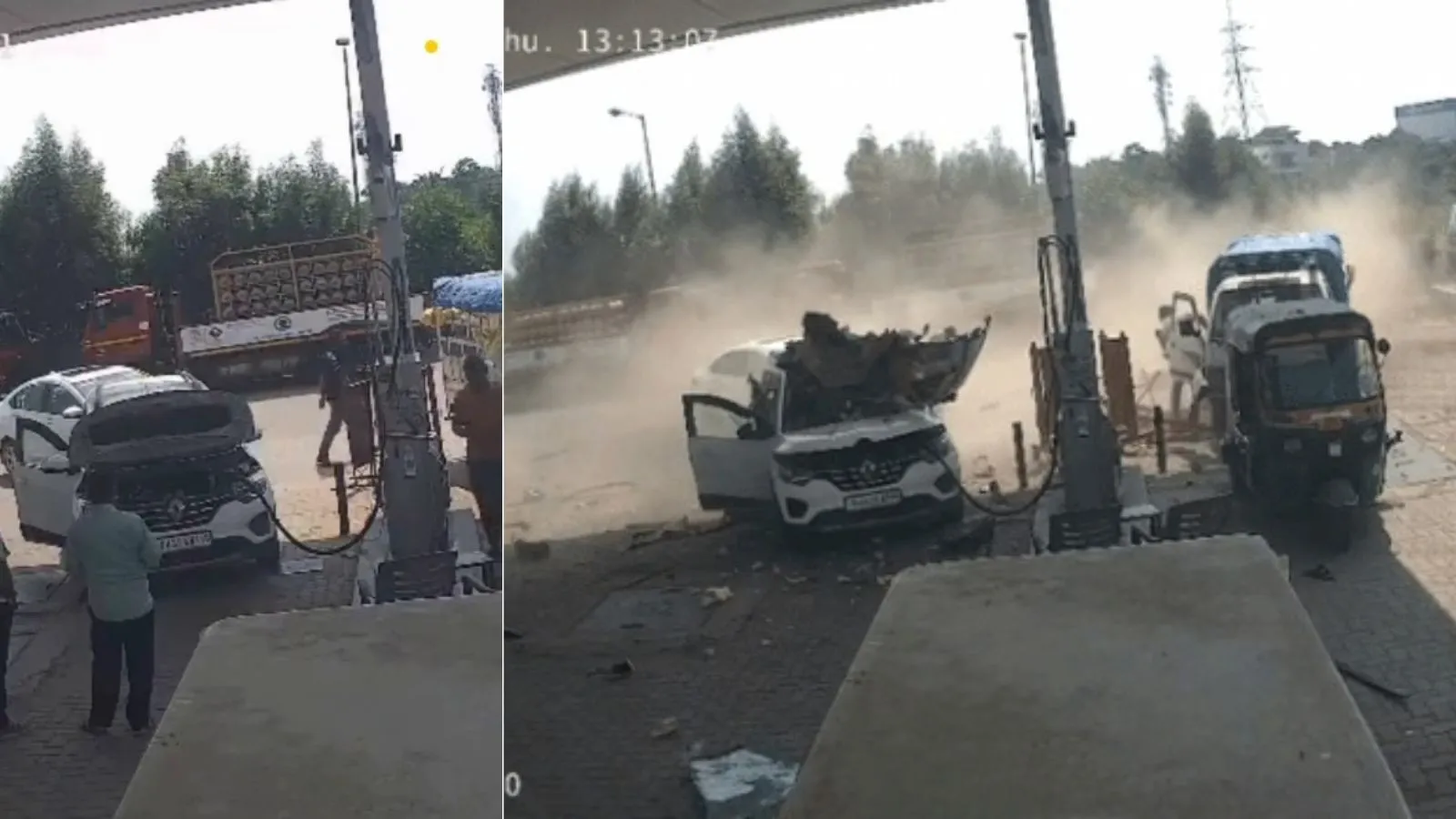
CNG Car Explodes at Gujarat Fuel Station
According to the information available so far, the incident happened when a car arrived at the CNG station along NH-48 for refuelling. Once the vehicle was positioned at the pump, the CNG filling process began.
The car's CNG tank reportedly burst during refuelling, resulting in a sudden and powerful explosion.
The blast caused extensive damage to the vehicle, particularly its rear portion, where the CNG system was located. Windows were shattered and pieces of the vehicle were thrown away from the immediate blast site.
The sudden explosion created panic at the busy fuel station, with people in the vicinity quickly moving away from the vehicle.
Footage captured by CCTV at the station has also emerged, showing the moment the CNG car blast occurred. The visuals have attracted considerable attention because of the speed and force with which the vehicle was damaged.
While the available footage provides a visual account of the incident, it does not by itself establish what caused the CNG tank to fail.
Two Nearby Vehicles Damaged in NH-48 CNG Blast
The explosion was powerful enough to affect vehicles parked close to the CNG car.
Two nearby vehicles reportedly suffered damage as debris from the exploding vehicle spread across the area. Broken glass and portions of the car were scattered several metres from the point of the explosion.
The incident could have resulted in much more serious consequences given that it occurred at a fuel station and involved a compressed natural gas system. However, the fact that no one was inside the car at the moment of the blast helped prevent casualties.
The incident also serves as a reminder that a CNG vehicle can still pose significant risks if its fuel system, cylinder or associated components develop a serious fault.
Driver, Passengers Were Outside the Car
One of the most significant details emerging from the incident is that the car was empty when it exploded.
During CNG refuelling, the occupants had reportedly stepped out of the vehicle. This meant that no passenger was sitting inside the car when the CNG tank reportedly ruptured.
Station personnel were also positioned away from the immediate vehicle during the refuelling operation, according to reports. This helped limit the possibility of people being directly caught in the explosion.
The incident therefore highlights the importance of following basic CNG refuelling safety rules, particularly the requirement for passengers to remain outside the vehicle while gas is being dispensed.
Karjan Fire Brigade and Police Reach the Spot
Following the CNG explosion near Karjan, the local fire team and police reached the site.
Safety measures were taken at the station to prevent the situation from escalating and to secure the surrounding area. The response teams also assessed the scene after the blast.
The presence of emergency services was particularly important because the incident had occurred at a CNG station, where fuel-related hazards can potentially create additional risks if not brought under control quickly.
No deaths have been reported in connection with the incident, according to the reports available as of October 3.
What Caused the CNG Cylinder to Explode?
The exact cause of the Gujarat CNG car blast has not yet been established.
Initial reports indicate that the vehicle's CNG tank or cylinder burst while gas was being filled. However, that description explains what happened during the incident, rather than establishing why the component failed.
Several possibilities could require examination, including a technical defect in the vehicle's CNG system, the condition of the cylinder, maintenance history, certification and testing status, or another mechanical or pressure-related issue.
At this stage, it would be premature to attribute the explosion to any particular cause without the findings of a technical examination or official investigation.
Reports indicate that authorities are examining the circumstances surrounding the incident and the safety arrangements at the CNG station.
CNG Cars and the Importance of Cylinder Safety
CNG is widely used as an automotive fuel because of its relatively clean-burning characteristics and its potential to reduce fuel costs compared with some conventional fuels. But like any compressed gas system, CNG requires properly maintained equipment and adherence to safety procedures.
A vehicle's CNG cylinder operates under high pressure and is therefore subject to safety standards, inspection and testing requirements.
The CNG cylinder is one of the most critical components in a CNG vehicle. Any deterioration, damage, improper installation or failure of associated equipment can potentially create serious safety risks.
Previous incidents have demonstrated that failures involving on-board CNG cylinders can have severe consequences. A technical investigation published by the Petroleum and Natural Gas Regulatory Board into a separate 2021 cylinder explosion, for example, documented a fatality during CNG refuelling and identified the event as a major explosion incident involving an on-board cylinder. That earlier case was separate from the Karjan incident and should not be treated as evidence of the cause of the October 1 explosion.
Why CNG Refuelling Safety Matters
The Karjan incident also brings attention to basic safety practices that motorists should follow while filling CNG.
Passengers should leave the vehicle during refuelling and maintain a safe distance from the filling area. Smoking, open flames and activities that could create sparks should be avoided around CNG stations.
Vehicle owners should also ensure that their CNG systems are installed and maintained through authorised channels and that required inspections and cylinder testing are completed within the prescribed schedule.
Any unusual smell, suspected gas leak, damaged component or abnormal behaviour around the CNG system should be treated seriously rather than ignored.
For CNG vehicle owners, routine maintenance is not simply a matter of vehicle performance. It is also an important part of fuel-system safety.
CCTV Footage Shows Sudden Explosion
The CNG car blast video from the Gujarat station has drawn attention because the explosion appears to occur suddenly during the refuelling process.
The footage and images circulating from the scene show the destructive force of the blast, with the rear portion of the vehicle severely damaged and debris spreading around the area.
Such visuals have also prompted renewed public interest in CNG car safety and the precautions required at CNG filling stations.
However, CCTV footage can establish the sequence of visible events but cannot, on its own, determine whether the cylinder had a manufacturing defect, maintenance problem, pressure-related failure or another underlying issue.
Investigation Expected to Establish Exact Cause
For now, the key question surrounding the Vadodara CNG car explosion remains unanswered: why did the vehicle's CNG tank fail during refuelling?
A detailed examination of the damaged cylinder, the vehicle's CNG system, maintenance records and other relevant components would be necessary to establish the precise cause.
The incident occurred on a major highway and at a fuel station where several vehicles and people could potentially have been present. That makes the absence of fatalities particularly significant, although the damage to the CNG car and two nearby vehicles shows how quickly a vehicle-level failure can affect the surrounding area.
As authorities examine the incident, the Karjan CNG explosion is likely to renew discussions around vehicle inspections, cylinder testing, maintenance standards and safety procedures at CNG stations.
For motorists, the incident carries a straightforward message: stepping out of the vehicle during refuelling, maintaining the CNG system properly and ensuring that the cylinder remains within its required inspection and testing schedule are essential precautions.
The exact reason behind the October 1 NH-48 CNG blast near Karjan will become clearer only after the technical and official examination is completed. Until then, the incident remains a serious reminder that compressed-gas systems require careful handling, regular maintenance and strict adherence to safety procedures.
With input from agencies
Image Source: Multiple agencies
© Copyright 2026. All Rights Reserved. Powered by Vygr Media.