

 By
By 
Guwahati, July 23: Assam is grappling with one of its worst flood disasters in recent years, with the death toll rising to around 40 and dozens of people still missing as torrential rains continue to inundate vast swathes of the state. More than nine lakh residents across 25 districts have been affected, while rescue teams race against time to evacuate stranded families and deliver relief to marooned villages.
The scale of destruction has prompted Chief Minister Himanta Biswa Sarma to describe the devastation as "unimaginable," following his visit to several flood-hit areas in Upper Assam. Homes, roads, bridges, schools, tea estates and agricultural lands have been submerged, leaving thousands displaced and livelihoods shattered.
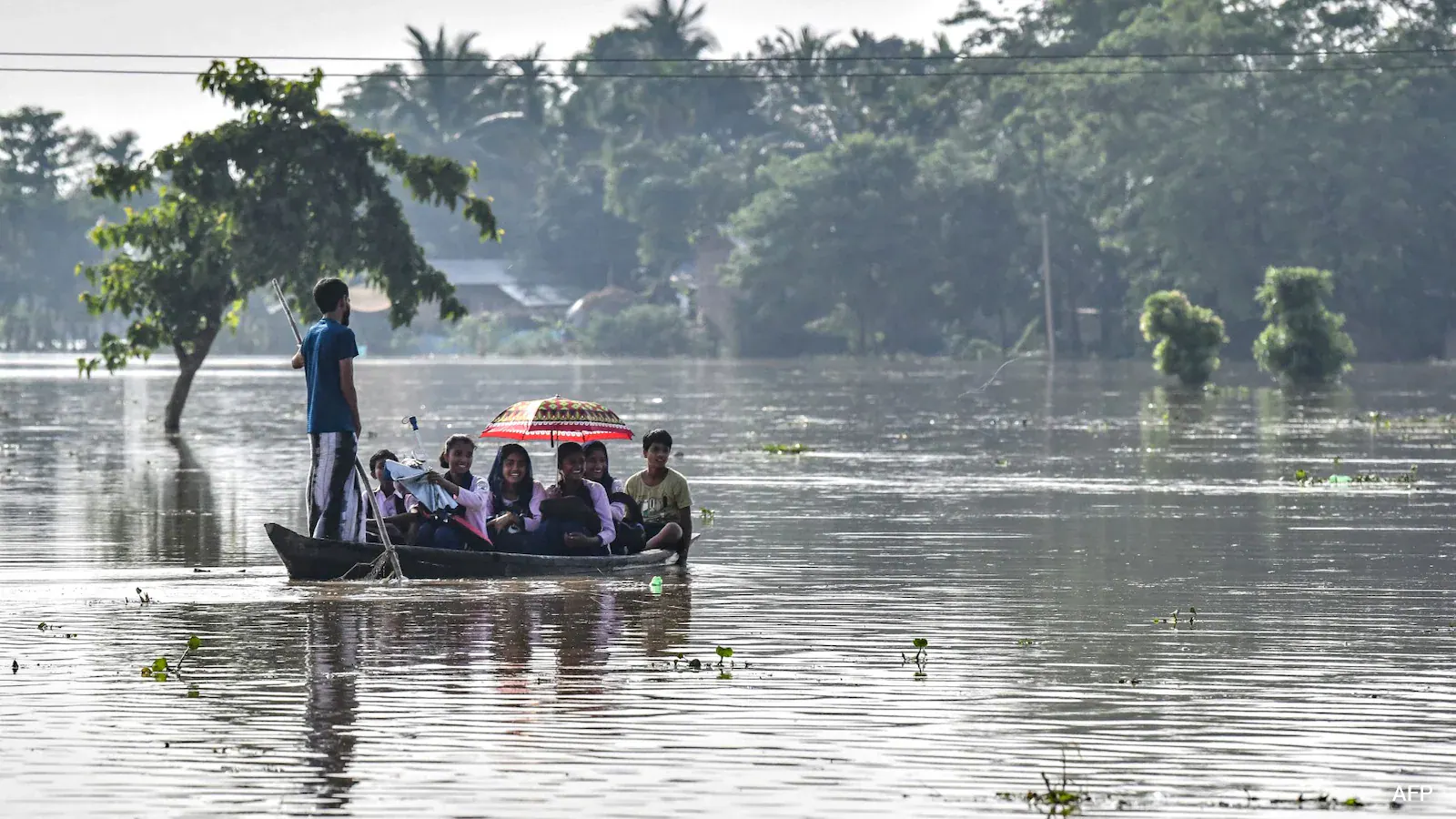
Death Toll Rises Amid Worsening Flood Situation
The flood situation has deteriorated rapidly over the past few days due to incessant rainfall across Assam and neighbouring Nagaland. Official figures indicate that around 40 people have lost their lives, while nearly 80 people remain missing after being swept away by raging floodwaters or trapped in landslides and flash floods.
Authorities fear the casualty count could rise further as rescue operations continue in several inaccessible locations where communication links have been severely disrupted. Thousands have been evacuated to relief camps, while many others continue to wait for assistance from state agencies, the National Disaster Response Force (NDRF), State Disaster Response Force (SDRF), and local volunteers.
More Than Nine Lakh People Affected Across 25 Districts
According to state authorities, the floods have impacted over nine lakh people spread across nearly 1,800 villages in 25 districts. Districts in Upper Assam have borne the brunt of the disaster, with Sivasagar, Dibrugarh, Tinsukia, Charaideo, Dhemaji, Lakhimpur and neighbouring regions witnessing extensive inundation.
Relief camps have been set up to shelter displaced residents, while government agencies are distributing food, drinking water, medicines and essential supplies. However, officials acknowledge that reaching several remote villages remains a major challenge because roads have either been washed away or remain submerged under several feet of water.
Apart from human suffering, thousands of livestock have reportedly perished, compounding the economic losses faced by rural communities that depend heavily on agriculture and animal husbandry. Standing crops have also been destroyed across large agricultural belts, raising concerns over long-term livelihood impacts.
Why Upper Assam Was Hit So Hard
Meteorologists and disaster management officials have attributed the unprecedented flooding largely to exceptionally heavy rainfall over Nagaland during a span of just two days.
The intense precipitation caused rivers originating in Nagaland to swell dramatically before flowing into Assam, overwhelming drainage systems and flooding downstream districts. Rivers including the Dhansiri, Dikhow and other tributaries experienced a sudden surge in water levels, inundating low-lying areas across Upper Assam.
Experts noted that the region received unusually high rainfall within a very short period, leading to flash flooding rather than the gradual riverine flooding commonly associated with the monsoon. The cascading effect of overflowing tributaries eventually intensified flooding in several districts situated along the Brahmaputra basin.
The India Meteorological Department (IMD) has clarified that there was no cloudburst event in either Assam or Nagaland. Instead, the flooding resulted from sustained heavy rainfall combined with geographical and infrastructural vulnerabilities, including weakened embankments, shrinking wetlands and inadequate drainage networks.
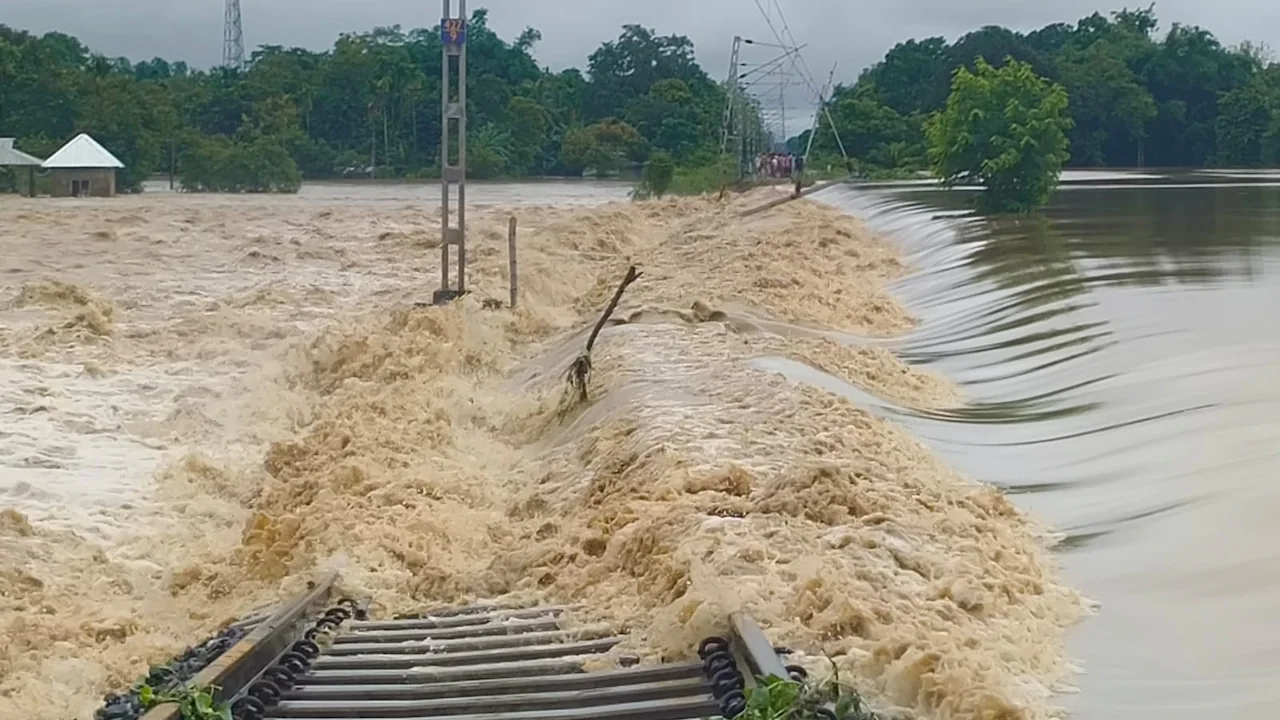
Massive Damage to Infrastructure and Tea Estates
Floodwaters have severely damaged public infrastructure across the affected districts.
Several roads remain impassable after being washed away, while bridges have suffered structural damage, cutting off connectivity between villages and towns. Schools, healthcare centres and public buildings have also been inundated.
Assam's globally renowned tea industry has suffered a significant setback as floodwaters submerged multiple tea estates, particularly in Upper Assam. Estates located around Nazira and adjoining regions remain underwater, disrupting plantation activities and threatening crop losses during a crucial production period.
Transport services have also been affected, with several routes experiencing disruptions due to submerged roads and damaged infrastructure.
Rescue Operations Continue on War Footing
Multiple agencies are engaged in large-scale rescue and relief operations across the state.
Personnel from the NDRF, SDRF, district administrations, police, and local volunteers are using boats to evacuate stranded residents from submerged villages. Rescue teams continue to navigate challenging conditions, including strong currents and inaccessible terrain.
The state government had earlier placed the Indian Army and the Indian Air Force on standby to support rescue operations if required, underscoring the seriousness of the unfolding humanitarian crisis.
Relief camps are providing temporary shelter, food and medical care, although authorities admit that the sheer scale of the disaster has stretched available resources.
Chief Minister Calls Destruction "Unimaginable"
After conducting an aerial and ground assessment of flood-hit regions, Chief Minister Himanta Biswa Sarma described the scale of devastation as unprecedented.
He assured residents that the government would prioritise rescue operations, rehabilitation and infrastructure restoration. The Chief Minister also emphasised that both immediate relief and long-term flood mitigation measures would be necessary to reduce the impact of such disasters in the future.
Meanwhile, the Central government has constituted an inter-ministerial team to visit Assam and assess the extent of the damage. The team's findings are expected to form the basis for additional financial assistance and rehabilitation measures for the flood-affected state.
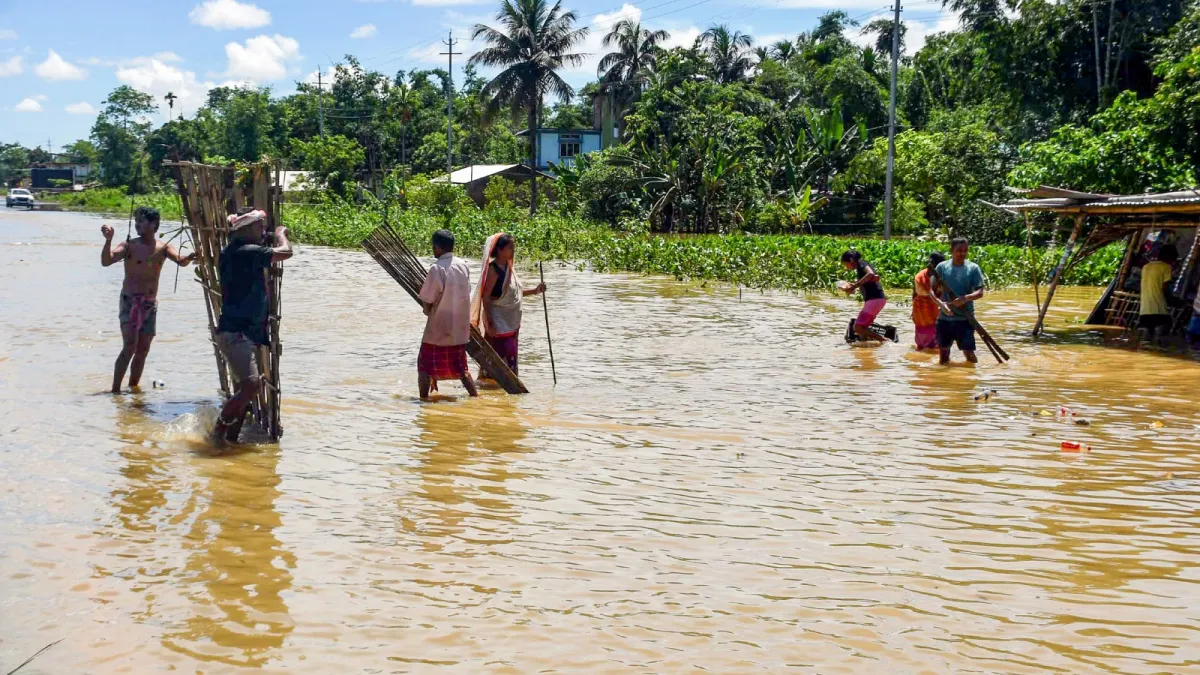
Recurring Flood Crisis Raises Larger Questions
While seasonal flooding is a recurring phenomenon in Assam due to the Brahmaputra and its numerous tributaries, experts believe this year's disaster once again highlights deeper structural vulnerabilities.
Environmental experts point to rapid urbanisation, encroachment on wetlands, degradation of natural drainage channels and ageing embankments as factors that have amplified the impact of heavy rainfall. Climate variability, bringing increasingly intense rainfall events over shorter periods, has further heightened flood risks across Northeast India.
The IMD has forecast continued rainfall over parts of Northeast India in the coming days, keeping authorities on alert as river levels remain dangerously high in several districts.
Long Road to Recovery
For thousands of families forced from their homes, the immediate priority remains survival. But once floodwaters begin to recede, Assam faces the enormous task of rebuilding damaged infrastructure, restoring livelihoods and rehabilitating displaced communities.
Agricultural losses, damaged tea plantations, destroyed roads and disrupted public services are likely to have long-term economic consequences for the state. Health officials are also preparing for possible outbreaks of waterborne diseases in relief camps and flood-affected villages.
As rescue teams continue searching for the missing and relief agencies work to reach isolated communities, the disaster serves as another stark reminder of the growing challenges posed by extreme weather events in one of India's most flood-prone regions. With weather forecasts indicating further rainfall, authorities remain on high alert, hoping to prevent an already devastating humanitarian crisis from worsening further.
With input from agencies
Image Source: Multiple agencies
© Copyright 2026. All Rights Reserved. Powered by Vygr Media.