 By
By 
A disturbing video from Bihar’s Banka district has brought another alleged case of public harassment into the spotlight, just days after similar incidents in Jamui and Samastipur triggered widespread concern.
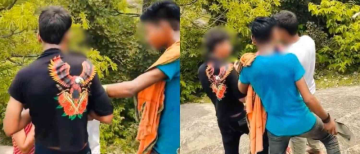
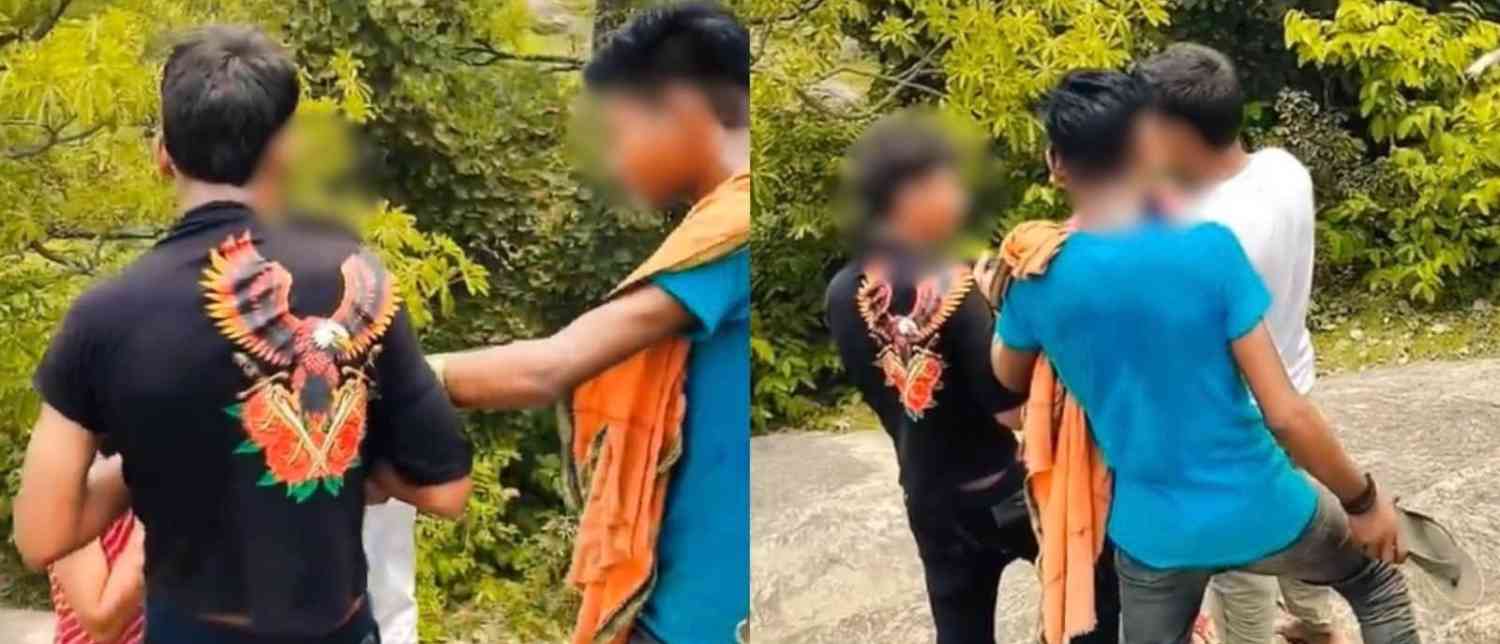
The latest case centres on Mandar Hill, a well-known tourist and pilgrimage destination in Banka. A video circulating on social media appears to show a group of six young men surrounding a woman and behaving indecently with her. One of the men is seen allegedly striking her with a slipper, while another appears to twist her arm. A third person is reportedly carrying a stick.
Following the circulation of the footage, police registered a case against six unidentified youths and began efforts to establish the identities of both the men and the woman seen in the video.
The incident has drawn particular attention because of its timing. It comes shortly after videos from Jamui and Samastipur showed groups of men allegedly targeting young women and their male companions in public. In all three cases, video footage became a crucial element in bringing the incidents to the attention of authorities.
The cases have also revived a larger question: why are groups of men increasingly appearing willing to publicly confront, intimidate or assault young women simply because they are seen with male companions?
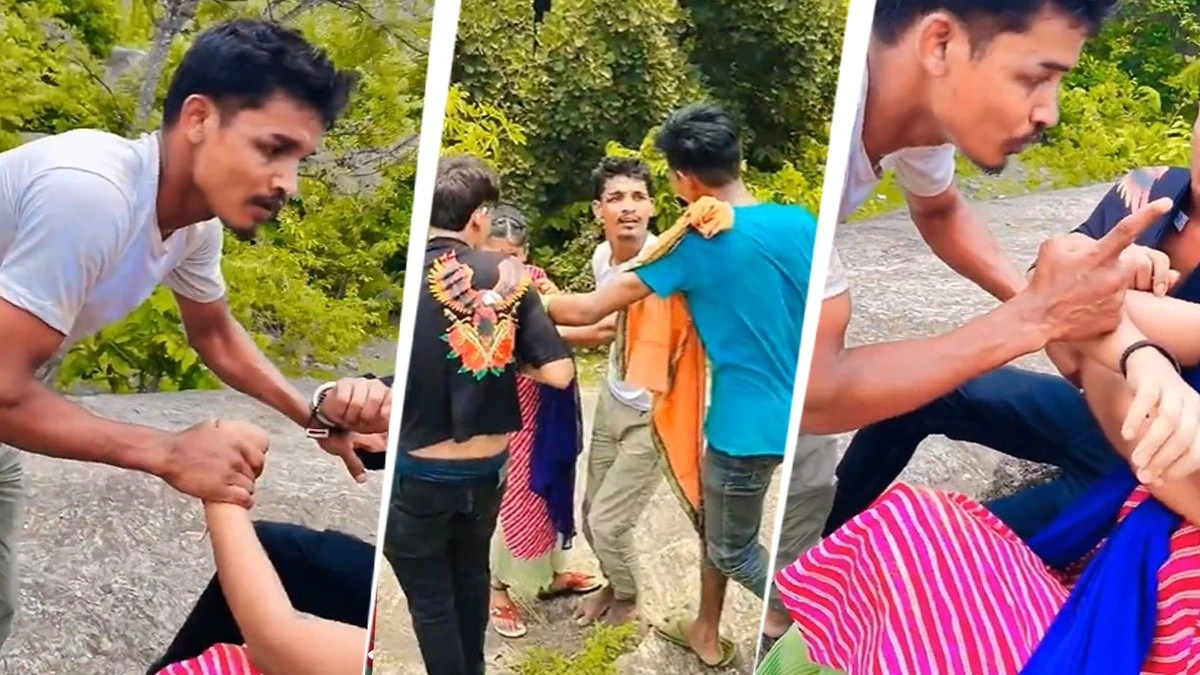
Mandar Hill video puts Banka under scrutiny
According to the police, the Mandar Hill video reached the authorities through the local police social media cell on September 22. Although the footage carries a September 3 timestamp, investigators are examining whether that date accurately reflects when the incident occurred.
Preliminary police assessment suggested that the video could potentially be several months old. Establishing the actual date and circumstances of the incident is therefore part of the ongoing investigation.
After receiving the footage, police visited Mandar Hill to verify the location shown in the video. Officers also questioned people living and working around the tourist site, including local residents and shopkeepers, in an effort to identify the individuals involved.
The police subsequently registered a suo motu case against six unidentified men.
The FIR invokes several provisions of the Bharatiya Nyaya Sanhita, including provisions relating to the use of criminal force against a woman with intent to outrage her modesty, sexual harassment, the use of criminal force with intent to disrobe a woman and acts carried out with common intention. Provisions of the Information Technology Act have also been included.
The video itself has been taken on record as evidence.
For investigators, identifying the people visible in the footage is now a central task. Police have indicated that further legal action will follow once the individuals involved are identified and the circumstances are established.
The incident has simultaneously raised questions about security at tourist locations. Mandar Hill attracts visitors and pilgrims, making the alleged assault particularly significant from the perspective of safety in public and recreational spaces.
Jamui case brought the issue into sharp focus
The Banka incident emerged soon after another video from Bihar caused widespread outrage.
In Jamui, a Class 10 girl and a male friend were allegedly stopped by a group of men while returning from coaching classes on September 19. The two teenagers were reportedly surrounded, while the boy was physically confronted and the girl was allegedly groped, grabbed and dragged.
The incident was recorded on video and subsequently circulated widely on social media.
The footage appeared to show the group confronting the teenagers and preventing them from simply continuing on their way. The girl was allegedly targeted while her male companion was also assaulted and restrained.
Police later arrested several people in connection with the incident. At least five individuals, including three minors, had been taken into custody according to reports, while two alleged key accused were subsequently detained after an encounter in which they were injured.
The case generated intense public reaction not only because of the alleged assault itself, but also because the incident appeared to involve a group of men collectively confronting two teenagers.
That detail is important.
The incidents are not simply about individual acts of harassment. They raise questions about what happens when a group of people decides that it has the authority to interrogate, punish or humiliate another person in a public space.
Samastipur video added to growing concern
Before the Banka case emerged, another disturbing video had surfaced from Samastipur.
The footage reportedly showed a group of men on motorcycles surrounding a girl and a boy before allegedly verbally and physically abusing them. Police subsequently arrested four people in connection with the case.
Authorities treated the case as particularly sensitive because the girl appeared to be a minor. The accused were booked under relevant provisions of the Bharatiya Nyaya Sanhita, Information Technology Act and the Protection of Children from Sexual Offences Act.
The sequence of events meant that Bihar saw three separate videos associated with alleged harassment or assault of women and girls within a short period.
However, the cases should not automatically be treated as identical. The precise circumstances, ages of those involved, locations, timelines and offences alleged differ from one case to another. Police investigations will ultimately determine what happened in each incident and who was responsible.
What connects them in the public eye is the appearance of group-based intimidation and the prominent role played by mobile-phone footage in bringing the allegations to wider attention.
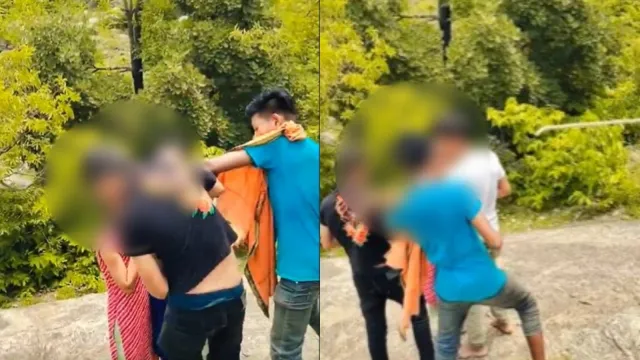
When the camera becomes the first witness
One striking feature of these cases is that the alleged perpetrators or people at the scene appear to have recorded portions of the incidents.
The videos subsequently became evidence and helped draw public attention to events that might otherwise have remained confined to a particular locality.
But the same technology also creates another problem.
A video can spread much faster than an investigation can establish facts. Footage may be edited, stripped of context, incorrectly dated or accompanied by misleading claims. In the Mandar Hill case, for instance, the timestamp on the circulating clip and the police assessment of when the incident may have occurred have raised questions that investigators still need to resolve.
That makes verification crucial.
Social media can alert authorities to a possible crime, but the viral nature of a clip does not itself establish every fact surrounding an incident. Police still have to identify the people involved, locate the scene, establish the timeline, record statements and determine which laws apply.
At the same time, the availability of video evidence can be extremely significant. In cases where victims may be reluctant or unable to immediately report what happened, footage circulating online can prompt authorities to begin an investigation.
The challenge is to ensure that public outrage does not replace due process.
A deeper question about policing women's choices
The recent Bihar incidents have also prompted a wider conversation about how society reacts when young women are seen with men.
The concern is not limited to physical safety.
In one recent discussion triggered by the Bihar cases, the incidents were placed alongside a separate controversy in Haryana, where a village-level social body reportedly announced a ban on love marriages and threatened social boycott for couples and their families who defied it.
Such declarations have no authority to override constitutional rights. The Supreme Court has previously made clear that adults have the right to choose their partners and that community bodies cannot lawfully dictate whom individuals may marry.
The comparison highlights a broader social tension: the difference between a community expressing an opinion about relationships and individuals using force, intimidation or social pressure to control someone else's personal choices.
These are not the same legal issue, but they can become connected when ideas about morality or acceptable relationships are used to justify interference in people's lives.
In the Jamui case, for example, the teenagers were reportedly returning from coaching classes when they were confronted. The alleged violence therefore did not arise from a formal legal process or any lawful authority. It was a group of men deciding to intervene in the lives of two young people.
That distinction matters.
No private group has the legal authority to punish someone for being seen with a friend or romantic partner.
Public spaces cannot become zones of informal punishment
Tourist destinations, roads, parks and other public spaces are meant to be accessible to ordinary citizens. Yet safety depends not only on the presence of laws but also on whether people believe those laws will be enforced.
The Mandar Hill incident is particularly significant because the alleged assault reportedly occurred at a prominent tourist and pilgrimage site.
For women, the ability to visit such places without fear of being surrounded, filmed, followed or harassed is a basic aspect of public safety.
Security at tourist sites therefore involves more than preventing theft or managing crowds. Authorities must also consider harassment, intimidation, sexual violence and the misuse of mobile phones to record or circulate such acts.
The cases also show why quick reporting mechanisms can matter. In the Banka case, the video reached police through a WhatsApp channel associated with the local police station. That allowed officers to locate the site and begin the identification process.
But prevention remains more difficult than investigation.
Once an assault has occurred and a video has gone viral, the damage to the victim cannot simply be reversed through arrests.
From viral outrage to accountability
The repeated appearance of such videos can create a dangerous cycle.
An incident takes place. Someone records it. The footage spreads. Public anger grows. Police begin an investigation. Suspects are identified or arrested. Attention eventually moves elsewhere.
The real test lies beyond the viral moment.
Investigators must determine what happened. Victims and witnesses need protection. Evidence must be preserved. Charges must be based on established facts. Courts must ultimately assess the evidence according to law.
The Mandar Hill investigation is still at an early stage, and the six men named in the FIR remain unidentified according to the reports available on September 25. The identities of the woman and the alleged perpetrators had not been publicly established in the material reviewed for this report.
That uncertainty is important. Viral footage can make an incident appear straightforward, but establishing criminal responsibility requires more than identifying faces in a short clip.
The larger safety concern
The three Bihar cases have arrived within a narrow period, but they should not automatically be interpreted as proof of a single statewide pattern without broader evidence.
They do, however, expose several recurring challenges: harassment of women in public places, group intimidation, the targeting of young people, the recording and circulation of abusive acts, and the difficulty of ensuring that public spaces remain safe.
They also underline the importance of distinguishing between social disapproval and criminal conduct.
People may hold strong opinions about relationships, clothing, friendships or social behaviour. Those opinions do not give anyone the right to physically assault, sexually harass, threaten or humiliate another person.
The Constitution and criminal law provide a framework for individual rights and accountability. Community pressure cannot substitute for that framework.
For Bihar, the immediate priority in the Mandar Hill case is straightforward: identify the people in the video, establish when and how the incident occurred, determine the applicable offences and proceed according to law.
But the wider challenge is more complicated.
A woman should not have to calculate whether a public place is safe based on who she is travelling with. A teenager should not have to fear being surrounded by a group simply because she is walking with a male friend. And a tourist destination should not become a place where strangers believe they can impose their own version of morality through intimidation.
The videos from Jamui, Samastipur and Banka may eventually disappear from social-media feeds. The investigations will continue long after the clips stop trending.
What happens next whether these cases lead to credible identification, prosecution and stronger preventive measures will determine whether the outrage surrounding them produces lasting accountability or simply becomes another brief moment in the endless cycle of viral crime footage.
With input from agencies
Image Source: Multiple agencies
© Copyright 2026. All Rights Reserved. Powered by Vygr Media.