 By
By 
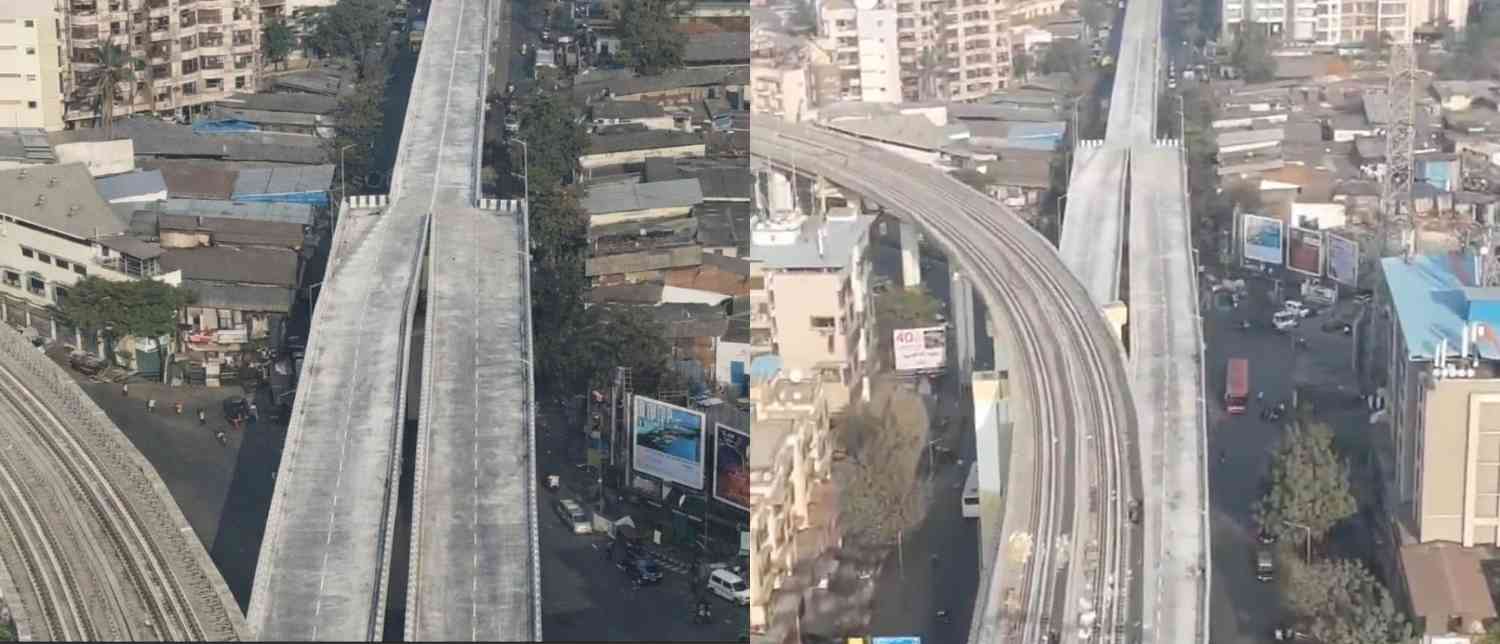
A newly constructed flyover in Mumbai’s Mira Road–Bhayander corridor has ignited an intense public debate, with viral videos, political jabs, and sharp criticism questioning the logic behind its design. At the centre of the controversy is a stretch of road that appears to shrink abruptly from four lanes to two—an apparent bottleneck that many citizens fear could worsen congestion and raise accident risks rather than solve traffic woes.
Responding to the backlash, the Mumbai Metropolitan Region Development Authority (MMRDA) has issued multiple clarifications, firmly rejecting allegations of faulty engineering or poor planning. According to the authority, the narrowing is a deliberate, phased design choice shaped by existing right-of-way constraints, long-term expansion plans, and integration with the Metro Line 9 double-decker corridor.
Yet, even as officials defend the project, social activists, legal experts, and opposition leaders continue to raise concerns over safety, accountability, and execution—turning the flyover into a flashpoint in the larger debate over urban infrastructure planning in the Mumbai Metropolitan Region.
The Viral Video That Sparked the Storm
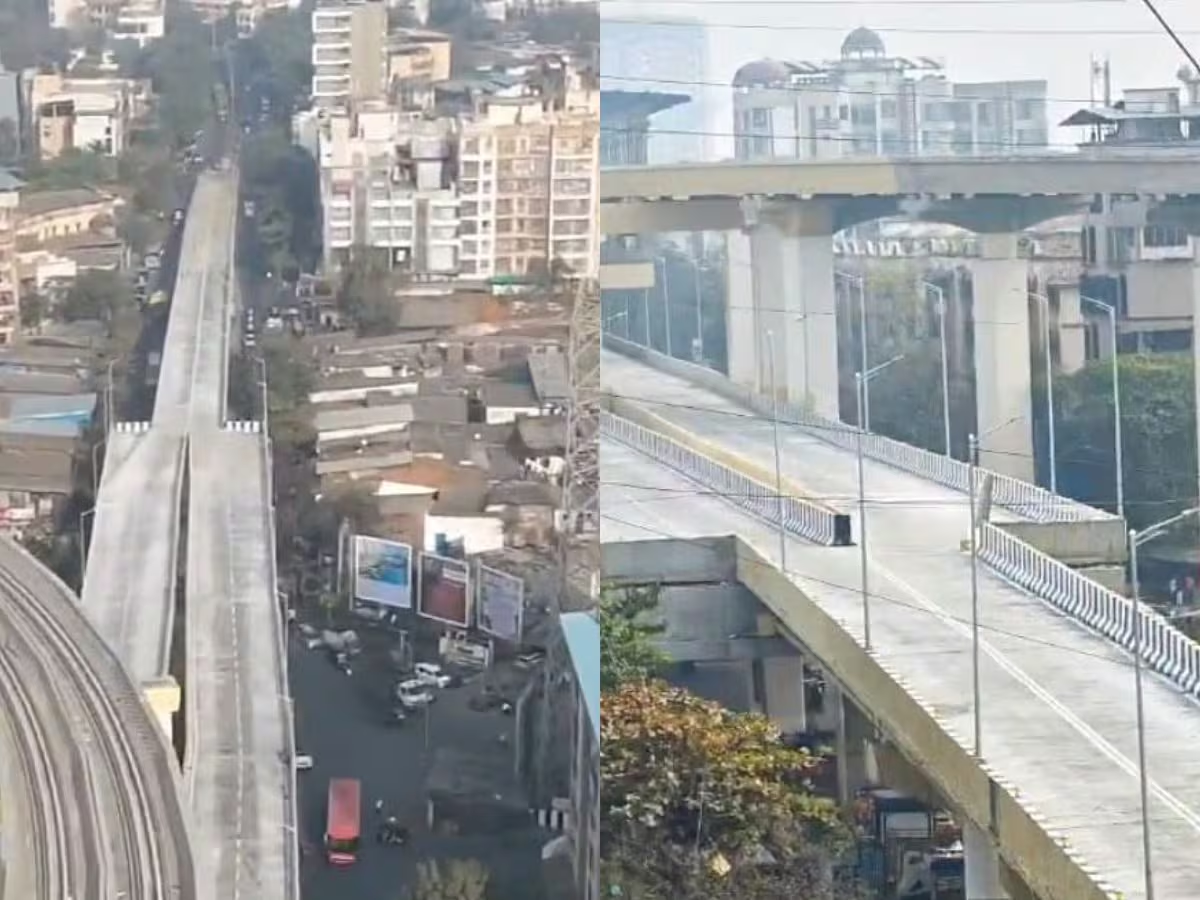
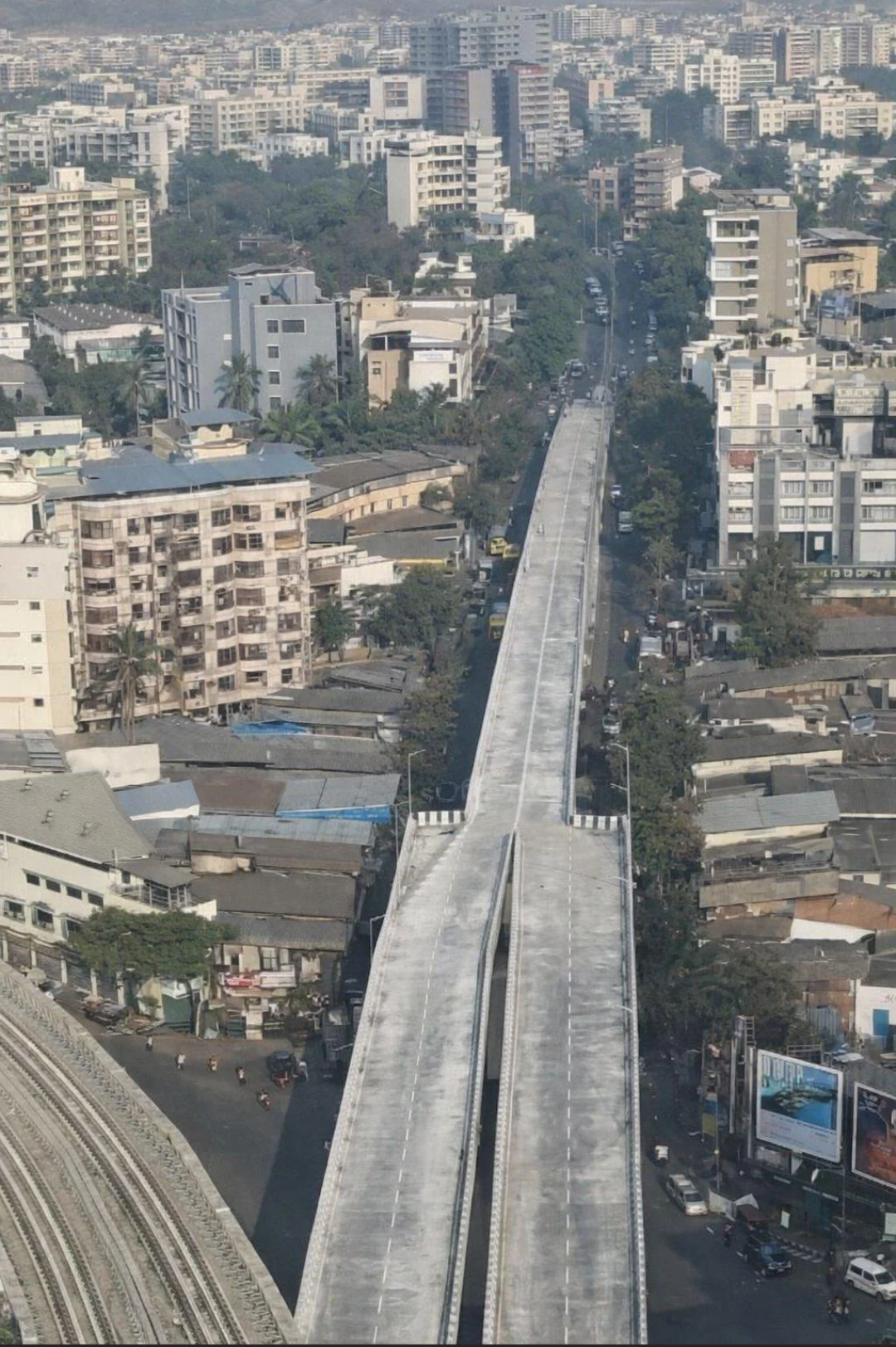
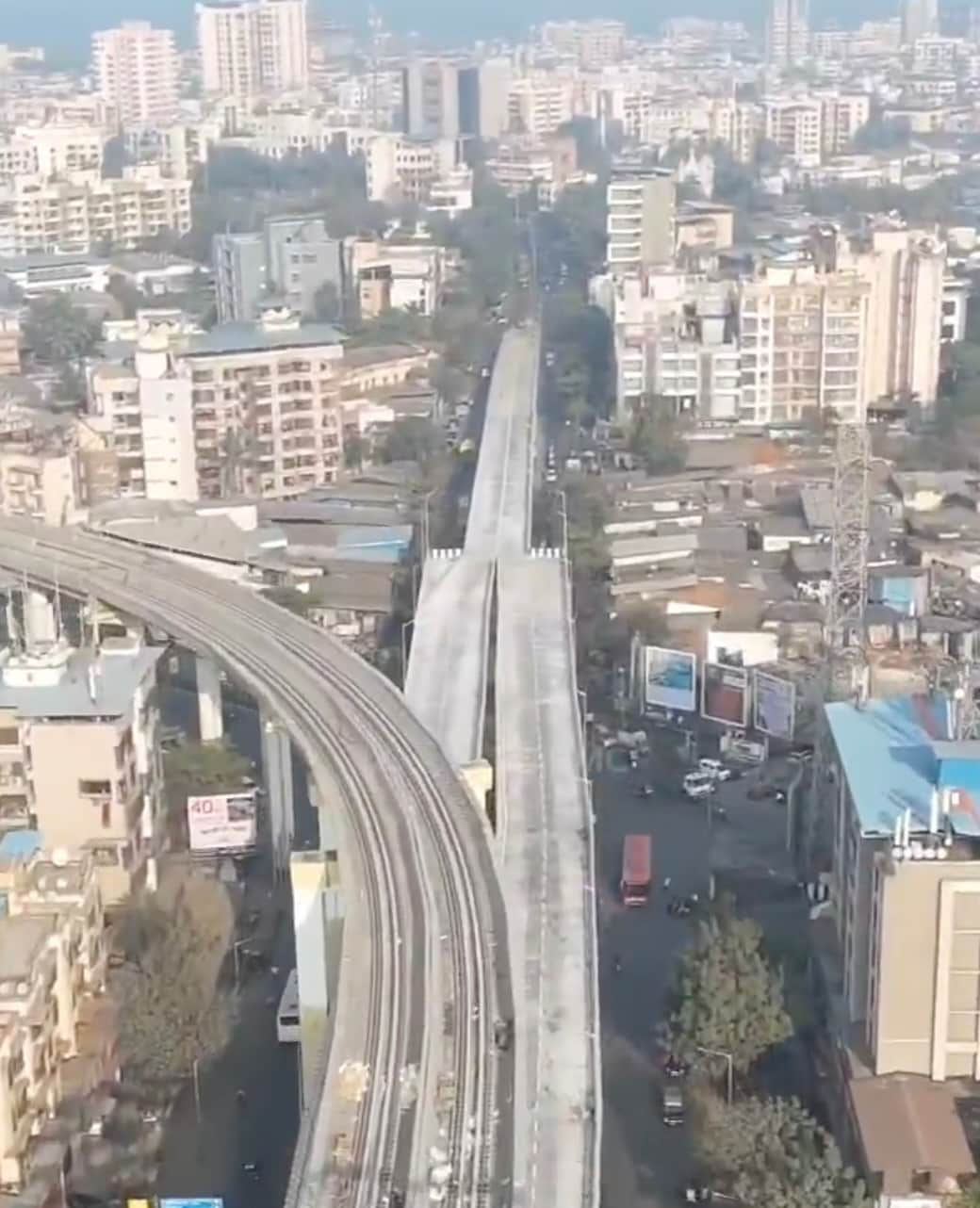
The controversy gained momentum after a video shared widely on social media showed the flyover beginning with a broad four-lane carriageway before tapering into just two lanes midway through the structure. The clip, circulated prominently by the X account Gems of Mira Bhayander, quickly went viral, triggering disbelief, ridicule, and outrage among commuters.
Many viewers questioned how a flyover designed to ease congestion could suddenly create a narrowing point that forces vehicles to merge, potentially slowing traffic and increasing accident risks—especially during peak hours when Mira Road and Bhayander already experience heavy congestion.
The flyover, part of the Metro Line 9 project connecting Andheri West to Mira Bhayander, was meant to be a symbol of improved connectivity. Instead, it became a lightning rod for criticism even before its scheduled inauguration in February.
“Bottleneck That Defeats the Purpose”: Public Reaction and Online Satire
Flyovers are typically constructed to ensure uninterrupted, high-speed vehicular movement by eliminating traffic signals and intersections. In this case, critics argue that the sudden transition from four lanes to two does the opposite—creating a choke point where vehicles must slow down and merge.
Local residents and commuters voiced frustration online, with comments ranging from sarcastic to outright furious. The structure was mockingly labelled an “engineering marvel” and a prime example of “zero-planning management.” Some users asked bluntly, “What kind of engineering is this?” while others warned that the design could invite accidents, especially at night or during the monsoon.
Speculation also emerged that the narrowing might be linked to ongoing Metro construction or land availability issues. However, critics feared that until future widening is completed, the flyover could complicate traffic rather than simplify it.
The flyover does not “suddenly narrow.” The transition from 4 lanes to 2 lanes is not a design flaw, but is based on available road width constraints, and future network planning.
As per planning, the flyover has been designed with two lanes for Bhayander East and future… https://t.co/hZrsBl9SAR— MMRDA (@MMRDAOfficial) January 27, 2026
MMRDA Responds: “Not a Design Flaw, but Planned Phased Connectivity”
Facing mounting criticism, the MMRDA issued a detailed clarification, calling claims of a “sudden narrowing” misleading. The authority emphasised that the flyover’s configuration is intentional and rooted in both present constraints and future expansion plans.
According to the MMRDA, the structure has been designed in phases to accommodate traffic towards both Bhayander East and Bhayander West. Currently, the flyover includes two operational lanes for Bhayander East, while provision has been kept for two additional lanes that will eventually extend towards Bhayander West across the Western Railway line.
Because the Bhayander East arm appears first along the alignment, the existing four-lane stretch transitions into two lanes at this stage. The remaining outer lanes, officials said, are reserved for a future extension that will complete east-west connectivity once approvals and coordination processes are finalised.
Golden Nest Circle: Why the Flyover Is 2+2 Lanes Here
One of the most critical sections of the flyover lies near Golden Nest Circle, one of the busiest junctions in the Mira–Bhayander region. This intersection sees five major roads converging, resulting in consistently high traffic volumes throughout the day.
Up to this point, the flyover has been constructed with a 2+2 lane configuration and is fully integrated with the elevated Metro corridor. To ensure effective traffic dispersal, slip roads have been provided on both sides of the flyover, allowing vehicles to merge and exit smoothly.
MMRDA officials said this design was chosen to manage the intense vehicular load at the junction while aligning with the Metro Line 9 infrastructure running above.
Right-of-Way Constraints Beyond the Junction
Beyond Golden Nest Circle, towards Bhayander East, the available right-of-way reduces significantly as per the Development Plan (DP). This spatial limitation, the MMRDA said, makes a four-lane configuration unfeasible at present.
As a result, a 1+1 lane flyover has been constructed along the median, complete with dedicated upward and downward ramps. This design ensures uninterrupted movement towards Railway Phatak Road, even within the constrained width available in the area.
According to officials, the configuration balances current on-ground realities with the long-term goal of strengthening east-west connectivity once land and approval hurdles are addressed.
Safety Measures: MMRDA Lists Multiple Protections
In response to concerns that the lane reduction could increase accident risks, the MMRDA stressed that extensive safety measures have been incorporated into the flyover’s design.
These include rumble strips to alert drivers of changes in road conditions, delineators to guide lane discipline, adequate signage, retro-reflective tags for night visibility, directional boards, and anti-crash barriers. The authority also confirmed that it is actively seeking guidance from traffic police to identify any additional safety enhancements before opening the flyover to public use.
“Invitation to Crashes?” Activists and Experts Push Back
Despite the official assurances, several public figures remain unconvinced. Social activist Anjali Damania sharply criticised the design, calling it an “invitation to accidents.” She drew parallels with the September 2022 car crash that killed industrialist Cyrus Mistry, alleging that faulty bridge design played a role in that tragedy.
“MMRDA is repeating the mistake and is not ready to admit it. How many lives are we going to put at risk?” she asked, questioning the authority’s willingness to acknowledge potential hazards.
Advocate Krishna Gupta also raised red flags over execution and accountability. He pointed out that the contractor executing the project, J Kumar Infraprojects, had previously been blacklisted by the Brihanmumbai Municipal Corporation (BMC) but continues to receive major infrastructure contracts.
Gupta further alleged that two earlier double-decker bridges built by the same contractor developed potholes within a year of inauguration, raising concerns about quality control and oversight.
Political Jabs and Growing Pressure
The controversy has also spilled into the political arena. Shiv Sena (UBT) leader Aaditya Thackeray took a sarcastic swipe at the state government and MMRDA on X, mocking the flyover’s design and the authority’s defence of it.
He suggested, tongue-in-cheek, that the “masterpiece” could soon be taught to other countries and joked that the bridge would be fully completed by 2047—echoing broader criticism of delayed infrastructure promises.
Thackeray also questioned why the transition from four lanes to two could not have been designed more smoothly, warning that any abrupt reduction in lanes is bound to create chaos and congestion.
Other Sections Already Open, MMRDA Clarifies
MMRDA officials noted that the Metro Line 9 double-decker corridor includes multiple viaduct stretches at different stages of completion. While the controversy centres on the 1.5-kilometre Deepak Hospital–Phatak Road stretch in Bhayander East, other sections have already been opened to traffic.
These include the 1.1-kilometre SK Stone Circle–Shivar Garden stretch and the 754-metre Kashigaon Metro Station–Saibaba Hospital stretch, which officials say are functioning as intended.
Future Widening Planned, Subject to Approvals
Looking ahead, the MMRDA reiterated that the flyover has been designed with future widening in mind. Provision has been made to extend both carriageways by an additional 1+1 lane on the outer sides to strengthen east-west traffic continuity.
However, the proposal is currently at the planning stage and will be taken up in coordination with the Mira-Bhayander Municipal Corporation (MBMC) after securing approvals from the competent authorities.
Until then, the authority maintains that the flyover’s primary objective is traffic dispersal and congestion reduction within existing spatial constraints.
A Test Case for Urban Infrastructure Planning
As the flyover awaits inauguration, the Mira Road–Bhayander debate highlights a larger challenge facing India’s rapidly urbanising cities: how to balance immediate congestion relief with long-term planning, land constraints, and public safety.
While the MMRDA insists the design is sound and forward-looking, critics argue that execution and communication failures have eroded public trust. Whether the flyover ultimately delivers on its promise—or becomes a cautionary tale—will only become clear once it opens to traffic.
For now, the structure stands as both a vital infrastructure project and a symbol of the growing scrutiny surrounding urban development in the Mumbai Metropolitan Region.
With inputs from agencies
Image Source: Multiple agencies
© Copyright 2025. All Rights Reserved. Powered by Vygr Media.