 By

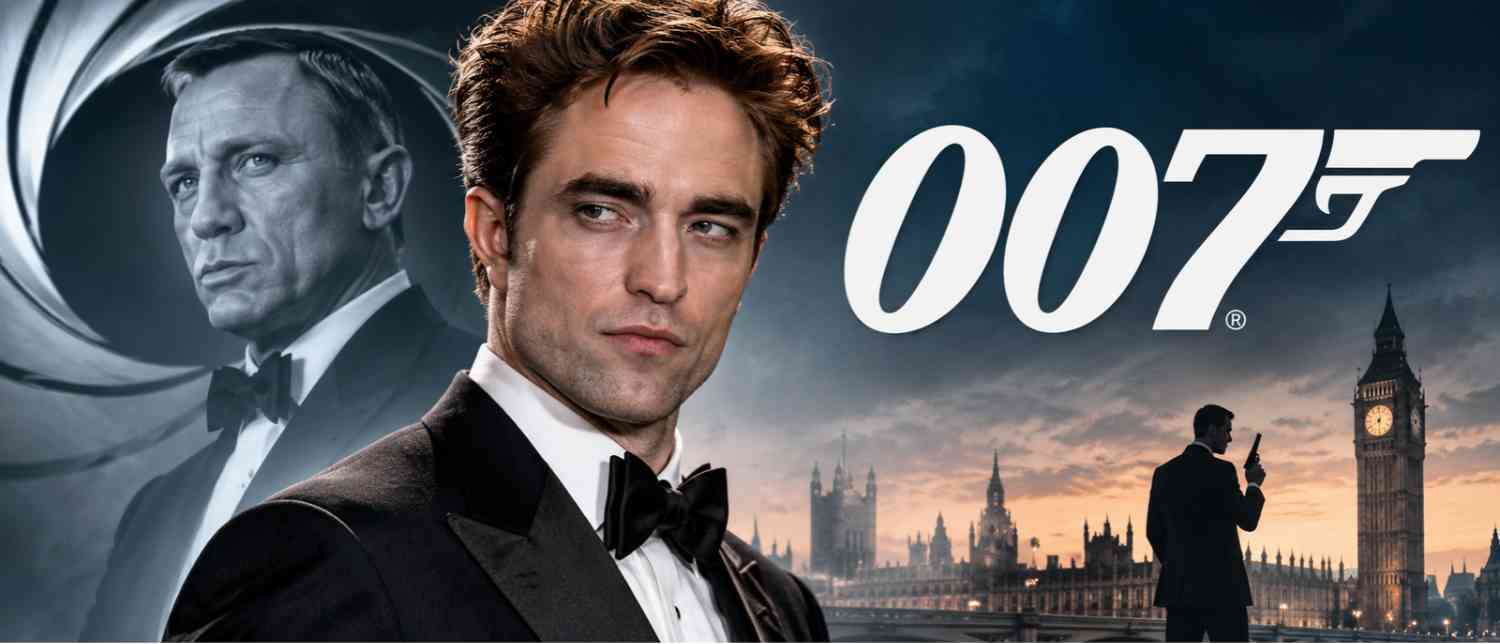
The name is Bond. James Bond. Except, this time, the internet seems more interested in calling him 'Emo Bond'. When Robert Pattinson steps into the shoes of the world's most recognisable fictional spy, he will inherit much more than a licence to kill, an expensive wardrobe and an enviable collection of cars. He will inherit a character whose relationship with masculinity, vulnerability and emotional expression has changed considerably over six decades.
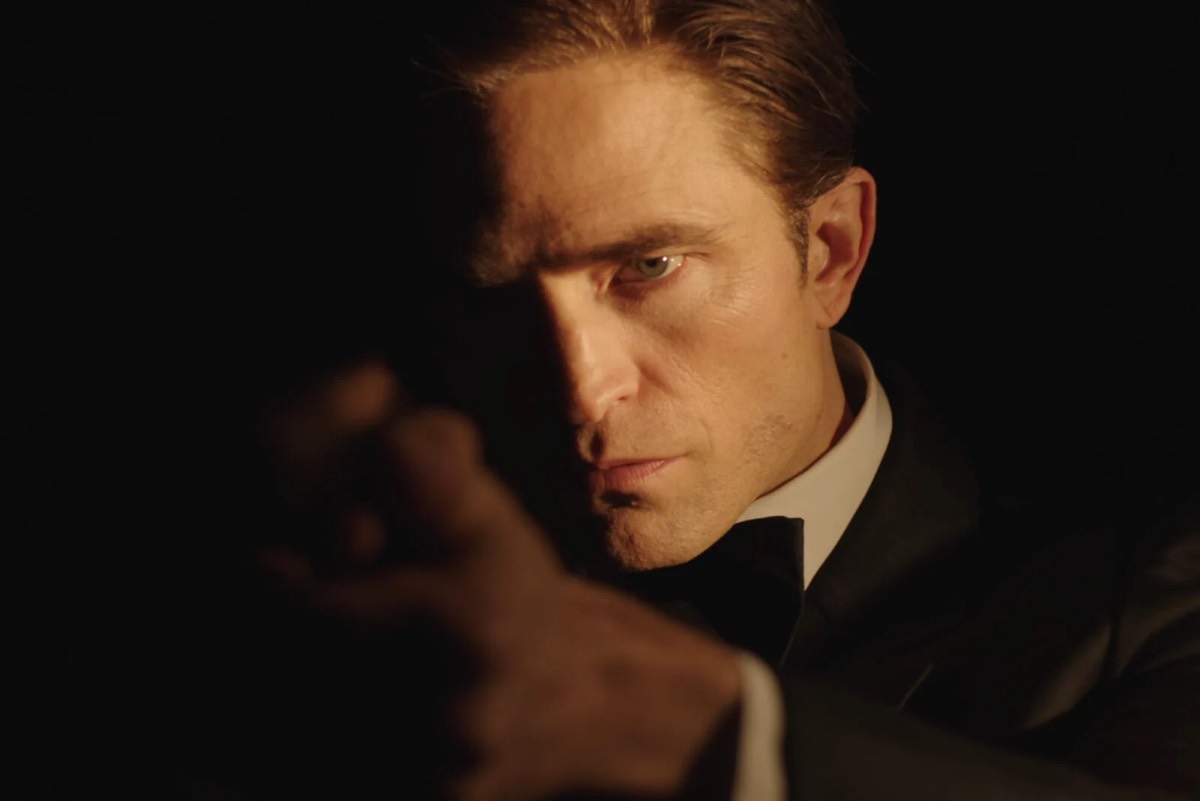
At first glance, Pattinson might seem like an unconventional choice for James Bond. The actor who once made teenage audiences swoon as the melancholic vampire Edward Cullen in Twilight and later portrayed a troubled, nocturnal Bruce Wayne in The Batman does not immediately evoke the image of a smooth-talking British secret agent. Bond is supposed to be effortlessly charming, impeccably dressed, dangerously confident and perpetually in control. Pattinson, meanwhile, has built much of his post-Twilight career playing men who are uncomfortable in their own skin, emotionally complicated and occasionally on the verge of falling apart.
But perhaps that apparent contradiction is precisely what makes his casting interesting.
The question is no longer simply whether Robert Pattinson can play James Bond. It is whether he can take forward the emotional transformation that Daniel Craig brought to 007 while restoring the playful confidence and irresistible charm that have always defined the character. More importantly, can Pattinson make vulnerability look as powerful as traditional masculine swagger?
James Bond Has Always Been More Than Just a Cool Man in a Suit
Since Sean Connery first appeared as James Bond in Dr. No in 1962, the character has represented a particular ideal of masculinity. He was sophisticated without appearing pretentious, physically intimidating without being visibly aggressive, and confident enough to walk into dangerous situations as though he owned the room.
His emotional life, however, was rarely allowed to interfere with his professional identity.
For much of the franchise's early history, Bond's defining characteristic was his ability to remain composed. He could face an armed opponent, survive an elaborate assassination attempt or walk away from an explosive confrontation without displaying much more than mild irritation. His confidence came partly from his apparent inability to be emotionally unsettled.
The women he encountered were frequently treated as romantic interests, adversaries or temporary companions rather than people who fundamentally altered his understanding of himself. Love was permitted, but emotional dependence was another matter altogether.
This was not necessarily a flaw in the character. Bond was created in a particular cultural environment, and his cinematic personality reflected the masculine ideals that audiences associated with power, authority and sophistication at the time.
But cultural expectations change. So do audiences.
What once appeared effortlessly cool can eventually look emotionally restrictive. The modern action hero does not necessarily have to suppress every feeling to demonstrate strength. Increasingly, audiences are interested in understanding what happens beneath the confident exterior.
And James Bond has not remained untouched by that shift.
From Sean Connery's Unshakeable Spy to Daniel Craig's Emotionally Wounded 007
Every actor who has played James Bond has brought something distinctive to the role. Yet few transformations have been as significant as the one introduced by Daniel Craig in Casino Royale (2006).
Craig's Bond was physically formidable, but he was also visibly vulnerable. He bled, suffered, made mistakes and experienced the consequences of his decisions. His confidence was not always effortless, and his emotional life was no longer something the franchise could conveniently ignore.
The difference was particularly striking in his relationship with Vesper Lynd.
In Casino Royale, Bond falls in love, begins imagining a life beyond espionage and allows himself to believe that he might finally escape the emotional isolation associated with his profession. When that relationship collapses, the consequences are not brushed aside with a witty remark or another glamorous adventure.
His heartbreak becomes part of his identity.
One of the film's most memorable moments occurs when Bond finds Vesper sitting in a hotel shower, visibly shaken after witnessing the violence surrounding them. Rather than responding with his familiar sarcasm or attempting to restore his own composure, he joins her. He sits beside her and holds her.
It is a surprisingly intimate moment for a franchise built around an emotionally guarded action hero.
The scene matters because Bond does not become less masculine by displaying tenderness. If anything, it makes him more recognisably human.
Craig continued developing this version of 007 through Quantum of Solace, Skyfall, Spectre and No Time to Die. His Bond carried grief, questioned his place in the world, struggled with trust and eventually discovered a form of emotional commitment that demanded the ultimate sacrifice.
By the time No Time to Die arrived in 2021, Bond was no longer simply a professional assassin with an impressive collection of gadgets. He was a man capable of loving deeply, building a family and accepting that his personal choices could matter more than his survival.
Daniel Craig did not eliminate the traditional James Bond. He complicated him.
That is perhaps the most important part of the legacy Robert Pattinson inherits.
Why Robert Pattinson's 'Emo Bond' Image Could Actually Work
The nickname 'Emo Bond' might sound like an internet joke, but it highlights an interesting possibility for the franchise.
Pattinson's career has been defined by his willingness to move away from conventional leading-man expectations. Following the enormous success of Twilight, he could easily have continued playing romantic heroes and commercially safe characters. Instead, he pursued increasingly unconventional projects that allowed him to explore uncomfortable, unpredictable and psychologically demanding personalities.
In Good Time (2017), he played a desperate man whose questionable decisions become increasingly difficult to defend. In The Lighthouse (2019), he portrayed a psychologically unstable individual trapped in an increasingly disturbing environment. Both performances demonstrated an actor interested in emotional extremes rather than polished heroism.
His return to mainstream blockbusters through Tenet and The Batman further demonstrated his range.
In Tenet, Pattinson displayed a lighter, more playful screen presence, combining intelligence, humour and understated confidence. It offered a glimpse of the sophisticated, quick-witted personality that could be valuable in a James Bond film.
Then came The Batman (2022), which provided perhaps the most interesting indication of what he might bring to 007.
His Bruce Wayne was not the familiar billionaire playboy who effortlessly moved between glamorous parties and secret crime-fighting missions. He was withdrawn, obsessive and emotionally consumed by his past. His Batman was driven less by the satisfaction of defeating criminals than by an unresolved need to confront his own trauma.
Pattinson demonstrated that a physically imposing superhero could also be insecure, isolated and emotionally conflicted.
That combination could prove useful in reinventing James Bond.
The character does not necessarily need another actor who can perform confidence convincingly. It needs an actor who can make the audience curious about what that confidence conceals.
Pattinson has repeatedly demonstrated that ability.

The Changing Definition of Masculinity: Why Bond Cannot Remain Frozen in Time
The evolution of James Bond is also a reflection of changing attitudes towards masculinity.
For generations, popular culture celebrated male heroes who were emotionally restrained, physically dominant and largely independent of meaningful emotional relationships. Their ability to endure pain without acknowledging it was often presented as evidence of strength.
But the idea that vulnerability and masculinity cannot coexist has gradually become less convincing.
Contemporary audiences have become more receptive to male characters who experience anxiety, grief, insecurity and emotional attachment without automatically being portrayed as weak. This does not mean that traditional masculine characteristics have disappeared or become undesirable. Confidence, courage, physical capability and decisiveness remain compelling qualities.
What has changed is the expectation that these qualities must come at the expense of emotional depth.
James Bond provides an interesting example of this transition.
Sean Connery's Bond represented a relatively uncomplicated version of masculine authority. Roger Moore brought humour and theatrical charm. Timothy Dalton introduced a more serious and psychologically intense interpretation, while Pierce Brosnan restored the franchise's polished glamour and effortless sophistication.
Daniel Craig brought these qualities into conversation with a more emotionally complicated version of the character.
Pattinson now has an opportunity to take that evolution further.
However, a more emotionally expressive Bond should not automatically mean a permanently miserable one. Modern masculinity is not simply about replacing emotional repression with emotional exhaustion.
There is a difference between a character who possesses emotional intelligence and one who appears incapable of enjoying his own existence.
Bond must remain entertaining. He must still be capable of flirting, making sharp observations, enjoying a perfectly prepared martini and walking away from danger with a knowing smile.
The challenge is to make those familiar qualities feel compatible with a more emotionally developed personality.
Can Robert Pattinson Bring Back the Playfulness That Bond Needs?
There is one potential problem with the idea of an emotionally darker James Bond: the franchise could become too serious about its own seriousness.
Daniel Craig's portrayal was successful partly because his Bond never completely abandoned the qualities that made the character entertaining. Despite his personal tragedies, he retained physical confidence, dry humour, sexual charisma and an ability to command attention.
His emotional vulnerability existed alongside his traditional appeal rather than replacing it.
That balance is essential.
Pattinson's performance in The Batman showed considerable control over silence, internal conflict and psychological tension. However, Bruce Wayne's withdrawn personality is not necessarily the ideal template for an international spy whose professional survival depends on reading people, manipulating situations and occasionally charming his way out of trouble.
James Bond is not supposed to spend every evening brooding in a dark room.
He should be able to enjoy life even when he knows how easily it can be taken away.
This is where Pattinson's performance in Tenet becomes particularly relevant. His character Neil demonstrated that he could play a sophisticated and capable operative with a relaxed sense of humour. He could be charming without being excessively polished and confident without appearing invincible.
Those qualities could provide a useful starting point for his interpretation of 007.
The ideal Pattinson Bond would not be an extension of Edward Cullen or Bruce Wayne. It would be a synthesis of the different personalities he has explored throughout his career: the emotional complexity of his independent films, the physical intensity of Batman and the understated charm of his espionage performance.
That combination could give audiences something genuinely different.
What Should the Next James Bond Film Do Differently?
A successful new James Bond era cannot rely entirely on the novelty of its casting. Pattinson's name may generate curiosity, but the character will ultimately be judged by the quality of the writing, direction and performance.
The next film should resist the temptation to repeat Daniel Craig's emotional journey.
Craig's Bond had already explored heartbreak, betrayal, fatherhood and sacrifice. Recreating those experiences with a different actor would risk turning an important character evolution into a familiar formula.
Instead, Pattinson's 007 should be allowed to experience emotions in ways that are distinct from his predecessor.
Perhaps his Bond could be more introspective without being emotionally paralysed. Perhaps he could understand the psychological cost of his profession while refusing to let it define every aspect of his personality.
His relationships with women should also reflect the changing expectations of modern audiences. Female characters should possess ambitions, agency and identities beyond their connection to Bond. The franchise has already begun moving in this direction, and there is little reason to reverse that progress.
Equally important is the need to preserve the elements that make James Bond culturally recognisable.
The tailored suits, sophisticated settings, memorable villains, elaborate action sequences, dry humour and unmistakable musical identity are not obstacles to reinvention. They are part of the franchise's appeal.
The goal should not be to make Bond unrecognisable. It should be to make him relevant without stripping away his personality.
A modern James Bond can acknowledge his emotional limitations and still be the most interesting person in the room.

The Real Test: Can Emo Bond Still Be Cool?
Perhaps the most interesting aspect of Robert Pattinson's casting is that it challenges audiences to reconsider what they expect from James Bond.
For decades, coolness has been central to the character's identity. Bond rarely appeared uncertain, rarely allowed his emotions to become visible and almost always seemed to have control over the situation.
But perhaps that version of coolness has become too predictable.
There is something compelling about a character who can be confident and uncertain, emotionally guarded and deeply affectionate, physically fearless and psychologically vulnerable. These qualities do not cancel one another out. Together, they create a more layered personality.
Pattinson has spent much of his career exploring precisely these contradictions.
His biggest advantage may not be that he can make Bond sad. It is that he can make the audience believe there is a complicated person underneath the immaculate suit.
Nevertheless, emotional complexity alone cannot carry the franchise. A Bond who is constantly introspective but lacks humour, charisma and romantic confidence would miss an essential part of the character. The audience does not want to watch 007 lose his identity in the process of becoming more human.
It wants to see what happens when those two qualities finally coexist.
James Bond Can Feel More Without Becoming Less
Robert Pattinson's arrival as James Bond presents an opportunity to take one of cinema's longest-running characters into an interesting new phase.
Daniel Craig demonstrated that vulnerability could strengthen the character rather than diminish him. His portrayal challenged the assumption that an action hero must remain emotionally inaccessible to appear powerful.
Pattinson has the acting range to explore that idea further. From the romantic melancholy of Twilight to the psychological darkness of The Batman, his career suggests an actor comfortable with characters who are complicated, imperfect and emotionally exposed.
But the next chapter of 007 should not be defined by sadness alone.
James Bond still needs his confidence, humour, sophistication and unmistakable swagger. He should be capable of feeling heartbreak without becoming consumed by it, showing affection without losing his independence and acknowledging fear without surrendering his courage.
Perhaps that is what the future of James Bond should look like: not a return to the emotionally untouchable spy of the past, nor an attempt to turn him into a permanently troubled superhero, but a character who can embrace both strength and vulnerability.
The most interesting Bond may ultimately be the one who understands that having no feelings is not the same as having no weaknesses.
And if Robert Pattinson can make that distinction work without forgetting how to order a martini, 'Emo Bond' might turn out to be considerably cooler than the internet initially imagined.
© Copyright 2026. All Rights Reserved. Powered by Vygr Media.