

 By
By 
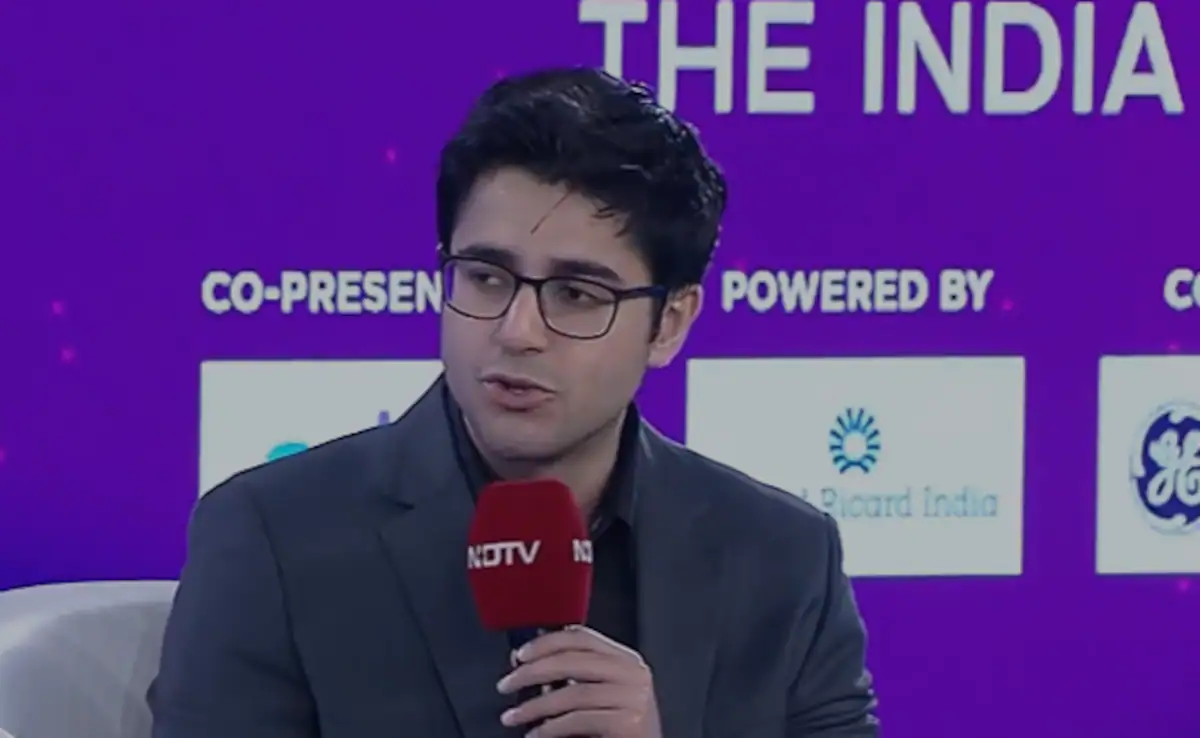
India’s quick-commerce industry is on the verge of a historic milestone. When Zepto debuts on the stock exchanges later this year, co-founder Aadit Palicha, just 23 years old, is set to become the youngest managing director and chief executive officer of a publicly listed company in India.
The milestone marks an extraordinary journey for Palicha and his childhood friend and co-founder Kaivalya Vohra, who launched the company after dropping out of Stanford University during the Covid-19 pandemic. Five years later, the duo is preparing to take one of India’s largest startup-led public offerings to Dalal Street.

From Stanford Dropouts to Quick-Commerce Leaders
Palicha and Vohra’s entrepreneurial story began during the pandemic when they returned to India from Stanford University and started experimenting with online grocery delivery. Their first venture, KiranaKart, eventually evolved into Zepto in 2021 after the founders identified a growing demand for ultra-fast delivery services.
At the time, Zepto’s promise of delivering groceries within 10 minutes was viewed by many as unrealistic. However, the founders bet heavily on consumer convenience and a dense network of fulfillment centers, commonly known as dark stores. That bet has since transformed Zepto into one of India’s largest quick-commerce companies.
Today, the company competes aggressively with major players including Blinkit, Swiggy Instamart, Flipkart Minutes, Amazon Now and BigBasket in what has become one of the fastest-growing segments of India’s digital economy.
Aadit Palicha’s Historic Achievement
Once Zepto completes its listing, Palicha will officially become the youngest MD and CEO of a listed Indian company. Vohra, also 23, will join him as one of the youngest founders to take a venture-backed startup public in India.
The achievement reflects the rise of a new generation of Indian entrepreneurs who have built large-scale businesses before turning 25. Palicha has already been recognized among India’s leading young entrepreneurs, with Zepto emerging as one of the country’s most closely watched startup success stories.
Details of the IPO
Zepto has filed updated draft papers with the Securities and Exchange Board of India (SEBI) for its public offering. The company has proposed a fresh issue of shares worth approximately ₹8,010 crore. Including the offer-for-sale (OFS) component, the total issue size is expected to range between ₹9,000 crore and ₹10,000 crore, making it one of India’s largest startup IPOs.
Reuters reported that the IPO could raise as much as $837 million, while industry estimates place the overall issue size near the ₹10,000-crore mark.
Notably, neither Palicha nor Vohra plans to sell any shares through the offer-for-sale route. Instead, the OFS portion will be led by existing investors, including Nexus Venture Partners and other early backers seeking partial exits. The founders’ decision to retain their holdings is widely viewed as a signal of confidence in Zepto’s future growth prospects.
Explosive Growth Ahead of Listing
The company’s updated prospectus highlights the scale at which Zepto has expanded over the past two years.
As of FY26, Zepto operated 1,139 dark stores across 66 cities, compared with just 337 stores two years earlier. Revenue from operations more than doubled year-on-year to ₹22,624 crore from ₹11,110 crore.
Operational metrics also underscore the company’s rapid growth:
-
210 million orders processed during the March quarter alone.
-
Average daily orders reaching 23.3 lakh.
-
Dark-store productivity climbing to a record 2,140 orders per store per day.
-
More than 2.3 million orders being handled daily across the network.
The company plans to use a portion of the IPO proceeds to continue expanding its infrastructure. According to disclosures, Zepto intends to add approximately 1,904 new dark stores as part of its next growth phase.
Strong Revenue Growth, But Losses Remain a Challenge
Despite its impressive scale, profitability remains one of the biggest questions surrounding Zepto’s public-market debut.
The company reported a net loss of ₹5,905 crore in FY26, even as revenue more than doubled. Rising operational costs, network expansion and customer acquisition spending continue to weigh heavily on earnings.
Industry observers note that Zepto’s IPO will test whether public-market investors are willing to back high-growth, loss-making technology businesses. The quick-commerce sector remains intensely competitive, with companies prioritizing market share and scale over short-term profitability.
To address investor concerns, Zepto has increasingly highlighted operational efficiency, order density, dark-store productivity and advertising revenue as future drivers of profitability. The company argues that higher order volumes and better monetization can eventually create a sustainable business model.
Questions Around Transparency and Investor Scrutiny
As Zepto prepares for its stock-market debut, scrutiny around its financial disclosures has intensified.
Several investors and market observers have raised questions about visibility into certain operating metrics and profitability assumptions. The company’s IPO roadshow is expected to focus heavily on explaining how its rapid growth can translate into long-term shareholder value. The challenge for Zepto will be convincing investors that the economics of 10-minute delivery can become sustainably profitable at scale.
The public listing is therefore being viewed as a major test not only for Zepto but for India’s broader quick-commerce ecosystem and new-age internet businesses.
ED Summons Disclosure Emerges in IPO Documents
Ahead of the IPO, Zepto also disclosed that founders Aadit Palicha and Kaivalya Vohra received summons from the Enforcement Directorate (ED) earlier this year.
According to the updated draft prospectus, the summons sought information regarding foreign investments, overseas holdings, audited financial statements since FY21, shareholding structures, loans, guarantees, income tax returns, bank account details, immovable properties and the company’s business model.
Vohra reportedly appeared before the agency on April 17 and April 22, while Palicha appeared on April 20 and May 15. The founders submitted the requested information along with additional documents related to Zepto’s holding structure, business agreements, invoices and corporate arrangements.
The company stated that neither it nor its founders had received any further communication from the agency after complying with the requests. However, Zepto also cautioned investors that it could not guarantee the absence of future inquiries or proceedings related to the matter.
Founders Maintain Modest Salaries
Despite overseeing one of India’s fastest-growing consumer technology businesses, the two founders continue to draw relatively modest compensation compared with the company’s scale.
For FY26, Palicha received remuneration of ₹2.74 crore, while Vohra earned ₹2.61 crore.
Their decision not to participate in the offer-for-sale component further reinforces their long-term commitment to the company as it enters the next phase of growth as a publicly traded business.
A Defining Moment for India’s Startup Ecosystem
Zepto’s upcoming IPO represents far more than a fundraising event. It symbolizes the maturation of India’s startup ecosystem, where founders barely out of college are building businesses capable of challenging established retail giants and attracting billions in investor capital.
For Aadit Palicha, the listing will mark a personal milestone—transforming a Stanford dropout who once experimented with a grocery-delivery idea into the youngest CEO of a publicly listed company in India.
For investors, however, the bigger question remains whether Zepto can prove that rapid growth, expanding market share and ultra-fast deliveries can ultimately translate into sustainable profits. The answer may determine not only the success of Zepto’s IPO but also the future trajectory of India’s booming quick-commerce sector.
With inputs from agencies
Image Source: Multiple agencies
© Copyright 2026. All Rights Reserved. Powered by Vygr Media.