
 By
By 
Six workers were killed and two others remained missing after a sudden rush of water and debris entered an under-construction tunnel in Uttarakhand's Chamoli district on Thursday evening, triggering a large-scale rescue operation involving multiple disaster-response agencies.
The incident took place at a hydropower project in the Mayapur area near Pipalkoti. According to officials, 22 workers were inside the tunnel when water mixed with mud and debris suddenly surged into the structure. Fourteen workers were rescued and reported injured, while six died and two remained trapped or unaccounted for as search operations continued late into the night.
The tragedy has once again highlighted the dangers of construction activity in Uttarakhand's mountainous terrain, particularly during periods of intense monsoon rainfall when landslides, flash floods and sudden changes in water flow can make underground construction extremely hazardous.
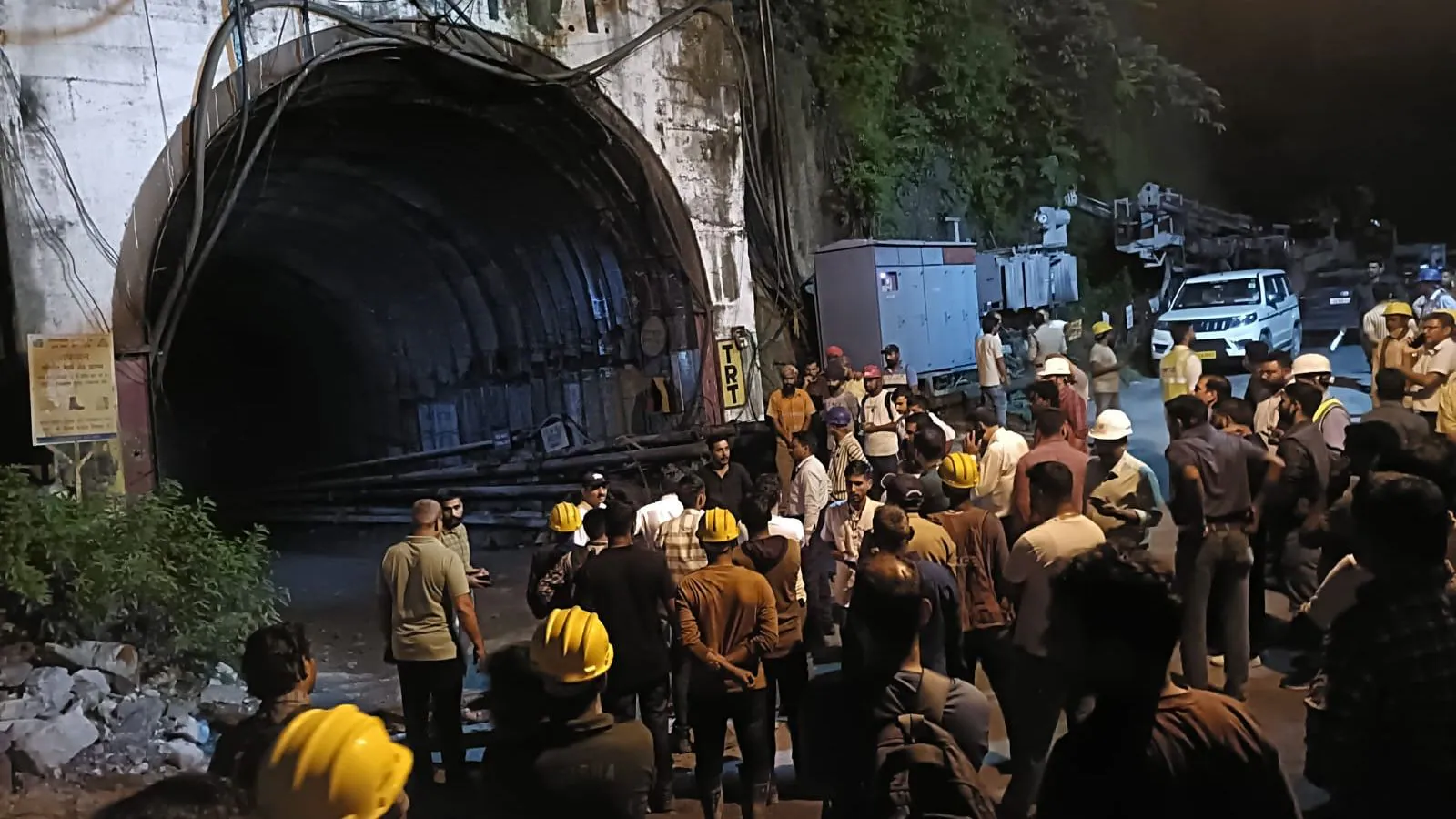
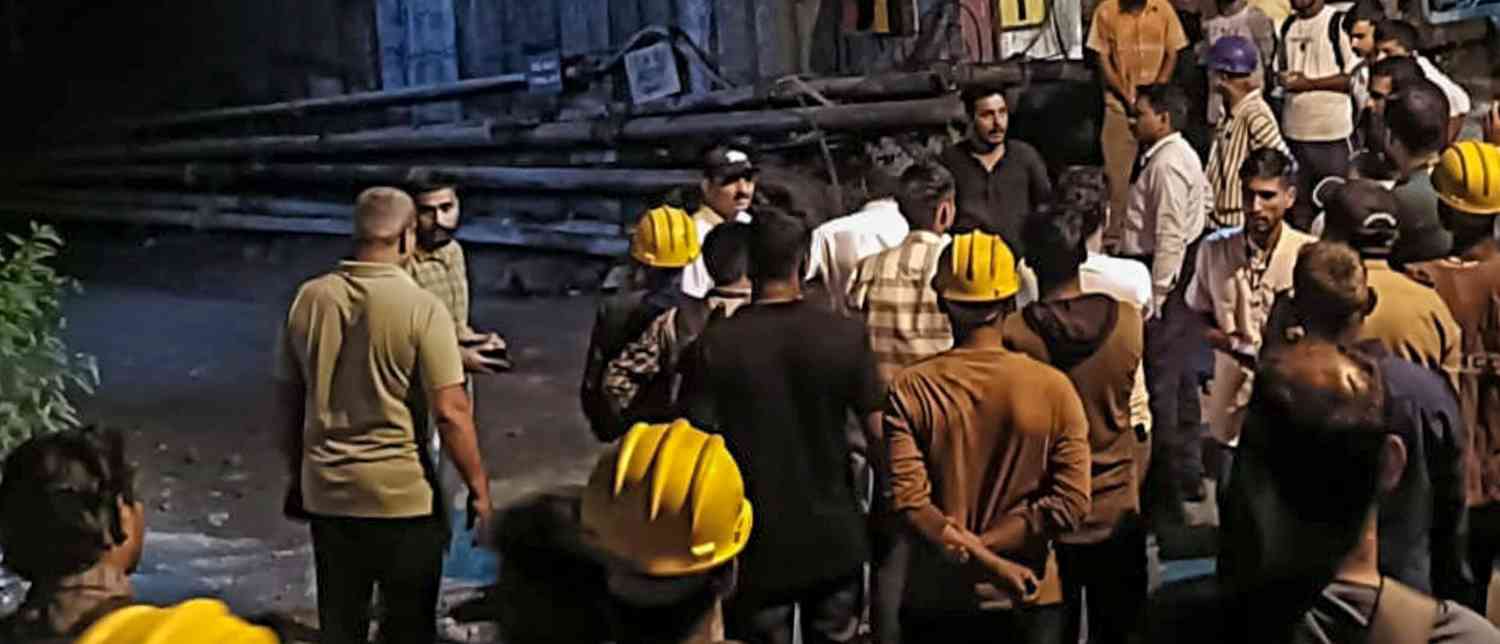
Uttarakhand Tunnel Accident: What Happened in Chamoli?
The incident was reported on Thursday evening at an under-construction tunnel associated with the Tehri Hydro Development Corporation Ltd (THDC) project in Chamoli.
While the State Disaster Management Authority said a significant amount of water and debris surged into the tunnel at around 6:30 pm, local reports placed the incident at around 7:05 pm. The tunnel, identified by the Times of India as a roughly 2-km-long Tail Race Tunnel, was being constructed by Hindustan Construction Company (HCC).
According to officials, a cavity had formed approximately 1.4 km inside the tunnel. Water and debris then entered through the cavity, which was believed to have been caused by a landslide above the tunnel alignment. Pumps were deployed to remove accumulated water and assist the rescue operation.
The sudden inflow created dangerous conditions underground. Reports said the force of the water swept several workers towards the tunnel's exit, while others were trapped inside. Of the 22 people working inside at the time, 14 were eventually rescued, six lost their lives and two remained missing.
Six Workers Killed, 14 Rescued
The death toll stood at six as rescue teams worked through the debris to locate the two missing workers.
The 14 workers who were rescued were taken for medical treatment. Uttarakhand Chief Minister Pushkar Singh Dhami said the injured workers were stable and that he had spoken to some of those admitted to hospital. He also said he had contacted the chief medical superintendent regarding their treatment.
The workers were reportedly on the 2 pm to 10 pm shift when the incident occurred. The timing meant a substantial workforce was underground when the water and debris entered the tunnel.
For the families of those still missing, however, the rescue operation remained a race against time. Teams had to work through unstable debris and water while attempting to reach sections of the tunnel that had been affected by the sudden surge.
NDRF, SDRF, Army Among Teams Involved in Rescue
The scale of the emergency prompted the deployment of several agencies.
Personnel from the National Disaster Response Force (NDRF) and State Disaster Response Force (SDRF) were involved in the search for the missing workers. The District Incident Response Force, police and Central Industrial Security Force also joined the initial rescue efforts. Army and Indo-Tibetan Border Police personnel were subsequently deployed as the operation expanded.
Rescuers were seen working through the debris in an attempt to reach the affected portion of the tunnel. Pumps were also being used to remove water from inside the structure, according to reports.
The rescue operation was being closely monitored by the state administration. Chief Minister Dhami directed officials to conduct relief and rescue efforts on a priority basis and said he was receiving regular updates from senior officers.
Local MLA Lakhpat Butola also reached the area and said the administration's priority was to support the rescue teams and those affected by the incident.
Heavy Rainfall Raises Concern Over Landslide Risk
The tunnel accident occurred amid heavy rainfall in Chamoli district, adding another layer of risk to the rescue operation.
The region had experienced persistent rain over several days. Rising water levels had already caused a bridge in the Niti Valley region to be swept away earlier in the week. Visuals from that incident showed a powerful flow of muddy water and debris striking and uprooting the bridge.
In the tunnel incident, officials cited the sudden movement of water and debris, while the report said a cavity had formed because of a suspected landslide above the tunnel alignment. The precise chain of events leading to the cavity and subsequent water inflow will require further assessment.
The combination of steep Himalayan slopes, unstable geological formations and intense rainfall can make underground construction particularly challenging. In such conditions, even a relatively localised slope failure can have serious consequences if it opens a pathway for water, mud and loose material to enter an excavation.
Why the Tunnel Became So Dangerous
A tunnel under construction is fundamentally different from a completed and fully operational underground structure. During construction, sections may not yet have received their final lining or other permanent protective measures, while excavation can expose varying types of rock and soil.
In this case, the reported cavity was located deep inside the tunnel, roughly 1.4 km from the entrance. That distance posed an immediate logistical challenge for rescuers because equipment, personnel and emergency supplies had to be moved through a partially constructed underground passage.
The presence of water further complicated the situation. Pumps were brought in to drain the tunnel, but rescue teams also had to contend with debris that could block access and potentially shift as water levels changed.
This made the operation considerably more complex than a conventional landslide rescue. Workers were not simply trapped beneath surface debris; the emergency unfolded inside a long underground structure where water, mud and unstable material could restrict movement and visibility.
Chamoli's Growing Exposure to Extreme Weather Events
The latest tunnel accident comes against the backdrop of repeated weather-related disasters in Uttarakhand.
Chamoli, in particular, has experienced flash floods, landslides and infrastructure damage during intense rainfall events. The district's mountainous geography makes roads, bridges, tunnels and hydropower infrastructure vulnerable when heavy precipitation triggers slope failures or sudden increases in river and stream flows.
The bridge incident in Niti Valley earlier this week offered a stark indication of the strength of water and debris moving through the region. Against that backdrop, the sudden entry of water into an underground construction site demonstrated how quickly weather conditions can turn a routine work shift into a life-threatening emergency.
The incident is also likely to renew questions about safety protocols at large infrastructure projects operating in fragile Himalayan terrain. Any investigation will need to establish whether the cavity was directly linked to a landslide, how quickly water entered the tunnel, what warning systems were available and whether workers had adequate escape routes and emergency preparedness.
Investigation and Safety Questions Ahead
While the immediate focus remained on locating the two missing workers and providing treatment to the injured, questions about the circumstances surrounding the accident are likely to follow.
The reported formation of a cavity above the tunnel alignment will be an important area of investigation. Authorities and project officials may need to examine the geological conditions around the affected section, rainfall and slope stability, drainage arrangements and the tunnel's construction status.
It will also be important to determine whether workers received any warning before the water and debris entered the tunnel and how quickly evacuation procedures could be initiated.
At present, officials have not publicly established a definitive cause beyond the reported landslide-related cavity and sudden inflow of water and debris. Therefore, conclusions about negligence or technical failure would be premature until a formal assessment is completed.
For now, the immediate priority remains the rescue operation.
Rescue Operation Continues as Families Wait
As teams from the NDRF, SDRF, Army, ITBP and other agencies continued working at the site, the focus remained firmly on the two missing workers.
Six families had already received the devastating news that their loved ones had died, while 14 workers were receiving medical attention after being rescued. The fate of the remaining two workers remained uncertain as rescuers searched through the debris-filled tunnel.
The Chamoli tunnel accident has therefore become more than another monsoon-related disaster in Uttarakhand. It is a reminder of the narrow margin for error when major infrastructure projects are built in a landscape where heavy rain, landslides, unstable slopes and powerful water flows can combine without warning.
As the rescue effort continues, the immediate hope is to bring the two missing workers out safely. Beyond that, the tragedy is likely to intensify scrutiny of construction safety and disaster preparedness at tunnel and hydropower projects across the Himalayan state.
With input from agencies
Image Source: Multiple agencies
© Copyright 2026. All Rights Reserved. Powered by Vygr Media.