 By
By 
Tesla Roadster Flying Car: Elon Musk has brought the idea of a flying car closer to reality with a dramatic demonstration of Tesla’s next-generation Roadster. The electric supercar performed an airborne flip, travelled upside down along a curved ramp and landed safely, showcasing technology developed with SpaceX. Tesla is targeting 2028 for production, although questions remain over safety, road legality and whether the vehicle’s extraordinary capabilities will make it into the final production model.
The future of electric cars may have just taken an unexpected turn, upwards.
On October 15, 2026, Tesla CEO Elon Musk unveiled the long-awaited next-generation Tesla Roadster at a SpaceX testing facility in McGregor, Texas, delivering a demonstration that looked more like a scene from a science-fiction film than a conventional automotive launch.
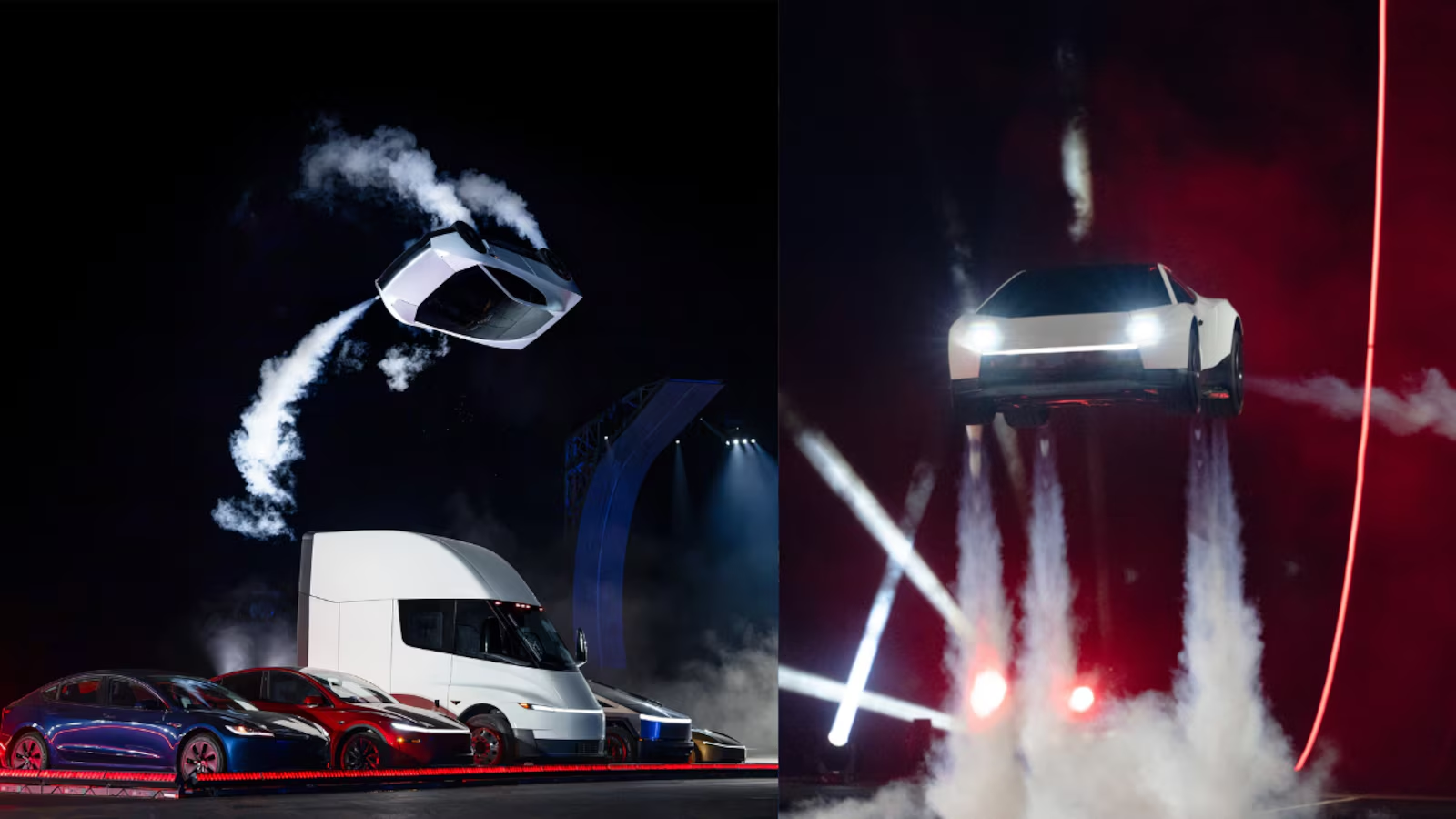
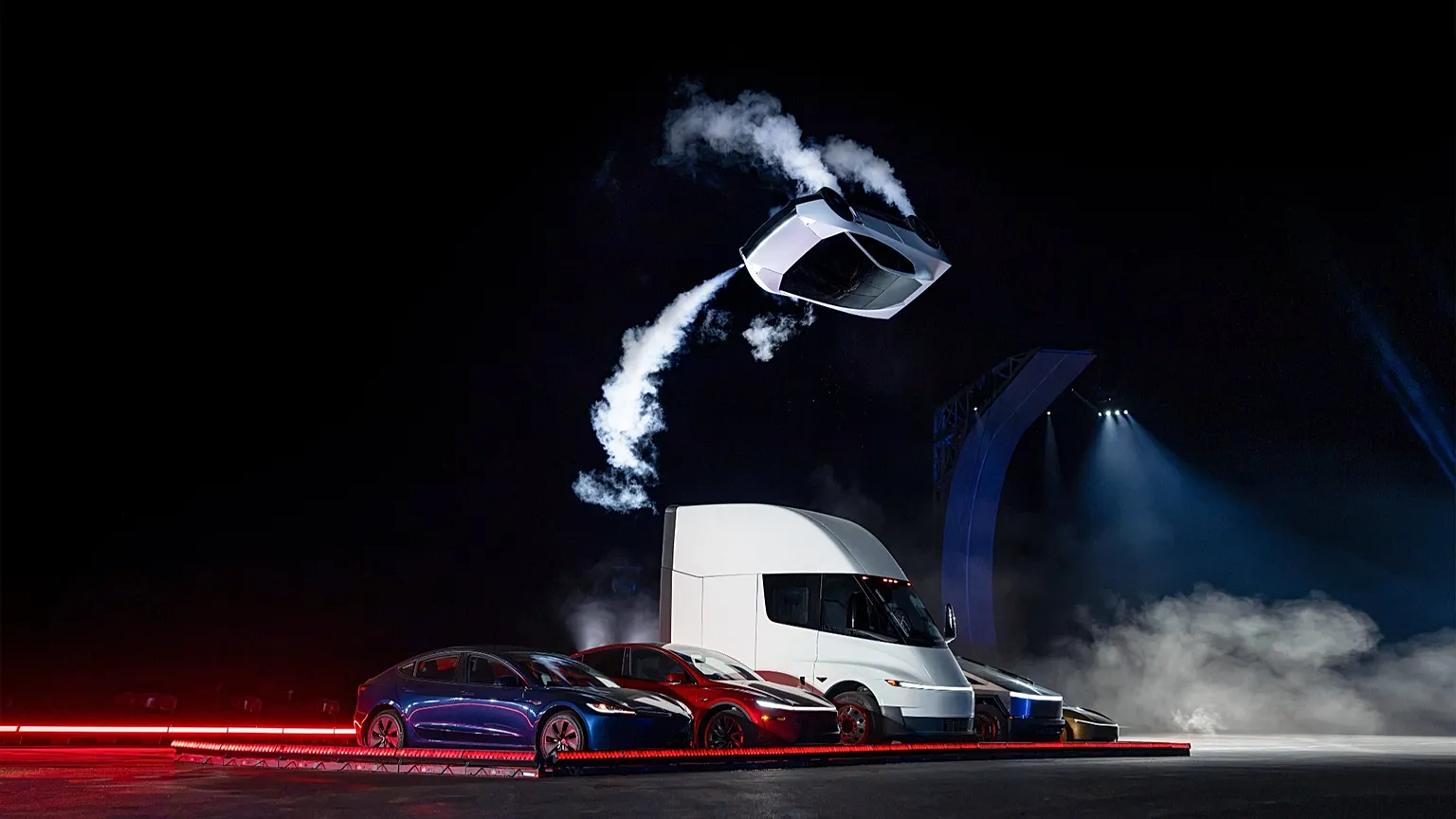
The futuristic electric sports car did more than accelerate or showcase its sleek design. It climbed a towering curved ramp, travelled upside down, launched into the air, performed a mid-air flip and returned to the ground under control. Another demonstration showed the vehicle jumping over a line of Tesla vehicles.
The spectacle immediately reignited global interest in flying cars and the possibilities of combining electric vehicle engineering with aerospace technology.
Musk shared footage of the demonstration on social media, suggesting that the future of flying cars had arrived. However, while the performance was striking, the Roadster’s ability to perform brief aerial manoeuvres should not be confused with the sustained flight capabilities of an aircraft.
Tesla Roadster 2 Makes a Dramatic Flying Car Debut
The new Tesla Roadster is the second-generation version of the electric sports car that helped establish Tesla’s early reputation for high-performance electric vehicles. Its latest unveiling comes nearly nine years after Musk first presented the next-generation Roadster in 2017.
The latest demonstration focused on the car’s unusual ability to combine road driving with short, controlled airborne movements. Unlike conventional electric supercars, which depend on tyres, suspension and aerodynamic downforce to maintain contact with the road, the new Roadster incorporates a proposed propulsion system inspired by SpaceX technology.
During the event, the vehicle used a specially designed ramp and an underbody suction system to travel upside down before leaving the structure. Thrusters then helped control its movement in the air, allowing it to rotate and land.
The demonstration also included a spectacular manoeuvre in which the car appeared to jump over several vehicles from Tesla’s lineup, including the Cybertruck.
The event was designed to demonstrate that the technology was more than a computer-generated concept. Nevertheless, the vehicle remains a pre-production showcase, and its final specifications, safety performance and commercially available capabilities will need further verification.
How Does the Tesla Flying Car Work?
One of the biggest questions surrounding the Tesla Roadster is how an electric sports car can lift off the ground without conventional wings or helicopter-style rotors.
The answer lies in its combination of aerodynamic systems and compressed-gas thrusters.
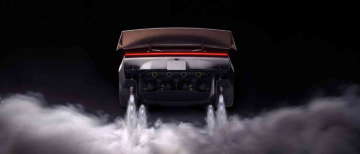
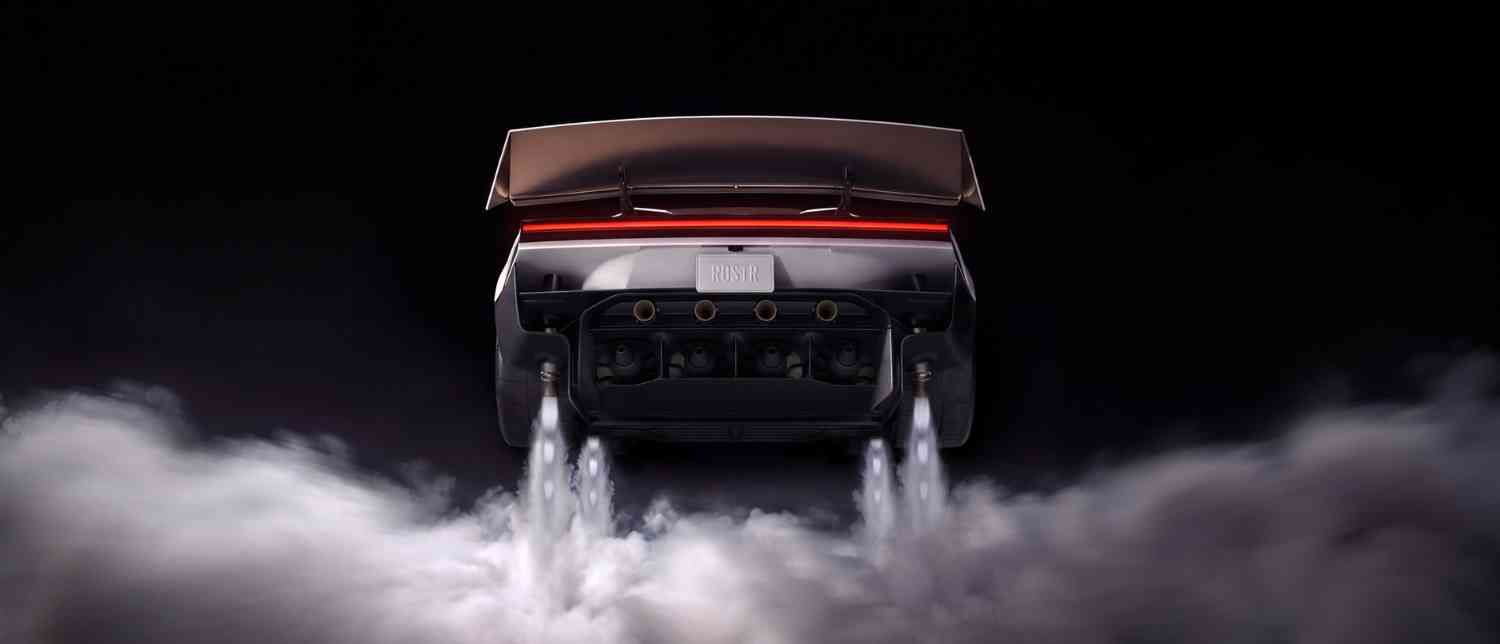
According to Tesla’s engineering presentation, the Roadster uses a system of 10 thrusters connected to compressed-air storage. These thrusters can generate controlled forces that help lift, rotate and stabilise the vehicle during brief airborne manoeuvres.
The system draws on aerospace engineering associated with SpaceX, Musk’s rocket company. Rather than relying on conventional rocket fuel for the demonstrated movements, the proposed setup uses pressurised gas released through thruster nozzles to generate force.
Tesla has also highlighted a multi-mode suction system beneath the vehicle. Powered fans pull air from underneath the car, creating suction that can help hold it against a surface. The company has described the system as capable of generating up to two times the force of gravity in suction under its stated operating conditions.
This technology was central to the upside-down driving demonstration. By helping the car remain attached to the curved ramp, the suction system enabled a manoeuvre that would be impossible for a conventional road car.
Active aerodynamics and lightweight construction are also part of the design. Together, these systems are intended to improve traction, handling and stability while supporting the vehicle’s more unusual capabilities.
However, the technology has important limitations. A car that briefly leaves the ground and performs an aerial flip has not necessarily demonstrated the ability to hover, travel long distances through the air or operate like an aircraft. Those capabilities would require considerably more evidence about stability, endurance, control systems and safety.
Tesla Roadster Acceleration, Top Speed and Range
The flying demonstration was only one part of Tesla’s ambitious performance pitch.
Musk has claimed that the new Roadster can accelerate from zero to 60 miles per hour in less than one second. That is approximately 96.6 km/h, a figure that would place the vehicle among the most extreme performance cars ever proposed.
Tesla has also advertised a top speed exceeding 230 mph, or approximately 370 km/h, for the Rocket configuration. The company has cited a range of more than 300 miles, although final real-world figures will depend on the production model, driving conditions and the configuration selected.
These numbers remain manufacturer claims rather than independently established production-car results.
The Roadster’s design is intended to complement its performance. Tesla has highlighted concealed headlights, a full-length rear light, flush-mounted body surfaces and lightweight wheels. Its aircraft-inspired styling draws on the appearance of high-performance military and reconnaissance aircraft.
The company has also promoted an aerospace-inspired paint finish, tinted glass influenced by spacesuit visors and the use of lightweight materials such as magnesium, titanium and carbon fibre.
Inside, the proposed cabin follows a minimalist approach, with an Ultrawhite finish, grey microsuede detailing and a performance-focused seating arrangement. Manual controls and a fixed seat position are also part of the design concept.
The result is intended to be a vehicle that looks and feels different from a conventional luxury electric car.
Tesla Roadster Performance, Thrust and Rocket Variants Explained
Tesla has outlined three configurations for the next-generation Roadster: Performance, Thrust and Rocket. Each is designed around a different level of performance and specialised technology.
Performance: This is the road-focused version, featuring active aerodynamics and the underbody suction system. It is designed as a two-seater and is described as road-ready.
Thrust: The Thrust configuration adds rear-mounted cold-gas thrusters to the performance-focused package. Tesla describes it as race-ready, with the company targeting acceleration from zero to 60 mph in less than 0.9 seconds.
Rocket: The most specialised configuration is described as air-ready. It features thrusters positioned around the vehicle to support forward, upward, lateral and rotational movement. Unlike the two-seat Performance and Thrust versions, the Rocket model is presented as a single-seater.
Tesla has claimed an acceleration time of less than 0.59 seconds for the Rocket configuration, along with a top speed exceeding 230 mph.
The company has begun accepting reservations for the new Roadster. The Performance reservation is listed at $50,000, while the Thrust reservation costs $250,000. The Rocket configuration is described as invite-only.
These reservation amounts should not be confused with confirmed final retail prices. Tesla has not yet delivered a production version of the new Roadster, and its eventual specifications and availability remain subject to development.
Tesla Roadster Launch Timeline: From 2008 to 2028
The latest unveiling marks another chapter in a project that has been years in the making.
Tesla introduced its original Roadster in 2008. Based on a Lotus Elise chassis, the electric sports car challenged the perception that battery-powered vehicles had to sacrifice speed and excitement for efficiency. It remained in production until 2012 and helped establish the foundation for Tesla’s subsequent expansion into electric sedans and SUVs.
The next-generation Roadster was unveiled as a prototype in 2017, with deliveries initially expected in 2020. The launch was subsequently delayed several times, leaving customers and enthusiasts waiting for a production model.
In 2018, Musk also discussed a SpaceX-inspired package for the Roadster, suggesting that rocket-style thrusters could push its performance beyond conventional automotive limits.
The October 2026 demonstration has now provided a more dramatic illustration of that ambition. However, the company’s latest production target is 2028, meaning buyers will still have to wait before the vehicle reaches the market in its intended production form.
The prolonged development timeline also makes the final outcome particularly important. Tesla will need to demonstrate that the vehicle can move beyond spectacular prototypes and deliver reliable, repeatable performance in a commercially viable package.
Is Tesla’s Flying Roadster Safe and Legal on Public Roads?
Despite the excitement surrounding the unveiling, the Roadster’s flying-car features raise substantial questions about safety and regulation.
A conventional road vehicle is designed to operate within established rules governing acceleration, braking, crash protection and road handling. A car capable of lifting off the ground introduces additional risks involving thrust control, airborne stability, landing forces and the possibility of unexpected movement.
Musk himself acknowledged that the vehicle was not necessarily optimised for safety. That admission highlights the difference between demonstrating an extraordinary engineering capability and making it suitable for everyday use.
The regulatory position is another challenge. A vehicle that performs sustained or independently controlled flight could fall under aviation rules in addition to motor vehicle regulations. Even if the Roadster’s airborne movements remain brief, the legality of using its thrusters on public roads is unclear.
The company will need to establish which capabilities can be used legally, what safeguards are required and how the vehicle will meet applicable standards before customer deliveries begin.
For now, the demonstration establishes that the prototype can perform particular airborne manoeuvres in a controlled setting. It does not establish that owners will be able to fly the car freely on public roads.
Why the Tesla Roadster Matters for Elon Musk
The new Roadster arrives at a time when Tesla is increasingly presenting itself as more than an electric vehicle manufacturer, with artificial intelligence, autonomous driving and robotics becoming important parts of its broader ambitions.
The car may not become a high-volume product, but it could serve as a technological showcase for the company. Such flagship vehicles, often called halo cars, are designed to attract attention, demonstrate engineering capabilities and strengthen a brand’s image.
The Roadster also brings together two areas associated with Musk: electric cars and aerospace engineering. By integrating SpaceX-inspired thrusters into a sports car, Tesla is testing the boundaries of what consumers expect a road vehicle to do.
Yet the commercial case is less straightforward than the spectacle. A specialised supercar with expensive hardware and uncertain regulatory limits is unlikely to become an everyday transport solution for most people.
Its significance may instead lie in the engineering questions it raises: how far can electric vehicle performance be pushed, how can aerospace systems be adapted for road use, and where should the line be drawn between an ambitious demonstration and a practical product?
Tesla Flying Car: What Happens Next?
The Tesla Roadster’s dramatic unveiling has revived the idea that flying cars could move beyond science fiction. Its combination of electric propulsion, active aerodynamics, suction technology and SpaceX-inspired thrusters makes it one of the most unusual automotive projects currently attracting public attention.
However, the next major milestone will not be another stunt. It will be the transition from prototype to production.
Tesla must still demonstrate the vehicle’s reliability, confirm its final performance figures, address safety and regulatory requirements, and show which advertised features will be available to customers.
Production is currently targeted for 2028, but the project’s history of delays means the timeline will be closely watched.
For now, the new Roadster represents both a remarkable engineering spectacle and an unanswered question about the future of transport. It may not replace conventional cars or become a flying taxi, but it has shown how radically the boundaries of electric vehicle design can be challenged.
The real test will be whether Tesla can turn the excitement of a few seconds in the air into a safe, dependable and commercially deliverable machine.
© Copyright 2026. All Rights Reserved. Powered by Vygr Media.