 By

India's highway infrastructure is undergoing a major transformation, with new expressways, wider roads and faster connectivity changing the way people travel. But as the country moves towards high-speed road networks, an equally important question deserves attention: Are Indian roads and motorists ready for higher speeds?
This question has gained fresh relevance following Union Road Transport and Highways Minister Nitin Gadkari's announcement on expressway speed limits and speeding challans. The minister has reportedly instructed officials not to issue traffic challans to motorists travelling at speeds of up to 120 kmph on expressways. More controversially, he has indicated that even drivers exceeding 120 kmph by up to 20% should not receive a penalty.
In simple mathematical terms, a 20% margin over 120 kmph translates to 144 kmph. This means motorists could potentially travel at speeds approaching 144 kmph without receiving a speeding challan under the enforcement approach described by the minister.
While the announcement may come as welcome news for highway commuters frustrated by speeding notices, it has also triggered an important debate about road safety in India. Is this a practical step towards more sensible traffic enforcement, or does it risk encouraging dangerous driving behaviour?
The answer is more complicated than simply choosing between faster travel and safer roads.
Nitin Gadkari's New Expressway Speed Limit Announcement: What Has Changed?
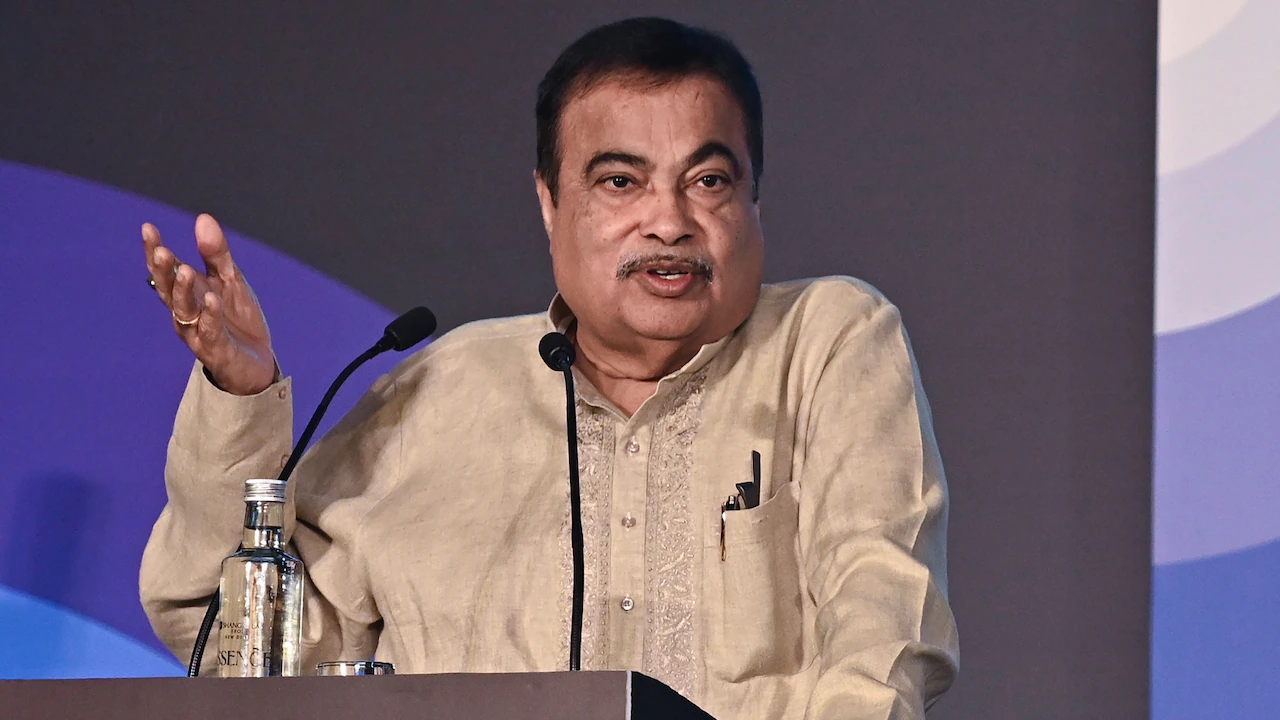
Speaking at the Confederation of Indian Industry's National Conference on Highways, Nitin Gadkari addressed concerns about speeding notices being issued to motorists on expressways.
He said he had instructed officials not to send notices to vehicles travelling at speeds of up to 120 kmph. He further indicated that motorists exceeding this speed by up to 20% should also be allowed to go without a challan. Penalties, according to his remarks, should apply when drivers cross that additional threshold.
The announcement has therefore brought two important figures into the conversation: 120 kmph and 144 kmph.
For motorists, the distinction is significant. A 120 kmph speed threshold represents the baseline mentioned by the minister, while the additional 20% margin takes the potential no-challan threshold to approximately 144 kmph.
However, one important clarification is necessary. The minister's remarks concern speeding enforcement and should not automatically be interpreted as a formal revision of every expressway's legally notified speed limit. Existing road-specific speed restrictions and applicable traffic rules still matter.
In other words, motorists should not assume that every highway in India now permits driving at 144 kmph.
Why the 20% Speeding Relaxation Has Divided Public Opinion
It is not difficult to understand why some motorists have welcomed the announcement.
Driving on an expressway is supposed to be a relatively smooth experience. Unlike conventional roads, access-controlled expressways are designed to minimise interruptions, reduce traffic conflicts and facilitate faster movement between destinations.
Receiving a speeding challan despite driving on a seemingly empty, well-maintained stretch can understandably frustrate motorists. A more reasonable enforcement mechanism could help address situations where minor variations in speed result in penalties.
Nevertheless, the announcement has raised concerns among road safety advocates and ordinary citizens.
Their argument is straightforward: higher speeds leave drivers with less time to react and significantly increase the severity of accidents.
At 120 kmph, a vehicle covers approximately 33 metres every second. At 144 kmph, that distance increases to 40 metres per second.
That is a substantial difference.
If a driver suddenly encounters an obstacle, a vehicle changing lanes unexpectedly or an animal crossing the road, those additional kilometres per hour can make an already dangerous situation considerably worse.
The concern is not necessarily that every Indian expressway is unsuitable for higher speeds. Rather, it is whether road conditions, vehicle safety, driver behaviour and enforcement standards are consistently good enough to support them.
Are Indian Expressways Safe Enough for Speeds of 144 kmph?
This is perhaps the most important question arising from the announcement.
India has invested heavily in modern road infrastructure. Expressways such as the Delhi-Mumbai Expressway and other access-controlled corridors represent a significant improvement over older highway networks.
However, infrastructure quality is not uniform across the country.
A road's safety depends on much more than its width or surface quality. Several factors determine whether a particular stretch can safely accommodate high-speed traffic:
-
Road design: Curves, gradients, merging lanes, entry and exit points, and visibility must be suitable for higher speeds.
-
Road maintenance: Potholes, uneven surfaces, damaged barriers and poorly maintained sections can become serious hazards.
-
Weather conditions: Fog, heavy rain, waterlogging and reduced visibility can make high-speed driving particularly dangerous.
-
Vehicle condition: Tyres, brakes, suspension and other safety components must be maintained properly.
-
Driver behaviour: Tailgating, sudden lane changes, distracted driving and aggressive overtaking increase accident risks.
-
Emergency response: Quick access to ambulances, patrol vehicles and trauma care facilities can make a critical difference after an accident.
A modern expressway does not automatically guarantee a safe driving environment at every speed.
The government must therefore ensure that higher-speed travel is supported by equally strong road engineering, maintenance and emergency-response systems.
Speed Is Not India's Only Highway Problem: Lane Discipline Matters Too
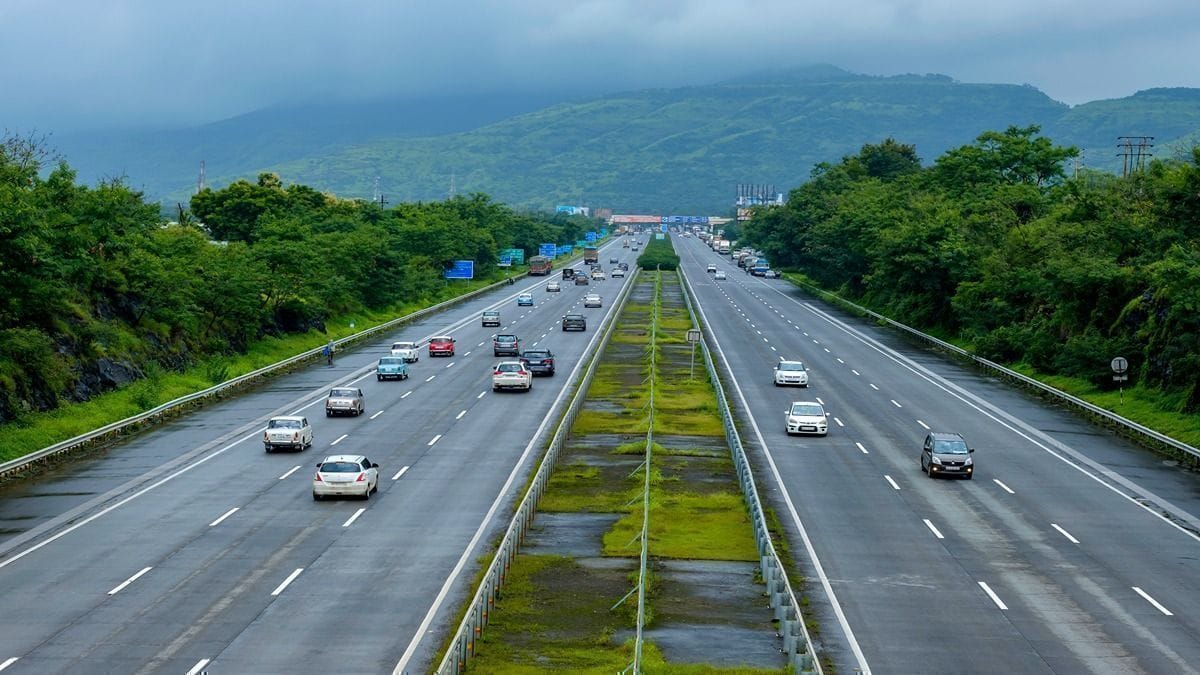
An interesting aspect of the ongoing discussion is the importance of lane discipline.
Many highway accidents and traffic disruptions are not caused by speed alone. Poor driving etiquette, unnecessary lane changes and vehicles occupying inappropriate lanes can create dangerous situations even when everyone is travelling below the maximum speed limit.
For example, a slow-moving vehicle occupying the extreme right lane can force faster vehicles to brake suddenly or weave between lanes. Similarly, drivers who overtake from the wrong side or change lanes without signalling create unpredictable situations for everyone around them.
This is particularly concerning on high-speed expressways, where even a small mistake can have serious consequences.
The solution cannot simply be to increase speed limits or issue more speeding challans. India needs a comprehensive approach to highway safety that treats lane discipline, overtaking practices, following distances and responsible driving as equally important priorities.
A driver travelling at 100 kmph but constantly changing lanes can be just as dangerous as someone travelling faster in an unpredictable manner.
AI-Based Traffic Management Could Be a Game Changer
Another significant aspect of Gadkari's remarks was his call for greater industry participation in developing an AI-based Advanced Traffic Management System (ATMS).
Technology could play an important role in improving highway enforcement and monitoring traffic violations.
An AI-powered traffic management system could potentially help authorities identify:
-
Lane discipline violations.
-
Dangerous or unauthorised overtaking.
-
Vehicles travelling at excessive speeds.
-
Unsafe driving patterns.
-
Traffic congestion and unusual movement.
-
Potentially hazardous situations requiring immediate intervention.
Such systems could make traffic enforcement more consistent and reduce excessive dependence on manual monitoring.
However, technology should not become merely another mechanism for issuing traffic challans. Its primary purpose should be preventing accidents.
For instance, identifying a vehicle repeatedly changing lanes dangerously and alerting enforcement personnel could be more valuable than simply recording its speed.
Similarly, automated monitoring should be transparent, accurate and supported by reliable equipment calibration. Motorists should have a fair mechanism to challenge incorrect penalties.
If implemented properly, AI-based traffic monitoring could help India move towards a more intelligent and preventive road safety system.
Better Roads Must Come With Greater Accountability
There is another important dimension to the debate: the quality of highway construction and maintenance.
Gadkari has also warned contractors and consultants responsible for poor-quality highway infrastructure, stressing that potholes and maintenance failures would attract accountability. He has indicated that contractors could face financial penalties, blacklisting and other strict action.
This is an important message.
If motorists are expected to follow higher-speed driving standards, the agencies responsible for building and maintaining roads must also meet equally demanding standards.
A driver cannot reasonably be expected to travel safely at high speeds on a road with potholes, inadequate signage, poorly maintained barriers or dangerous construction-related diversions.
Road safety is a shared responsibility, but institutional accountability cannot be overlooked.
The government must ensure that highway contractors, maintenance agencies and enforcement authorities are held to measurable standards.
After all, a road's safety should be judged by how reliably it protects its users, not simply by how quickly vehicles can travel on it.
Should Motorists Welcome the 120 kmph No-Challan Announcement?
There is a reasonable argument in favour of reviewing how speeding violations are enforced.
Not every minor variation in speed deserves the same treatment as reckless driving. A sensible enforcement framework should distinguish between marginal speed deviations and genuinely dangerous behaviour.
However, a 20% margin at already high speeds deserves careful consideration.
At 60 kmph, a 20% increase means 72 kmph. At 120 kmph, it means 144 kmph. The consequences of such an increase are obviously not comparable.
This is why a uniform percentage-based relaxation may not be the most effective approach to highway safety.
A better system would consider road design, traffic density, weather, visibility and vehicle movement before determining appropriate enforcement thresholds.
More importantly, motorists should understand that the absence of an immediate challan does not mean a particular driving speed is automatically safe.
A speed limit is not a personal challenge, and an enforcement threshold should never become a target.
Drivers must continue following applicable speed-limit signs and traffic regulations rather than treating the minister's remarks as permission to accelerate indiscriminately.
The Bigger Picture: India Needs Faster Roads, But Safer Journeys Too
India's expanding expressway network is essential for economic growth, improved connectivity and more efficient transportation. Faster highways can reduce travel times, support logistics and connect important economic centres.
But the success of this infrastructure cannot be measured in kilometres of roads constructed or the maximum speeds vehicles can achieve.
It must also be measured by the number of people who reach their destinations safely.
Nitin Gadkari's announcement has opened an important conversation about the balance between practical traffic enforcement and road safety. The proposed 120 kmph no-challan threshold and additional 20% relaxation may offer motorists some relief, but they also highlight the need for clearer communication, stronger lane discipline and more accountable highway management.
The government must ensure that any change in speeding enforcement is supported by transparent rules, appropriate road engineering and reliable safety mechanisms.
Ultimately, India does not simply need expressways where cars can travel at 120 or even 144 kmph. It needs expressways where motorists can travel confidently without constantly worrying about reckless drivers, poor maintenance or unpredictable road conditions.
Because the real measure of a successful highway is not how fast it allows people to drive, but how safely it brings them home.
© Copyright 2026. All Rights Reserved. Powered by Vygr Media.